"Iron Dames Singclair" by Sophie Hinners—the Cinderella story of a bay gelding
Iron Dames Singclair – A mare, but not a Fredricson horse
 from Dominique Wehrmann
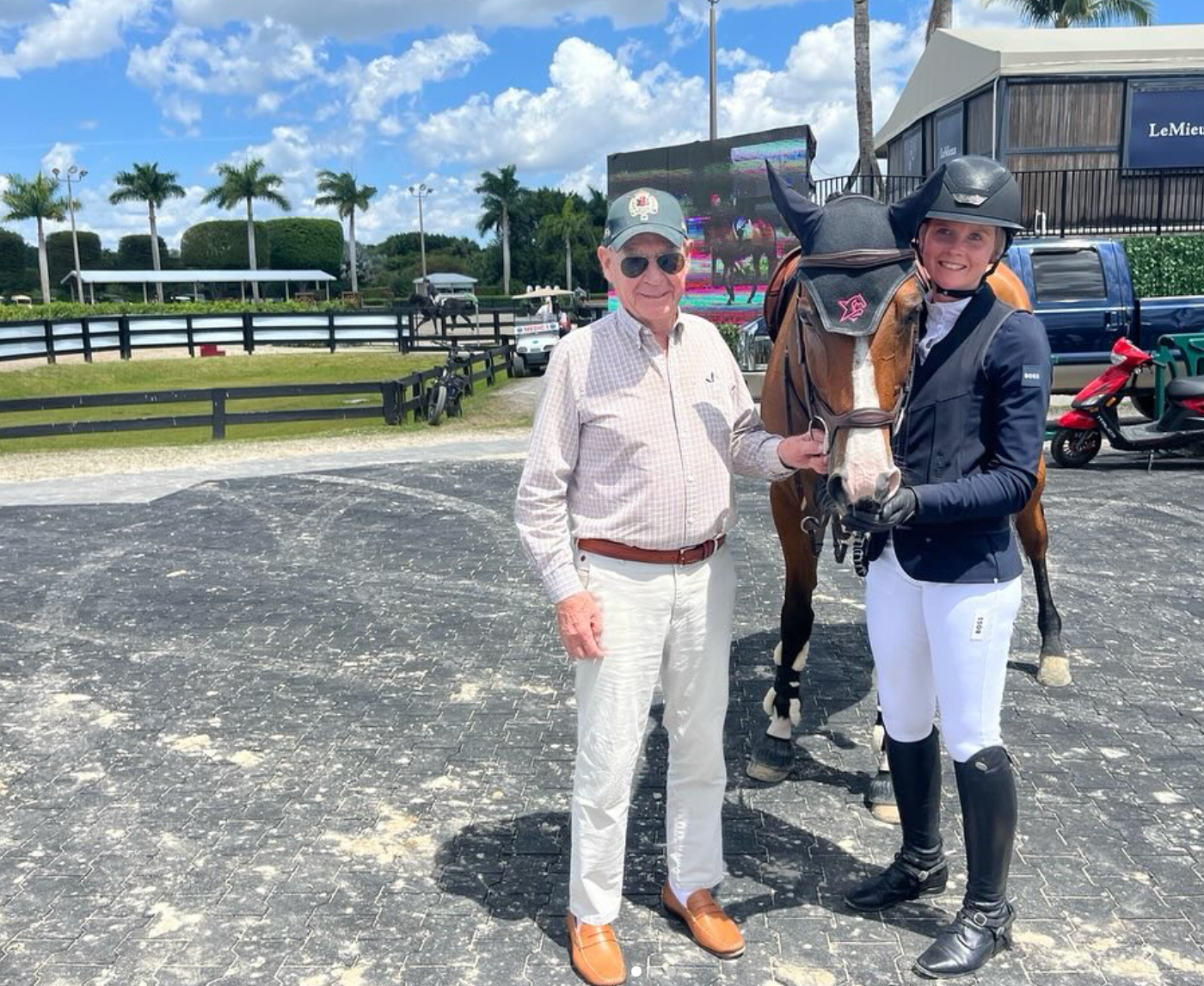
 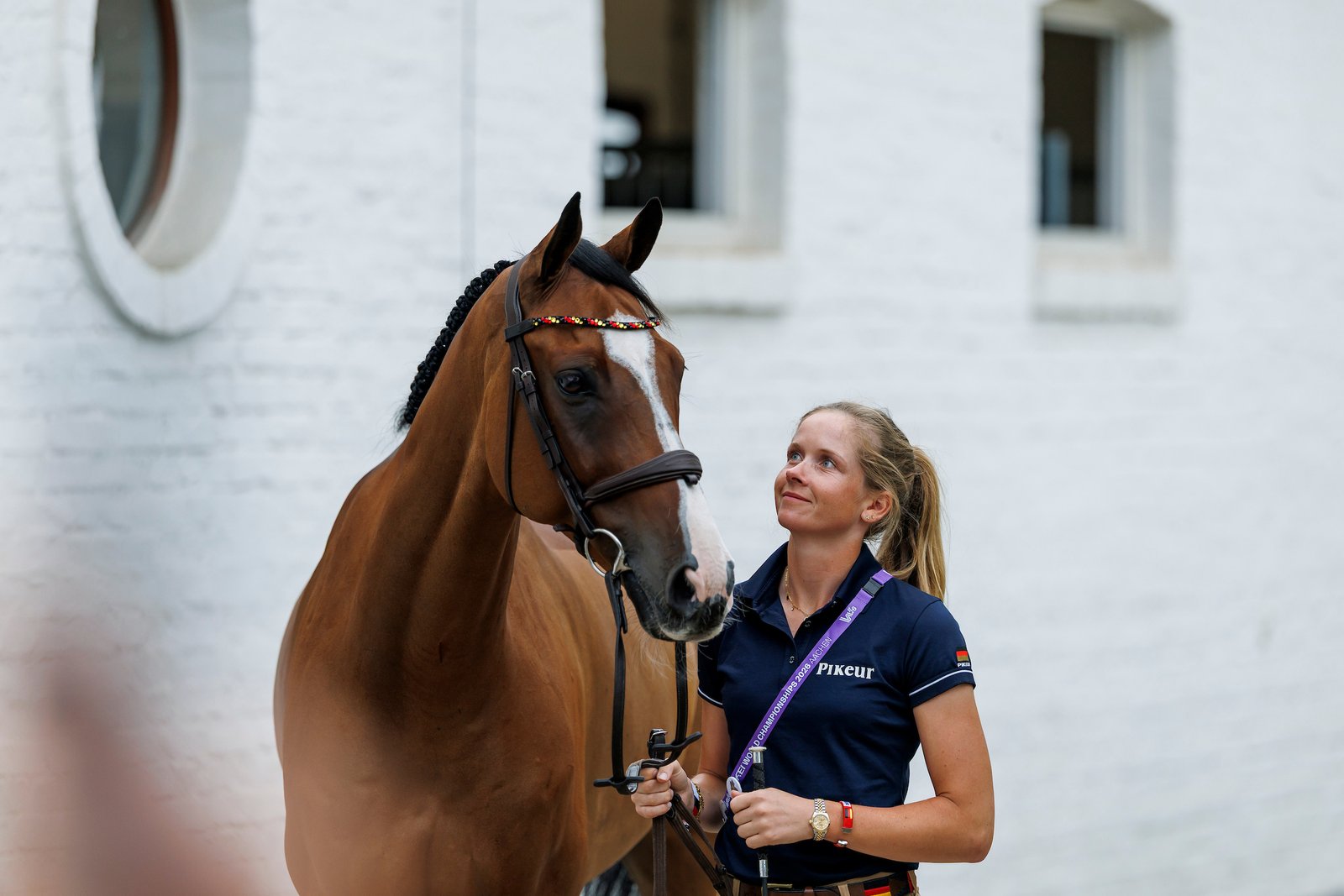 Breeder Jan-Olof Wannius calls Sophie Hinners and Singclair a “match made in heaven.”
Photo: sportfotos-lafrentz.de
Breeder Jan-Olof Wannius calls Sophie Hinners and Singclair a “match made in heaven.”
Photo: sportfotos-lafrentz.de Iron Dames Singclair was born in Sweden. His breeder is a leading figure in the Swedish equestrian world: Jan-Olof “Jana” Wannius, a show jumper at the 1976 Olympic Games and longtime director of the Falsterbo Horse Show.
One shot, one hit
For Jana Wannius, breeding is purely a hobby. In addition to his own career in the saddle, he previously worked as a lawyer and as the director of the Falsterbo Horse Show. He was looking for a good young horse when he was offered a four-year-old mare, a daughter of Cardento. Her great-grandmother was a Thoroughbred mare named Geisha xx, whose bloodline included, among others, that of Seabisquit’s longtime rival, War Admiral by Man O’War. This mare had been bred to the Holsteiner stallion Cortez, who combined the genes of Cor de la Bryère with those of Ramiro Z. The foal, named Conqubine, remained the only offspring of that Thoroughbred mare. Conqubine herself, however, proved to be exceptionally prolific, siring 17 offspring. Among them was Coco Chanel Q by Camaro M—the next generation of Cor de la Bryère blood, which was now crossed with the Olympic stallion and star sire Cardento, who combined the talent of Capitol with the tenacity of Lord.
The result of that mating was the very mare that Jan-Olof Wannius was about to meet. She was an attractive horse, but she had a few bad habits. Among other things, she was clingy at the stable. Wannius wasn’t sure what to make of her. But since he was about to leave for an extended stay in the U.S. anyway, he negotiated that, during the five months he would be away, the mare should at least be ready to be tested for jumping ability. And so it came to pass. When Wannius returned from the U.S., he watched the gray mare jump. She was exceptionally good at it. Although she was still a bit clingy, Wannius decided to give it a chance. He had her broken in, but first wanted to breed her to produce a foal.
Why look so far afield?
Anyone who wants to breed needs a suitable stallion. When Wannius asked his good friend Maria Gretzer—a three-time Olympian for Sweden and later “national team coach”—about a suitable stallion, the answer was crystal clear to Gretzer: “There can only be one!” Namely, her own, Singular La Silla by Fergar Mail-Stakkato, bred by the Mexican Alfonso Romo.
Singular La Silla had just been licensed at the time and was in training with Marcus Ehning. Ehning presented him in the Youngster Tour at the Falsterbo Horse Show, where he was in impressive form. The stallion placed second in the final. After that, it didn’t take much convincing for Wannius. “I’m a fan of the Stakkato bloodline and am good friends with both Alfonso Romo and Maria Gretzer, so it was a perfect fit.”
The result of all these considerations was a brown colt with a white blaze, full of energy and—as the Wannius family quickly realized—with a great love of jumping. “We let the mare and foal out into the paddock. There was a bush there,” Wannius recounts. You can almost imagine what happened next. Singclair could have run around the bush, but he didn’t. Wannius: “That’s when we knew he could jump!”
Getting Started in the Saddle
When it was time to start breaking in Singclair, he proved to be an extremely sweet, docile horse—until one rider mounted him a little too quickly one day and he got scared. Before any problems could arise, Maria Gretzer and her team took over his further training. Did the future Swedish team leader sense from the very beginning that she had a superstar in the stable? “I was just jumping him like this,” Maria Gretzer says, gesturing with her hand to indicate an 80-centimeter jump. “But I just had such a great feel for him. It was sooo much fun to ride him and jump little jumps,” she still raves about it today.
Later, Wannius sent his young horse to Stephanie Holmén for further training; at the time, she was a rider-trainer for Peder Fredricson. She and Singclair were a perfect match. The gelding learned and learned, getting better and better. In 2022, Holmén presented him in the Youngster Tour at Hickstead, finishing third in the final. That was the moment when Holmén realized she had a gem under her saddle, says Maria Gretzer. “When he was seven, Stephie had a feeling that Singclair would one day compete in the most difficult show jumping classes.”
His boss, Olympic team champion Peder Fredricson, was a different story. He rode Singclair—then eight years old—at two competitions, also riding clear rounds and placing. But the two never really clicked. “Peder has a long torso and likes to ride in a light seat,” explains Gretzer. “But the horse has a somewhat short neck, so it just didn’t work. Singclair needs a rider who keeps his upper body a bit more upright. I also think he’s more of a horse for women. And Stephie and Sophie ride in the same style.”
Since Fredricson didn’t want to ride the gelding himself, a sale was on the table—even though Peter Eriksson (who secured the silver medal for the Swedish team at the 2004 Olympic Games riding Singclair’s grandfather, Cardento) was another Olympic rider convinced of the gelding’s exceptional talent and urged Fredricson to give him a try after all. Fortunately for Sophie Hinners, the former world number one stuck to his “no.”
How Singclair Came to Germany
Karl Schneider of Gut Broichhof on the Rodderberg is a trainer in high demand worldwide. Among other things, the Swedes owe him the mare Mary Lou, Henrik von Eckermann’s first championship horse after he left Beerbaum Stables. Schneider arranged for Sophie Hinners to ride Singclair. “Over the past few years—and even now—I’ve repeatedly been given horses from Karl Schneider to ride,” explains Hinners. “Singclair was one of them. He came to our stable so that I could ride him a bit and then we’d sell him.”
As is often the case with horses, they’re easier to market when they’re successful. So Hinners also entered Singclair in competitions. Right at the start of their partnership, she took the then-eight-year-old to the United Arab Emirates during the winter months—a destination that has increasingly become the “Wellington of the Middle East” for show jumpers in recent years. “He jumped his first CSI3* Grand Prix with a double clear round at the age of eight. That’s when we really saw what he was capable of and what a fast, impressive progression he’d made.”
No one had expected that. “I have to say, when we first started jumping him, none of us really thought he was capable of it,” Hinners admits. To this day, the gelding has a very unique way of jumping. “The way he sometimes twists a bit, how he sometimes spirals upward, then forward again, then a little to the right and left—whatever suits him at the moment and however he thinks he’ll get over the jump best,” Hinners describes. “That’s why I think it was difficult to assess him as a young horse.”
Luckily for her, that CSI3* Grand Prix was just the beginning of the Singclair/Hinners success story.
Singclair becomes Iron Dames Singclair
Another person plays an important role here. “When we realized what a great horse he was, I had just joined the Iron Dames team. Deborah (Mayer, the ‘owner’ of the Global Champions League Iron Dames team, Ed.) wanted to secure a horse for me. That’s how it happened with Singclair. He was the first horse she bought for an Iron Dames member. That’s why he’s so special to all of us—because it all started with him.”
And how! Not a single tournament without a top finish—sixth place in the Prix de l’Europe at the 2025 CHIO Aachen, a clear round and second place in the Nations Cup in Calgary, fourth in the Geneva Grand Prix, seventh in the Rolex Grand Prix in ’s-Hertogenbosch, and the highlight of this season: third place in the Rolex Grand Prix in Aachen. That’s just a small selection. And now they’re the top German pair after the first qualifying round of the World Championships following a textbook ride.
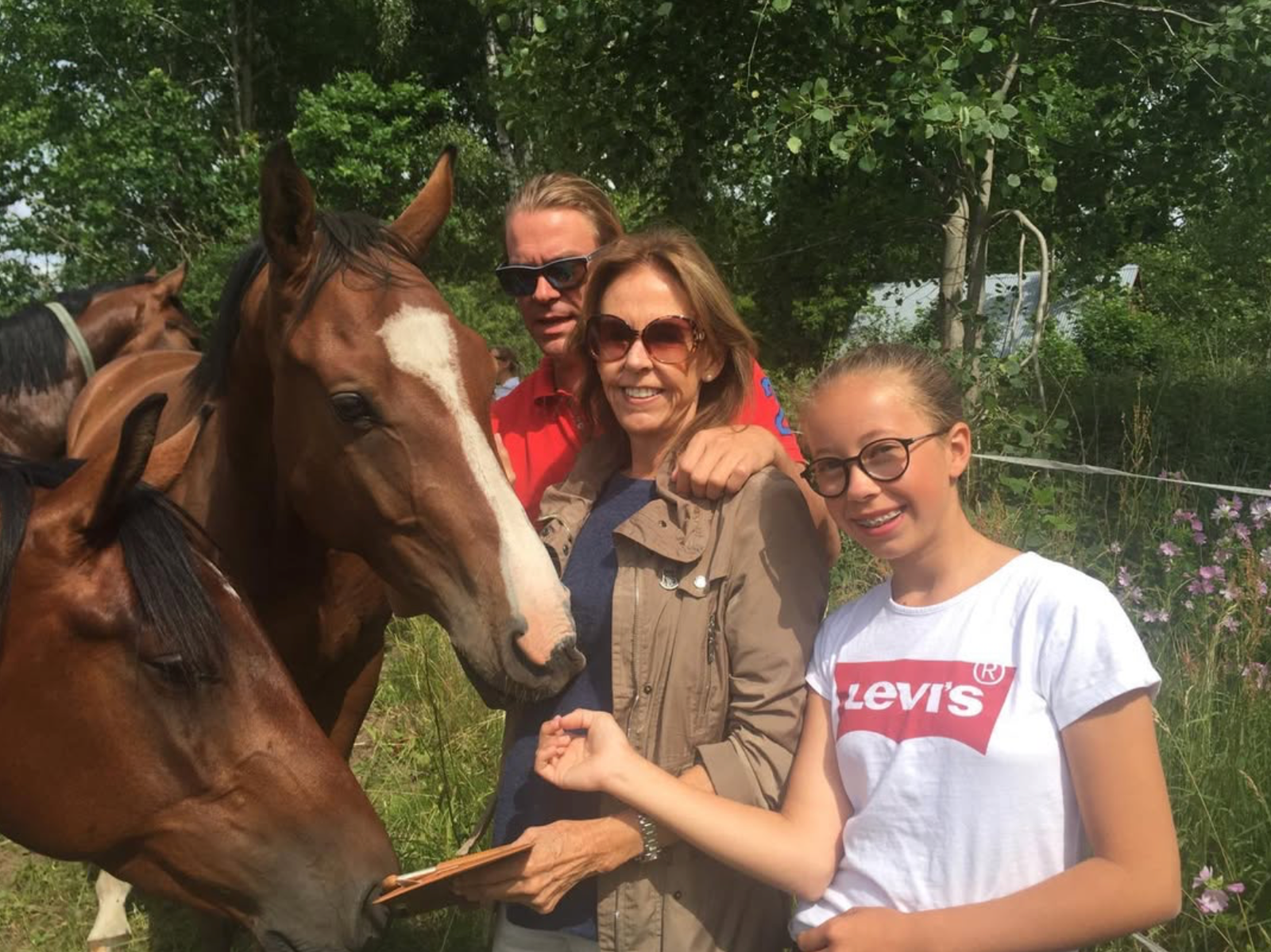
“When I saw them on TV for the first time, I had tears in my eyes,” says breeder Jan-Olof Wannius. “Singclair and Sophie—they’re a match made in heaven.” His whole family has taken great joy in following the pair’s progress. And they’re not the only ones.
And what became of Singclair’s parents?
They always say that most good horses aren’t the easiest to handle. That certainly seems to apply to Singclair’s dam as well. After her son was weaned, Jan-Olof Wannius sold the Cardento daughter to the Philippaerts family. Under the name Curious Friday, she enjoyed a successful career in competition, first under the Philippaerts twins, then under the Norwegian rider Jenny Krogsaeter, with whom she competed at the 2021 European Young Riders Championships. Later, Curious Friday was sold to the U.S. and competed in classes up to 1.60 meters with Caroline Pasmore. Singclair is her only offspring.
His sire, Singular La Silla, enjoyed success with Marcus Ehning not only in young horse show jumping. Later, the pair placed third in the World Cup show jumping event in Bordeaux and also competed in the final in Las Vegas. Later, Maria Gretzer entrusted the stallion to the Danish rider Linnea Ericsson-Carey, and things went just as well, with double-clear rounds in the Nations Cup, top-three finishes in Grand Prix events, and more. Singular La Silla has since retired from competition and is now stationed at the Béligneux le Haras stud farm in France. “Unfortunately, he’s had very few mares in Sweden,” Maria Gretzer laments. Yet Singclair is arguably the best example of Singular La Silla’s genetic legacy.