Great Britain won the hard-fought League of Nations stage in Rotterdam; Germany did not advance to the second round
League of Nations Showdown Between the U.S., the U.K., and Switzerland; Germany Fails to Advance to the Second Round
 from Dominique Wehrmann
 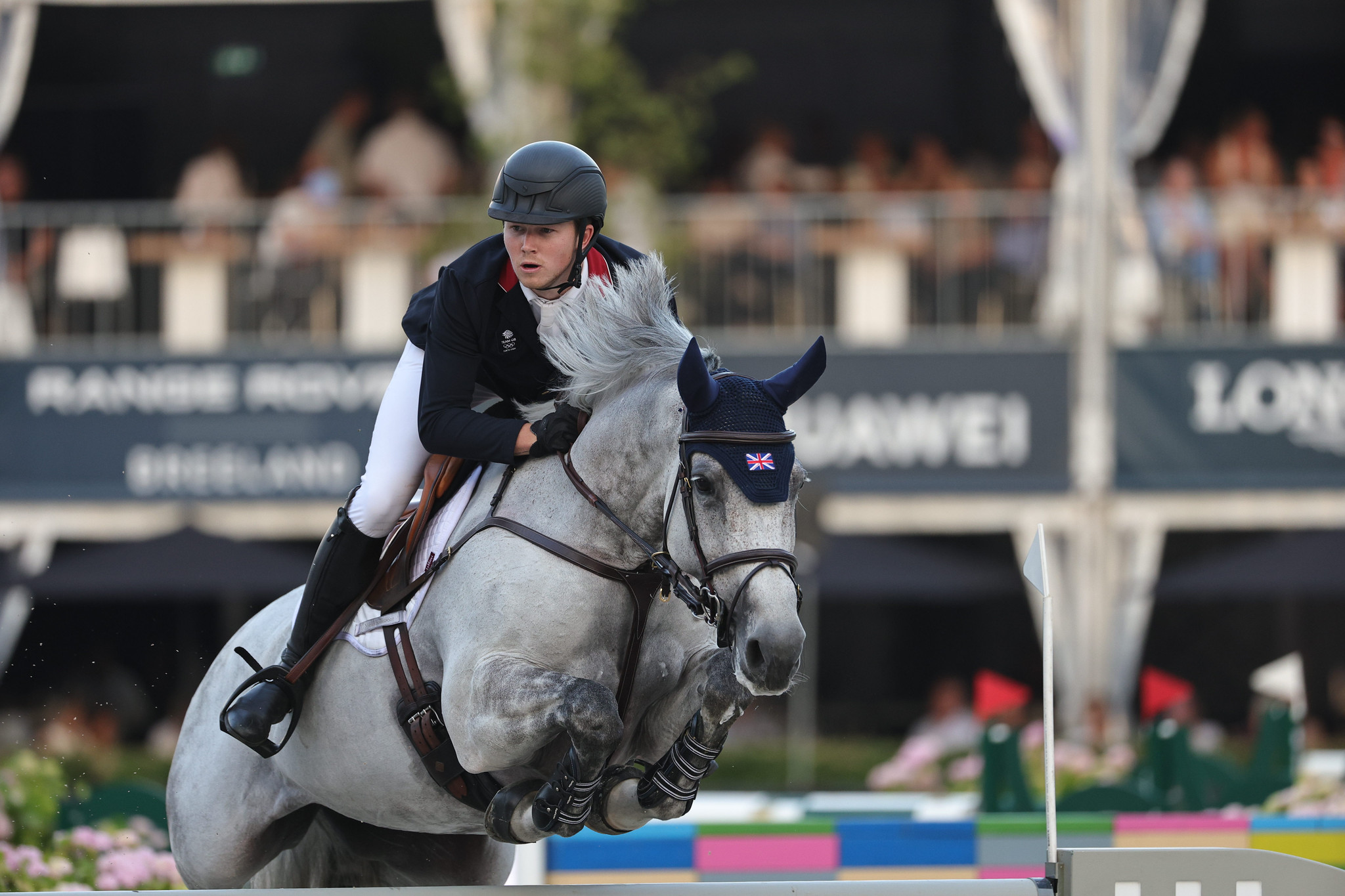 The new dream team for Great Britain: Harry Charles and LT Holst Freda.
Photo: FEI/Leanjo de Koster
The new dream team for Great Britain: Harry Charles and LT Holst Freda.
Photo: FEI/Leanjo de Koster Even the first round of the League of Nations stage in Rotterdam was a thriller. Brazil or Germany—which team would advance to the second round as the eighth-best of the ten teams? That was the question the final riders had to settle. Both nations had twelve penalty points. Four of those came from René Dittmer and Corsica X, and eight from League of Nations debutant Michael Jung riding his nine-year-old Fischerheros Z. The discard result came from Mario Stevens and Starissa, who completed the course with twelve faults of their own.
Earlier, Brazil had been represented by Marlon Modolo Zanotelli riding Jana Wargers’ Dorette OLD, Yuri Mansur riding Elano de Laubry Z, Eduardo Pereira de Menezes riding Londontime, and Rodrigo Pessoa riding Major Tom—who had long been absent from international competition—and all four had one knockdown each. This resulted in a tie in penalty points, which meant that the cumulative time of the three pairs in the standings had to determine the final placement.
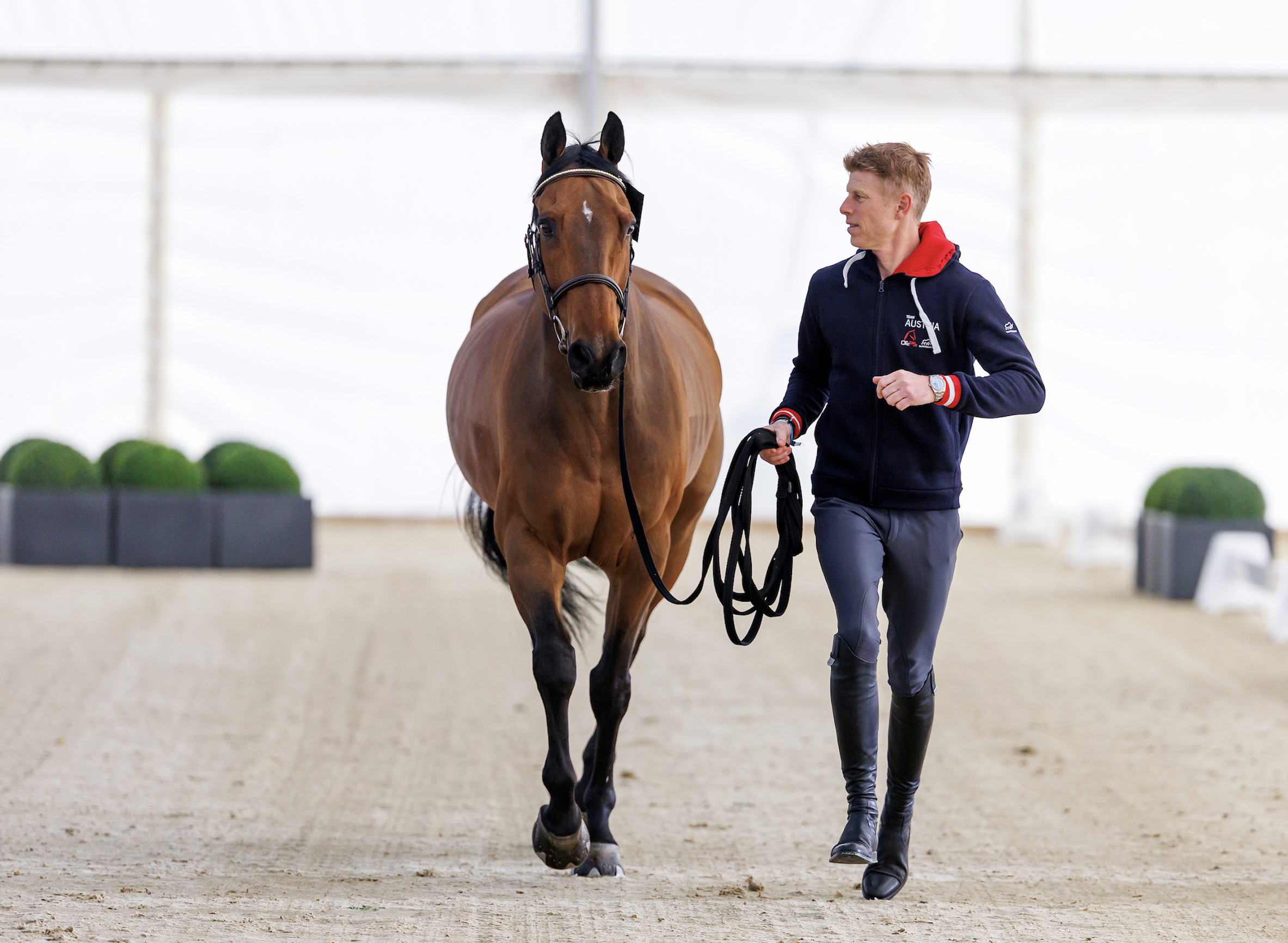
The final pair for Germany—the two on whom everything depended—were Richard Vogel and Cloudio. There’s no question that the European champion, winner of s’-Hertogenbosch and Aachen, has nerves of steel. Time and again, his round has determined success or failure. And Cloudio jumped, as his name suggests, as if he wanted to leap over the clouds—especially at the water jump, where Richard Vogel brought him very close to the obstacle. But the twelve-year-old son of Casall demonstrated all his quality and cleared the white line without a fault. Everything else went smoothly as well. But what did the time say? Perhaps it was that moment at the water jump; in any case, Germany clocked 211.47 seconds and Brazil 210.22. That meant Germany was out and had to watch the second round from the stands.
Showdown Number Two
The Netherlands and Switzerland had advanced to the second round without any mistakes. The Irish, Italians, and Belgians each had four points. The British and the U.S. had eight points each. As mentioned, the Brazilians had twelve. But as the second round progressed, the tide would turn quite dramatically.
Ben Maher, riding Marco Kutscher’s Catelly, made up for the one knockdown in the first round with a clear round. The same was true for 23-year-old British rider Sienna Charles, riding Chawton. Sienna’s brother Harry, on the other hand, had already ridden a clear round in the first round—on a horse he’s only been riding for six weeks, and which had previously jumped spectacular rounds at the World Cup Final in Texas under New Zealand’s dark horse, Julie Davey: the 12-year-old Colman daughter LT Holst Freda. The two were the heroes of the day for the British team. The British team’s number four, who was no longer in the competition for the second round—where only three riders per nation are allowed to compete—was Jessica Mendoza on Summerhouse. They had two knockdowns in the first round.
This left the British team with eight faults, while their competitors racked up more and more knockdowns. The Netherlands, the host nation, was represented by Bas Moerings on Ipsthar, Willem Greve on Grandorado, Harrie Smolders on Mr. Tac, and Sanne Thijssen riding Cupcake Z. Except for Thijssen, who had eight faults, all three rode clear rounds in the first round. But in the second round, the heat may have taken its toll. All three made one jumping fault each. Not bad, but not good enough. The disappointment in the Rotterdam stadium was palpable when the decisive rail fell for the final rider, Harrie Smolders.
Showdown Number Three
In the end, three nations each had eight faults: Great Britain, the U.S., and Switzerland. They were the leaders after the two grueling rounds and now each had to name a rider to compete for the third time. GBR team captain Di Lampard chose Harry Charles. Good choice. Even though he and LT Holst Freda had only known each other for a short time, they already seemed perfectly in sync. The mare jumped powerfully and with drive even in her third appearance. With a clear round in 31.18 seconds, they set the bar high for the competition.
Next up was the U.S. Robert Ridland sent former world-class eventing rider Marilyn Little and her 11-year-old mare, La Contessa, into the competition. The pair did their best, but it wasn’t enough. They finished 0.07 seconds behind Charles.
Now the decision rested with Jason Smith and his wonderfully jumping 11-year-old stallion Picobello van’t Roosakker Z, representing Switzerland. The gray horse jumps powerfully and remained just as faultless as his competitors. His time: 31.64 seconds. With that, the outcome was decided: victory for Great Britain, ahead of the U.S. and Switzerland.
A Comeback and Unusual Horses
The British were understandably over the moon. Harry Charles said, “That’s the beauty of this format! We were pretty much out of the running after the first round. But in the second round, everyone put in a great performance!” Leading the way was Harry himself. Something that even surprised him. “Freda and I have only been a team for six weeks. Normally, you can’t ride a jump-off like this after such a short time. It’s practically impossible. But with Freda, it’s possible! I’m so glad to have her!”
Harry’s sister Sienna emphasized that she and her brother are completely in sync when they ride together as a team. “But in the Grand Prix, it’s a different story,” she added, offering a gentle warning to her older brother. She was proud of her stallion Chawton by Typhoon, bred by the family: “He just didn’t want to jump at all. He’s a fighter.”
When asked if he could offer any tips to his fellow riders, opening rider Ben Maher explained: “Catelly and I are just getting to know each other. Besides, he’s a completely different horse from the other three. So I couldn’t really offer any advice.” It worked out anyway—something team manager Di Lampard never doubted, even after the mixed first round. “We were just unlucky there. But I was confident that we’d be able to turn things around in the second round.” And rightly so, as it turned out.
Ranking
Rotterdam was the third of only four qualifying events for the League of Nations Final in Barcelona (October 1–4). Only the top eight of the ten teams in the league are allowed to compete there.
A small consolation for Germany: Even after today’s elimination, Otto Becker and his team remain at the top of the standings with 230 points, though they are now just five points ahead of the British. The Dutch desperately needed a win today. They are currently in tenth place, on the brink of elimination, as is Italy in ninth place.
You can find all the results and the complete rankings here.