Horse breeding statistics in Germany: fewer foals registered again in 2025, Westphalia defies the trend
Foal statistics 2025: This is the state of horse breeding in Germany
 from Jan Tönjes
 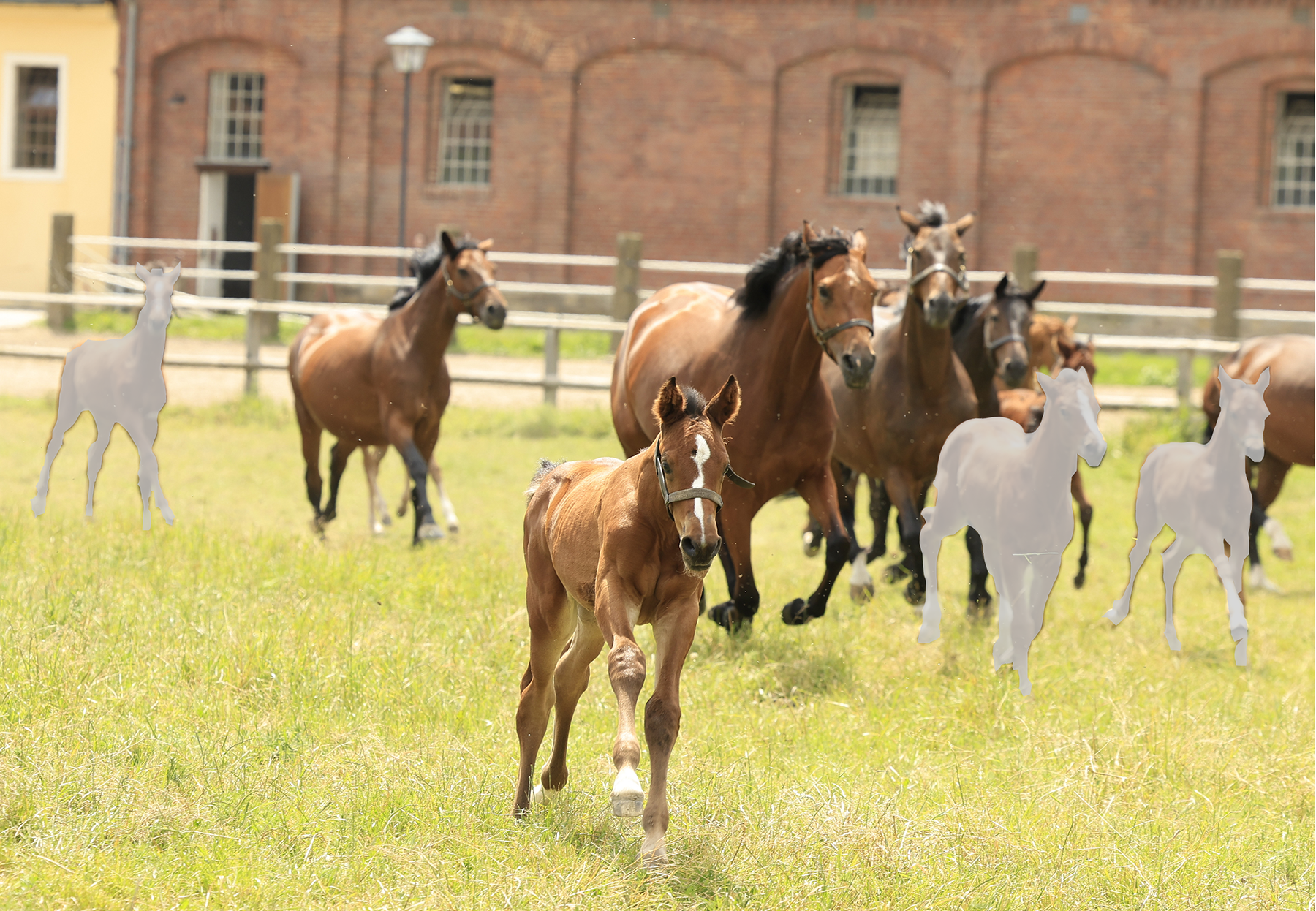 Slump in Germany's foal herds - the downward trend in the number of registered warmblood foals could not be stopped in 2025 either. Photo: tofi-images.de
 Germany, a horse country? That was once the case, one might fear. The annual report of the German Equestrian Federation (FN) is traditionally only presented in May of the following year as part of the FN conferences. It presents the key data on German horse breeding as reported to the FN by the breeding associations.
EQUI PAGES has already requested the figures from the German warmblood breeding associations in advance. This means that the figures considered here may differ marginally from those published by the FN. However, their basic message will not allow any other interpretation.
In 2025, over 8 percent fewer foals than in the previous year
According to the breeding associations from March 2026, 22,995 warmblood foals were registered with German breeding areas last year (excluding one player that is also relevant for Germany, Studbook Zangersheide, which operates in Germany but is based in Lanaken, Belgium). UPDATE: On March 24, the FN published the “official figures”, citing a figure of 23,367 registered foals – and describing this 8.7 percent decline as “quality instead of quantity”.
These 22,995 warmblood foals from 2025 compare with the figure for 2024: There were still 25,100, over eight percent more. In 2023, the statisticians even recorded an impressive 28,049 warmblood foals in German breeding stables. However, this is also the highest figure in a ten-year comparison. However, it also means that the number of registered warmblood foals has shrunk by 18 (!) percent in just two years. Almost a fifth in just two years – in direct comparison, even the ailing German automotive industry still looks healthy. And even if we take the average figure for the past few years as a basis, the picture is not much more positive: it is 25,602, which is still almost exactly ten percent (10.18%) higher than the figure for 2025.
Westphalia stable
A good two thirds of all warmblood foals born in Germany in 2025 (15,699) are registered in Hanover, Westphalia or the two Oldenburg associations (OL for dressage horses, OS for show jumpers). The smallest of the three associations in terms of numbers, the Pferdestammbuch Westfalen, has the lowest deviation: Only 32 foals fewer (3,916) than in 2024 were registered there in 2025. That is 0.8 percent. Figures that competitors can only dream of. In Hanover, the comparative figures fell by 8.9%, from 6,335 to 5,772 in 2025. In Oldenburg, the number of registered foals (6,011) was 9.25% lower than in the previous year (OL = 3,350 [-11.4%] and OS = 2,661 [-6.4%]). When looking at the figures of the Oldenburg International Jumper Breeding Association (OS) in particular, it is important to bear in mind that Paul Schockemöhle’s Lewitz Stud is by far the largest breeder in this organization.
DSP with double-digit losses
The German Sport Horse Association, DSP, has five associations under its wing. Within this group, 13.5 percent fewer foals were registered. The two big ones lost eleven percent (Baden-Württemberg) and 13.6 percent (Brandenburg-Anhalt).
UPDATE: Following the initial publication, the Saxony-Thuringia Breeding Association has corrected its reported figures once again. While we initially had to assume a drop of 30 percent, as also reported, the managing director now writes that 559 foals have been registered for the year 2025. No equine passport has yet been printed for around 20 foals. And further “In 2024, the number was 714 foals. This actually corresponds to a declining registration rate of currently 155 and 133 foals, i.e. around 21.7% and 18.6% respectively.
Holstein 9.35% less
Last year, the Holsteiner Verband registered 231 fewer foals (2,238) in the Land between the Seas (or nationwide), a drop of 9.35 percent. However, figures from Holsteiner Hengsthaltungs GmbH show that demand does exist across all breeding region borders.
Trakehner gaining ground
The “niche within the niche” is often praised by marketing experts as a USP, a unique selling point in the market. For the Trakehner Verband, which is the only German breeding organization in the warmblood sector to uphold pure breeding, this seems to be true: 24 foals more than in 2024 make the East Prussians the only association in Germany to achieve an increase: 3.4 percent. A total of 739 foals were registered.
In contrast, the figures published by the Mecklenburg Verband are down: 386 foals, more than 15 percent fewer than in 2024 (456), were registered in the breeding region, which can proudly point to the stamp stallion Chacco-Blue from its own ranks.
The situation is similar at the Breeding Association for German Horses (TZfDP). Here there are 278, in 2024 there were still 295, which is 5.7 percent less.
Where are the show horses of tomorrow?
In 2025, 21,326 new competition horses were registered in Germany. These include horses that were not born in Germany, but mainly in Europe. It was the first time that this figure had risen again, by almost five percent compared to the previous year. You don’t have to be a prophet to realize that such figures are unrealistic in the not too distant future. The approx. 23,000 registered foals born in 2025 will not become 23,000 three-year-olds (although it goes without saying that not only horses in this age group will be registered with the FN as competition horses for the first time). There are always losses in the breeding years. The figures for carcass disposal in Lower Saxony, a traditional horse-breeding state, have risen dramatically since the sharp increase in veterinary costs due to the new GOT, as the podcast “Tell me about the horse” has shown. Foals that are sick and whose prospects in the event of illness look rather poor are a financial burden in horse breeding, which is already barely profitable.
What are the breeding associations doing?
The German breeding associations are not only responsible for managing their “products”, but also for marketing them. While they used to limit themselves to two or four auctions a year, the picture has now changed. Especially in the foal sector, there is now hardly a major show at which a few foals are not offered for sale. The hammer circles, virtually or in reality, almost every weekend at some showground or other. The associations know this: Hope is an important motivating factor. If the breeder gets his foal sold, perhaps in the five-figure range, then the incentive to continue (after all) is greater. At foal age, the costs for mother and child are still manageable. But if you are forced to raise a foal yourself, you have to be an optimistic, cheerful person when it comes to the costs involved.
However, those who have been breeding horses for a long time will tell you that this is not a completely new situation. The ups and downs in horse breeding are as old as the hope that the mare will have no problems in her first heat. And somehow the skier’s adage that every slope is followed by a counter-slope also applies. And that leads uphill.
Similar posts