Recognizing equine metabolic syndrome (EMS) in horses
Equine metabolic syndrome (EMS) in horses – symptoms & diagnosis
 from Kerstin Wackermann
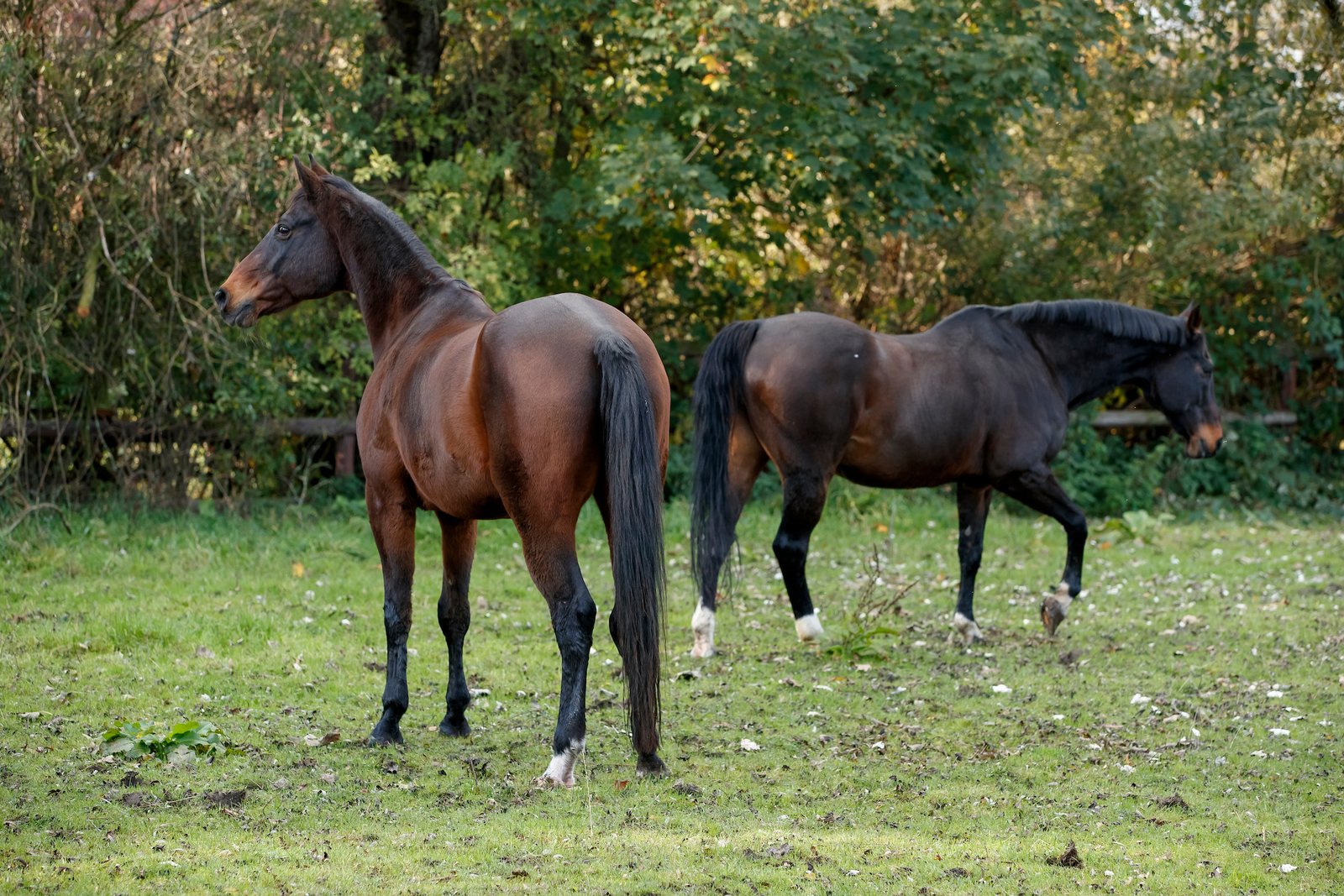
  Fat pads are a typical symptom of Equine Metabolic Syndrome (EMS). Treatment should only be carried out in close consultation with the vet. Photo: Adobe Stock (KI)
 Equine metabolic syndrome (EMS) describes a metabolic disorder in horses in which the regulation of insulin is disturbed. Although the comparison with type 2 diabetes in humans is often made, it is not entirely correct: while in humans the focus is on persistent insulin resistance with elevated blood glucose levels, horses with EMS do not usually show permanently elevated fasting glucose levels; instead, the decisive factor is a disturbed, often excessive insulin response to sugar and starch.
EMS mainly affects overweight horses and ponies, which often already have laminitis or have suffered from laminitis. It is characterized by a gradual progression. The metabolism becomes unbalanced over a long period of time without any clear symptoms of the disease appearing. In everyday life, EMS therefore remains unrecognized for a long time until visible changes appear or laminitis occurs for the first time.
What happens in the horse’s body in equine metabolic syndrome?
In equine metabolic syndrome, the horse’s metabolism reacts hypersensitively to sugar and easily digestible carbohydrates. After eating – especially fresh grass, high-sugar hay or starchy concentrated feed – the pancreas releases large amounts of insulin.
Insulin ensures that sugar is transported from the blood into the body cells. In EMS horses, the hormonal system reacts excessively to feed: after ingesting rations rich in sugar or starch, the insulin level rises significantly more and remains elevated for longer, even if the blood sugar is often within the normal range. This persistent insulin dysregulation (ID) is at the heart of the disease and directly affects fat distribution, energy balance and hoof health.
Which horses are particularly at risk?
In principle, any horse can develop equine metabolic syndrome. In everyday life and in studies, however, it has been shown that ponies and light-fed horses in particular often suffer from insulin dysregulation. These groups are evolutionarily adapted to poor feeding conditions and utilize energy very efficiently. Under today’s husbandry conditions with high-energy feed and limited exercise, this leads to greatly increased insulin responses more quickly than in animals with a different metabolism.
Genetic influences also play a role. For certain breeds such as horses of the Iberian group (e.g. PRE), Paso breeds, Morgan horses, Arabians and Fjord horses, the literature describes an increased tendency towards pronounced insulin reactions. So far, these are observations from studies and practice – there is no clear “EMS gene test”. Whether this predisposition actually results in insulin dysregulation or EMS depends primarily on management, especially feeding and exercise.
The decisive factor is the long-term combination of high energy intake and low exercise. Under these conditions, horses are much more likely to develop impaired insulin regulation, regardless of their visible body weight.
Typical symptoms of EMS
Many horses with equine metabolic syndrome are overweight and have characteristic fat deposits. Fat deposits are particularly common on the mane crest, shoulders and croup, at the base of the tail, above the eyes and around the hose or udder. These pads often persist even if owners reduce the amount of feed.
In addition, insulin dysregulation significantly increases the risk of insulin-associated laminitis. In some horses, it is even the first noticeable symptom.
Not all signs clearly indicate at first glance that a horse is suffering from insulin dysregulation. Some horses appear less willing to perform or unusually sluggish, others show a conspicuously strong appetite.
Such changes provide important indications of impaired insulin regulation and should always give rise to a specific veterinary examination
How is EMS diagnosed?
Veterinarians do not diagnose equine metabolic syndrome on the basis of a single value, but step by step. The first step is always a clinical assessment: regional fat pads – especially on the mane ridge – and previous or current episodes of laminitis are important indicators.
The vet then takes a detailed feeding and husbandry history. Information on grazing, hay quality, use of concentrates and daily exercise will show whether the metabolism is regularly confronted with high sugar levels. This information does not replace laboratory values, but provides a crucial context for their evaluation.
In the next step, the vet checks the insulin metabolism. To do this, he takes blood samples and determines insulin and glucose levels. Many EMS horses show inconspicuous insulin levels on an empty stomach, even though they develop severely elevated insulin levels after eating carbohydrates. Fasting measurements alone therefore do not detect all forms of insulin dysregulation.
This is why the oral sugar test (OST) is considered an important part of diagnostics today. The horse is given a defined sugar solution and the vet measures the insulin level at set times. This makes it possible to detect whether the insulin level rises excessively or falls again too slowly – changes that can remain hidden in resting values.
The diagnosis of EMS ultimately results from the overall picture. Clinical abnormalities, management factors and laboratory findings must fit together. Isolated individual findings do not allow a reliable classification.
EMS is not just about weight
A horse of normal weight can suffer from EMS or insulin dysregulation just as much as a significantly overweight animal. The decisive factor is not the number on the scales, but the body’s hormonal response to feed intake. Horses with an inconspicuous appearance can exhibit pronounced insulin dysregulation and thus carry a relevant risk of laminitis. Even horses with an apparently unremarkable appearance should be examined if there are corresponding risk factors, for example if they repeatedly show laminitis, appear tired without a clear cause or have had abnormal insulin levels in previous blood tests.
Feeding and management with EMS
In horses with EMS, the intake of sugar and starch in particular influences the insulin response. The aim of feeding is to avoid pronounced insulin peaks after feed intake and to reduce permanently elevated insulin levels. The content of non-structural carbohydrates (NSC) in the ration is therefore crucial. These include sugar, starch and fructans – with sugar and starch in particular directly determining the insulin response.
Fresh pasture grass can lead to a significant increase in insulin levels in sensitive horses, as it can contain relevant amounts of fructan as well as sugar. Hay influences the insulin response primarily through its content of water-soluble sugars and possibly starch. The selection of forage therefore requires targeted control of the carbohydrate content and must not be based solely on external quality characteristics. The ration design must not only take into account the body condition, but above all the individual insulin reaction of the horse.
Concentrated feed rich in starch or sugar is generally unsuitable for horses with EMS. Even small amounts can be enough to significantly raise the insulin level again. Mineral feed should cover the requirement without providing additional sugar or starch via energy-rich carriers.
Regular exercise adapted to the patient’s condition and training status can improve insulin sensitivity. One study showed that a seven-day, moderate exercise program of around 45 minutes a day more than doubled the ability of muscle cells to absorb sugar from the blood. The horses then utilized glucose much more efficiently because the number of sugar transporters in the muscles increased.
Can EMS be cured?
According to current knowledge, equine metabolic syndrome is considered a chronic metabolic disorder and cannot be cured. The aim of treatment is not to “eliminate” the disease, but to permanently stabilize insulin regulation and significantly reduce the risk of insulin-associated laminitis.
If EMS is recognized early, the metabolism can often be well controlled through consistent management. Adapted feeding, regular exercise and husbandry management tailored to the individual risk can lead to a reduction in clinical symptoms and affected horses remaining stable in the long term.
FAQs on EMS in horses
How much hay is useful for EMS?
Hay remains the basis of feeding, even with EMS. However, it is not only the quantity that is decisive, but above all the content of water-soluble carbohydrates in the roughage. Horses with insulin dysregulation react very differently to identical hay rations. This is why it is not enough to reduce the amount of feed across the board in the case of EMS. The decisive factor is which hay is fed and how evenly the horse consumes it throughout the day.
If a horse consumes large quantities of sugar-rich hay in a short period of time, the insulin level can rise significantly. Long breaks between feedings or strongly changing hay rations can also destabilize the metabolic situation. The aim is to maintain a steady, controlled hay intake with as constant a supply of carbohydrates as possible.
What role do sugar, starch and NSC play in EMS?
Sugar and starch belong to the so-called non-structural carbohydrates (NSC). These are carbohydrates that are quickly available in the small intestine and cause a significant increase in blood sugar and insulin secretion. In horses with EMS, the metabolism reacts particularly sensitively to these NSC. After feed intake, the insulin level often rises more sharply and remains elevated for longer than in metabolically healthy horses. This is also confirmed by controlled feeding studies: horses developed very different insulin responses after identical rations, depending on the NSC content of the feed (Borgia L. et al. 2011, study). NSC therefore not only act as an energy source, but also as a central hormonal trigger in the EMS process.
Experimental work on the development of laminitis shows the clinical consequences that such an insulin overreaction can have. In these models, an elevated insulin level was sufficient to trigger laminitis – without additional inflammation or mechanical overload (de Laat M. A. et al. 2010, study).
Do horses with EMS need medication?
Medication is not the first step in the management of equine metabolic syndrome. They are considered when insulin regulation cannot be stabilized despite consistently adapted feeding and sufficient exercise. Or if the risk of laminitis is very high.
Metformin is described in the literature as a supportive option. Controlled studies have shown that metformin reduces the glycemic and insulinemic response to an oral sugar load (Rendle D. I. et al. 2013, Equine Veterinary Journal). At the same time, studies on drug absorption show that metformin is poorly absorbed from the digestive tract in horses. This can limit the clinical effect and vary from individual to individual (Hustace J. L. et al. 2009, American Journal of Veterinary Research).
Medication can therefore not replace the management of EMS, but at best supplement it.
Which medications can be problematic with EMS?
Glucocorticoids are a particular focus in horses with equine metabolic syndrome. They can reduce insulin sensitivity and exacerbate existing metabolic problems. In practice, this is particularly relevant when concomitant inflammatory diseases need to be treated. Guidelines and reviews therefore recommend that preparations containing cortisone should only be used in EMS horses after careful risk-benefit assessment and close metabolic monitoring (Durham A. E. et al. 2019, study).
How should you train a horse with EMS?
Exercise can improve insulin sensitivity, but requires the horse to be pain-free. Guidelines emphasize that training with EMS must always be individually adapted. If there is an increased risk of insulin-associated laminitis(link to article) or if the horse is lame, it is more important to reduce pain and stabilize the hoof situation. Forcing the horse to exercise or overworking it is counterproductive in this phase.
Regular, moderate exercise stimulation is recommended to support the metabolism without putting additional strain on the hooves and musculoskeletal system (Durham A. E. et al. 2019, Journal of Veterinary Internal Medicine).
Why stress and pain worsen the course of EMS
Stress activates the release of cortisol in horses. Persistent pain can intensify this stress reaction. Cortisol reduces the insulin sensitivity of the body’s cells and thus promotes increased blood sugar and insulin levels.
These hormonal effects can also destabilize the metabolism in EMS, especially if stress or pain persists over a longer period of time. This often manifests itself subtly in day-to-day stable life: the horse occasionally walks with a feeling, has muscular tension or is persistently restless. Such signs should be taken into account in EMS management, even if they do not immediately appear to be “metabolically typical” (Durham A. E. et al. 2019, Journal of Veterinary Internal Medicine).
Are insulin dysregulation in horses and EMS the same thing?
No, insulin dysregulation and equine metabolic syndrome are not the same thing, even if they are often equated in everyday life. Insulin dysregulation describes a clearly definable, measurable disorder of insulin regulation. The horse’s body no longer reacts appropriately to insulin, especially after feed intake. This dysregulation can be objectively demonstrated by blood tests and standardized stress tests and represents a specific pathophysiological finding.
Equine metabolic syndrome, on the other hand, is a clinical syndrome, i.e. the simultaneous occurrence of several characteristic features. EMS is present when insulin dysregulation occurs together with typical physical and clinical abnormalities. These include, in particular, regional fat deposits, often – but not necessarily – obesity and a significantly increased risk of insulin-associated laminitis. EMS therefore describes a more comprehensive clinical picture than a single laboratory finding.
Insulin dysregulation (ID) forms the central core of EMS. However, it can also occur in isolation without a horse being formally classified as an EMS horse. Conversely, EMS without demonstrable insulin dysregulation cannot be meaningfully defined according to current knowledge.