Hay for horses with EMS, sport horses, seniors, ponies & co.
 from Kerstin Wackermann
 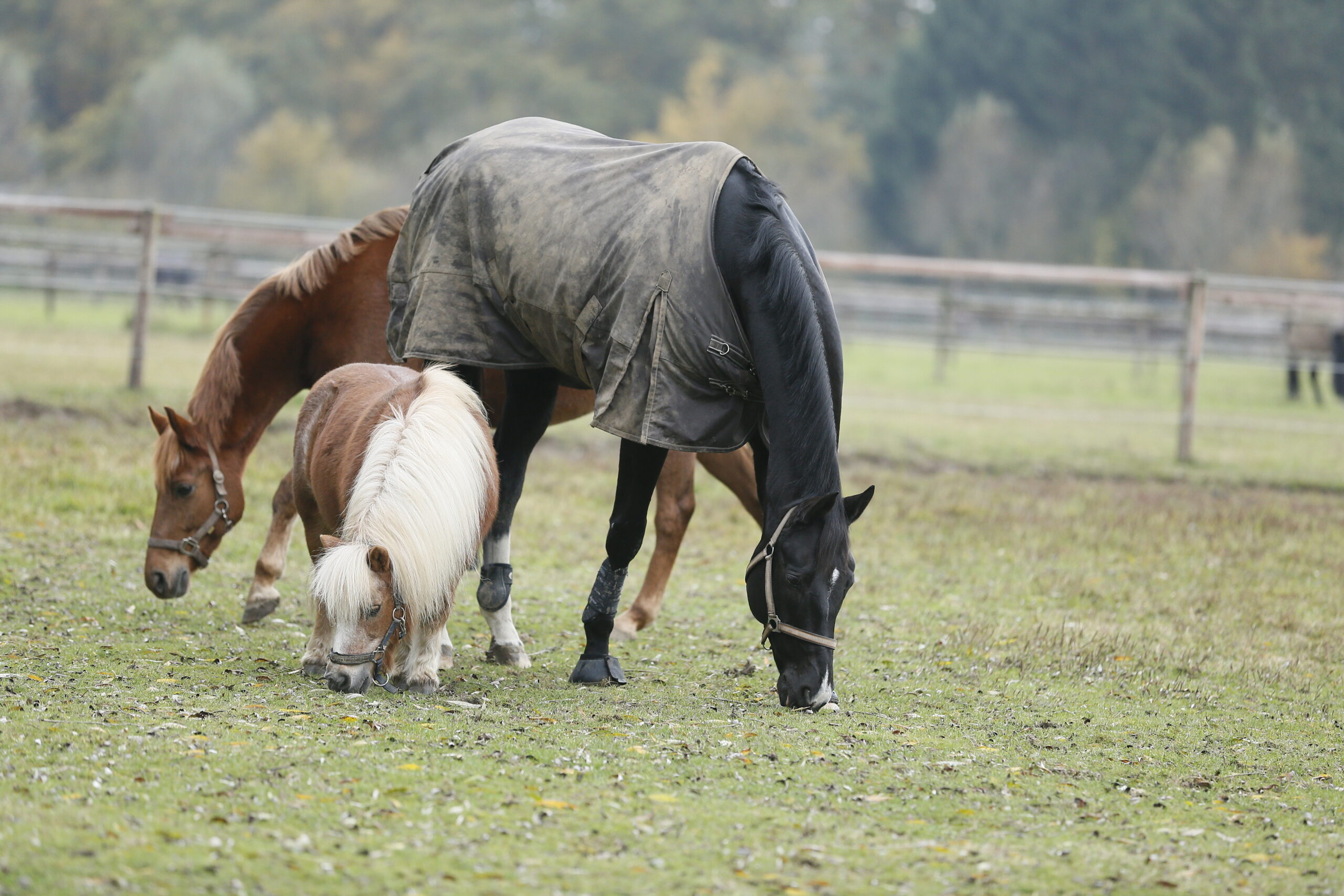 Seniors, ponies, sport horses - feeding must be individually adapted for all. Photo: Jacques Toffi
 Protein, energy, crude fiber and above all sugar (non-structural carbohydrates, NSC) determine whether a horse is optimally supplied or whether health risks arise. The wrong dosage can lead to obesity, laminitis, reduced performance or digestive problems.
Hay for horses with EMS, Cushing’s or at risk of laminitis
Horses with equine metabolic syndrome (EMS), Cushing’s disease (PPID) or insulin resistance or a high risk of laminitis react sensitively to sugar. The decisive factor is the content of NSC (non-structural carbohydrates). Studies recommend using hay with less than 10 to 12 % NSC in the dry matter in order to avoid insulin spikes and laminitis.
As the NSC content depends heavily on the location, plant species and time of cutting, a hay analysis is essential. In addition, farmers can reduce the sugar content by soaking. Studies ( Longland et al. 2011) showed that soaking for 30 minutes significantly reduces the soluble sugars. Soaking for too long or using old water can increase the microbial load. Steaming or a combination of soaking and steaming reduces germs and sugar content(Moore-Colyer et al., 2014).
Hay that is well suited for horses with EMS or Cushing’s is late cut hay (after flowering), as it tends to be richer in crude fiber and lower in energy. 1.2 to 1.5 kg of hay per 100 kg of body weight per day is a guideline. In addition, owners can also use measures to extend the feeding time: Close-meshed hay nets or time-controlled hay racks prevent horses from consuming large quantities in a short period of time. This keeps the horse occupied for longer and reduces the risk of obesity. It is also possible to mix hay with straw (see section on light-fed horses below).
Hay for sport horses
Sport horses have a higher need for protein and energy, which cannot be met by high-crude fiber, late-cut hay alone. Jansson & Lindberg(2012) show that early-cut hay with a crude protein content of 90 to 110 g/kg DM and up to 9.5 MJ ME/kg DM is better suited to ensure the basic supply of performance horses.
In addition to the supply of nutrients, the continuity of roughage intake is also important: studies have shown that horses with regular access to roughage have a significantly lower risk of stomach ulcers. In practice, this means that sport horses benefit from a combination of structured hay (to promote chewing movements) and early cut hay (to provide energy).
Hay for seniors and horses with dental problems
Older horses often suffer from tooth wear or missing teeth. They can no longer chew coarse, stalky hay sufficiently. There is a risk of a blocked throat or that the senior horse cannot take in enough hay.
Hay for old horses should therefore mainly consist of softer, leafier hay from the 2nd cut (provided the sugar content is moderate) or additionally offer soaked hay cobs so that senior horses can continue to consume sufficient roughage. There are also studies on this. It is important that older horses do not go without roughage, as this is the only way to maintain healthy intestinal activity.
Hay for light-fed horses and ponies
Ponies and robust breeds have a low energy requirement and tend to become overweight quickly. Hay that is too high in energy or sugar can lead directly to laminitis. Treiber et al.(2006) showed that ponies with a high energy and sugar supply develop a significantly increased risk of laminitis. A late cut with a high crude fiber and low energy content is particularly suitable for these animals. If the horse needs to lose weight, the procedure should be discussed in detail with the vet.
Studies indicate that a reduction in hay is indicated for overweight horses, but should not be done abruptly. The hay quality should first be adjusted and feed management optimized before the quantity is reduced. In particular, too rapid a restriction can promote muscle loss, negative metabolic changes or behavioral problems.
To satisfy the need to chew without supplying too much energy, feeding restraints such as hay nets are useful. They extend the feeding time and prevent hasty eating. Keepers can also use roughage alternatives that are rich in structure but low in energy. Clean straw, which can be added in small quantities, is particularly suitable. It extends feeding times without significantly increasing energy intake. However, it is important that straw is hygienic and not too sharp-edged in order to avoid colic. However, horses must be slowly accustomed to a higher proportion of straw in order to reduce the risk of constipation.
The hay/straw mixture should not contain too much straw, the ratio should be a maximum of 2 parts hay to 1 part straw. When feeding straw, care must be taken to ensure that the horse gets enough exercise and always has unlimited access to water. An additional supply of nutrients such as amino acids is also required, as straw provides significantly less energy and protein than hay and haylage.
Regular weight checks and adjustment of the ration are crucial.