EMS & insulin dysregulation in horses: Why laminitis develops
Why is the risk of laminitis so high in horses with insulin dysregulation and EMS?
 from Kerstin Wackermann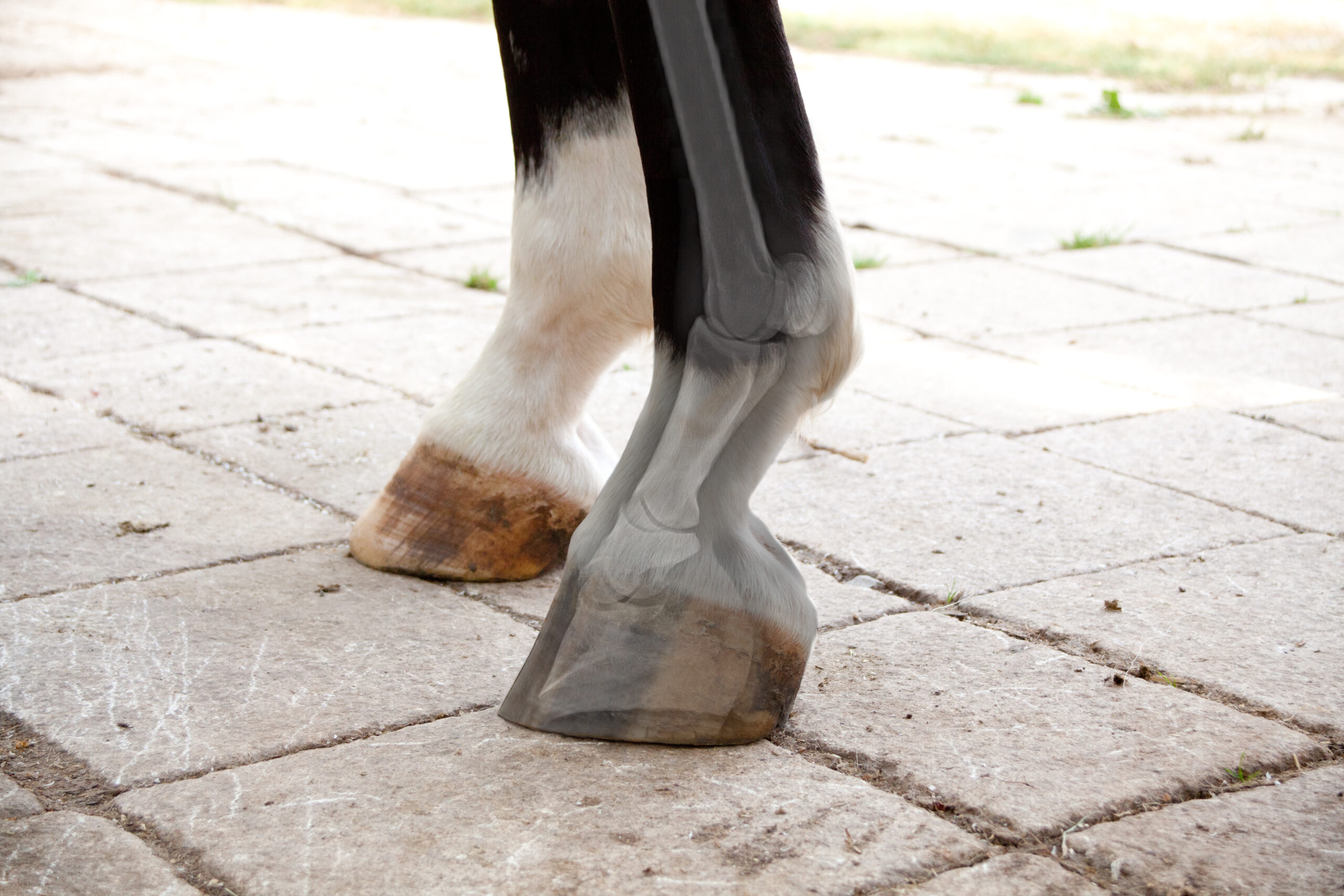
To understand why metabolism plays such a central role in the development of laminitis, it is worth taking a look at the structure of the hoof. Insulin not only affects the sugar metabolism, but also influences blood vessels, cell growth and the strength of connective tissue. In the hoof, this hormone meets a particularly sensitive system: the lamellae of the hoof corium. These fine, well-vascularized structures connect the coffin bone to the horn capsule and bear the entire weight of the horse. Their stability forms the basis for a resilient, healthy hoof.
Permanently elevated insulin levels weaken the hoof lamellae
If the insulin level remains elevated for a longer period of time, insulin changes the signaling processes in the cells of the lamellae. They lose their normal, firm structure. As a result, the connection between the individual lamellae gradually weakens. The suspension of the coffin bone becomes unstable, without anything being immediately visible from the outside.
At the same time, insulin also interferes with the control of the blood vessels in the hoof corium: The blood flow no longer adapts correctly to stress and demand. This results in pressure changes in the tissue, which puts additional strain on the lamellae. Research assumes that permanently high levels of insulin change the cell control in the hoof lamellae and gradually weaken their retaining function.
Why laminitis often occurs with EMS
This preliminary damage remains unnoticed for a long time. Pain only occurs under stress – for example when working on hard ground or during prolonged exercise – because the weakened suspension of the coffin bone can no longer withstand the mechanical forces sufficiently. Many horses with EMS already have such lamellar pre-damage before significant lameness occurs.
Excess weight exacerbates this process because fatty tissue is hormonally active and further increases the insulin response. It also increases the mechanical stress on the hooves. However, obesity is not the actual cause. Even horses of normal weight or only slightly overweight can have a pronounced insulin dysregulation and be at high risk of laminitis.
This is why EMS laminitis is not classic laminitis
In classic (toxic/intestinal-associated) laminitis, high-sugar or high-starch rations, certain medications or toxins often lead to inflammatory processes via disturbances in the intestinal environment, which damage the hoof lamellae. Feed can also be the trigger for EMS – but via a different mechanism: high-sugar and high-starch rations cause insulin levels to rise sharply after feed intake. If insulin remains elevated repeatedly or over a longer period of time, signaling processes and vascular regulation in the lamellae of the hoof corium change. The support function gradually decreases so that the coffin bone loses its stable suspension. This is known as insulin-associated laminitis.
In classic laminitis, the focus is on gastrointestinal measures and emergency therapy. Whereas insulin-associated laminitis is about metabolic management via feeding, exercise and insulin control.
Feeding with EMS: How to avoid insulin spikes
For the feeding of EMS, this means one thing above all: everything that triggers strong or long insulin rises in the horse must be consistently reduced or excluded. This does not apply to individual “problem feeds”, but to the entire daily insulin load.
Sugar and starch play the central role here. Horses with insulin dysregulation react hypersensitively to these carbohydrates. Even moderate amounts can cause insulin to rise sharply and remain elevated for hours. The ration must therefore be structured in such a way that it covers the energy requirement without provoking insulin spikes.
Hay for horses with EMS and insulin dysregulation
The basis is always roughage. Only hay with a low content of water-soluble sugars and starch (NSC) is suitable for EMS horses. This cannot be reliably assessed without analysis, as appearance, smell or time of cutting say little about this. If the sugar content is too high or unknown, the risk of insulin increases significantly. In such cases, watering can reduce the risk, but is no substitute for permanently suitable hay quality (link to hay article).
The amount of hay consumed influences the metabolism just as much as the sugar content. Large rations at once lead to the horse absorbing a lot of carbohydrates in a short period of time. This causes insulin to rise more than if the same amount is distributed evenly throughout the day. Structurally rich feed with long feeding times relieves the metabolism.
Which feed EMS horses should not be given
Concentrated feed with grain, molasses or high starch content is generally not suitable for horses with EMS or insulin dysregulation. These feedstuffs provide readily available energy and stimulate insulin secretion particularly strongly. Even seemingly small extras such as bread, apples, carrots or sugary treats add up over the course of the day and can have a relevant effect on insulin levels.
Mineral feed and supplements must also be examined critically. It is not only the mineral content that is decisive, but also the carrier. Products with molasses or starch can negate the positive effect if they regularly trigger insulin spikes.
Grazing with EMS
Grazing is a particularly difficult risk to calculate for horses with insulin dysregulation. Depending on growth, weather and time of day, grass can develop very high sugar and fructan contents. For affected horses, uncontrolled grazing therefore means frequently recurring insulin spikes, even with low overall feed intake.
Particularly high amounts of sugar and fructan are produced in the grass when there is a lot of sun and at the same time growth is slowed down, for example due to cold or dry conditions. Under these conditions, the risk of insulin-associated laminitis increases significantly. Grazing is therefore always a management issue with EMS and should only be carried out in close consultation with the vet.
With EMS, feeding should stabilize the metabolism, not radically reduce the energy intake. The horse should be full, eat continuously and be able to absorb all nutrients without being hormonally overloaded. In overweight horses, the ration must not be reduced abruptly in order to avoid the risk of hyperlipemia (link to EMS-Pillar).
h1
h2
p
pn
h1
h2
p
pn
h1
h2
p
pn
h1
h2
p
pn