A commentary on the wealth gap in the equine sector
Horse world between horse flap and Premier Jumping League
 from Dominique Wehrmann
 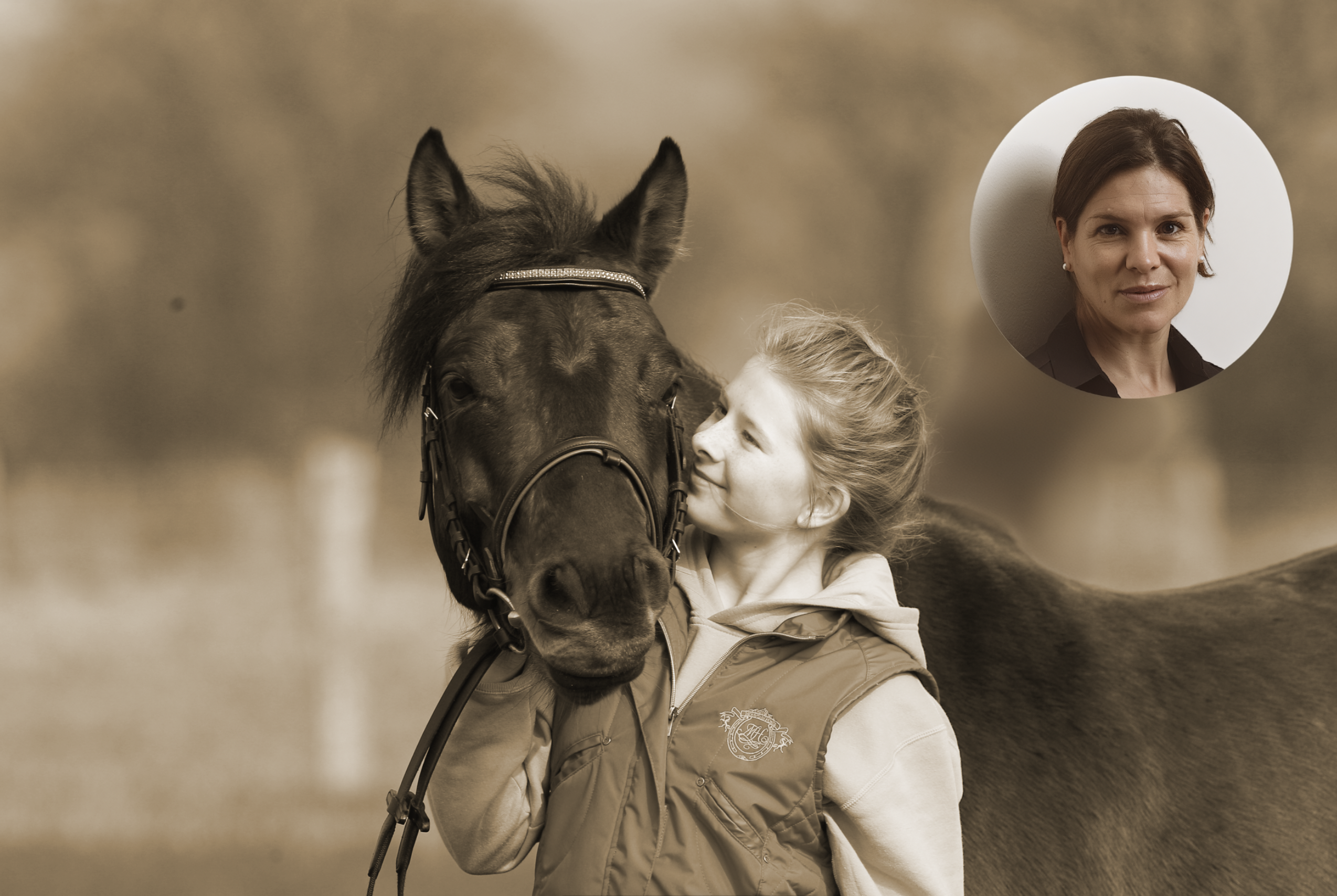 A source of income for some, monetary quicksand for others - horses are so many things. But they are one thing for everyone: a lifelong love.
Photo: Sportfotos-lafrentz.de
A source of income for some, monetary quicksand for others - horses are so many things. But they are one thing for everyone: a lifelong love.
Photo: Sportfotos-lafrentz.de This spring, the Premier Jumping League (PJL) was launched at a grand gala in Miami. It is a new show jumping series in which U.S. billionaire and sports investor Frank McCourt (currently the majority shareholder of Olympique de Marseille; until 2022, he held a 50stake in the Global Champions Tour until 2022) plans to invest $300 million in the coming years.
According to estimates, the equine industry generates a total of $300 billion annually worldwide—a twelve-digit sum. It’s hard to imagine.
Sport for the rich? By no means
Looking at numbers like these, one might think that horse people are immeasurably wealthy. This is a misconception, as Jan Tönjes has already pointed out in our newsletter. For the vast majority, working with horses is a lifelong, indispensable passion. Horses are more than a hobby; they’re a calling. But for most, it’s one that costs them money rather than earning it—even to the point of self-sacrifice. An entire industry is built on this.
However, this is becoming increasingly rotten, as becomes clear when you turn away from top-class sport and look at the situation in normal equestrian Germany, one of the most traditional horse countries in the world. Ten years ago, it was easy to finance a horse in a riding stable on an average salary. But supply bottlenecks due to war, a generally uncertain political climate, insane energy prices, poor harvests, ever-increasing labor costs and, in this country, the enormous rise in veterinary expenses are driving costs through the roof. This affects every horse owner. The fact that people have less and less time also contributes to sluggish horse sales.
Not being able to find a buyer for the horses, plus the increased costs, is a particular burden for small breeders. They can no longer afford or no longer want to breed, partly because they can hardly sell their “normal” horses. Whether in forums or on social media, the tenor is the same everywhere: “We’re giving up breeding”, “This is my last horse” or “Who can afford all this?” Answer: Fewer and fewer people.
The part that has already sunk
This is particularly evident in the example of Petra Teegen’s first “horse hatch” in Germany and similar rescue centers. At Teegen’s center, people can anonymously put their horses in a hidden pasture if they are unable to cope with keeping them for whatever reason. The most common reason is lack of money, says Teegen.
Out of 195 horses in 2025, around 150 were given away because their owners could no longer afford to keep them. Since January, she has already had 53 requests, once more than 20 in one day. This is not only bad for the horses, but especially for their people.
“People have a terribly guilty conscience,” says Petra Teegen. She took in two particularly tragic cases in December and January. The owners took their own lives because they could no longer afford their horses.
The base is crumbling
Anyone who thinks that the Pferdeklappe and the fates that unfold here have nothing to do with PJL, GCT & Co. is mistaken. The situation in the rescue centers reflects the situation in Germany as a whole. And rural equestrianism and rural breeding are the foundations on which both top-class sport and the aforementioned 300 billion dollar industry are based.
Many of the horses that are jumping and piaffing millions together today fell into the straw on a rural farm. In countries with a long equestrian tradition such as Germany, the Benelux countries or France, this rural breeding was and is a reliable supplier of horses for sport and leisure. Large farms such as Lewitz, Paul Schockemöhle’s stud farm with more than 1,000 broodmares, are still the exception.
However, the horses are not only born in this country, they are also trained here and presented at competitions before being sold as medal hopes for the up-and-coming nations in the desert or overseas, sometimes for tens of millions. This is a huge economic factor that is increasingly in danger of collapsing.
Quite apart from breeding, if there is no more rural riding, there will be no more young riders, neither for top-class sport nor for hobby sport, which also needs horses. Very few state-certified horse owners work as trainers and instructors for world-class riders. Most of them work in regional riding stables – and will probably be unemployed in the not too distant future. Farriers and vets will no longer be needed. Saddlers can concentrate on car seats again. Care product manufacturers can focus on cosmetics. Sounds like a horror scenario? We are not very far away from it. And yet the passion for horses is still as strong as ever.
People want horses, but the costs are crushing them
A study from Belgium, which took a close look at the equine sector in the Flanders region, reflects the situation, which is certainly not unique to the area studied. The study comes to the conclusion that although 1.43 billion euros are spent on horses in the region each year, only a few businesses benefit from this money.
“A large proportion of riding schools, breeding farms and boarding facilities have difficulties making a profit,” says Stijn van Ormelingen, professor at the KU Leuven and co-author of the study, in an interview in De Ochtend: “Only just over half of these companies make a profit. That is relatively low compared to other sectors.”
The economics professor explains: “Companies that don’t make a profit probably have other reasons for being involved with horses. They often do it out of passion and not primarily to make a profit.”
But you also have to be able to afford a hobby.
Solutions desperately sought
How do we deal with this situation? That is the big question to which there is still no satisfactory answer. Great campaigns such as the “Horses for our children” project or “Horse diversity” contribute to this because they are committed to ensuring that more people have access to horses again. Perhaps it would also be an idea to offer part of the sponsorship money as a breeder’s premium. After all, that would be recognition and an incentive for those who make the sport possible in the first place.
Ultimately, however, the problem is a structural one that affects more than just the equine industry, but one that affects it in particular, as Petra Teegen says: “We link the plight of animals to the plight of people.” Eliminating this hardship is a task that belongs at a higher level. Whether through “more net from gross” or whatever slogan you want to use. Without an economic upturn, all horse lovers will have to persevere.
Let’s hope that the situation is recognized and that the solution concepts work. So that there will never again be people who take a hopeless step out of sheer desperation at having to hand in their horse at the horsebox.
Ähnliche Beiträge