An interview with Philipp Schulze Topphoff, the "newcomer" to Ludger Beerbaum's team of riders
Philipp Schulze Topphoff: “I thought about it for quite a while.”
 from Dominique Wehrmann
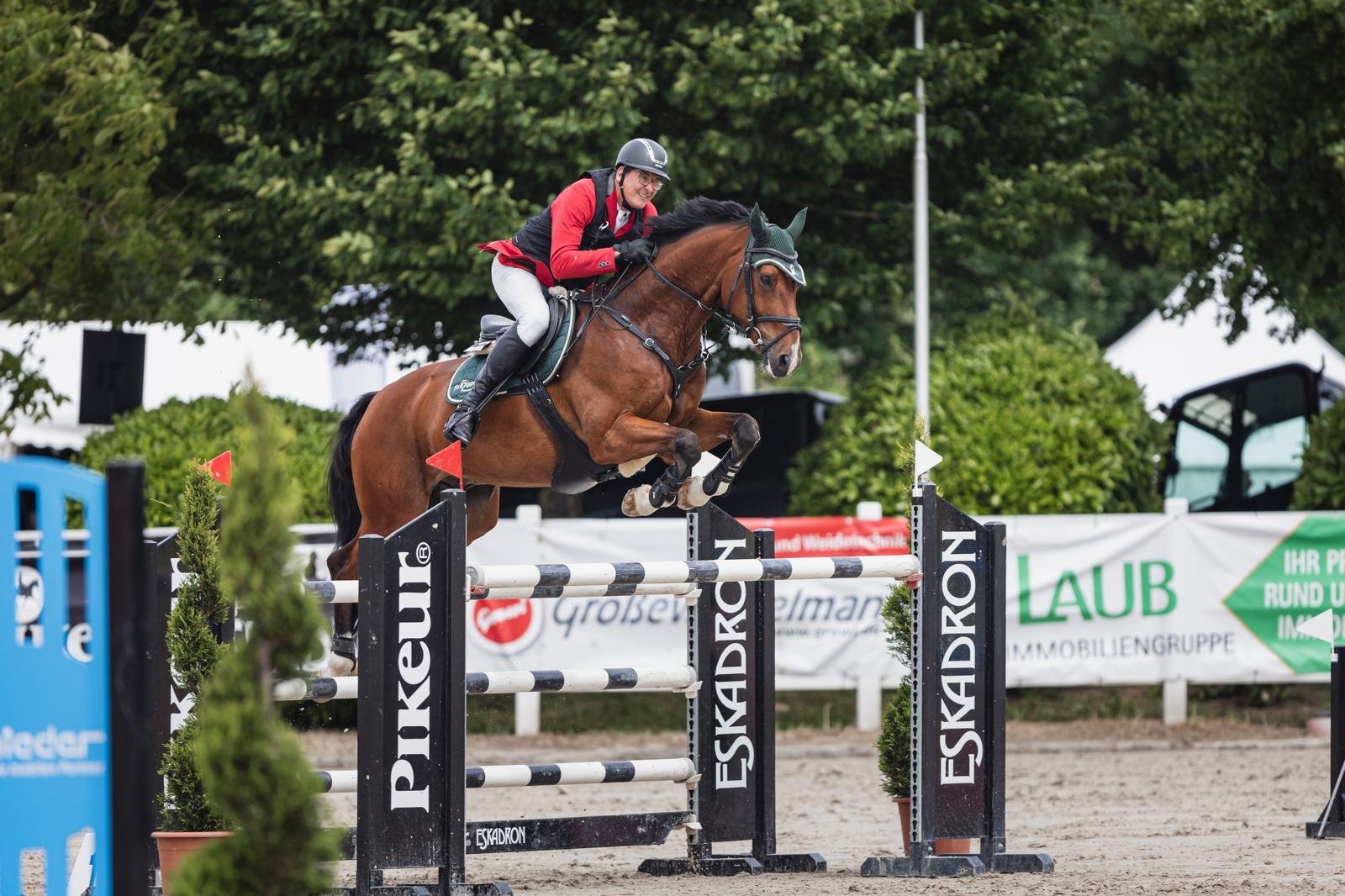
 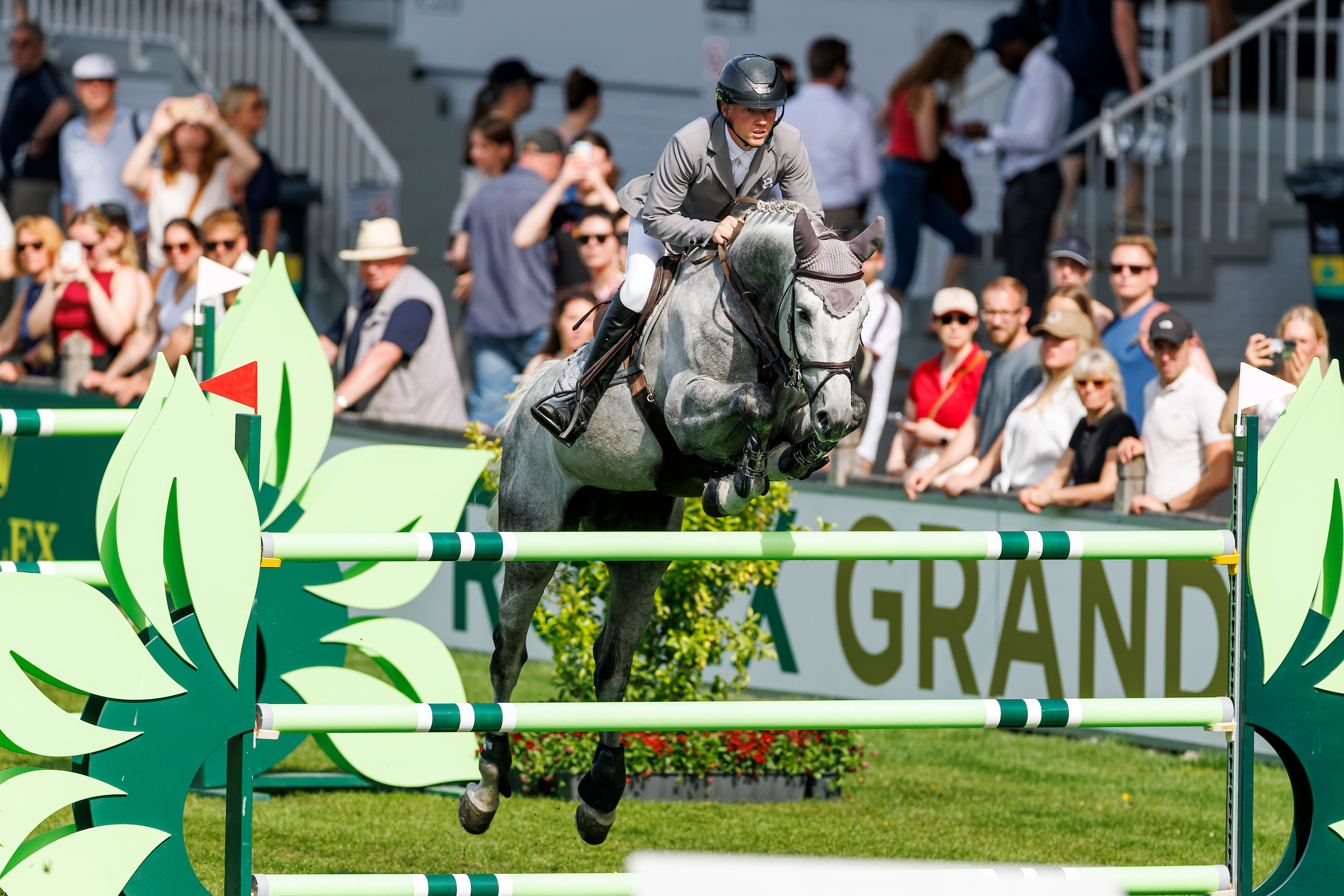 Philipp Schulze Topphoff and the eight-year-old Cortez FZ competed in the Youngster Tour at TSCHIO Aachen in May, where they placed ninth in the final.
Photo: sportfotos-lafrentz.de
Philipp Schulze Topphoff and the eight-year-old Cortez FZ competed in the Youngster Tour at TSCHIO Aachen in May, where they placed ninth in the final.
Photo: sportfotos-lafrentz.de Since April, Philipp Schulze Topphoff has been a rider on Ludger Beerbaum’s team in Riesenbeck. Even as a pony rider, the 27-year-old was a regular member of the German Nations Cup and Championship teams, won team gold and bronze at the 2013 and 2014 U16 European Championships riding Mentos Junior, and became European champion twice with Concordess NRW in the young riders’ category—once in the team competition and once in the individual competition. It was Concordess who also brought him his first World Cup successes and accompanied him to the finals in 2022.
Schulze Topphoff first came into contact with Riesenbeck as a U25 rider, when he was signed by the Global Champions League team Riesenbeck International and immediately enjoyed success. Now he’s back on the GCL team, though no longer as an “outsider” but as a member of the Riesenbeck team.
What is his life like after moving from Havix to Riesenbeck? An interview
EQUI PAGES: How long have you been here?
Philipp Schulze Topphoff: I think I’ve been here for two and a half months now. It was in mid-April, to be exact.
So tell me, what’s it like? How is it different from back home? I mean, you were already riding most of the time before, weren’t you?
Exactly—we ride here at the end of the day, too. There’s a certain parallel there, but when you look at the details, it’s actually a little different. Of course, it’s a bit less self-directed; there’s more of a set structure here. In my view, this structure has the advantage that I can really focus completely and fully on the horses themselves. I know I have time for them, so I’m happy to take a little extra time when needed, because that’s my main job.
At home, it was kind of the whole operation, so to speak, that I had to take care of—or rather, what’s the word? “Take care of”? I always enjoyed doing it, though. But in any case, there was always something else that needed to be done alongside riding.
But you didn’t clean up the mess at home, did you?
Sure, of course!
Okay, then describe in detail what your daily routine at home was like and what’s different now.
Yeah, it’s pretty simple: a family business with no employees at home. You just have to do everything yourself. We did have some help, mostly in the morning in the stable, starting around seven o’clock. After feeding, we’d clean the stalls once, and then go riding. In between, we’d grab a bite to eat whenever it worked out. And then we’d “ride” the rest—so to speak—whatever wasn’t finished yet.
Now, in principle, it’s a bit similar: go to the stable, ride. Then there’s a break together with the rest of the riders—at least that’s what’s offered—for a period of two hours. Exactly when each person leaves depends on the specifics, depending on how far along you are with the horses and how much you want to get done. Sometimes we ride until noon, sometimes until 1:00 or 12:30—it varies. But generally speaking, the plan is that from noon to 2:00 p.m. is theoretically the lunch break, and in the afternoon, after a short rest, we continue until we’re done riding—depending on how much is on the schedule for the day. The general idea is to be finished around 5:00 p.m.
Sure, if we end up working until six, or if customers come by to try out horses, or if a horse comes in from outside that we want to buy and test, and for whatever reason we can’t reschedule the appointments—then it gets late sometimes, and that’s just how it is. But it’s not like we work until eight or nine in the evening every day. No, no, that’s not how you should picture it.
Since you’ve been here, have you picked up anything—whether it’s about horse management, riding, or anything else?
Of course I’m in on it—I really try to take everything in. Here at the stable, we naturally place a lot of emphasis on the horses’ responsiveness—that fundamental work on the basics, so that everything runs smoothly. We don’t do show jumping all that often, except at competitions, of course. Then we watch videos together, talk about them, and analyze things a bit. But most of the time, when something isn’t going the way we’d like, we always end up coming back to the groundwork. We place an enormous amount of emphasis on this—ensuring there’s a certain basic level of suppleness so that the course feels as easy as possible. After all, ultimately, it’s our shared goal for the course to look incredibly easy to the spectators. That’s the idea behind it. Ideally, it should look completely harmonious and effortless.
The horses you’re riding now—did you bring your own? Do you only have horses for training? Or are you also given horses to ride to earn points in the Global Champions League? Or are you riding your own here?
It depends. But in the end, it’s less about who owns the horses. When we’re ready for me to compete in team jumping, the horses that are expected to deliver the best results will be the ones we enter. Sure, I brought two horses with me, Carla and Clemens. They’re on their way back up again. They’d been out of the loop for a bit—not quite in the form we would have liked—but now they’re back on track.
The horses here are—not all of them, but for the most part—younger horses, ranging from six to eight years old. Then we also have a slightly more experienced mare and a gelding who’s already 13 and has competed in three- and four-star Grand Prix events. I’m still getting to know him better, but we’ve already had a few good results.
And among the young horses, which one do you see as your next rising star?
Among others, we have two six-year-olds: Ferrari (by Farfelu de Muze) and Ascaro O (by Asca Z). Then there’s Cortez FZ—I’d say we have pretty high hopes for him. After all, he’s already eight years old, so we’re getting closer to where we want to be. At eight, he’s already competed in a ranking show jumping event and placed.
But you won’t be riding for the Global Champions League team this weekend, right?
Nope, I was just added to the team right before this weekend—I wasn’t even on the team before that. They took advantage of this transfer window to bring me in. A rough estimate, if things go well: maybe mid-September—once my own horses are ready again and I’ve built up a bit more of a rapport with the eight-year-old.
Is it really the case that things work according to the “Hochdien” principle here—first normal young horses, then better ones at some point?
I wouldn’t exactly call that “promoting” me. I can only speak for myself here. But at least in my case, it’s true that I was brought into the team after just a few weeks. You don’t just bring someone in and then give them horses that aren’t a good fit. Of course, I get younger horses, but they’re not four or five years old—they’re six and up. So it’s not the extreme of working with very young horses, but of course it’s also not like I arrive here and on Sunday the horses are ready for five-star show jumping (laughs).
What made you decide to move to Riesenbeck in the first place? Did you just want to get away from home?
No, not at all. I was actually completely satisfied with how things were going. But when someone reached out to us, of course you listen to what they have to say at first. If FC Bayern calls—metaphorically speaking—then you at least listen to what they have to say. I thought about it for quite a while—it took a few weeks—and then decided that I’d like to give it a try.
And haven’t you regretted it yet? After all, we’re short-handed at home.
That’s true, but it still works out. There were never enough stalls, no matter how many horses were there—we really always had our hands full. Now it’s at least a little less hectic. Marie (his sister, 29, also once a medal winner in the youth program, Ed.) is riding a bit more again. Before, it was often the case that I got new, better horses, simply because she works full-time and I was riding full-time. Now, quite understandably, she’s getting her chance, and I think she’s doing really well. My father rides quite a bit at home and has assigned a few stalls to a young student whom he’s eager to help develop.
Have you agreed on a fixed-term contract here in Riesenbeck, or is it open-ended?
It’s an open-ended story. The goal is certainly for us to work together successfully over several years, but other than that: the ending is open.
Has that always been a dream of yours?
What do you mean, “dream” … I was always my own boss at home—in a manner of speaking—aside from my father. I can’t say I didn’t like it before; I didn’t necessarily want to leave either. But looking back: Of course, it’s a dream location—a place you’d love to go to and make a name for yourself. The people who’ve left here have gone on to become world-class riders, or they’ve stayed here as well.
Speaking of world-class—are you already thinking about that, or are you taking it one step at a time for now?
Sure, it’s always been my goal to wear the red jacket—in the Nations Cup, and someday in the Championships, too. I think that’s what every athlete wants; I’m sure I can speak for most of them. I’m still working toward that.
Do you feel like you’re under a different kind of pressure now that you’re riding for this stable?
What does “pressure” mean?—Of course, we try to pull as many strings as possible to make sure things go reasonably well. And of course, when everyone—or at least many people—is working toward this goal, there’s a certain expectation that, as a rider, you’ll at least do everything in your power to give your absolute best in those two minutes. That’s clear; that’s what’s expected. You could call that pressure—yes, a little bit, anyway. And if you show up at the competition wearing that gray blazer, people might look at you a little differently.
Are you good at handling pressure?
Yeah, I think so. Well, so far, anyway (laughs). That’s always the case in team jumping—there’s a bit of mental pressure. It’s actually going pretty well.
Is there any competition within your stable?
That sounds almost a little negative, as if you wouldn’t want the other person to succeed. That’s absolutely not the case (laughs)! We’re more focused on seeing the positive side of things—making sure everyone achieves good results. It’s perhaps more like healthy competition; we each have our own stable area and our own team, but to the outside world, we’re one team: Beerbaum Stables.
One day after we spoke with Philipp Schulze-Topphoff, he rode the promising prospect Cortez FZ (the “FZ” stands for the breeder of this licensed son of Cornet Obolensky, Franca Zanetti) to second place in the Grand Prix of the two-star tour. The very next day, a “Recorded Warning” was filed with the FEI. Philipp Schulze-Topphoff commented: “When I entered the course, everything was still fine. When we came out, Cortez had a mark on his side that you wouldn’t have noticed at all on a bay or a chestnut, but he’s a gray. That means he also has very sensitive skin, especially when he’s sweating. I’m incredibly frustrated with myself that this happened! But rules are there to be followed, and it’s good that they exist.”
Ähnliche Beiträge