GOT: German Insurance Association Calls for Political Action Over Excessive Veterinary Billing
Insurance against GOT: “unclear rules,” skyrocketing vet bills
 from Jan Tönjes
 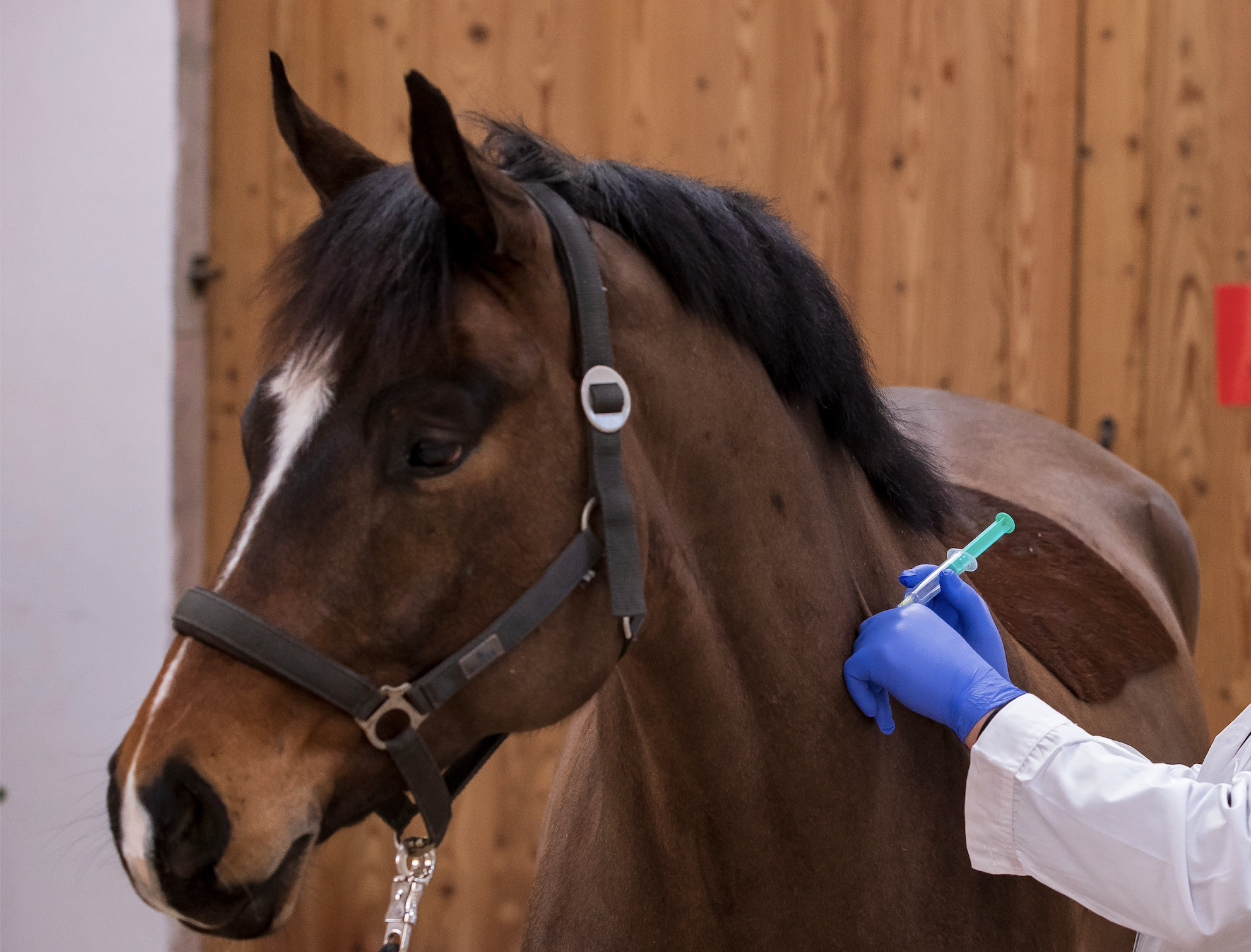 The GOT governs all veterinary services. Photo: sportfotos-lafrentz.de
 During the debate over the GOT, a few voices from insurance companies were heard. However, the umbrella organization refrained from making statements—at least until now. The German Insurance Association (GDV) has now taken a stance. Based on nearly 2.1 million claims per year, the association believes it is in a position to identify structural shortcomings. These shortcomings exist and require urgent legislative action, the association writes on its website.
Simple sentences are rarely seen anymore under the new GOT
The 2022 amendment to the GOT was explicitly intended to establish the basic fee rate as an economically viable, independent unit of remuneration—not merely as a basis for calculating surcharges, but as a standard rate that covers costs. In billing practice, however, it hardly plays this role anymore, writes the umbrella organization. Insurers observe that, particularly where insurance coverage extends up to three times the standard rate, this limit is regularly exhausted—apparently with full knowledge of the scope of coverage. In the podcast “Erzähl mir was vom Pferd,” it was candidly admitted that this is referred to as “insurance-optimized” billing.
Maximum rate for standard surgery
As an example, insurers cite a case in which treatment for a double cruciate ligament tear in a dog cost over 8,000 euros. Both legs were operated on in a single surgical session without complications and without extensive follow-up treatment; the procedure took place at a clinic belonging to a large chain—that is, under conditions that tend to reduce costs. Nevertheless, the maximum rate was billed.
There is also evidence suggesting that equine clinics—particularly those with specialized expertise, such as in ophthalmology—may be engaging in “insurance-optimized” billing practices.
The discretion of the veterinary profession must be more clearly defined
In addition to the issue of adequacy, insurers criticize the lack of clarity in key provisions. Take, for example, Section 2 of the GOT. While it grants “discretion” in determining fees, it provides “neither legal definitions nor illustrative examples.” What “difficulty” or “time required” means in individual cases thus remains open—resulting in “heterogeneous billing practices,” the report continues. Currently, it is exactly that—“heterogeneous,” i.e., inconsistent—and thus difficult for both pet owners and insurers to understand.
Will there be double billing under the new GOT?
With regard to Section 6 of the GOT, which prohibits double billing, insurers criticize the fact that it remains unclear when a service is “part of another service.” And, in their observation, Section 8 of the GOT regarding analogous billing is sometimes invoked even when a relevant fee item already exists. One example is an ovariohysterectomy following pyometra (removal of the ovaries and uterus following uterine infection). This service is explicitly regulated in item 604 of the fee schedule. However, “analogous billing” is frequently used when invoicing. The reasons cited are “greater complexity” or “emergency nature.” According to the association, these are arguments that should actually be reflected through the fee factor under § 2 GOT, not through § 8.
Claims
Insurers are calling for this distinction between factor increases and analog billing to be clarified by law, and for the key provisions of the GOT to be specified more precisely through legal definitions or illustrative examples.
The Association of German Pet Owners (VDTH) welcomes the fact that the insurance industry has now taken a stance on the GOT. “This prolonged hesitation on the part of insurers has ultimately contributed to rising veterinary costs,” said Sabine Reimers-Mortensen, first chairwoman of the VDTH, in a press release. “We are all the more pleased that the insurance industry has now also taken a critical look at the GOT. This gives further momentum to our call for fair and transparent veterinary fees for the care of the approximately 35 million pets.”