New regulation of animal disease notification law takes EHV-1 and equine influenza into account
EHV-1 and equine influenza now notifiable
 from Dominique Wehrmann
 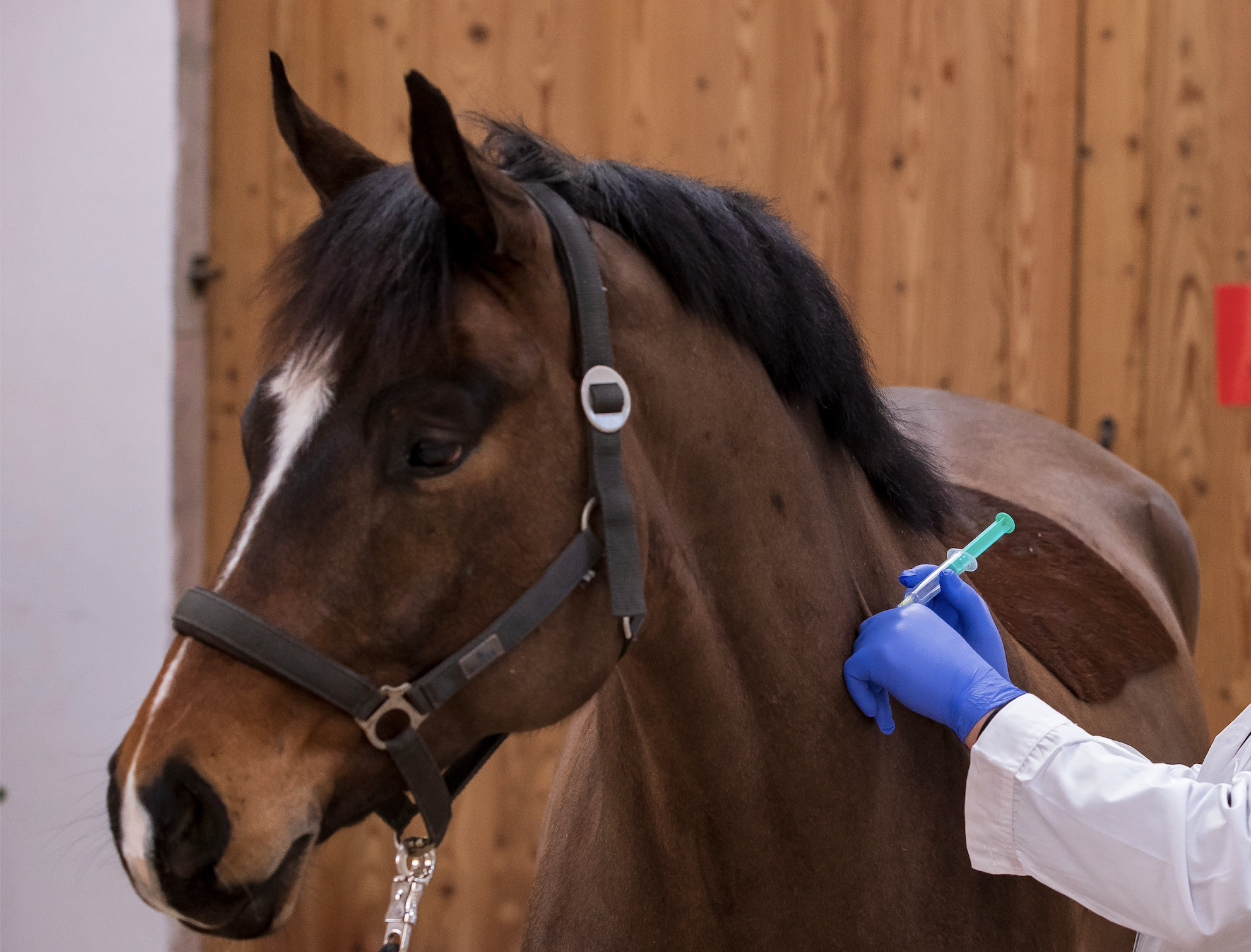 Vaccination against herpes was only mandatory for competition horses for one year, from 2023 to 2024. Photo: sportfotos-lafrentz.de
 There are cases of herpes every spring. Most stable owners take a responsible approach, informing neighboring stables, canceling events and urging their stallholders not to visit other stables. The Austrian equestrian center Stadl-Paura took a similar approach when it became known that there were horses there that had contracted influenza.
However, there was previously no obligation to report herpes outbreaks and influenza and to quarantine affected businesses. At least the former has been different since March 10.
This is because on March 10, the “Ordinance on the Revision of the Animal Disease Notification Law and on the Amendment of Other Animal Disease Regulations” came into force. New additions to the list of notifiable diseases are EHV-1 – the equine herpes virus type 1 – and equine influenza.
What does “mandatory reporting” mean?
A disease is defined as an epidemic if it is caused by bacteria or viruses, occurs en masse and spreads rapidly, has a high economic relevance and/or is transmissible to humans or vice versa.
With the reporting obligation, the state ensures that it is informed about the incidence of certain animal diseases, as positive findings of notifiable diseases (such as EHV-1 and influenza) must be reported to the veterinary offices. The veterinary offices then forward the report to the Federal Ministry of Agriculture. In this way, the epidemic can be monitored.
The reporting obligation therefore only serves to monitor, but not to combat outbreaks of disease. The veterinary offices can decide for themselves whether to quarantine a barn.
Livestock owners are not obliged to report if they have a confirmed case on the farm, but the veterinarians looking after the livestock and the testing bodies such as laboratories are.
Reporting vs. notification obligation
There are significant differences between notifiable diseases, such as EHV1 and influenza, and notifiable diseases, such as rabies. In the case of notifiable diseases, even suspected cases must be reported to the veterinary office and epidemic hygiene measures must be ordered, as the aim here is to combat the disease.
The state has defined measures for this, including the establishment of exclusion zones, the killing of affected animals and appropriate disposal.
As already mentioned, even the suspicion that it could be a notifiable disease must be reported. Everyone in whose care the animals are, including animal owners and other caregivers, is obliged to do so.
Sensible measure
Equine veterinarian Dr. Annette Wyrwoll, who ran her own clinic in Bavaria for many years and now works there as managing director, welcomes the measure to make EHV-1 and influenza notifiable.
“That definitely makes sense. Year after year, we have to deal with cases of herpes.” She personally very much regrets that the compulsory vaccination against herpes was dropped. “I think that was a big mistake. 50 years ago, there were still frequent outbreaks of influenza. That changed with the introduction of compulsory vaccination. I have always advised my customers to get vaccinated against herpes as well and have always done well. The back and forth about compulsory vaccination has undermined our credibility.”
Compulsory vaccination against herpes had been introduced in 2023, but as the FEI did not go along, the national associations were against it anyway and the introduction of the new GOT meant a significant additional financial burden for horse owners anyway, the obligation became a recommendation again.