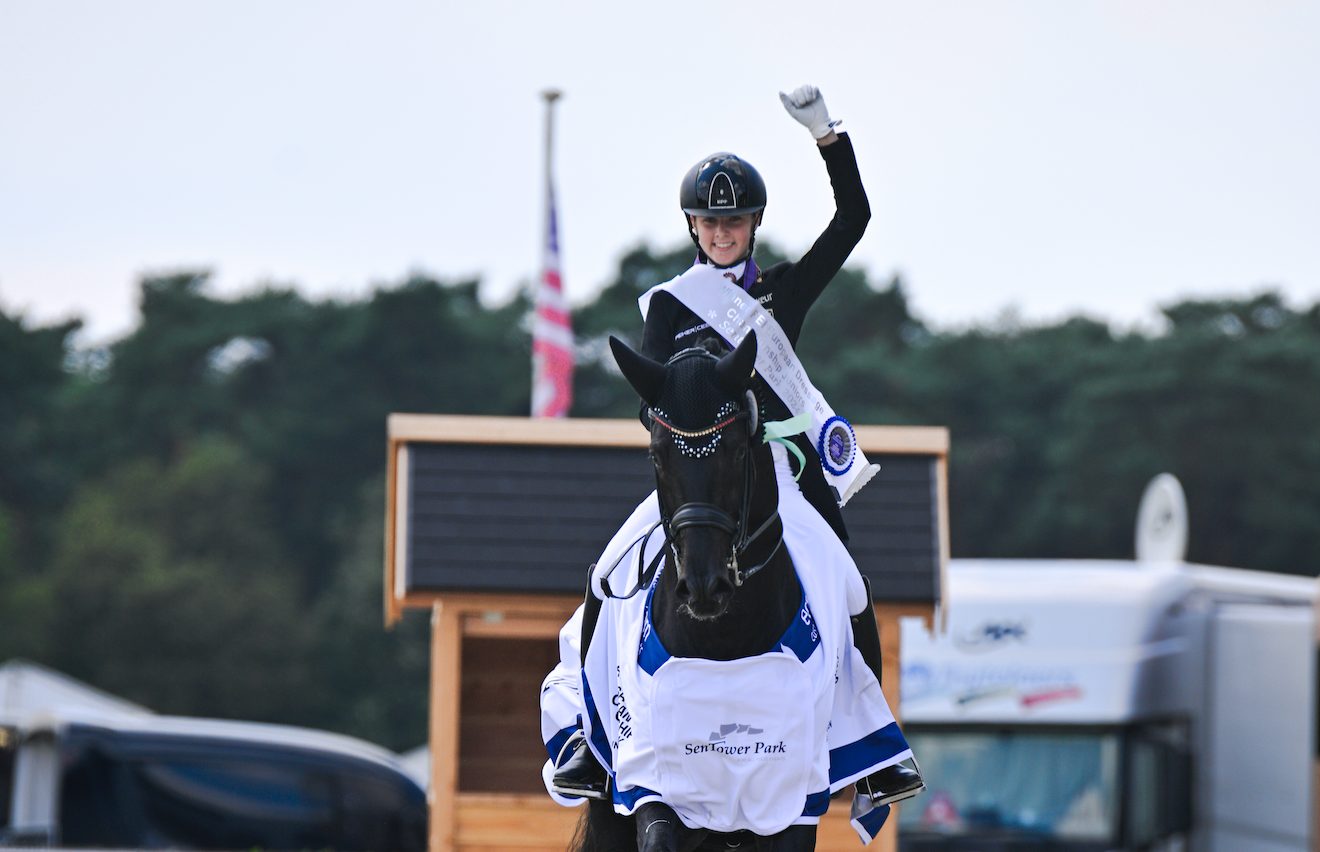
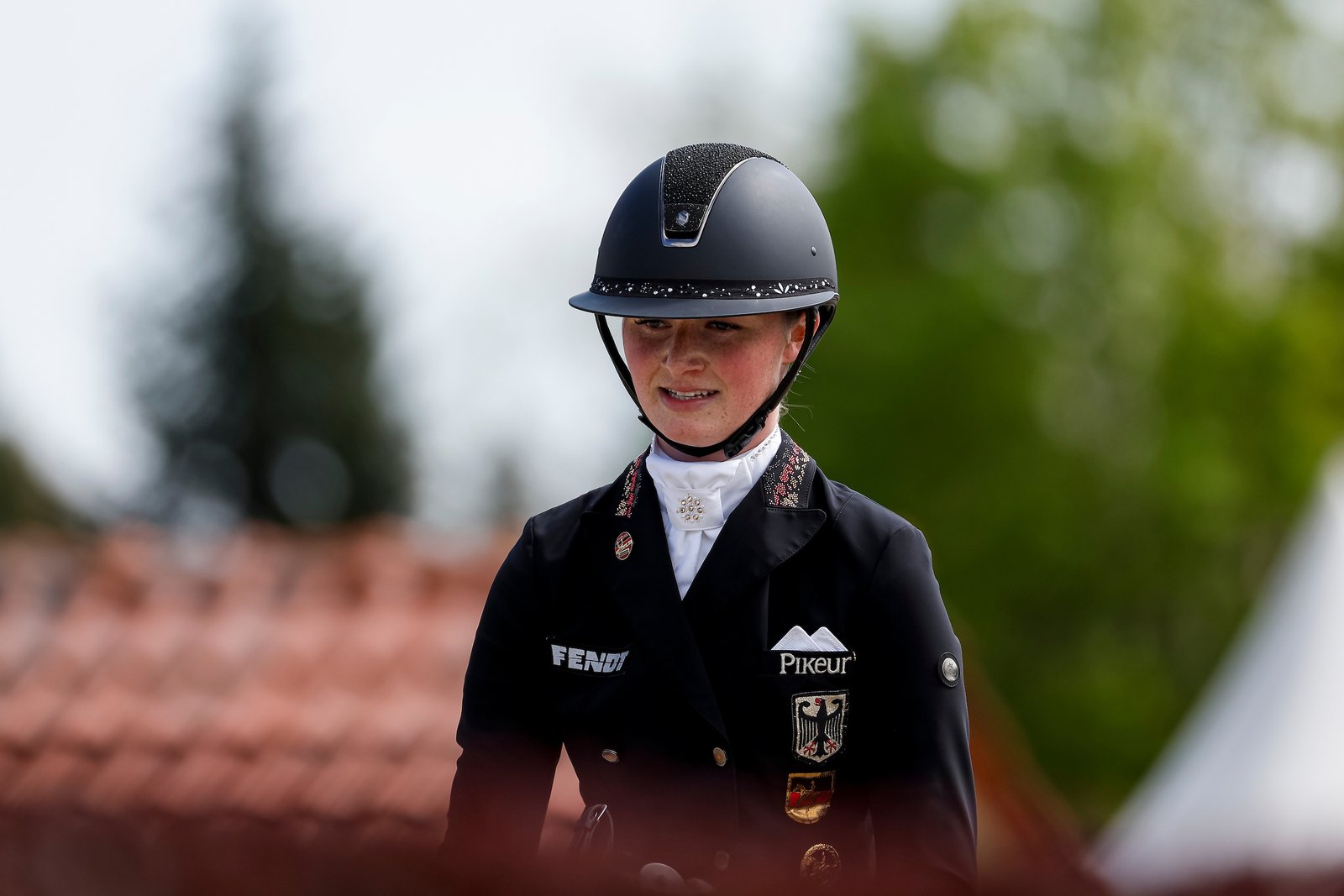
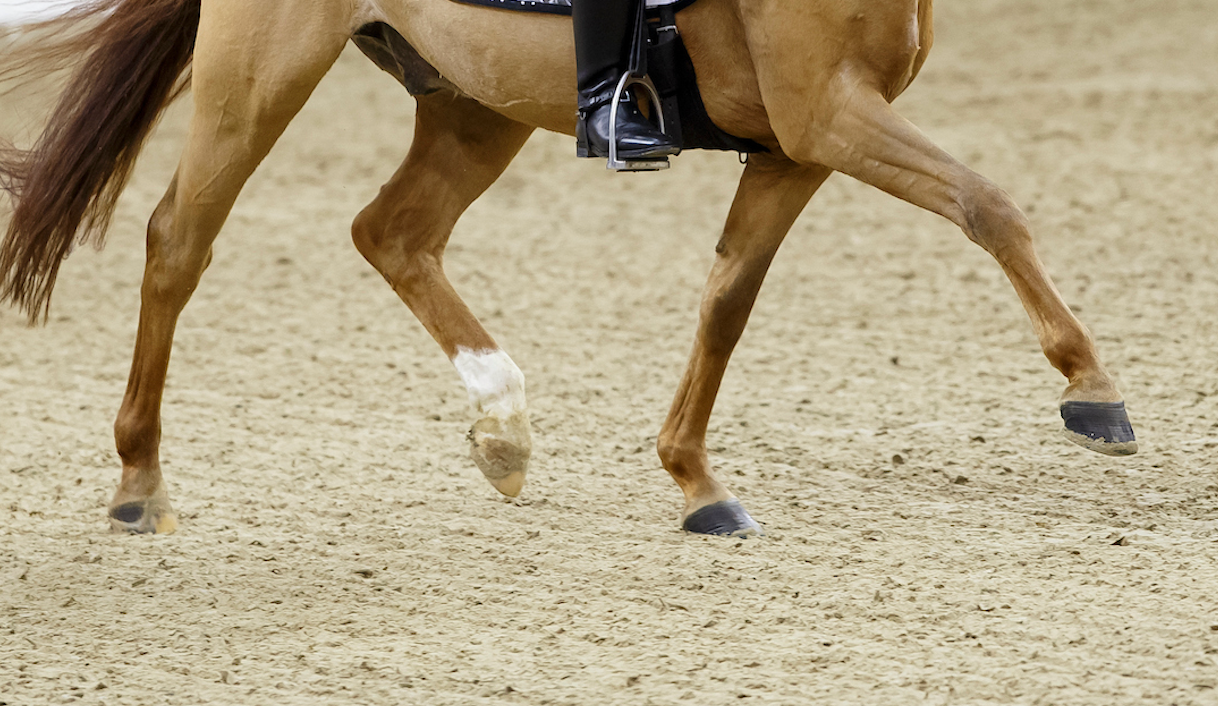
Isabell Werth and Back for Good Win the Louisdor Prize Qualifier at Anakenenhof; Frederic Wandres and Veuve Cliquot Take Second Place
Isabell Werth Wins the Louisdor Prize Round at the Anakenenhof Riding with Back for Good; Frederic Wandres and Veuve Cliquot Take Second Place
 from Jan Tönjes
 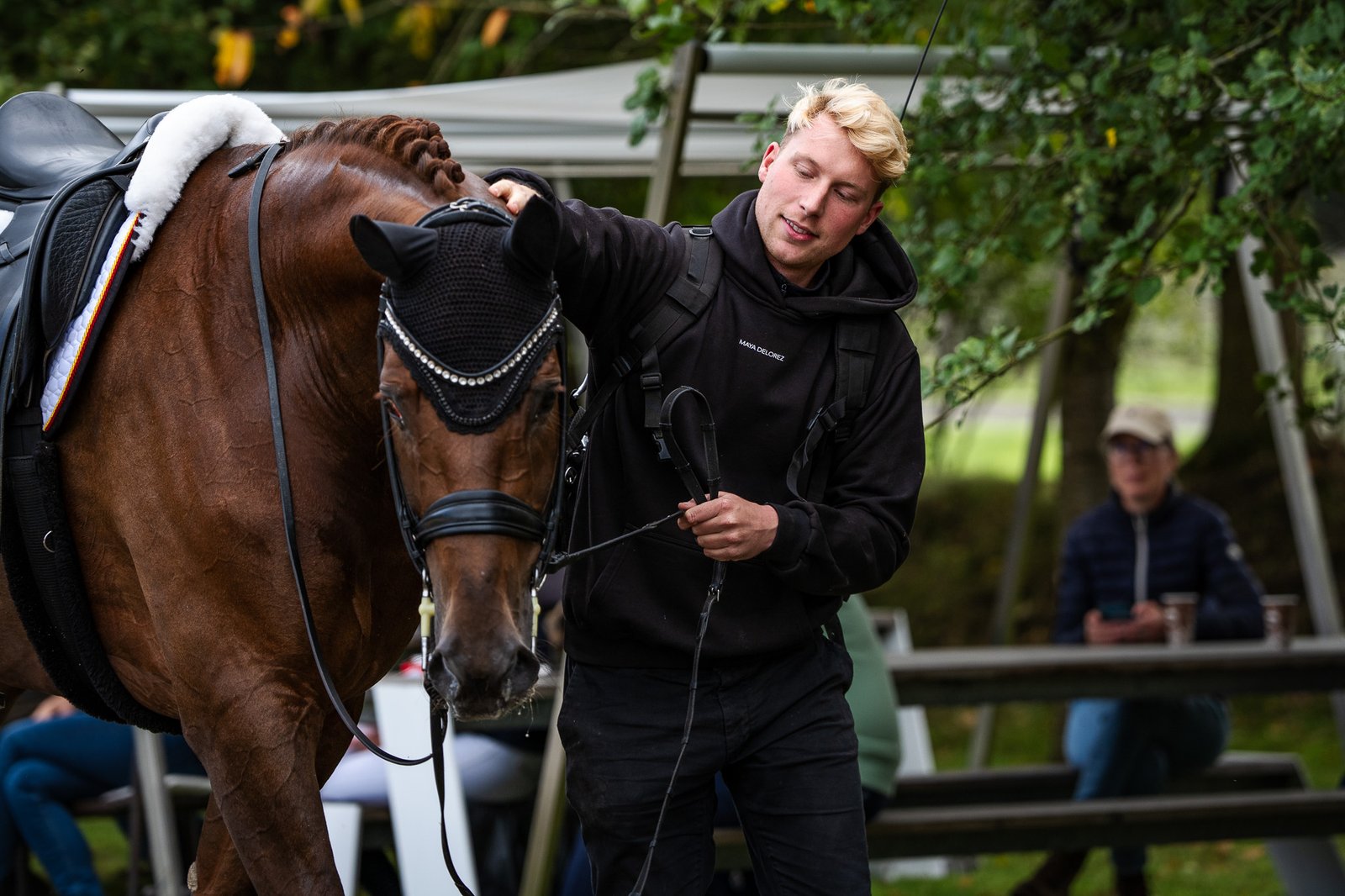 Lars Ligus and Veuve Cliquot FRH, who qualified for the Louisdor Prize final under Frederic Wandres at the Anakenenhof; Photo: @alter.perspectives/Gloria Lucie Alter
 It’s a good thing there are two indoor riding arenas at the Anakenenhof in Pinneberg, northwest of Hamburg. The torrential rain that pounded the region on Saturday was less intense (8.4 liters) than on Friday—when a whopping 58.2 liters of rain per square meter were recorded—but it was still quite a lot. That’s why the qualifying competition had been moved indoors. On Sunday, there were blue skies and sunshine, plus fluffy white clouds. So far, so good. But that meant the horses didn’t get to familiarize themselves with the competition arena until Sunday, the day of the qualifier for this year’s Louisdor Prize.
Consequently, some of the horses’ eyes were wide, and their heart rates were elevated. It was a top-class field in which, among others, two former National Champions and several highly-ranked finalists from the national competition competed at the Grand Prix level.
The two tickets went to two “foxes” who must be credited with great potential. The victory went to Isabell Werth and Back for Good, a son of the Neustadt state-approved stallion Be Benicio. The tall Brandenburg-bred horse once began his career at the licensing inspection. In keeping with the Werth family’s credo that “the best stallion is a gelding,” Back for Good now competes as a gelding. And he has a new owner. Multiple Austrian national champion Victoria “Vici” Max-Theurer purchased the stately chestnut last year.
His lack of competition experience was evident today in the arena at the Anakenenhof. He entered the arena with wide eyes and obvious nervousness. His performance there wasn’t entirely free of tension, but the talent of this Ben Benicio son for piaffes and passages was impossible to overlook. Even though the left pirouette didn’t go quite as well today, the DSP gelding had already shown very balanced pirouettes yesterday in Hall 2.
The horse suffered from the aforementioned tension, which is, however, understandable. Before his debut at the three-star level, Back for Good had competed in nine tournaments, six of which were in riding horse classes. In 2024, he competed in an S-level dressage class, and in 2025, another at the Prix St. Georges level. That was it. Scores of 75.46 percent, ranging from 77.021 to 74.468 percent, secured the pair a spot in the final in Frankfurt.
Veueve Cliquot—the Herzlake duo’s favorite horse
Frederic Wandres and Veuve Cliquot FRH delivered a masterful Grand Prix performance. It was hard to believe that this son of Vitalis is just eight years old—two years ago, he won the silver medal under Frederic Wandres’ fiancé, Lars Ligus, in the Six-Year-Olds’ Final at the Bundeschampionat. Well-executed and curved traversal shifts, confident flying flying changes over two jumps—straight and with plenty of ground covered—and a collected walk that was clearly distinguished from the equally strong and powerful walk, with perfect rhythm and precision. The piaffes were still slightly forward-biased, while the passages were already more tactically controlled.
There was a mistake during the single changes, and the left pirouette lacked balance. As spectacular as the chestnut’s front leg “march” was, one wished he would show the same activity in his hind leg. A bit more push off there could provide a stronger impulse from the rear. But since the horse is solid in the movements—aside from the mistake in the single changes—Wandres and Ligus now have plenty of time to work on building up the Hanoverian’s strength.
Veuve Cliquot also had an impact on the atmosphere in the arena. Frederic Wandres trotted lightly before the start. The son of Vitalis reached for the bit in textbook fashion. But his barely noticeable nod at the start showed that the chestnut appeared cooler from the outside than he actually was (73.894).
“I love this horse,” Bernadette Brune said, summing up her stallion Vaderland OLD’s performance so succinctly. He, too, is a son of Vitalis, and he, too, performs the dressage movements with confidence. Co-National Coach Henrik Lochthowe praised the 10-year-old’s talent for the passage. Overall, the judges would have liked to see the bay horse demonstrate a bit more power in his hind legs, so that, for example, his canter would gain more volume (72.73).
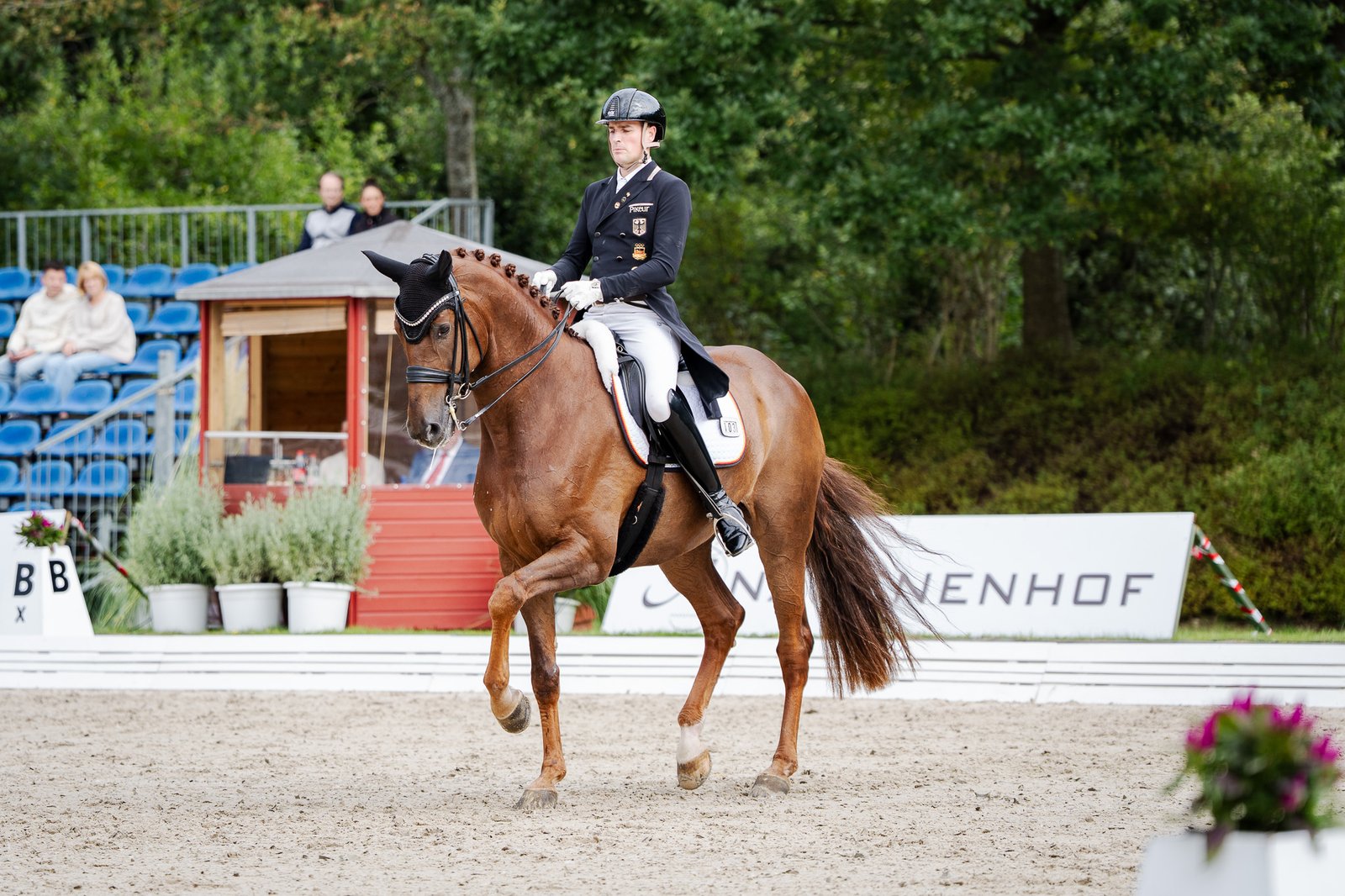 A Sure Thing: Veuve Cliquot under Frederic Wandres. Photo: @alter.perspectives/ Gloria Lucie Alter
With a score of 72.277 percent, Anna Schölermann and the dark chestnut Vitally placed the next offspring of Vitalis in fourth place. A horse with a celebrity dam: the three-time World Cup winner Weihegold. The Oldenburg was among the eight-year-olds in the starting field. He did a fine job of showcasing his talent for the piaffe. The transitions into and out of the passage were not yet as fluid as one might have hoped. However, it was already evident today that this compact horse will eventually excel at it.
Fifth place also went to a Vitalis offspring, the mare Zinq First Vienna FH FRH. She was the horse with the most impressive record: This year, the ten-year-old has already helped her rider, Lucie-Anouk Baumgürtel, become the German U25 Champion and a European Team Champion. The pair began their test with confidence, performing a lively, springy trot sequence, followed by piaffes and passages with the lightest of contact. In the canter, however, a mistake occurred during the flying changes—resulting in two jumps—and in a pirouette, the mare resisted instead of cantering rhythmically around her inside hind leg. Nine horses scored above the 70 percent mark.
Results of the Louisdor Prize Qualifying Round at Anakenenhof, Pinneberg, 2026