There won't be any Olympic Games in Berlin—at least not until 2048
Berlin Withdraws Its Olympic Bid
 from Dominique Wehrmann
 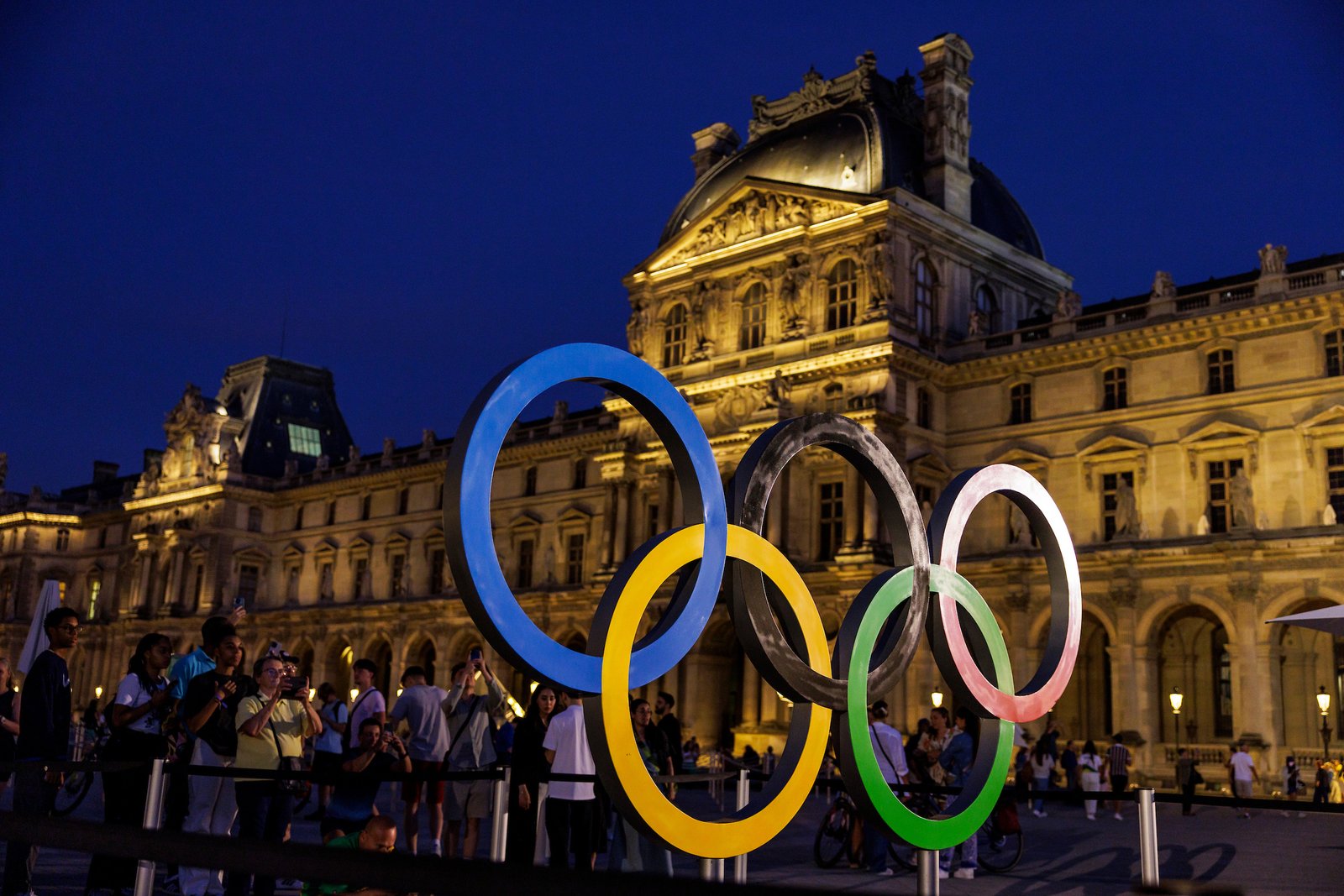 The Olympic Rings in Berlin instead of Paris? That was the dream that has now been dashed. But two candidates for Germany’s Olympic bid are still in the running.
Photo: Sportfotos-lafrentz.de
The Olympic Rings in Berlin instead of Paris? That was the dream that has now been dashed. But two candidates for Germany’s Olympic bid are still in the running.
Photo: Sportfotos-lafrentz.de “Today is a sad day for Berlin. The Olympic and Paralympic Games would have been a huge opportunity for Berlin, for eastern Germany, and for future generations,” said Wegner. He spoke of the fact that “the plug had been pulled” and added that he had “never been so reluctant to attend a press conference.” Sports Senator Iris Spranger (SPD) described the day as the “worst morning” she had ever experienced before a press conference. This was reported by Sportschau, among others.
The Political Background
Berlin’s Olympic Commissioner, Kaweh Niroomand, cited a lack of political stability as the reason for the withdrawal: “We were unable to deliver what the federations demanded of us—namely, political stability.” He added that they also wanted to avoid being eliminated from the race in Baden-Baden with only a single-digit number of votes.
The backdrop to this is the Berlin House of Representatives election, in which the previous CDU/SPD coalition—which had backed the bid—lost its majority. Elif Eralp of The Left is considered the likely new Governing Mayor; she opposes the Olympic bid, as do the Greens—both cite other financial priorities. Unlike the bids from Munich and North Rhine-Westphalia, Berlin’s bid was not legitimized by a referendum. The House of Representatives had approved it only under the previous CDU/SPD coalition, while opponents were seeking to launch a referendum against the bid.
The Buried Idea
Berlin had submitted the “Berlin+” proposal, a joint bid with Brandenburg, Saxony, and Mecklenburg-Western Pomerania for the 2036, 2040, or 2044 Summer Games. According to the Tagesspiegel, Berlin had most recently scored 74.6 out of 100 points (“good”) in the DOSB evaluation—significantly lower than its competitors Munich (87 points, “very good”) and Cologne-Rhine-Ruhr (85 points, “very good”). Finance Senator Stefan Evers (CDU), who had lost to Eralp in the race for the top candidacy, and Bob Hanning, manager of the Bundesliga handball club Füchse Berlin, expressed regret over the withdrawal.
The DOSB is now expected to make a decision on Saturday in Baden-Baden regarding the German Olympic bid, choosing between the remaining candidates, Munich and Cologne-Rhine-Ruhr.
Olympic Equestrian Events in Munich or Cologne/Rhine-Ruhr – The Plans
If Germany were to be awarded the right to host the 2036, 2040, or 2044 Summer Olympics, equestrian events could rely on existing, proven infrastructure. Here are the plans.
Munich
The venue would be the Munich-Riem Olympic Equestrian Center—the same facility that served as both a stable and a competition venue back in 1972. It covers approximately 27 hectares, is characterized by mature trees, winding paths, and hills, and today regularly hosts national and international tournaments, including the “Horse International“with over 70,000 visitors annually. According to the bid proposal, all three Olympic disciplines are to be held in Riem: dressage (approximately 12,000 seats), show jumping (approximately 20,000 seats), and eventing (approximately 20,000 seats), as well as para-dressage during the Paralympics. The Bavarian Equestrian and Driving Federation, which is based at the facility, as well as other federation representatives, were involved in the planning process.
Cologne/Rhine-Ruhr (CologneRhineRuhr Application)
Aachen is slated to host equestrian events at the Soers Sports Park—with the Tivoli serving as the venue for soccer. When it comes to Aachen, there’s not much to explain to equestrian enthusiasts. It’s no coincidence that the annual CHIO Aachen is nicknamed the “World Festival of Equestrian Sports.” The people of Aachen have proven time and again that they can host championships here, most recently at the 2026 World Championships.
Even with the existing infrastructure, the people of Aachen succeeded in making the 2026 World Cup a sporting event unlike any other—one that even surpassed the 2006 World Cup. But in the coming years, further upgrades are planned, and the long-planned construction of a new multipurpose arena is set to begin. To this end, the state of North Rhine-Westphalia has just pledged a financial injection of 28 million euros.
On September 17, 2026, NRW State Secretary Andrea Milz presented the grant notification for 28 million euros for the construction of a new, modern multipurpose indoor riding arena at Sportpark Soers to Birgit Rosenberg and Philip Erbers of the board of the Aachen-Laurensberger Racing Club (ALRV)—the organizer of the CHIO Aachen. The total cost of the project is approximately 48 million euros. The ALRV will cover the difference from the state funding as its own contribution. Construction is scheduled to take place between 2027 and 2029. The funds come from the structural transformation funding program for the Rhineland coalfield (Investment Act for Coal Regions). With this funding, the state aims to strengthen equestrian sports in the region and provide a boost for structural transformation.
According to a press release from the City of Aachen, the indoor riding arena is part of the larger “Sportpark Soers” project, which the Aachen City Council unanimously approved back in September 2024: A total of 40 million euros in state funding had been pledged for the site’s development, half of which was to go to the city of Aachen (for the demolition of the former police headquarters and the construction of a multifunctional sports hall for volleyball, handball, and basketball) and half to the ALRV. The equestrian arena itself is also part of an overall concept that includes youth development, parasports, and stables.