Drought, Heat—Why Horse Feed Has Become So Expensive: Prof. Dirk Winter Explains Which Factors Influence the Price
Why Horse Feed Has Become So Expensive: A Look at Commodity Markets, Harvests, and Energy Prices
 from Jan Tönjes
 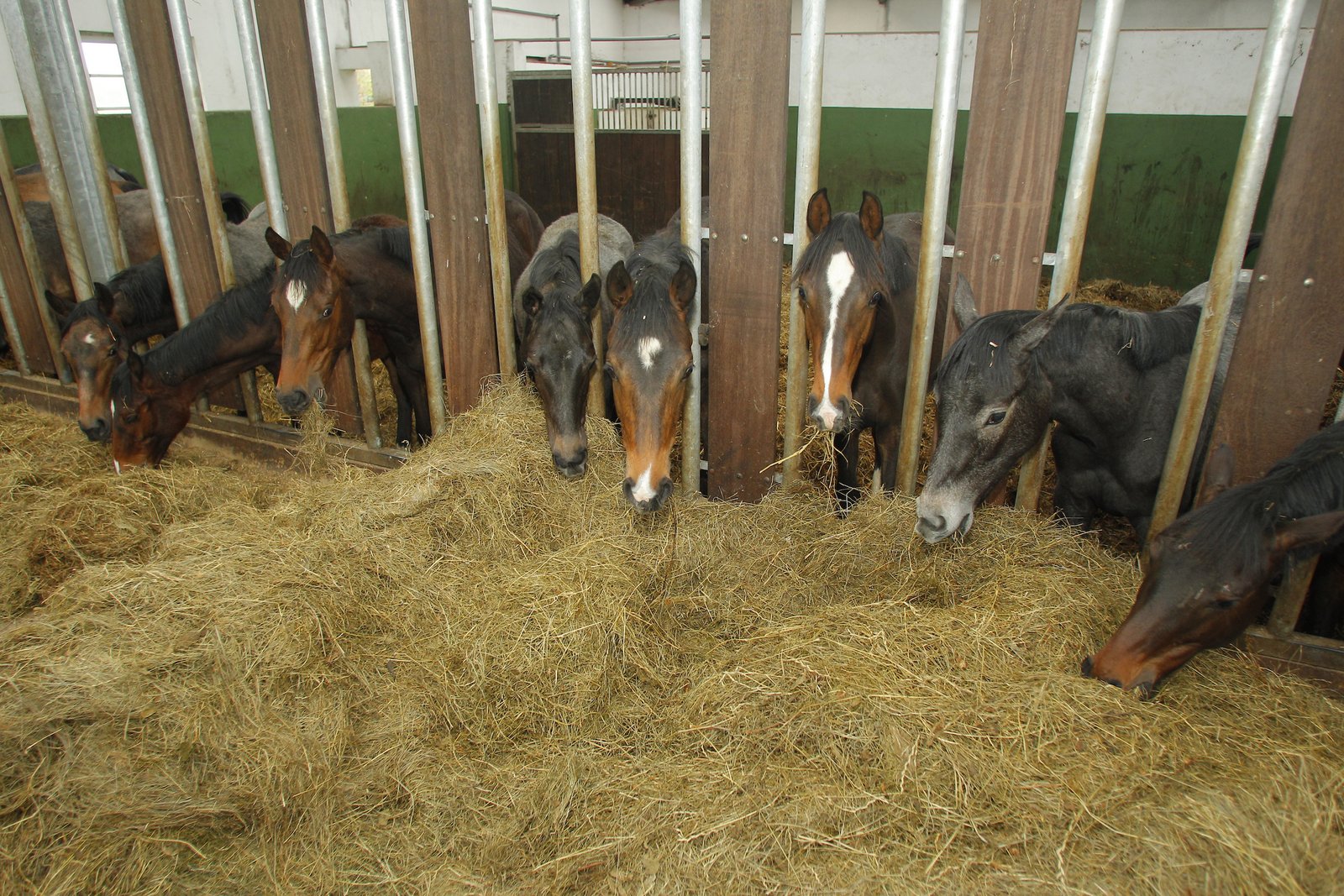 The best hay for the weanlings? That's a particularly costly motto this year.
Photo: sportfotos-lafrentz.de
The best hay for the weanlings? That's a particularly costly motto this year.
Photo: sportfotos-lafrentz.de On September 2, 2026, Federal Minister of Agriculture Alois Reiner presented the 2026 harvest report. The results were exactly as the German Farmers’ Association had already announced in mid-August: a 7 percent decline in grain production alone. That amounts to 3.3 million metric tons, to name just one example. But bagged animal feed is also becoming increasingly expensive. What used to cost 24 euros now easily costs 28 or 30 euros.
Anyone who regularly buys feed knows these price fluctuations. In the podcast“ERZÄHL MIR WAS VOM PFERD,”Dirk Winter—a professor of equine management at the Nürtingen University of Applied Sciences for Economics and the Environment, former director of the Jungborn Teaching and Research Farm, and a former product manager at a horse feed manufacturer—explained the background.
Prof. Dr. Dirk Winter …
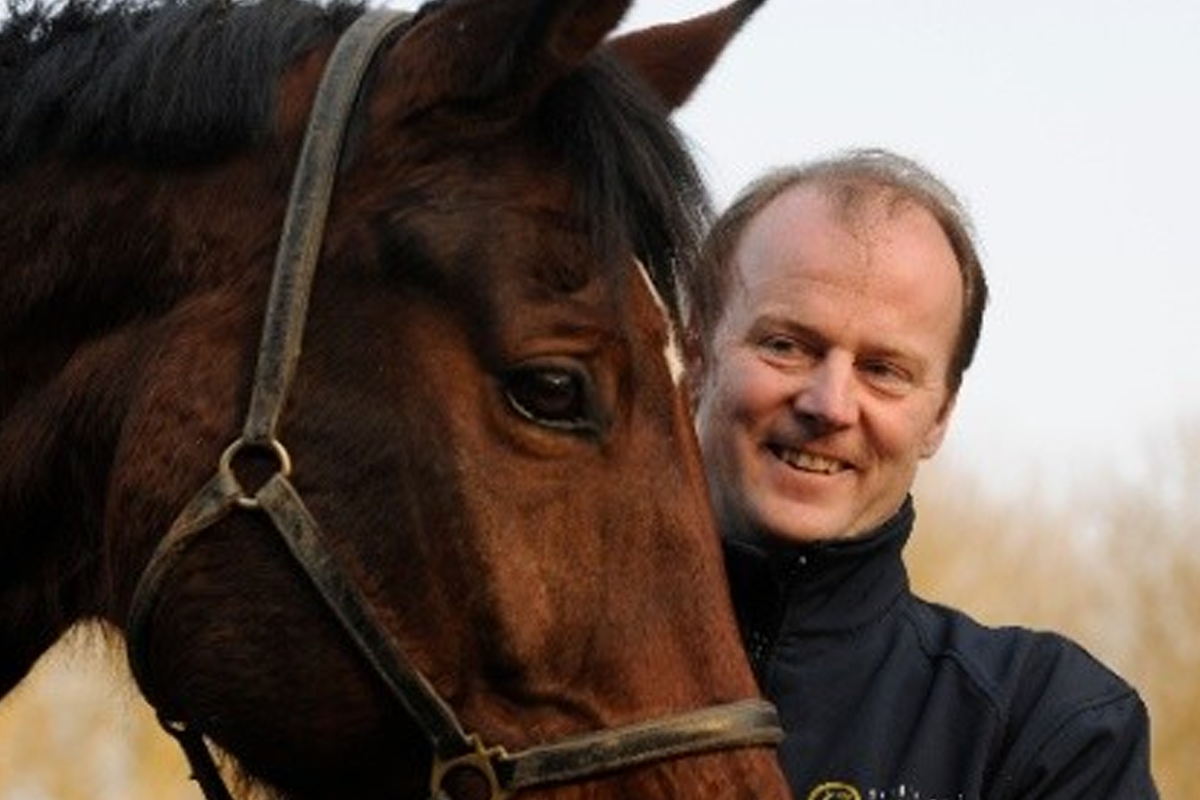
… is the Dean of Equine Management at the Nürtingen-Geislingen University of Applied Sciences for Business and the Environment (HfWU) and director of the Jungborn Teaching and Research Farm. Before he began “teaching students about horses,” he was a product manager for horse feed at a major animal feed manufacturer. In short: A native of Lower Saxony, he is the ideal person to contact for any questions about horse feed. He is also part of the team behind the e-learning platform weiterbildung-pferd.de.
What grains actually end up in the feeder?
Oats, corn, and barley are the classic individual ingredients in concentrated feed, supplemented by mixed feed in pellet, muesli, or extruded form. Extrusion is a special processing method in which grains are “puffed.” If you like popcorn, peanut flips, or lentil chips, you’re a fan of extruded foods. In animal feed, this process is used to make starch and nutrients more digestible.
What’s in pellets?
Pelleted concentrated feed is a popular staple in many places, often placed in the feed trough. The color of the pellets reveals the ingredients used in their production: Greenish pellets contain a lot of grass or alfalfa meal. Grayish pellets tend to contain wheat or oat bran, and the very light-colored ones—which are rather rare in Germany—have a high proportion of pure grain, as is common primarily in the Netherlands.
Why does wheat—even though it’s not horse feed—determine the price of everything
?
As a layperson, it’s easy to imagine: The oats in the region have been affected by the intense heat. The yield is lower, the price goes up—supply and demand… In fact, according to the German Farmers’ Association, the oat yield in 2026 has fallen by ten percent compared to the previous year.
But it’s not the field across the way—it’s global trade—that determines the price. And when it comes to that, the world isn’t looking at oats—it’s looking at wheat.
Paris, Chicago, Little Kleckersdorf
The key mechanism lies in the stock market. The prices of oats, barley, and corn are based on wheat, which is treated as the “benchmark.” This is particularly true at the Matif in Paris (Marché à Terme International de France, a French futures market) and, with even greater global influence, at the Chicago Board of Trade. From there, the price makes its way to the so-called spot market. There, it is adjusted to the regional currency and local conditions such as harvest quality or weather. So anyone buying oats in the rural feed trade ultimately pays a price that was set far away on an international exchange. “In part, yes,” Prof. Winter confirmed in the podcast in response to the pointed question of whether the price in Chicago or Paris determines what one pays for a bag locally in Kleinkleckersdorf.
When speculators get involved, grain becomes an asset class
What’s particularly revealing is that grain prices often have little to do with physical availability. Prof. Winter describes how international demand—for example, from China—can create shortages or ease supply in the market. And this happens regardless of how the harvest actually turned out. Added to this are speculators who buy and sell wheat without a single grain ever leaving the port. This volatility has a direct impact on the prices of related grains—even though oats themselves aren’t even listed on the exchange.
The Ukraine Crisis and the Grain Market
The example of Ukraine shows how geopolitical events have a direct impact on the feed market. Along with Russia, Ukraine is one of Europe’s largest grain-producing regions. After the war began, an agreement reached at one point allowed exports to resume—at least temporarily—through the ports in Odessa, before the land route became the only option. At the same time, according to Prof. Winter, the Russian grain market for Europe largely collapsed due to export restrictions. Together, these two developments caused a noticeable shortage in the European supply—and drove prices up long before they reached the sack of oats on the store shelf.
Oats: From Horse Feed to Oat Milk Competitor
On closer inspection, oats—of all things—turn out to be a niche product: While they play hardly any role in determining wheat prices in compound feed, they do compete directly with the food industry. Whether it’s oat milk or oatmeal—the raw material is the same, and horse owners are in direct competition with consumers on supermarket shelves. Whether you’re a porridge lover or someone who prepares overnight oats, you’re just as unaware of this as the person using an oat milk frother while enjoying a cappuccino: The price range for oats over the past 20 years has been considerable: The lowest price was around 170 euros per metric ton, but it also climbed to over 310 euros.
What happens in the field is just one of many factors at play. According to Prof. Winter, rising energy, drying, and transportation costs are currently the main drivers pushing prices back up—even though the price of grain alone on the exchange had fallen in the meantime.
Soy: Genetic Engineering, Contracts, and the Question of Amino Acids
Oats are a classic choice. But horse feed from a bag or silo contains many components. According to Prof. Winter, soybean meal remains indispensable for meeting protein requirements—especially for lactating mares or in foal rearing—because it provides high levels of essential amino acids—significantly more than alfalfa, for example.
In 2025/26, 429.46 million metric tons of soybeans were grown worldwide. The major growing regions are the U.S., Brazil, and Argentina, although South America is the only region where a distinction can be made between genetically modified and non-genetically modified soybeans. The rule here is: When China, as the largest buyer, makes purchases, the market tightens; when the country refrains from buying, the situation eases—a circumstance that, according to Winter, turns futures trading into a gamble for German feed manufacturers.
The area under soybean cultivation is growing in Germany. From 2025 to 2026, it even increased by 20 percent to 52,300 hectares. A total of 130,800 metric tons were harvested in 2026—three times as much as just ten years ago, according to the Federal Ministry of Agriculture.
Alfalfa: Attractive, but not really an affordable alternative
Alfalfa is generally considered “the queen of forage crops.” That’s what Prof. Winter calls it in the podcast—it’s drought-resistant thanks to its deep taproots and, as a legume, is capable of fixing atmospheric nitrogen.
However, it cannot compete with soy in terms of protein content: While soy extraction meal provides between 44 and 48 percent protein, alfalfa green meal contains only 15 to just over 20 percent, depending on how it is processed. The main growing regions are southern France—particularly the Champagne region—as well as Spain and Morocco—with the associated harvesting, drying, and transportation costs that, despite the plant’s hardiness, do not keep the price low by any means.
Roughage—Hay and Straw: A Regional Market Unbound by Exchange Logic
Unlike grains, roughage is not traded on international exchanges but is subject to a highly regional market. Local weather conditions influence harvest yields here. So the small town of Kleckersdorf does, in fact, depend on conditions in the surrounding area.
The German Farmers’ Association, which focuses less on horses and more on livestock such as cattle and pigs in its analyses, draws a somewhat optimistic conclusion for 2026: “In particularly hard-hit regions, no grass has regrown on pastures after the first mowings, which is causing shortages both in terms of the current supply for the animals and in building up sufficient winter feed stocks. Despite regional feed exchanges, this is expected to lead to a reduction in some livestock populations.”
How much does hay cost in different places?
The website Heupreise.de provides comparative figures. In early September, the portal listed average prices per metric ton ranging from 129.84 euros (round bales) to 148.31 euros (square bales) to 245.54 euros (HD small bales).
However, there are significant regional differences: According to the portal (as of early September 2026), the average price paid for a metric ton of hay in square bales in North Rhine-Westphalia was 171.24 euros, while in Saxony the price was 132.58 euros—22.6 percent less.
The Expensive South
In general, roughage prices are higher in the south. The droughts of 2026 persisted for a long time here. Winter’s figures from the drought years of 2018/2019 and 2021/2022 make it clear that prices are still moderate compared to their peak: According to Winter, prices climbed to as high as 300 euros per metric ton during those periods. His advice to horse owners and boarding stable operators: Enter into contracts with fixed quantities, prices, and defined quality standards—as has long been standard practice in agriculture—rather than being at the mercy of the free market year after year.
Hygiene Standards for Roughage: What Quality Levels 1 Through 4 Mean
Quantity—that is, availability—is not the only criterion. In addition to price, Prof. Winter highlights an aspect that is often overlooked in practice: the hygienic quality of hay. Laboratory tests check for aerobic bacteria, molds, and yeasts and classify the feed into four quality levels—ranging from “safe to feed” to level four, which should under no circumstances be fed.
In addition, microscopic examination reveals exactly which plants are actually contained in the bale—for example, whether it contains poisonous herbs such as autumn crocus or ragwort, which grow alongside valuable herbs in some nature conservation areas. According to Winter, a survey they conducted of 400 boarding stables showed that 68 percent of all facilities had at least one to five horses with coughs in their stables—an indication of widespread quality issues with hay, straw, and stable management that are linked to equine asthma.
Why Straw Is Almost as Expensive as Hay
Winter attributes the fact that some round bales of straw now cost just as much as hay to several factors: Competition from biogas plants, but also the practice of many farmers to chop the straw directly during harvest and plow it into the soil, rather than baling and selling it. The reason: the positive effect on humus and—increasingly important in many regions—water retention in the soil.
Added to this is regional competition in the dairy industry: Dutch farmers reportedly now have to travel as far as Poland to obtain straw for their intensive dairy production, where they harvest it themselves with their own machinery. Hay, moreover, has long since become a major export hit; it is shipped as far as Spain.
Alternatives?
While there are alternatives to straw as bedding—wood shavings, miscanthus, chopped hemp straw—anyone hoping these will save money is mistaken, according to Prof. Winter: “At the moment, none of the alternatives are inexpensive.”
The Outlook: No Quick Relief in Sight
When asked where prices are headed, Winter remained cautiously optimistic, but not euphoric. He does not expect a genuine easing of tensions until geopolitical hotspots such as the war in Ukraine or the Middle East conflict subside and supply chains—such as those via the Strait of Hormuz or Ukrainian Black Sea ports—are functioning reliably again. The Strait of Hormuz is particularly important because of fertilizer. A large portion of nitrogen fertilizer is produced in the Gulf states. The process is energy-intensive, and the natural gas reserves around the Persian Gulf offer a locational advantage for production. It is estimated that about one-third of global production takes place in the Gulf region. And everything produced there must pass through the Strait of Hormuz.
In the short term, Prof. Winter expects prices to stabilize at a high level rather than decline significantly. In the medium term, he pins his hopes on the expansion of renewable energy in feed production itself: If energy-intensive production facilities can switch more extensively to solar energy, he believes this could mark “a real turning point” for feed prices.
Information
:
The harvest report from the Federal Ministry of Agriculture, Food, and Home Affairs (BMEL)
Press Release from the German Farmers’ Association on the 2026 Harvest Report