Veterinary Office Threatens Tournament Organizer with a Fine of Up to 25,000 Euros Over Suspected Animal Welfare Violations
When the Veterinary Office threatens tournament organizers with a 25,000-euro fine
 from Jan Tönjes
 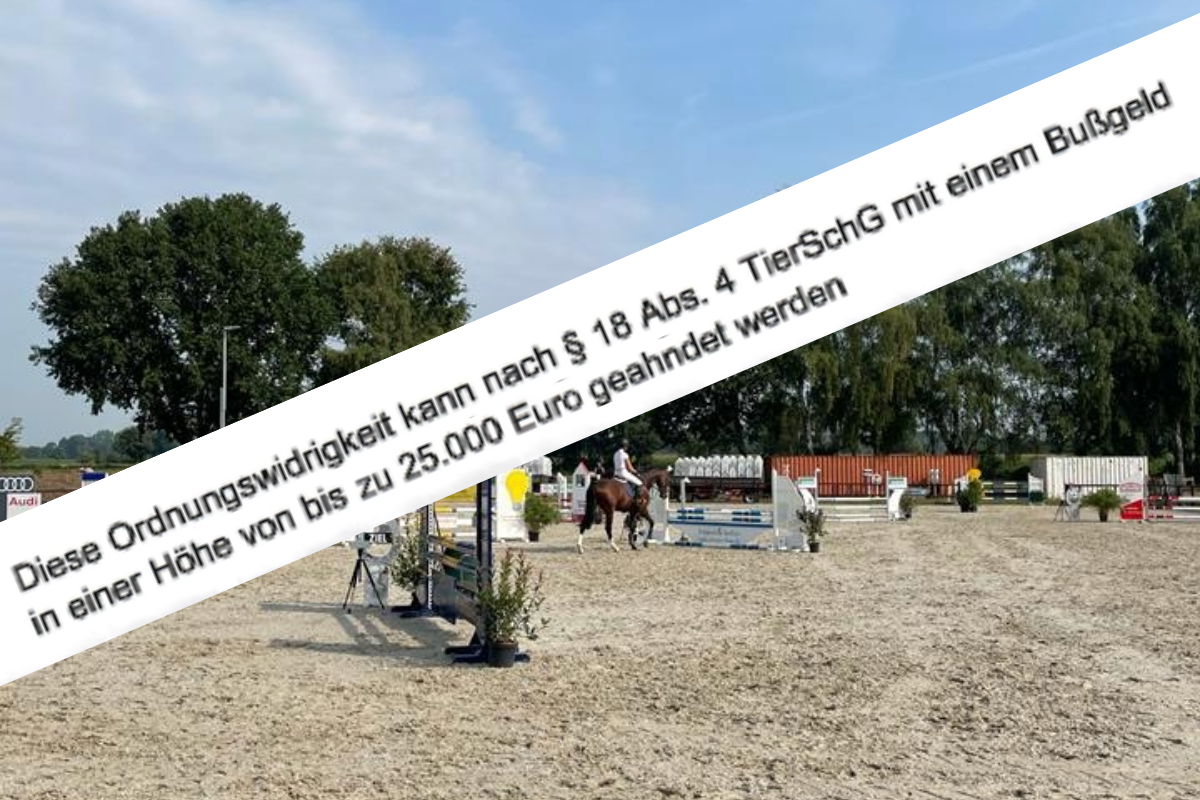 The Veterinary Office is threatening tournament organizers with fines of up to 25,000 euros in the run-up to the event. Photo: private
 Two and a half weeks before the tournament is set to begin, the Hohenböken Riding Club in the Oldenburg region receives a six-page letter. Sender: the Oldenburg District Veterinary Office. Content: a notice that restrictions might be imposed on the tournament scheduled for July 3–5 in the small village in the municipality of Ganderkesee. The gist of it, put simply: tournaments are events that potentially raise animal welfare concerns. At the end, the letter refers to a possible fine of up to 25,000 euros, to be paid by the organizer. This case is a prime example of the challenges tournament organizers in Germany are currently facing.
Research
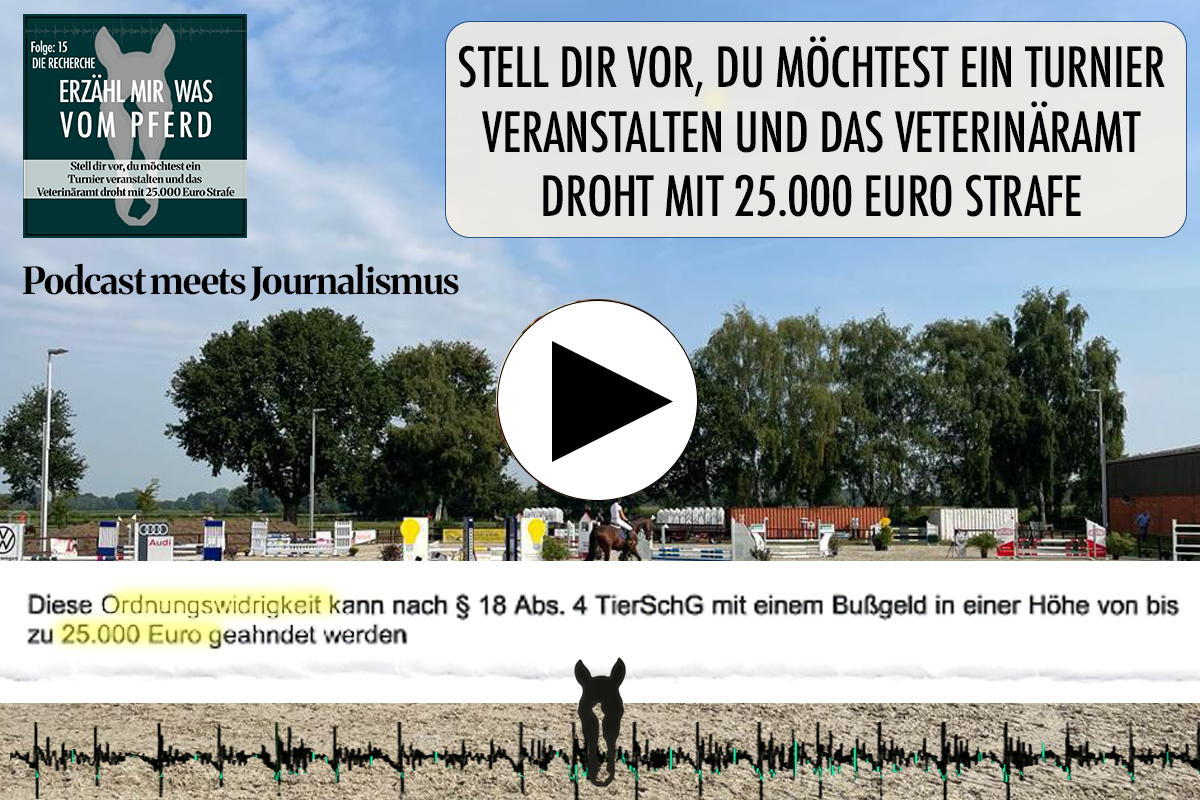
The case was covered and analyzed in the podcast “ERZÄHL MIR WAS VOM PFERD, ” in which Anja Nehls and EQUI PAGES editor Jan Tönjes investigated the background. For the episode titled“Imagine You Want to Host a Tournament and the Veterinary Office Threatens a 25,000-Euro Fine,”the two journalists spoke with the president of the Hohenböken Riding Club, Cora Wöbken, as well as with Dr. Henrike Lagershausen, Head of Veterinary Medicine and Animal Welfare at Pferdesport Deutschland. The Oldenburg Veterinary Office itself did not issue a statement—the office’s press office declined to comment on the content of the letter when asked.
The Letter and Its Demands
The letter refers to the guidelines on animal welfare in equestrian sports issued by the Federal Ministry of Food, Agriculture, and Home Affairs (BMELH). These guidelines are not legally binding but serve as a guide—among other things, they specify the minimum age at which horses may be ridden, prohibit certain training methods, set minimum stall sizes, and define exercise times.
Specifically, the Veterinary Office requires the tournament organizer to, among other things:
- an adequate water supply with drinking troughs providing drinking-quality water for all participating horses,
- a body condition in the horses that allows them to participate in the competition —in particular, the animals must not be too thin,
- the exclusion of sick, injured, or overworked horses—for example, those with injuries to the mouth or head caused by improper tack or the incorrect use of a whip and spurs,
- appropriate and animal-welfare-compliant saddles and bridles,
- Minimum housing requirements, such as a pen size of at least twice the height at the withers squared.
In addition, the letter mentions signs of stress, strain, and burnout that should be taken into account. According to the letter, failure to comply with the requirements may result in a fine of up to 25,000 euros.
Conditions Imposed Without a Specific Violation
What is noteworthy about the letter is that the agency makes it clear that it does not have to wait for an actual violation to occur. The mere possibility that animal welfare violations could occur at a tournament is sufficient grounds to impose preventive conditions. Before issuing a final order, the club was given the opportunity to respond—with a deadline of about one week before the tournament. At the same time, the agency pointed out that, in its view, the conditions were immediately enforceable, since the public interest takes precedence over the organizer’s private interests. In other words: appealing the decision is essentially futile.
Legal experts from Pferdesport Deutschland (German Equestrian Federation, FN) have reached a different conclusion in their review of the facts: Veterinary authorities may only impose restrictions if there is a concrete threat to animal welfare. In this case, no such threat existed. The federation disputes what it perceives as the blanket insinuation in the letter—that equestrian sports fundamentally pose a threat to animal welfare—and has, for its part, sent a letter to the authority overseeing the veterinary office requesting a face-to-face meeting.
Registered mail in the RV Hohenböken mailbox
For Cora Wöbken, the president of the Hohenböken Equestrian Club, this was the first letter of its kind. She knew that a neighboring club had already received a similar letter. But she also knew that another neighboring club had been able to hold its tournament without receiving an official letter. At one point, a rumor circulated within the district equestrian association that only tournaments spanning multiple event weekends were likely to be affected. This was a misjudgment, since the event in Hohenböken does not span multiple weekends, and there are no plans for the horses to stay overnight.
State Association Informs Event Organizers
After receiving the letter, the Weser-Ems Equestrian Association (PSVWE), together with the FN, hosted an informational evening during which a veterinarian explained the animal welfare requirements in detail. The informational evening did not provide a definitive legal clarification regarding liability. Who is liable in case of doubt? The club, the rider, or the judges? Club President Wöbken: “No one knew—what does this mean for us as a small club? At first, all the event organizers, as well as the PSVWE (Weser-Ems Equestrian Association), were overwhelmed by the situation.” There has never been a comparable case before.
What worried the club president most was not so much the substantive criticism of how the tournament was run, but rather the idea that recordings—made, for example, with a smartphone—might be circulating without any record of any potential intervention.
Are the judges liable?
The question of the extent to which judges can be held accountable for their actions on the warm-up area was also discussed at the meeting, but remained unresolved at that time.
An email to the responsible staff member at the Veterinary Office, in which Wöbken invited her for coffee at the tournament grounds, went unanswered. A similar invitation from the neighboring club in Höven to the office also came to nothing.
The tournament will take place
Despite the unresolved issues, the club decided at a specially convened meeting to hold the tournament—in conjunction with the club’s 50th anniversary—as planned. The letter from the veterinary office was scanned and published via the participant information section on FN-Neon. In addition, the club provided information about the applicable requirements through its social media channels.
The course of the tournament itself: uneventful. At least until the final test on Sunday: According to several people present, a rider there treated her horse unfairly. Several people, including the presiding judge, intervened. The rider was expelled from the competition grounds. Was this a consequence of the letter? Cora Wöbken shrugs: “I don’t know if they would have intervened so quickly otherwise, because several people stepped in at once, and I thought that was especially great.”
State Association Handles Incident
The incident was reported to the PSVWE in accordance with reporting regulations. The LK representative duly reported what had happened. A written statement from the supervisory judge further documented the intervention. The case is now with the PSVWE’s disciplinary department, which has interviewed additional witnesses. A decision has not yet been reached.
A tournament in Hohenböken next year?
Will the club host its tournament again next year? Club President Wöbken isn’t sure. Contrary to usual practice, the club had not yet registered the event for 2027 at the time of the interview—partly in light of how the ongoing disciplinary case is unfolding and what consequences organizers might face in the future based on similar cases.
Not an isolated case
According to research by ERZÄHL MIR WAS VOM PFERD, the letter sent to the Hohenböken Riding Club is not an isolated incident. Similar letters from veterinary authorities to tournament organizers are reportedly becoming more frequent, not only in the Oldenburg region or Lower Saxony, but nationwide. Both the PSVWE and the German Equestrian Federation (Dachverband Pferdesport Deutschland) are now having the legal basis for such orders reviewed by legal experts in order to provide organizers with clarity regarding their actual responsibilities and liability risks.
Who is liable—the rider, the organizer, or the judge?
When asked who is responsible for a horse’s welfare during competitions, Pferdesport Deutschland points to a clear division of responsibility: According to this, the primary responsibility for a horse lies with the rider or horse owner—whether at the competition, on the way there, or at home. The competition organizer, in turn, is obligated to create and ensure competition conditions that are appropriate for the horses’ well-being—for example, by providing water, suitable stalls, and the general framework conditions.
However, the association does not consider detailed matters—such as the individual fit of a saddle or the nutritional status of individual horses brought to the event—to be the responsibility of the organizer. These matters fall under the purview of the judges on site and the tournament staff, who must intervene and disqualify competitors in cases of doubt. According to Pferdesport Deutschland, judges themselves are considered independent; consequently, the organizer cannot be held liable for their decisions.
Stress as an Evaluation Question
A central point of contention in the letter is the concept of stress. According to Dr. Henrike Lagershausen, who heads the veterinary medicine division at Pferdesport Deutschland, stress is an inherent part of a horse’s life—for example, when interacting with other horses or with humans. The key distinction is between positive and negative stress, as well as whether and to what extent the animal’s ability to adapt is exceeded. It has been scientifically proven that horses can adapt well to many recurring situations—such as transport, a horse walker, or their first ride—provided these are introduced gently and gradually.
The association’s Performance Testing Regulations (LPO) designate Lagershausen as an independent set of animal welfare rules in this context: According to the LPO, horses that do not meet the on-site requirements must be disqualified—regardless of any additional guidelines that may have been formulated.
Recommendation: Seek a conversation
Both Pferdesport Deutschland and the Hohenböken Riding Club emphasize the importance of direct communication with the relevant veterinary office. Or, as in the case of Hohenböken, making an effort to initiate a dialogue in the run-up to the tournament. The umbrella organization also recommends this: Contact the office, discuss any outstanding issues together, and—for larger events—also offer to conduct a joint inspection of the tournament grounds. Pferdesport Deutschland even has a term for this: The so-called “hotspot approach” is designed to support event organizers and state associations, upon request, in their communication with the authorities.
To provide general information on the responsibilities and authorities of official veterinarians, the association has also established a working group tasked with interpreting the guidelines. According to Lagershausen, a paper on the topic of official veterinary inspections at competitions—which is to be distributed via the state associations to event organizers, judges, and competition veterinarians—is in the final stages of preparation.
Film Bans as a Response?
In connection with this case, Cora Wöbken also raised the question of whether tournament organizers could restrict or prohibit filming on the premises. Pferdesport Deutschland has taken a clear stance against such bans: The association is committed to a transparent sport, and filming bans are, moreover, only enforceable to a limited extent, according to a written response from the relevant department upon request.
So what now?
The Hohenböken case serves as a prime example of the conflicting pressures tournament organizers currently face: On the one hand, there are the regulatory powers of the veterinary authorities, compounded by the requirements of the guidelines on animal welfare in equestrian sports. Finally, there is the issue of their own responsibility—which has not yet been definitively clarified in legal terms—for the conduct of third parties on the tournament grounds. And hanging over all of this is the sword of Damocles, with “25,000 euros fine” inscribed on its blade.
Widespread suspicion or a clever tactic?
The fact that some veterinary authorities apparently view competitions—and, incidentally, breeding events as well—with a general suspicion that they are hotbeds of potential animal welfare violations is a bitter blow to the equestrian sport, according to its advocates. The fact that the sport is under scrutiny is nothing new. On the other hand, the threat of draconian penalties could serve to heighten the awareness of every individual—regardless of their role or function at the competition venue. The example from Hohenböken shows that the misconduct of a single person prompted several people at the event to take action. In this respect, the author of the letter can claim to have made an impact. In doing so, she has fulfilled her duty, even if she did not respond to requests for contact.
Is that legally okay?
It remains to be seen whether and how the legal situation will be clarified in the future—for example, through the discussions initiated by Pferdesport Deutschland with the higher authorities. The ongoing disciplinary case from Hohenböken itself has not yet been conclusively resolved at this time. The matter is now in the hands of the relevant equestrian federation.
But it doesn’t always have to be a tournament that brings official veterinarians into the picture. In Thuringia, as research by ERZÄHL MIR WAS VOM PFERD has revealed, a horse owner who wanted to take her experienced school ponies to a fair was told to make sure the ponies weren’t petted…