FN explains how national championships for riding horses and ponies are conducted and judged
Pioneers, scoring, etc. – the new National Riding Horse Championship
 from Dominique Wehrmann
 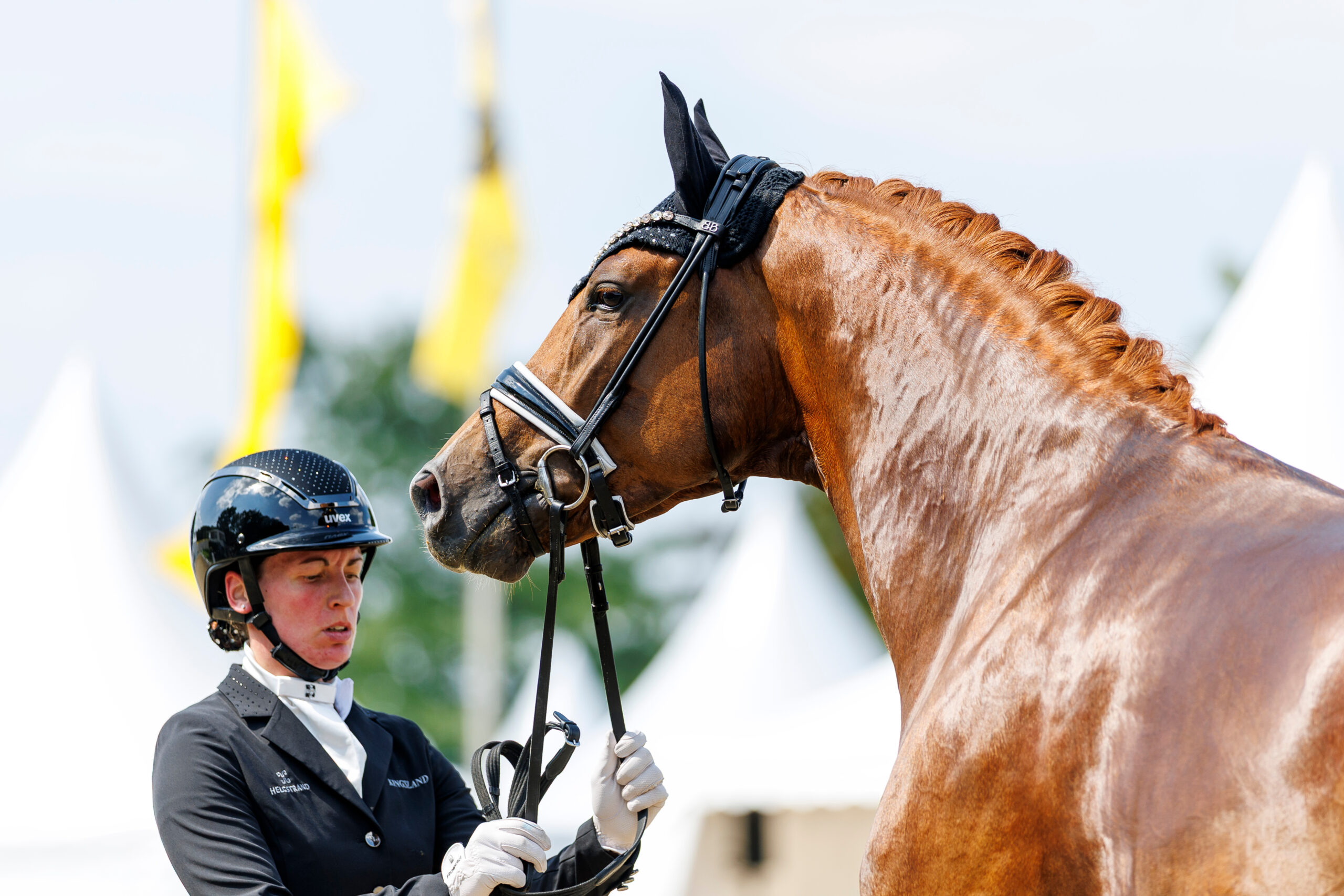 It is up to the individual associations to decide how they will conduct their tryouts for the 2026 National Horse and Pony Championships.
Photo: Sportfotos-lafrentz.de
It is up to the individual associations to decide how they will conduct their tryouts for the 2026 National Horse and Pony Championships.
Photo: Sportfotos-lafrentz.de There has been a great deal of criticism of the planned changes to the National Riding Horse Championship, including from judges, for reasons outlined by Dr. Carsten Munk, chairman of the German Judges’ Association, in an interview with EQUI PAGES. As a result, the assessment of conformation and quality of the horse’s build in hand was reinstated in the program, albeit with a different schedule.
Ponyforum, a major marketplace for riding ponies and small horses in Germany and a long-time sponsor of the riding pony competitions in Warendorf, has ended its partnership after 20 years. The FN’s response to this termination was brief, as can be read here: UPDATE: Due to changes at the Bundeschampionat—Ponyforum will not be a sponsor in 2026.
To that end, a detailed explanation was released today outlining exactly what the proceedings will look like at the riding arena during the 2026 National Championships—and the path leading up to them.
A test for the three-year-olds, two assignments for the four-year-olds
- The three-year-olds have only one more test to go, and before that they will participate in a mandatory training session designed to help the horses and ponies become familiar with the competition arena.
- In the qualifying round, the four-year-olds compete in a riding horse test, and in the final, they compete in a Class A dressage test (DA3 test ridden individually, but without the opening line-up at the start of the test). Only the result of the final counts toward the National Championship standings. There is no mandatory training for the four-year-olds.
- The guest rider test has been eliminated. The rideability score will now be awarded solely by the judges.
New Rating System
- Scores will continue to be given for walk, trot, canter, and rideability, but in tenths of a point rather than halves of a point as was previously the case.
- The fifth score is the “Overall Impression as a Riding Horse.” It consists of two equally weighted sub-scores: the evaluation of the horse’s conformation and quality before the test, and the impression under the saddle. Here, the judges evaluate how the horse uses its body under the rider and how harmoniously the rider and horse present themselves together.
“By breaking down the overall impression of a riding horse into these two sub-scores, greater emphasis is placed on the age-appropriate presentation of young horses, without losing sight of the fundamental qualities of a riding horse.” (FN press release)
Step-by-Step Guide to the Presentation
The presentation of the horses in hand takes place after the mandatory training under saddle for three-year-olds and on the day before the riding test for four-year-olds. This part of the test is mandatory, takes place publicly in the indoor arena, and is streamed via ClipMyHorse. The scores are announced and will not be changed for the remainder of the test.
The public nature of the event and media coverage underscore the commitment to ensuring that the evaluation—with the exam spread over two days—is transparent, verifiable, and objective. (FN Press Release)
A pioneer who serves as a role model
At the FN’s“Heiße Eisen” young horse summit, topics discussed included the Bundeschampionats and the idea of sending trailblazers into the arena. This idea is now being put into practice. Two rider-horse pairs will demonstrate each test, and the judges will provide commentary.
FN: “These pioneers will discuss the nature of their presentations with their horses or ponies, and the potential scoring criteria will be explained to the audience. The focus should always be on a presentation appropriate for remonte horses, both during the rides and in the judging.”
Qualifications? To each his own…
Another question was how the evaluations are conducted within the individual breeding associations. Unlike dressage and show jumping horses, riding horses are not selected based on minimum scores in qualifying competitions; instead, they are nominated by the breeding associations, usually following the respective association championships. This will remain the case, but it does mean that the qualifying processes vary.
As the FN puts it: “While some breeding associations continue to use the original, traditional model for riding horse and riding pony classes, some breeding associations want to break new ground and try out the original model of the working group without a presentation in hand, or the model used this year at the Al Shira‘aa National Championships.”
You can find out what is required in each case by reviewing the respective calls for proposals.
Following the National Championships, the various experiences will be evaluated by the working group that introduced the changes to the National Championships (the composition of which is not specified), in collaboration with the equestrian and breeding associations.
Similar posts