Interview Julien Epaillard
Julien Epaillard: “My job is to listen and look into the horse”
 from Dominique Wehrmann
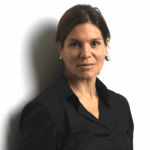
 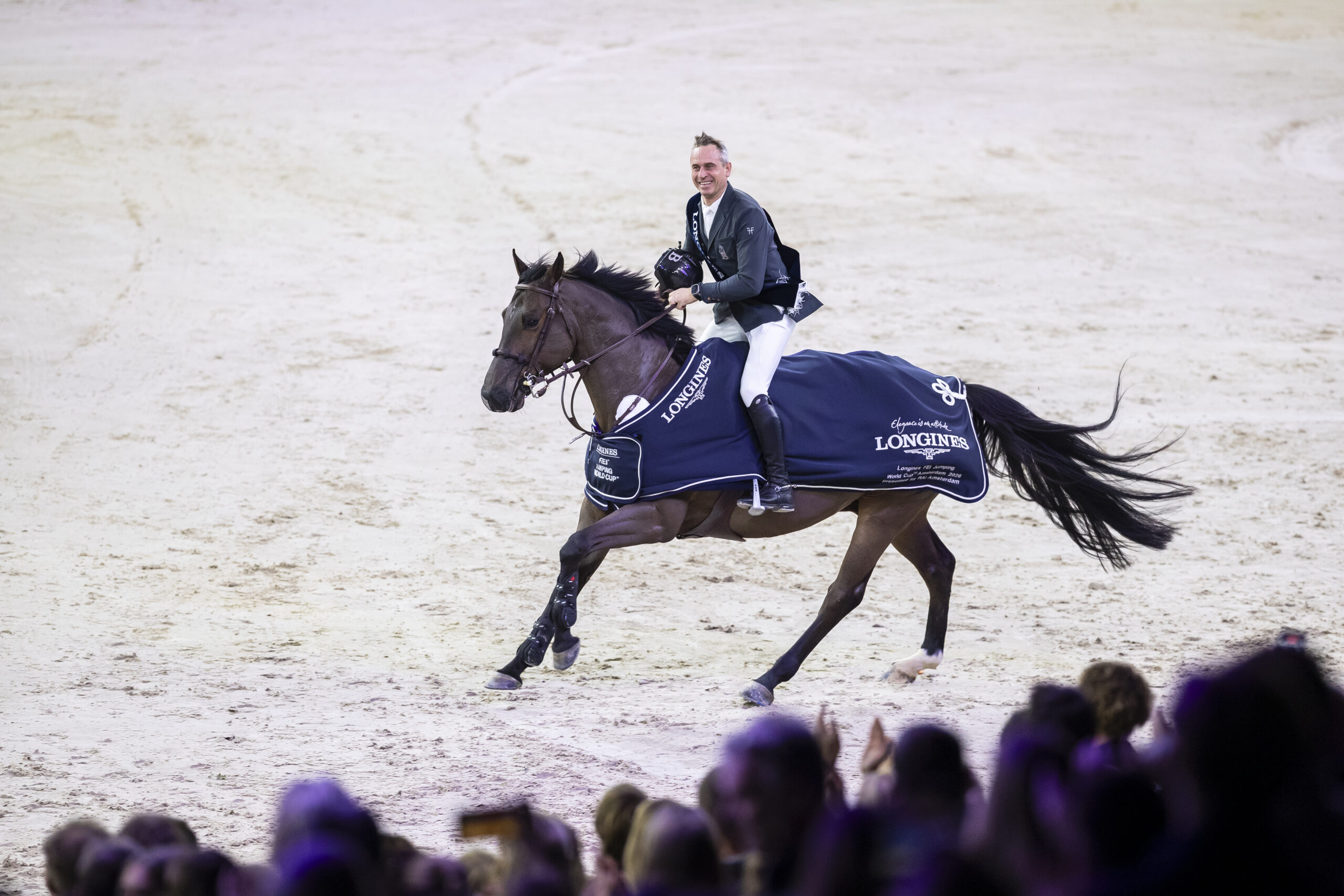 Freedom, but controlled, that is the principle behind Julien Epaillard's riding. And it works, as we saw again in Amsterdam. Photo: FEI/Leanjo de Koster
 Perhaps we can start with a more general question. What do you like most about riding? What is special about it for you?
I love spending time with horses every day. It’s a special sport. It’s not just sport, it’s a connection with an animal. That’s an important part of my work. I try to achieve something with the horse. A horse doesn’t give you everything on its own. So it’s daily work. It takes time to gain the horse’s trust, but you can lose it in a split second, just like with people. That’s why it’s an important part of my work, and why I enjoy starting with the horse so much. I work with him and we develop together.
Could you describe who has had the biggest influence on your career and riding style and why?
I have had many role models in my career. First of all, I have to mention my father. My father was a good rider, he rode 1.40 to 1.45 meter show jumping at the time. He was really good. My mother was a good dressage rider, jumped a bit too, but above all she was an excellent dressage rider. So I think they gave me a good foundation, that was the beginning.
When I was 18 to 20 years old, I went to Hubert Bourdy or Eric Navet for a while in the winter. Every winter I spent 15 days in a row at a stable – Rodrigo Pessoa, Michel Robert, I also ride with Bertrand de Belabre. Every time I try to see and pick up something everywhere, to learn something, always to learn.
One gets the impression that the horses trust you very much. How do you manage that? And how do you manage to make your horses so extraordinarily fast in the jump-off?
Building confidence means making as few mistakes as possible. I always try to get to the jump in time to make it as easy as possible for the horse. And to be fast, it’s basically the same: If you ask a short turn from the horse, it has to have confidence in you. Ultimately, in my opinion, the fewer mistakes you make as a rider, the better.
What role does dressage riding play for you?
You need control for precision on the course. You can’t do it without control. But it’s not dressage with passage or anything like that. I have to be able to brake, I have to be able to accelerate and I have to be able to turn. For me, it’s important that I can send the horse forward, pick it up again and collect it, but always with good balance. That’s how I imagine my riding. So I do dressage work, but in such a way that I let my horse canter, turn and let it canter again. I don’t need much more than that. I want to give the horses their freedom – but in a controlled manner. That’s the idea.
You seem to have your very own philosophy when it comes to dealing with horses. Your horses are not shod. Why is that?
Yes, all my horses are barehoofed. Sometimes I shoe them for special tournaments, grass tournaments, if I don’t like the ground. Some surfaces are simply not ideal for horses. I always have plastic shoes with me. But none of them have shoes at home. Just in case the ground is dull, I don’t feel comfortable on it or something similar. Last week, for example, I had Donatello’s hind hooves shod, but only the hind hooves, because he has more strength with them. But when you have shoes on the front, I don’t feel safe in the turns. The horse doesn’t look up in the turns. That’s why I always try to listen to my horses and see what’s best for them. But when they all go out to pasture together at home – the mares together, the geldings together, the stallions of course not – for this normal life, it’s much better not to have horseshoes.
So that describes your philosophy of paying attention to what the horse needs, what it feels comfortable with?
Yes, listening and looking into the horse is a big part of my work. I used to think: ‘The vet has to do his job, the farrier has to do his job and the rider has to do his job. But now I think very differently. Today I see it like this: I am the one who lives with my horses every day. Nobody knows them better than me. That’s why I know whether they need to go to the vet or the farrier. Six or seven years ago, I changed my whole system and now I’m the boss (laughs).
Speaking of horseshoes: Do you put them on yourself when you say that you sometimes decide on the spur of the moment?
No, but I work on the hooves myself. Okay, I have a lot of horses at home, so I have help with the young horses. But I have to say, when a new horse arrives, I always take care of the hooves myself, also to get to know them. I see how the horses move with them, whether I have to trim more or less and how they move afterwards. I always do this at the beginning. Once the horses are integrated into the system, I also get support.
You said that you changed your system six years ago. Was there a particular situation that prompted you to do so? Or what was the reason?
Yes, there were. My horses were injured too often. So I had to come up with something. Michel Hecart helped me a lot back then. He gave me a few horses because he rode less. We thought about it together, exchanged ideas, tried out different horseshoes, but couldn’t find the best solution. Toupie de la Roque had tendon problems with horseshoes. So we tried it without. After that, without horseshoes, we never had tendon problems again, she won the World Cup Grand Prix in London and everything.
I’ve also done this with other horses with joint problems. Safari d’Auge was also always a bit lame, not one hundred percent fit. So I tried it with him too – he went on to have a second career, won a lot and was never injured again. So I asked myself why I shouldn’t do this with all horses. That’s how I came to this path. I also thought about why it works better without shoes. I think the frog has to cushion the tendons when landing, even without strong shoes. This is also better for the joints.
We are in the process of finding a better solution instead of horseshoes. Sport is completely different today. Usain Bolt doesn’t run with iron shoes either. Horseshoes are too heavy and too inflexible. That’s why I don’t understand why we don’t make horseshoes that are like Nikes for horses.