Mauke in horses – causes, care and treatment at a glance
 from Kerstin Wackermann
 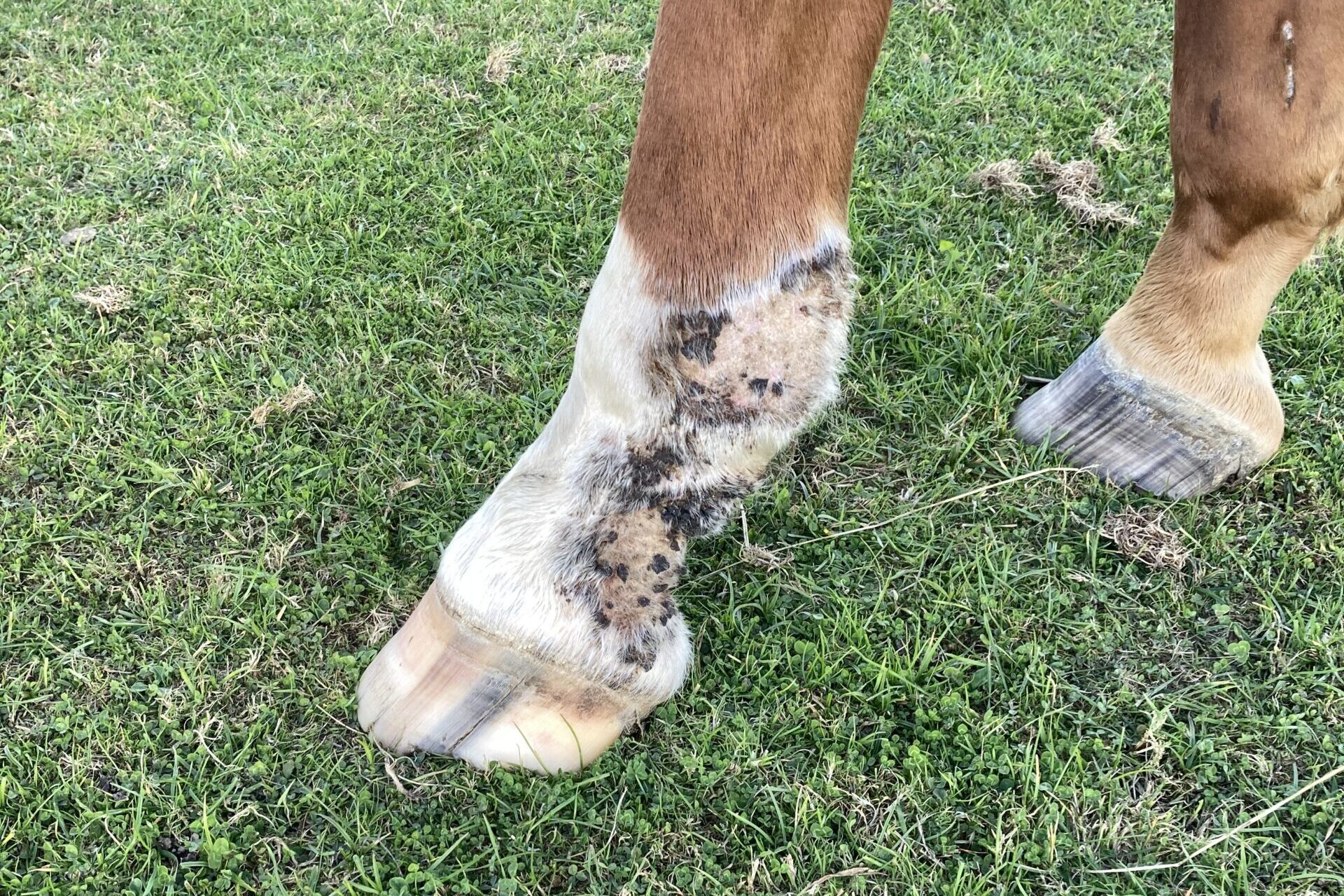 Partly crusty, partly sore areas in the area of the fetlock bend and surrounding area are typical of mauke.
 Equine pastern dermatitis (EPD) describes inflammatory skin changes in the fetlock area, especially in the fetlock bend. It ranges from slight redness to deep, weeping crusts and can be painful or cause lameness in severe cases. Mauke usually develops when the skin barrier is weakened: constant moisture, chafing or minor injuries open the way for germs. Bacteria, fungi or mites then colonize and trigger inflammation. Sometimes, however, primary pathogens or parasites are also the cause.
Why do so many horses get mumps?
The fetlock bend is sensitive. It often comes into contact with moisture, mud or bedding, is subjected to mechanical stress and is slow to dry. When the skin swells, it loses its natural protection: microorganisms have an easy time of it. Poorly mucked out, damp stalls and poorly drained runs are therefore among the most common causes.
A Swiss study showed that weather and humidity can even influence the composition of the skin flora(Kaiser-Thom et al., 2022). Inadequate bedding quality or tight-fitting gaiters also increase the risk(Raizner et al., 2022).
You can find more information on the causes of mauke here.
Is Mauke contagious?
Mauke is not normally contagious. It is caused by a disturbed skin environment, not by classic infections. However, certain triggers such as mites can easily be transmitted from horse to horse. With close contact or shared grooming equipment and blankets, a mite infestation can spread through the herd and cause inflammation in the fetlock area of several horses.
Infection by other pathogens is very rare: a nationwide outbreak with a new parapoxvirus was described in Finland in 2021/22(Virtanen et al., 2023). Corynebacterium bacteria have also been identified as triggers in individual cases(Grönthal et al., 2024). In such situations, there is a theoretical risk of zoonosis – i.e. possible transmissibility to humans. If several persistent cases are observed in the stable, a vet should take samples.
This weakens the skin flora and promotes mucous membranes
The skin flora is a sensitive protective system. It keeps pathogens at bay and ensures a stable balance. Studies show: This balance is upset in the case of thrush. Beneficial bacteria disappear, while pro-inflammatory species such as Staphylococcus and Streptococcus become prevalent(Kaiser-Thom et al., 2021). Frequent disinfection or aggressive creams exacerbate the problem because they further destroy the diversity of the skin flora(Sangiorgio et al., 2021).
The best rule: clean yes – sterile no.
Detailed information on skin flora and mauke can be found here.
Recognize mites and react correctly
Mites and mastitis sometimes go hand in hand. The parasites cause itching, dandruff and small cracks in the skin through which germs can penetrate. Horses with thick coats, such as Friesians or cold-blooded horses, are particularly affected. The vet recognizes mites through skin scrapings and can provide targeted treatment. It is also important to thoroughly clean contact horses, brushes, blankets or gaiters.
Suspicion of mauke caused by mites? Here you can find more information on this topic!
How do I treat mauke? Step by step
The treatment depends on the stage: moist, inflamed skin needs something different than dry, crusty areas. It is important that you restore the skin’s function – not just combat the symptoms.
Eliminate the cause
– Keep the legs dry, change wet bedding and avoid mud.
– Dry your legs thoroughly after washing.
– Make sure you wear breathable gaiters and clean equipment.Gently cleanse the skin
– Soak crusts instead of forcibly removing them.
– Use mild, pH-neutral shampoos or antiseptic washing solutions based on chlorhexidine – dosed sparingly.Care with suitable products
– In the case of weeping moles: no oily, sealing ointments (e.g. Vaseline, milking fat). They retain moisture so that germs can accumulate even better.
– Instead, use slightly drying, zinc-containing lotions or thin, breathable creams.
– For dry moles: choose moisturizing but non-greasy products. Care substances such as panthenol or aloe vera promote regeneration.
– Cortisone-containing creams only on veterinary advice in case of severe inflammation or itching.Targeted fight against pathogens
– In case of mites: Only treat with miticides (e.g. ivermectin, permethrin) after a veterinary diagnosis and in accordance with the approval. Off-label applications belong in the hands of a veterinarian.
– For bacterial infections: Only use antibacterial ointments or systemic antibiotics after resistance testing and monitoring.
– For viral or special pathogens: laboratory examination before treatment.Support healing in the long term
– Supplement with zinc, biotin and omega-3 fatty acids if necessary – they promote skin health but are no substitute for therapy.
– Exercise and good blood circulation support regeneration.
– Be patient: skin needs weeks to heal completely.
How to reliably prevent mauke
Clean, dry conditions are the most important thing to avoid moulting!
– Keep your legs dry and avoid mud.
– Check fetlock bends regularly – especially with heavy hangings.
– React early to the first redness before crusts form.
– Targeted and mild care – less is often more.
FAQ – briefly explained
Which ointments really help with mauke?
In the case of weeping moles: no greasy, sealing creams, but zinc-containing, air-permeable lotions. For dry skin: moisturizing, gentle care products.
When does your horse need a vet?
Whenever there is severe weeping, pain, spreading or fever. Also for recurring cases or suspected mites.
Can you treat Mauke yourself?
Yes, in the early stages. It is important to keep the skin dry and gently care for it. If the inflammation is deep or the cause is unclear, call the vet.
How long does it take to heal?
Mild forms heal in a few weeks, severe forms can take months. Patience and consistent care are crucial.