Skin flora and mucous membranes – when the balance is disturbed
 from Kerstin Wackermann
 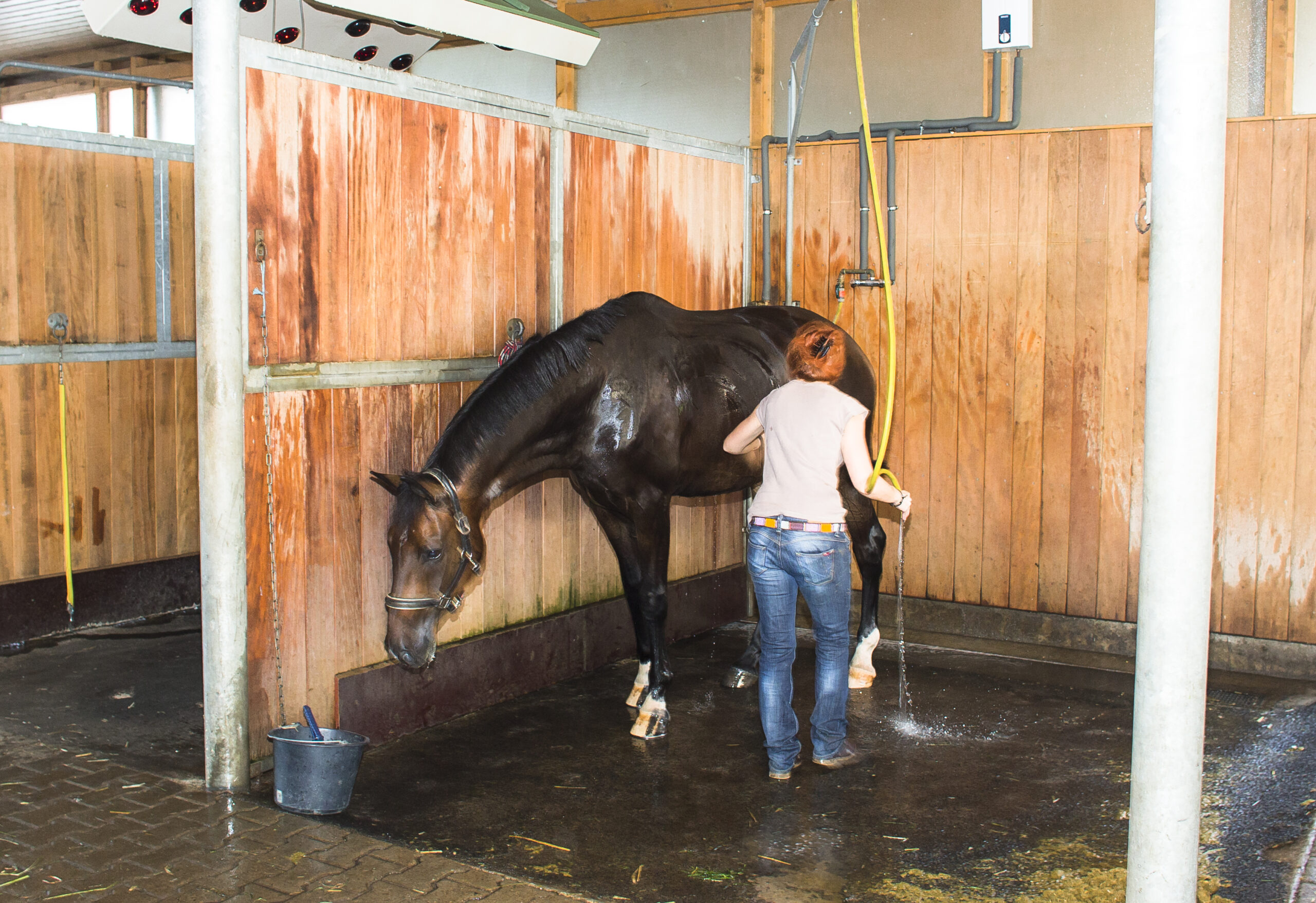 After washing, you should dry the fetlock bends with a soft towel to prevent moulting. Photo: Toffi-images.de
 A study from Switzerland showed clear differences in the composition of the skin flora between healthy and affected legs. This shows how closely mucous membranes are linked to a disturbed microbial balance.
How hygiene and care influence skin flora
Hygiene is important, but excessive cleanliness is dangerous. Aggressive shampoos, alcohol-based sprays or frequent washing destroy the skin’s natural protective film. They remove sebum and beneficial microorganisms. The result: the skin dries out, becomes cracked and therefore more susceptible to inflammation. This is because germs can penetrate through the cracks.
According to the study, horses treated with antibacterial agents show a significantly lower diversity of skin bacteria, which is why such products should only be used selectively and for a limited period of time.
Practical tip:
- Only clean legs when really necessary.
- Lukewarm water, gentle shampoos, soft sponges.
- Then dry thoroughly but carefully.
- Use mild, breathable care products, not highly greasy creams.
Moisture, grease and air: the right balance
Caring for mauke means finding the right balance: The skin should be protected, but not “sealed”. Oily creams often lead to problems with weeping thrush. They can trap moisture and worsen the environment – light, protective care products that keep the skin dry but do not seal it in are better. Zinc-containing pastes protect the skin and have a slightly drying effect, but should only be applied thinly so that the skin can continue to breathe and regenerate.
Dry, flaky areas may require a little more care. Moisturizers such as panthenol, urea or vegetable oils help to keep the horny layer supple.
It is always important to apply a thin layer, do not rub in and allow the skin to breathe.
Probiotic care – a new approach
Many people are familiar with probiotics in connection with good digestion. Researchers are now also working on strengthening the skin flora with the help of probiotics. A pilot study tested the use of the lactic acid bacterium Weissella cibaria on mauke spots. The bacterial balance shifted in favor of “good” germs, while potentially harmful species declined. The clinical effect was still limited, but the approach is considered promising, although no approved probiotic creams are yet commercially available.
Feeding and skin health
However, the skin flora can also be strengthened in the “classic” way, namely through feeding. The skin reflects the metabolism. A lack of zinc, biotin or high-quality fatty acids weakens its defenses. A balanced mineral feed supports regeneration and can help prevent relapses. If skin problems persist, a blood test is worthwhile to rule out nutrient deficiencies.
Everyday care in the stable: How to avoid moulting!
- Dry environment: After rain or washing, dry the legs completely, especially the bends of the fetlocks.
- Clean equipment: Clean brushes, towels and bandages regularly to prevent the spread of germs.
- Observe: Look for moist, reddened areas of skin early on.
- Patience: Don’t wash or apply cream too often – the skin needs time to find its own balance.
FAQ – briefly explained
What does “skin flora” mean in horses?
It includes all microorganisms that live on the skin. In balance, they protect the skin. This system becomes unbalanced in the case of mauke.
Can disinfection make mauke worse?
Yes, too frequent or too strong disinfection destroys the natural protective layer and promotes inflammation.
What about probiotic creams for mumps?
Still being tested, but initial experimental results show positive effects on the bacterial balance.
How do you treat Mauke correctly?
Clean gently, dry well, choose breathable care products – and if unsure, seek veterinary advice.