Equine asthma – causes, symptoms and treatment
 from Kerstin Wackermann
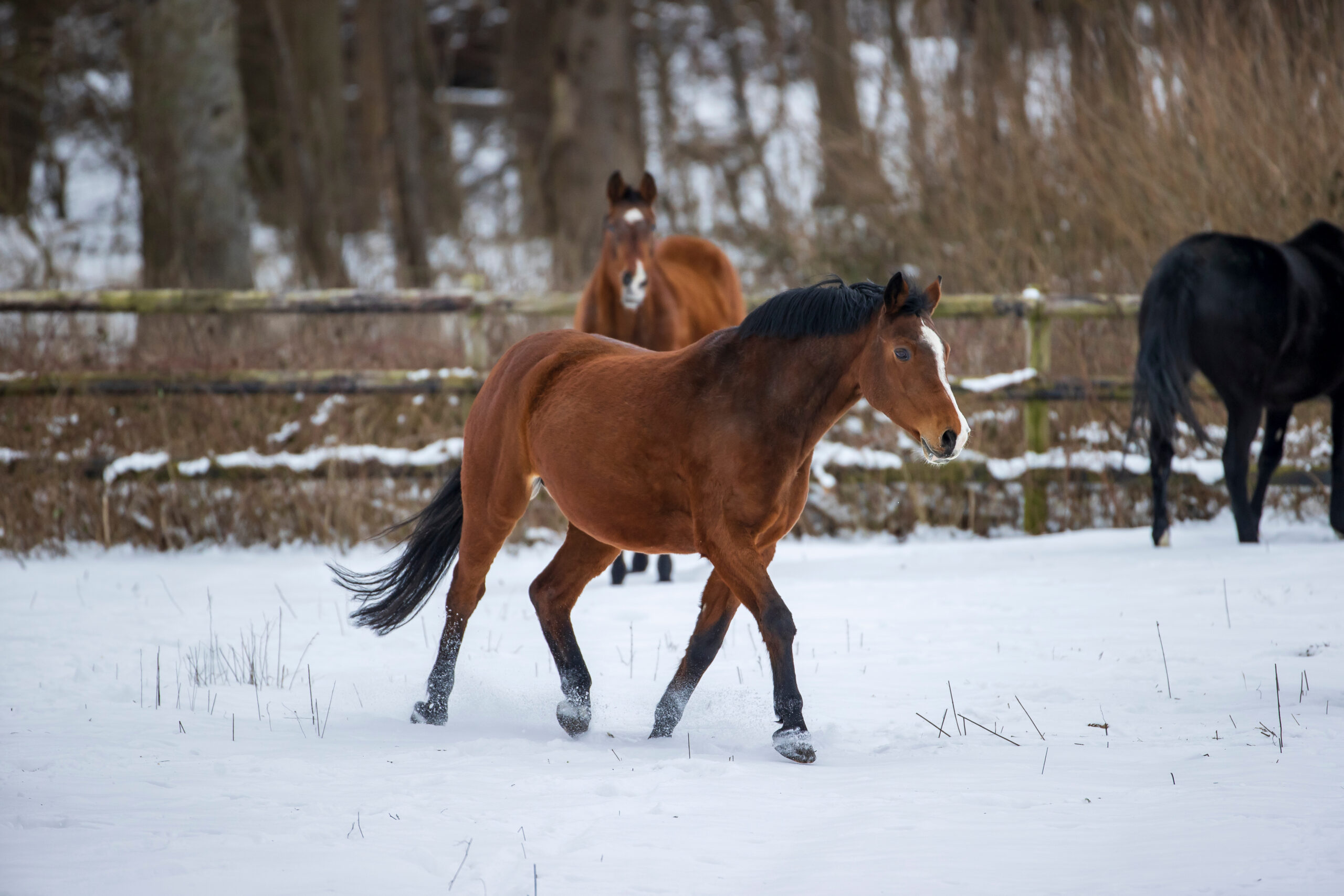
  Exercise and training - also in such a way that the horses start blowing - is essential to prevent equine asthma. If the horse is already ill, this also applies - but to the extent recommended by the vet. Photo: Toffi-images.de
 Equine asthma is not contagious, but is caused by a hypersensitive reaction of the lungs to dust, mold spores or pollutants in the air we breathe. The result: permanent inflammation of the airways, which is accompanied by reduced performance, sometimes coughing and, in severe cases, shortness of breath.
How does equine asthma develop?
The main cause of equine asthma is dust in combination with organic particles that irritate the horse’s immune system. This stress is mainly caused by the conditions in the stable. Typical triggers are
- Dust from hay, straw or the riding surface
- Mold spores in feed and bedding
- Ammonia from poorly mucked stalls
- Insufficient fresh air supply
- High humidity and heat, which promote the formation of germs and mold
Open stable horses can also be exposed to high levels of stress if they are fed dusty hay. In the long term, these stimuli lead to permanent inflammation of the bronchial tubes.
Mild and severe form: Equine asthma, RAO and IAD
For a long time, chronic lung problems were divided into two clinical pictures: IAD (Inflammatory Airway Disease), the milder form, and RAO (Recurrent Airway Obstruction): the “classic attenuation”, i.e. the severe, chronic form with significant shortness of breath. These two distinctions still exist, although they are not seen as separate clinical pictures as they used to be, but have been grouped together under the generic term equine asthma.
Symptoms – how does equine asthma manifest itself?
In mild equine asthma, the bronchi are not yet as constricted and constricted as in severe equine asthma. At this stage, the horses can still breathe better, so they generally do not show any noticeably increased breathing at rest and do not suffer from acute respiratory distress like horses with severe asthma. In the mild form, affected horses may also hardly cough at all, as the mucus accumulates in deeper airways where cough receptors are less dense. Only sometimes is there a little nasal discharge. However, reduced performance is typical.
Common symptoms of mild equine asthma:
- Occasional coughing, especially at the start of training
- Loss of performance, faster fatigue
- Prolonged recovery phase after exercise
- Partial nasal discharge (clear or slightly mucousy)
If this form of equine asthma is not treated, it can progress to the severe form. In this stage, the lungs react very strongly to dust, fungal spores etc.: The bronchial tubes constrict and a lot of secretions form, making breathing much more difficult. Air resistance can increase up to 16-fold! This also explains why, in the case of severe equine asthma, breathing becomes much more conspicuous and the horse also exhibits abdominal breathing. It has to push the air out of its lungs with the help of its abdominal muscles. This results in the so-called “vapor channel”.
Common symptoms of severe equine asthma:
- Frequent, sometimes paroxysmal cough (but can also be absent!)
- Significantly more difficult breathing, especially when exhaling
- Expanded nostrils when breathing
- Flank breathing, visible abdominal press (“vapor channel”)
- Shortness of breath, even at rest
- Reduced resilience to the point of refusing to work
Equine asthma without a cough – the case for many horses!
About 40 percent of horses with equine asthma have no cough, which is why the disease is sometimes only recognized very late! For this reason, reduced willingness to perform and more conspicuous breathing should be taken seriously.
There can be various reasons why horses with equine asthma do not cough. Firstly, the cough reflex is not equally strong throughout the airways: The upper airways (larynx, trachea, larger bronchi) are rich in cough receptors. This is where the horse reacts sensitively to mucus, dust or foreign bodies. Even small amounts often trigger a cough. In equine asthma, however, mucus often collects in the deeper areas. Deeper bronchi have significantly fewer of these receptors. So if the mucus is located further down in the smaller airways, the cough reflex is not reliably triggered.
In addition, the chronic inflammation also changes the sensitivity of the nerve fibers. This means that even large amounts of mucus can remain “still” – the horse does not cough even though it has difficulty breathing.
Therefore: No coughing does not mean that the horse is healthy!
How equine asthma is diagnosed
A vet will first listen to the heart and lungs and assess the breathing movements. Modern procedures such as bronchoscopy are used to make a reliable diagnosis. This allows the upper airways to be viewed directly and samples taken. Vets can assess the severity and type of equine asthma using a lung lavage sample: In what is known as bronchoalveolar lavage (BAL), fluid is obtained from the deep areas of the lungs. This is then examined with regard to the composition of the immune cells. X-rays, ultrasound or a blood gas analysis can also help to assess the extent of the disease.
Equine asthma: Treatment
The most important thing for equine asthma is consistent optimization of husbandry! Medication can only be effective in the long term if dust exposure is permanently reduced. Suitable measures include low-dust bedding, steamed or watered hay, haylage and a stable design with plenty of fresh air. Horses should be outside as much as possible, ideally in paddocks or outdoor boxes.
In the acute phase, anti-inflammatory preparations (glucocorticoids) and bronchodilators are used to widen the constricted airways. Mucolytic agents can support the removal of secretions. Important to know: Medication alleviates the symptoms, but is not a substitute for postural adjustment.
The horse can also inhale. Equine clinics recommend inhaling for 15 to 20 minutes with saline solution or special additives and then moving the horse. This makes it easier to loosen and remove mucus. It is important that the inhalation mask is always clean and free of old saliva or dust in order to prevent renewed contamination by germs.
Can equine asthma be cured?
Equine asthma cannot be completely cured in most cases, but it can be controlled very well. It is crucial that horse owners make long-term adjustments to their horse’s posture and pay close attention to the slightest symptoms. Early intervention prevents further damage to the lungs.
FAQs Equine asthma
Why do open stable horses also have equine asthma?
Lots of fresh air around the clock – that’s ideal for the horse’s respiratory tract. Many horse owners therefore wonder why open stable horses also suffer from coughs. This is usually due to the roughage! Dust and mold are the main cause of lung problems and hay is fed in large piles or as large round bales, especially in open stables. The horses inhale the dust directly. Especially if they stick their heads directly into the hay. What’s more, in some open stables the roughage is not so well protected from the rain: it gets wet and molds colonize. Even if there is no mold to be seen, the fungal spores can already be in the hay and be inhaled by the horse.
Why is my horse’s asthma sometimes worse in summer than in winter?
There can be two reasons for this: Firstly, the horse’s lungs are under increased strain in summer in hot temperatures, as part of the heat regulation takes place via the lungs. In horses with equine asthma, lung function is restricted. Affected horses are particularly weak in the heat and exhibit more conspicuous breathing. Heat dissipation via the lungs does not work as well, which is why there is a risk of horses with equine asthma overheating. You should keep an eye on this in summer and offer sufficient shade and water (which should actually also apply to healthy horses!)l
The second reason may be that the horse is allergic to certain substances in the environment, such as grass or pollen (see summer asthma).
What is summer asthma in horses?
“Summer asthma” in horses is a form of equine asthma that occurs seasonally – usually in the warm months. It is mainly triggered by pollen and other allergens in the air, which are more common in summer. Horses react to these particles with chronic inflammation of the lower airways.
In contrast to “winter asthma”, which is usually triggered by stable dust or mold spores in the feed, summer asthma is not related to dust in the stable, but to exposure to pollen and spores in the outside air.
Some clinics and veterinarians also speak of “summer pasture associated recurrent airway obstruction”.
Exercise with equine asthma: Can I still ride?
In most cases, yes – under certain conditions. Exercise is even an important part of the therapy, as this is the only way to ensure that all areas of the lungs are sufficiently ventilated. This helps to clear secretions, reduce inflammation and stabilize respiratory function in the long term.
However, training must be adapted to the horse’s condition. Horses with mild asthma (IAD) often tolerate normal training if they are given sufficient time to recover and care is taken to ensure dust-free feeding and low-dust stable conditions. In severe asthma (RAO), intensive exercise can increase breathlessness and stress. In these cases, exercise sessions should be short, moderate and regular. Always discuss with your vet how you should exercise your horse!
What is the life expectancy of equine asthma?
In mild equine asthma, life expectancy is hardly shortened, as the lungs are not so severely damaged. In the case of severe equine asthma, affected horses can live for many years with good treatment (optimization of husbandry, medication, inhalation) and sometimes even achieve a normal life expectancy. However, there are usually restrictions in terms of exercise capacity.