Cough in horses: harmless or chronic?
 from Kerstin Wackermann
 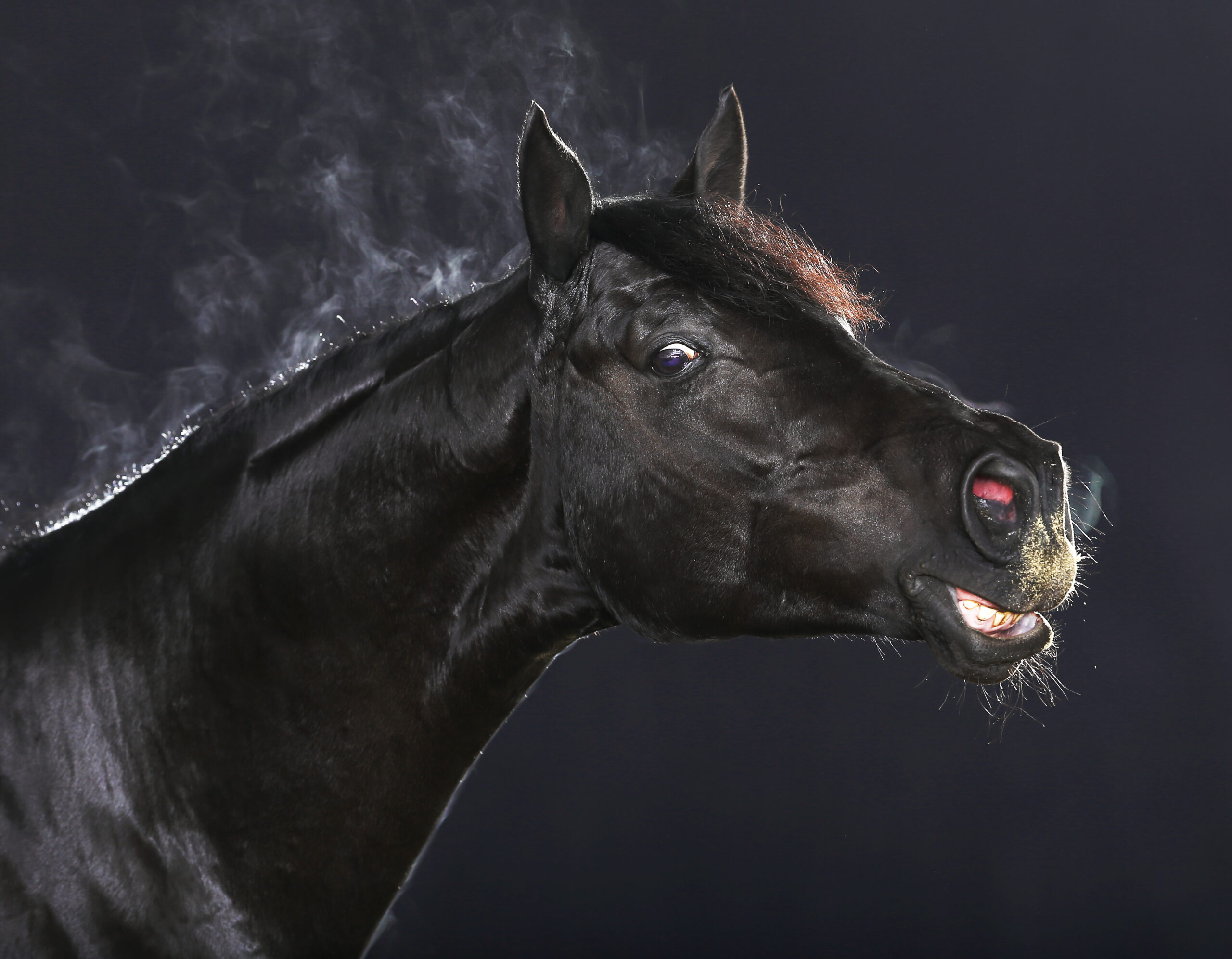 Horses are nasal breathers. This means that they can only take in enough oxygen through their nostrils. Their airways are also very sensitive. Photo: Toffi-images.de
 The first thing you should do when a horse is coughing is to take its temperature. If the temperature is above 38.5 degrees, it can be assumed that the horse has an acute infection caused by viruses or bacteria. An acute infection develops quickly and usually shows clear symptoms. In addition to coughing and fever, respiratory infections usually also cause nasal discharge (yellowish or green) and fatigue. Appropriate treatment is often effective very quickly.
Symptoms: Fever, cough, nasal discharge, fatigue
As an infection is contagious, you should also take the temperature of neighboring horses daily and wash your hands after every contact with the sick horse. The saddle, brushes, feed bucket etc. of the infected animal are of course also taboo for other horses as long as they have not been cleaned or disinfected accordingly.
Irritable cough in horses
As with humans, certain substances such as dust or pollutants irritate the horse’s respiratory tract. The horse’s body is programmed to get rid of these substances as quickly as possible: The horse coughs – a vital reflex when a foreign body has entered the respiratory tract. Irritable coughing in horses can therefore be a one-off, short-lived problem that does not require any special treatment. However, you should keep a close eye on your horse to see if the cough recurs and whether other symptoms of a respiratory disease such as nasal discharge, fever or reduced willingness to perform are noticeable. If the horse only ever coughs in certain situations, it is likely to be due to poor posture. The following points will help to find and eliminate the cause.
Typical posture errors that lead to coughing in horses
- Dust from e.g. straw, hay, from the riding surface
- Mold in feed and bedding
- Too little fresh air in the barn
- Humid air: high humidity of over 80 percent promotes mold formation and germ growth, especially in combination with heat
- Pollutants e.g. ammonia from urine in poorly mucked stalls
- Too little exercise: All areas of the lungs can only be well ventilated with regular exercise. If this ventilation is lacking, secretions accumulate more easily.
Chronic cough in horses/equine asthma
If the horse’s airways are repeatedly irritated, this can become a chronic problem. Horses with chronic lung disease can now be found in many stables, even in open stables. This is because dust – in the stable air as well as in the roughage in open stables – is one of the main causes of this disease.
The term equine asthma is now used to describe chronic inflammatory airway diseases that are similar to human asthma. A distinction is made between mild forms (Inflammatory Airway Disease, IAD) and severe forms (Recurrent Airway Obstruction, RAO).
Mild equine asthma is most noticeable when the horse is unable to perform as usual. Nasal discharge and coughing may or may not occur. In fact, around 40 percent of horses with equine asthma do not have a cough!
In severe equine asthma, it is clearly noticeable that the horse has breathing problems. It has a rapid breathing rate and abdominal breathing can be recognized (clear flank movement and vapour channel), respiratory distress is also possible. Even at rest, the horse breathes more intensively. If the horse repeatedly or persistently comes into contact with the stimuli that trigger this allergy-like reaction, remodeling processes take place in the lungs that can no longer be reversed and make breathing permanently more difficult.
More detailed information on equine asthma here.
What to do if your horse has a cough
- If the horse is coughing, the first thing to do is to take a temperature: Call the vet if the horse has a fever!
- Observe the situation in which the horse coughs: Cough only once, then observe the horse to see if other symptoms of a respiratory disease occur and note when the horse has coughed (e.g. when entering the arena). If the horse keeps coughing briefly: Call the vet.
- In any case, reduce lung-irritating substances such as dust, mold or ammonia and provide plenty of fresh air and hygienic roughage.
FAQs Cough in horses
Can I ride my horse with a cough?
Exercise is good for the horse’s airways, because only then are all areas of the lungs well ventilated. If the horse spends too much time in the box, the self-cleaning effect of the lungs does not work as well and secretions accumulate. Nevertheless, a horse with a cough must not be overworked: This is why you should always discuss with your vet the extent to which you can and should move your horse. In the case of an acute infection, just as with us humans, a break is called for.
What medication helps with coughs in horses?
An antibiotic is only used if the vet diagnoses or reasonably suspects a bacterial infection. However, if it is a viral infection or a chronic lung disease, antibiotics are useless. Other medications are then used to alleviate the symptoms, such as bronchodilators, cortisone (glucocorticoids) and expectorants (secretolytics).
Bronchodilators, as the name suggests, ensure that the bronchial tubes relax by relaxing the surrounding muscles. Examples are clenbuterol or albuterol, which are used as inhalation or oral preparations. It should be noted that these only work very well for a while. Then you should take a break from administering the medication as the effect wears off.
Cortisone is known to be an anti-inflammatory and is able to limit the “overreaction” of the lungs to dust or molds, for example. It ensures that the constriction of the bronchial tubes decreases and the bronchial mucosa swells. It also causes less mucus to be produced, which blocks the airways.
Expectorants liquefy the thick mucus that has formed in the airways so that it can be removed. However, it should only be administered for a limited period of time due to possible side effects.
When should my horse inhale: before or after riding?
Whether you should inhale before or after riding depends on what you want to achieve:
Before riding: Inhalation moistens the airways, can loosen mucus and make it easier to cough up during exercise. This is useful if the horse is to start training cough-free.
After riding: The movement has loosened mucus in the airways. This can be better liquefied and removed with subsequent inhalation. This is particularly useful for horses that produce a lot of mucus.
The vet should determine the individual inhalation plan – depending on the severity of the illness, medication and training status.
My horse sometimes has a clear cold. Is that bad?
The consistency and color of the nasal discharge can give an indication of the disease: Transparent (clear), watery nasal discharge is usually normal. It shows that the horse’s airways are well moisturized. If the nasal discharge is yellow or greenish, this indicates an infection – the vet should be called. Milky, white nasal discharge should also be investigated: it can occur with incipient or chronic lung diseases. One-sided nasal discharge can also indicate dental problems or sinusitis.