Stefan Stammer on the subject of stretcher exhaustion in horses
Carrier exhaustion – serious diagnosis or marketing concept?
 from Editorial office
 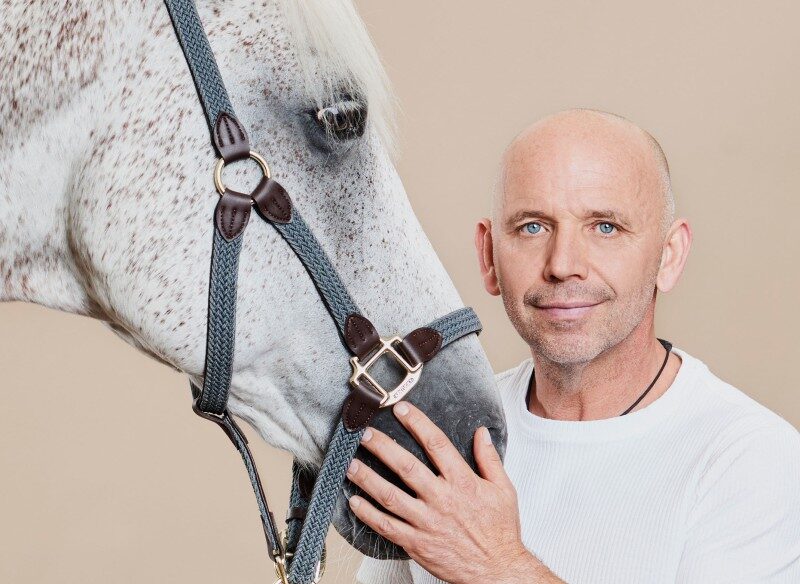 Stefan Stammer. Photo: Private
 Definition of stretcher exhaustion in horses
There is currently no clear and generally recognized definition for the term ligament fatigue. Like cervical spine syndrome or lumbar spine syndrome in humans, it is an umbrella term that can include very different symptoms that almost all riders have felt or noticed in their horse at some point.
- does not step on the hand properly
- tightens in the neck
- hides behind the reins
- is resistant
- has fecal water
- has a stomach ulcer
- Tightens (optionally in the neck, in the rib, in the loin)
- is crooked
- has a pain face
- goes (optionally) too much or too little forward
The trap
Many of these symptoms are common to anyone who has ever ridden or trained a horse. However, the way they are dealt with on various websites, social media and riding stables should give us pause for thought.
If any of these symptoms apply to your horse, then you should definitely give me a call. Your horse can suffer from stretcher exhaustion, and if you do nothing about it, your horse will suffer and become ill. Immediately afterwards, a simple or even more complicated (depending on the cost calculation) solution will be offered, which has been developed from scratch and which no one has been able to find before, because everyone else has either been unable to recognize this stretcher exhaustion to the chagrin of the horses or has deliberately ignored it completely out of greed for profit. Of course, there is no guarantee of success for this new method. Nobody knows how long the horse has been suffering, what pain memory it has built up and what psychological damage you and others have already caused it through ignorance or lack of knowledge. What is certain is that the method offered works and there will be enough eyewitnesses and influencers to confirm this.
This is an (incomplete) summary of the information from the Internet.
It’s your decision how you deal with it.
What is behind it?
To begin with, yes, there are many undesirable developments in equestrian sport. Horses are physically and mentally over- or under-challenged. Unfortunately, we don’t know exactly how often and how intensively, as there are no comprehensive studies. If you ask the internet, there are many. If you ask certain animal welfare organizations, it’s all of them. If you ask the riding associations, there are a few exceptions. There is no real survey that provides a cross-section of all riding styles and training methods.
Where riders are judged in public, at competitions, is where the monitoring is closest and the results are a cause for concern. Especially when organized competition riding in Germany, and to a lesser extent worldwide, is committed to ethical principles, the training scale and the guidelines for riding and driving. Show jumping must be measured against this standard, which is far higher than for all other forms of riding.
It is precisely there that we repeatedly see pictures that at least give us an idea that horses do not move as easily, harmoniously and effortlessly under the rider as we would all like to see. And this is not rare, but quite common. The figures on the internet often speak of 80 percent.
How do these figures come about?
To date, there is no science-based definition of the functional stabilization of a horse. It is also extremely difficult, as it depends on many individual components. The diagnosis of stretcher exhaustion is therefore based exclusively on the subjective assessment of the therapist responsible in each case.
Due to the fact that the professional basis of these therapists is very broad and often characterized by their own subjective images of “good riding”, the assessment of when deficits actually become relevant to health will be just as broad.
The first reason for this is that we would all like to see these optimal images of a correctly ridden horse throughout, which the judge at the show objectively assesses with a score of at least 8.0 in the categories of tact, suppleness and contact. That means good. A performance below this is not consistently harmonious, not completely relaxed and not in optimum suppleness.
The crucial question is: Is this already a health risk for the horse? The extended question: In any other situation when working with the horse, where this harmony, ease and suppleness is not fully achieved, even outside of competition, is this movement also dangerous to the horse’s health or welfare?
My answer: Not by a long shot!!!
How can we deal with these deficits?
In my opinion, the most important thing is to take the stress and pressure off the horse and rider and not to increase it by stirring up fears.
The symptoms above must be divided into normal balance reactions of a horse that is not balanced in optimal dynamics and suppleness and real medical diagnoses.
Balance reactions of a horse are:
- does not step on the hand properly
- hides behind the reins
- is resistant
- Tightens (optionally in the neck, in the rib, in the loin)
- is crooked
- goes (optionally) too much or too little forward
These are all completely normal everyday reactions of an imperfect horse and an imperfect rider. Accordingly, these can usually be improved through normal classical groundwork, as long as this is within the capabilities of horse and rider together, ideally with the help of a good trainer.
The result is still not perfect. Not perfectly permeable, not perfectly straightened, not perfectly harmonious. All of this is a reflection of real life and does not require treatment or pose a health risk. It is often not easy to accept this realization, but it is the first step towards a realistic assessment and the first step on the path to a solution.
In my experience, health problems arise above all when these everyday deficits are supposed to be solved in the short term by shortcuts with incorrectly used auxiliary reins, spurs and whips, use of force by the rider, stress, etc., faster than the classical riding theory defines.
Or, the other option is to leave the training path altogether and reduce the horse’s movement dynamics to such an extent that the deficits are no longer noticeable.
Then the other symptoms come into play:
- Stomach ulcers
- Chronic overload reactions of tendons, joints and bones
- Fecal water
- Generalized stress symptoms
- Breathing problems
- etc.
These are all medical diagnoses and must first be clarified by a vet. No ifs, ands or buts.
All of these symptoms can be caused by incorrect training. However, there are many other components that can only be assessed by comprehensively trained specialists using the latest diagnostic procedures. And these must first be clarified as efficiently and comprehensibly as possible for the horse owner. Irrespective of discussions relating to personal experiences, wishes or attitudes.
There is no substitute for trusting contact with a local vet who knows the horse, the rider, the external conditions and possibly also the financial possibilities!
The role of complementary forms of therapy
Then, for example, well-trained physiotherapists with comprehensive further training on the horse come into play, who can recognize functional deficits, provide therapeutic help, plan and implement solutions, if necessary together with an equally qualified trainer.
Experts who learn diagnoses and treatments in a few weekends for which others need years and decades, who have invented completely new methods that promise a cure within a few weeks and months, whose qualifications and reputations can mostly be found on social media platforms, should be critically questioned by responsible horse owners – before putting themselves in hands from which it is difficult to free themselves.
Because, and this is one of the major side effects of these marketing-based new methods, the dependencies that arise through emotional ties, the fomenting of fears and the nurturing of one’s own guilty conscience are very difficult to break. This applies both to the people who become dependent on these training methods and to the horse owners who place their horse’s health in the hands of therapeutic laypeople with good powers of persuasion. Both in good faith and trust, often to the detriment of the horse in the end.
Conclusion
There has always been good and bad training, good and bad riding. What has never led to the goal are simple answers to complex questions. Simple solutions to complex problems.
However, this is exactly what the protagonists of the carrier creation scene are increasingly offering. Even if their formulations are complex, the answers remain simple and the solutions seem certain. But that’s not all.
Now that this scene has found the philosopher’s stone, it is naturally willing to share it for a fee. Training and courses are offered for everyone to enable them to learn this type of health-oriented riding and horse rehabilitation themselves and to be able to offer it professionally in the future. All this in just a few weekends, partly online and with the complete package of riding, training, lesson design, saddle science, rehabilitation, bit science, pathology, dentistry, management and self-marketing. And all for a ridiculously low price of just a few thousand euros. This is just one of many offers that promise you a future career in your dream job with horses.
What can we learn?
You riders, horse management masters and national team riders, go out to the leisure riders and share your knowledge and skills with them. Not to teach them Grand Prix riding, but to give them a broader impression of suppleness. At the same time, listen to them and learn from their attitude towards the horse, their empathy and their relentless desire to do well, even if it doesn’t always work. These are wonderful people who are in no way inferior to you in their love, respect and care for their horse.
You leisure riders, go to the good professionals and see how they work. Learn from them, they have a lot of knowledge, experience and skill in training horses. At the same time, share your ideas, opinions and experiences with them. These are also valuable. Maybe you can help them to load their horses with less stress, maybe you can help them to mentally train a young horse in a more species-appropriate way. Just give it a try. These are wonderful people who are in no way inferior to you in their love, respect and care for your horse.
You show jumpers, go back to the dressage riders and let them inspire you with complementary methods to make your horse even more supple and powerful. They are wonderful people who know how to ride and have good training ideas
Dressage riders, take another jumping lesson with your dressage horse. You’ll see how one or two rideability problems disappear into thin air if you simply think “out of the box”. These are wonderful people who know how to ride and have good training ideas.
… and the following applies to both: everyone should have fun in the terrain, if not, you should ask yourself why and look for an answer and a solution … perhaps with the leisure riders.
That’s why eventers don’t need any advice 😉
If we can do this together, we won’t need any new training methods or an unleashed scene of wearer creation, and we won’t always have to counter the haters on the internet. Then we can take the ground away from them and at the same time thank them for inspiring us to question and improve our routine, which has led us to where we are today.
Stefan Stammer
About the author
Stefan Stammer is a trained equine osteopath, human physiotherapist, manual therapist and state-certified sports instructor. With his therapy concept “Stammer Kinetics”, he has been treating four-legged athletes from recreational to Olympic athletes since 1999. Since 2013, he has also been passing on his knowledge to other therapists and veterinarians and is active as a lecturer in various institutions. He has written several books on the biomechanics of the riding horse.