





Isabell Werth


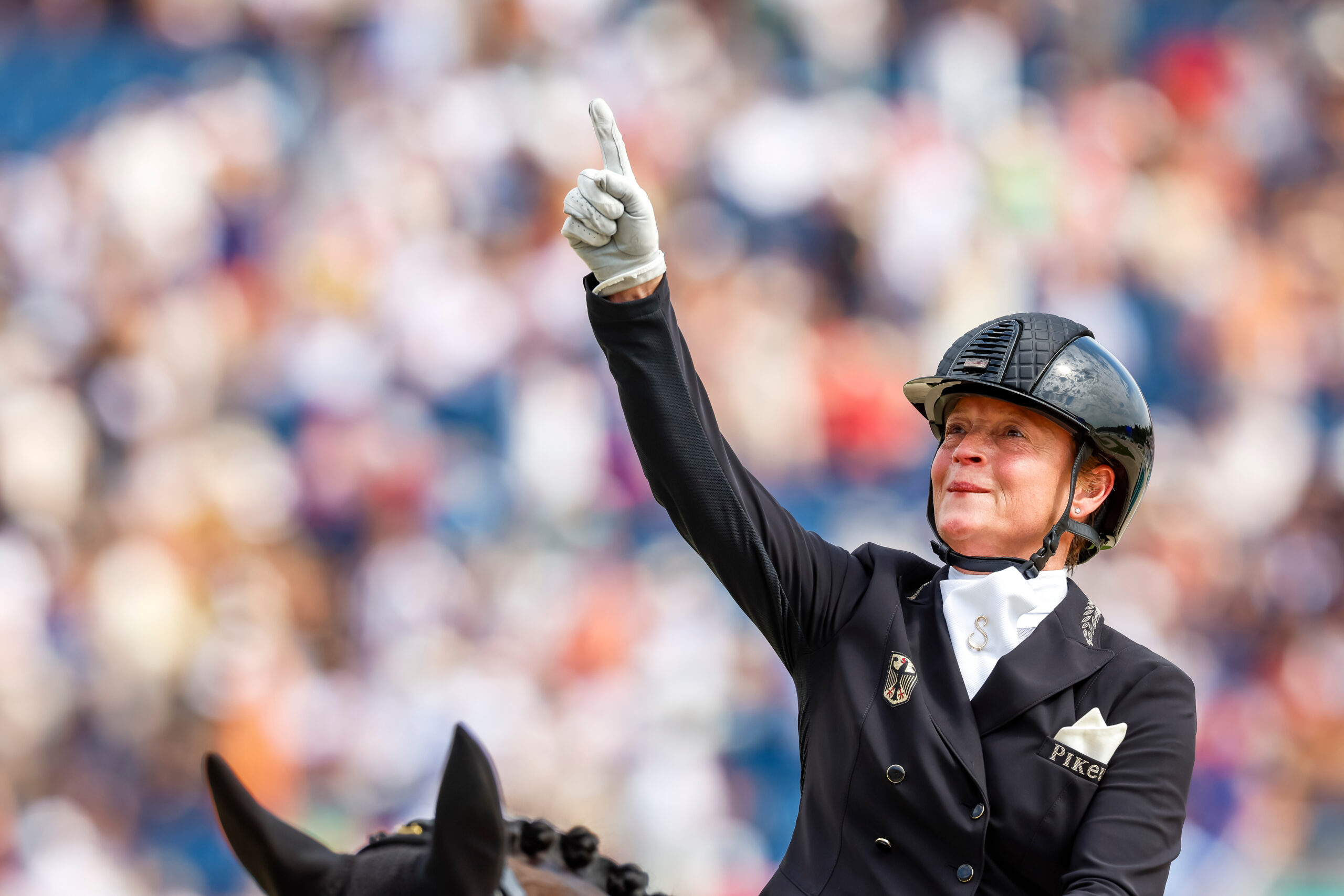
Isabell Werth. Photo: sportfotos-lafrentz.de
“One small step for a man, one giant leap for mankind,” said US astronaut Neil Armstrong when he became the first person in history to walk on the moon on July 21, 1969. On the same day, 384,400 kilometers away from this historic moment, a child was born who was also to make history in her own way. It was christened Isabell, Isabell Werth. The woman this child became is probably as well known today as the first man on the moon.
Childhood in the stable
Isabell Werth grew up together with her older sister Claudia on their parents’ farm, 22 hectares, animals and above all: ponies. The Werth sisters had a lot of fun with them before things got serious. The Graf von Schmettow Eversael riding club, to which Werth remains loyal to this day, was already their second home back then. They rode there three times a week for riding lessons, two dressage lessons and one show jumping lesson. And at the weekend, they would go off-road with friends from the riding club.
But the sisters also rode in competitions and, as Isabell Werth says today, there was a certain seriousness behind it from the very beginning. “Our mother drove us to the first tournaments and supported us as much as she could. She said: “If you just want to ride, then we don’t have to go to all that trouble. And if you want to ride competitions, then go all out.” This is what Isabell Werth says on her website.
Werth rode her first advanced (A) and elementary (L) level dressage tests in 1982 at the age of 12 or 13 with a Rhineland half-breed that was born in the same year as she was, i.e. 1969. Abendwind was the name of this son of the Trakehner Abendregen out of a thoroughbred dam. This bay also helped her sister Claudia to gain some competition experience. Three years later, Isabell Werth got a horse under the saddle in the Westphalian mare Larissa by Lund II, who was also talented on the show jumping course and cross-country. The pair competed in their first A-level event in Bonn Rodderberg, which they won straight away. From then on, Werth’s “riding list” was filled with horses of different talents and ages. She mostly studied at night for school, she says. It didn’t do any harm. On the contrary, it was probably good preparation for her law degree, which she later successfully completed. Werth did not make her career in the courtroom, however, but in the dressage arena. She has one man to thank for her success: Dr. Uwe Schulten-Baumer, the “Doctor”.
From zero to European Championship gold
The Werth and Schulten-Baumer families lived in the immediate vicinity. The steel manager Dr. Uwe Schulten-Baumer, once successful in all saddles himself, had a big name as a trainer. He had accompanied his son of the same name, his daughter Alexa, as well as Margit Otto-Crépin and Pia Laus into the big sport. In the mid-1980s, Nicole Uphoff joined him, who had a highly talented but difficult talent under the saddle with her Rembrandt. Isabell Werth knew Schulten-Baume partly because she was friends with his youngest daughter. At a New Year’s Eve party in 1986, he asked Isabell Werth if she could step in and ride a couple of his horses because the rider was ill. She could and she stayed. The beginning of an incomparable success story.
Up to and including 1987, Isabell Werth had never ridden a flying change at a show. She skipped the medium (M) level and went straight into advanced (S) level in 1988, the year in which Nicole Uphoff won double gold with Rembrandt at the Olympic Games in Seoul. Werth had a perfect four-legged teacher for this: Madras, medal winner for Germany at various championships with Uwe Schulten-Baumer Junior. Werth owes her first starts to him and thus also her victories and placings in advanced (S) level and, in the same year, in Grand Prix competitions. Madras was supported here by the Hanoverian-bred Windhuk son Weingart. They competed in their first Grand Prix in April 1988 and won team gold and individual silver at the European Young Rider Championships in September 1988. Less than a year later, Weingart helped Isabell Werth win the first of 13 European Championship team gold medals.
Rhineland, Wedemark, Rhineland
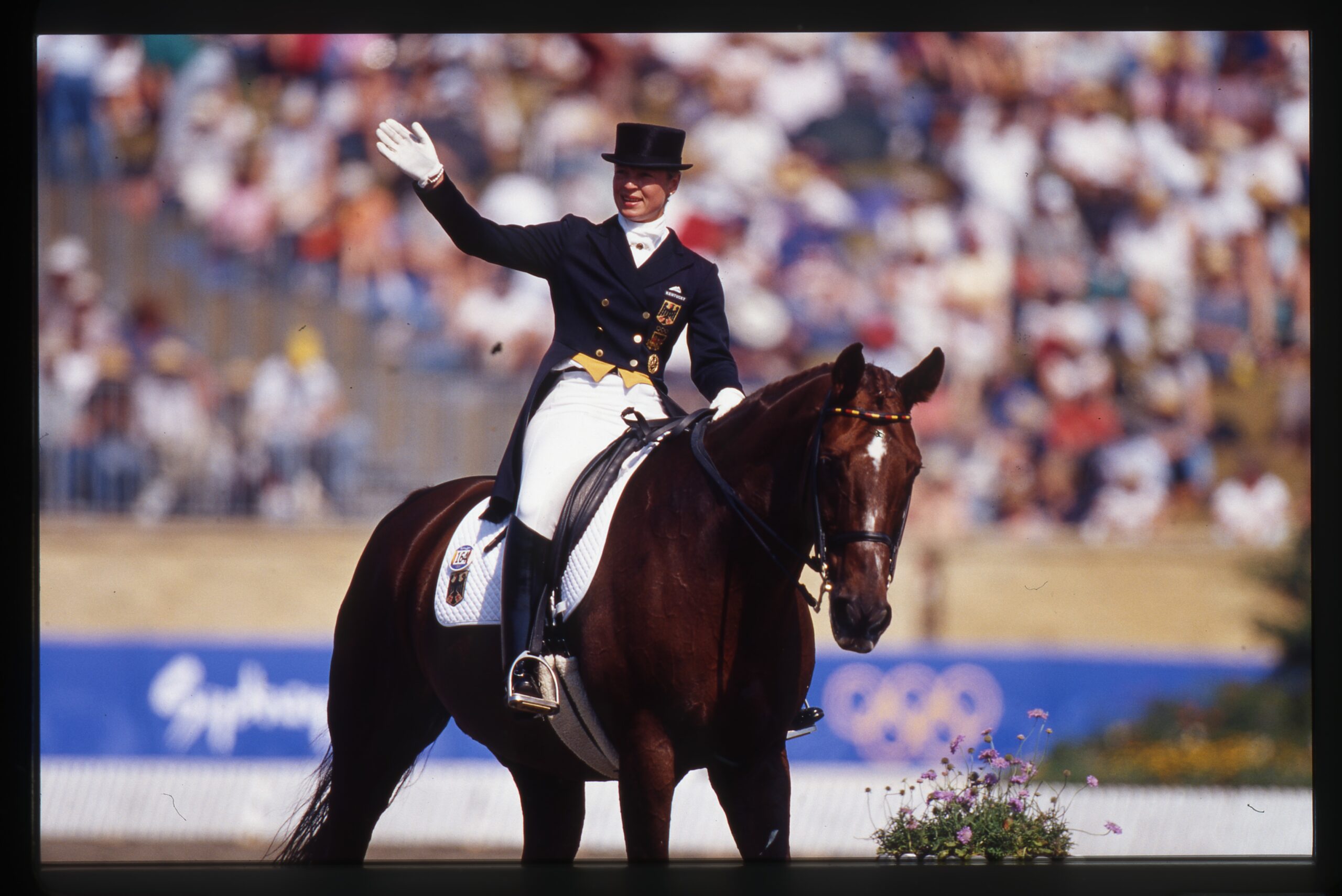
At home, meanwhile, a talent was maturing that would dominate the dressage world in the years to come: Gigolo FRH. The Hanoverian Graditz son accompanied Werth to her first Olympic Games in Barcelona in 1992, where they won team gold and individual silver. He made her Olympic champion a further time in 1996 and 2000. The partnership with Dr. Uwe Schulten-Baumer ended a year later. Isabell Werth left his stables along with a whole series of horses that Dieter and Madeleine Winter-Schulze acquired for her and moved to the couple’s facility in Wedemark. It was at this time that Isabell Werth also began to gain a foothold in her profession as a lawyer, before finally concentrating fully on her sporting career. Something that the Winter-Schulze couple also made possible for her. To this day, Madeleine Winter-Schulze is Werth’s most important supporter, but above all a friend, a family member so to speak.
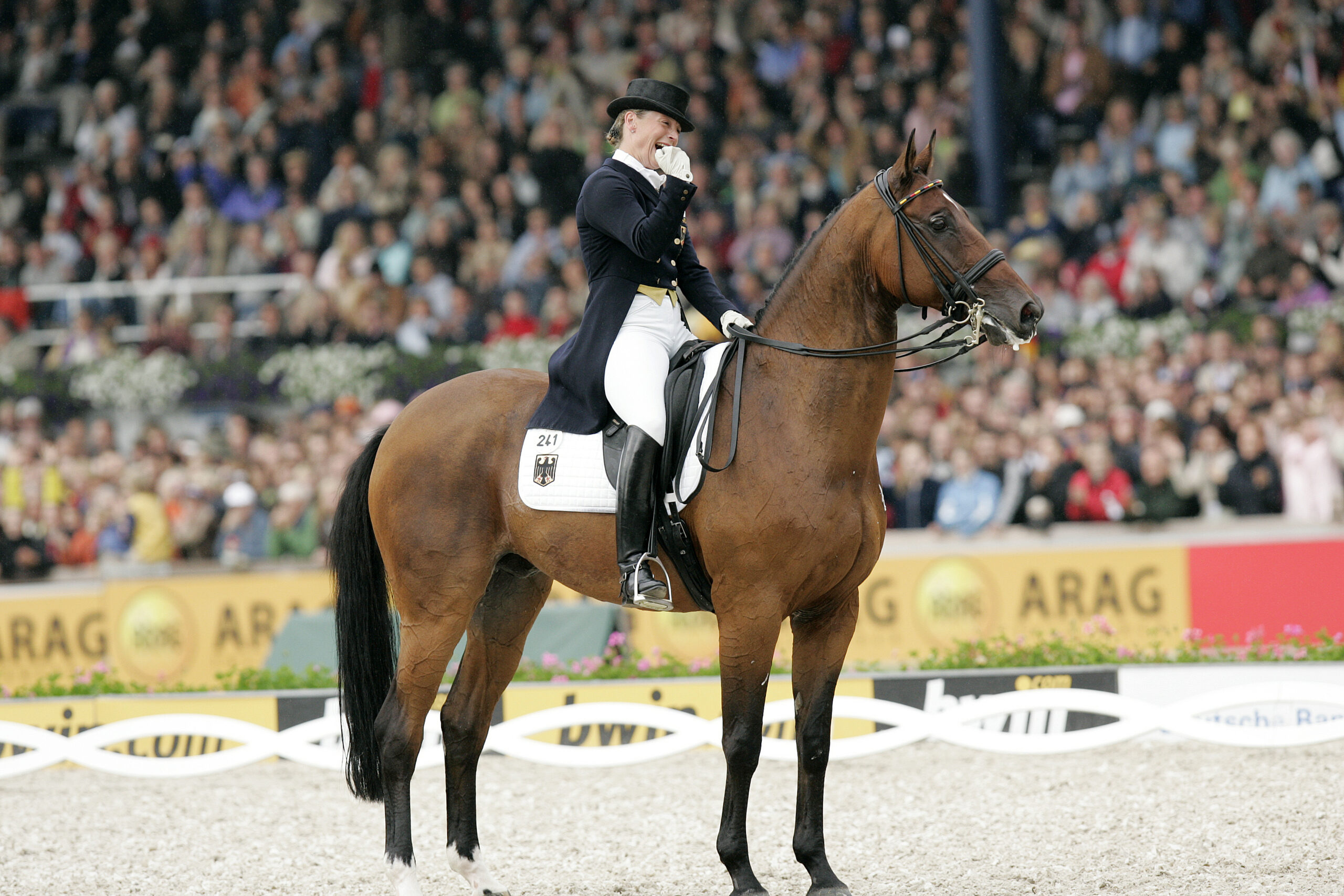
Isabell Werth now has eight Olympic gold medals in her wardrobe. And this wardrobe is located where Werth once came from: on her parents’ farm in Rheinberg. A modern equestrian facility has long since been built here, where Werth has now brought 30 horses into international sport.
Werth lives there with her family, which until his death in October 2025 included her life partner Wolfgang Urban, the former head of the Karstadt department store, where Werth herself worked from 2001 to 2004 and modeled for the house brand YORN. Their son Frederik was born in 2009.
Satchmo and others
In total, Isabell Werth has brought around 30 horses into international sport. In addition to and after Gigolo, she has also competed in championships with ten other horses (including World Cup finals). First and foremost are her Olympic horses, Satchmo, Gigolo’s successor, Weihegold, Bella Rose and most recently Wendy de Fontaine.
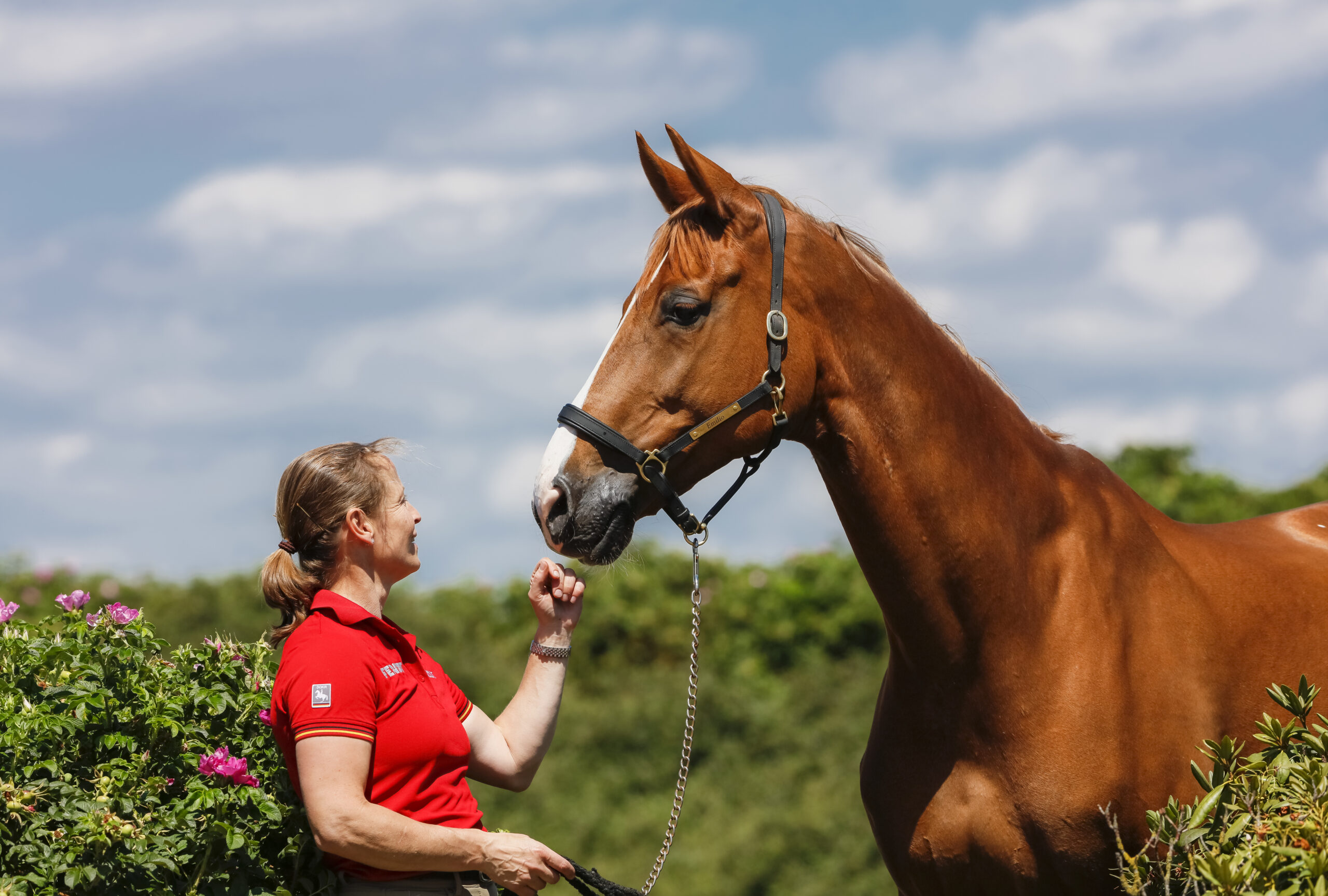
It is worth noting that there were also 80 percent Grand Prix horses in Werth’s career that never saw a championship, Emilio for example. At Werth he was always number 1b behind a Weihegold and a Bella Rose (i.e. also 1c at times). In any other stable he would have been the star.
Apart from Weihegold and Wendy, none of her top horses have ever had another rider. This includes the Hanoverian Antony, with whom she was part of the European Championship team in 1999 and 2001 and competed in six (!) World Cup finals; then the Oldenburg gelding Apache, who accompanied them to the 2004 World Cup; the brilliant Satchmo, who suddenly retired after a meteoric career as a youngster until he was diagnosed with an eye condition, which was surgically repaired to pave the way for the Sao Paulo son to reach the top of the world, which he shaped for years; the giant Hanoverian chestnut Warum nicht, in whom hardly anyone apart from Werth would have suspected a medal winner in the making as a youngster (but who won World Championship bronze with the team in 2010 and was World Cup winner in Las Vegas in 2007); El Santo, who had so much talent but struggled with the piaffe, Don Johnson, who could buck like a hare; the loyal Oldenburg mare Weihegold, who carried Werth to three World Cup titles and four European Championship gold medals in addition to team gold and individual silver at the Olympic Games; the wonderful Bella Rose, Werth’s declared favorite horse, who promised to be the new unbeatable star in 2014, then was out of action for years due to injury, only to reappear on the scene like a phoenix from the ashes in 2018 and become World Champion; then DSP Quantaz, who Werth describes as an opinionated macho; and finally the jet-black Wendy de Fontaine, who Werth took over from Andreas Helgstrand (see below).
Business partnership with Andreas Helgstrand
Werth’s stable will take in new horses at the beginning of 2026. Helgstrand Germany is relocating its headquarters from Syke in Lower Saxony to Werth’s facility in Rheinberg. The German Olympic champion and the controversial Danish dressage rider and horse dealer have had a long-standing business relationship. Werth has acquired several horses in his stables, including for her pupils, such as D’avie for Lisa Müller and Burg Cup winner Tzarina for Victoria Max-Theurer. She herself secured the Sezuan son Joshua, in whom she has high hopes. And when Andreas Helgstrand was banned because a Danish TV station had published undercover video footage showing cruel training methods in his stables, she took on Wendy de Fontaine, a mare trained by Helgstrand up to Grand Prix level, with whom she won team gold and individual silver at the Olympic Games in Paris, as well as becoming European team champion in 2025 and winning two bronze medals in the individual competition.
Prohibited medication
Isabell has been involved in medication cases twice in her career. The first time was in 2009, when her horse Whisper tested positive for the banned substance fluphenazine, a drug used in human medicine to treat schizophrenia, at the Whitsun tournament in Wiesbaden. It is considered doping in equestrian sport. Werth explained that the drug had been tested on Whisper because he was suffering from shivering syndrome and they wanted to test whether he responded to the substance. She apologized at the time and accepted the six-month ban.
The second horse from Werth’s stable to test positive was the Rhenish gelding El Santo, “Ernie”. At the Rhineland Championships at the end of June 2012, he was found to be using the banned substance cimetidine, which is used to treat stomach problems. Unlike fluphenazine, however, cimetidine is not banned internationally for the treatment of horses. It may only not be used on horses in competition. In Germany, however, the drug is not approved for horses.
Werth denied that El Santo had ever received this medication. She initiated investigations and had expert reports drawn up to find out how the drug could have entered the gelding’s body. In the end, the explanation was a power failure. This had caused the water pump to fail briefly. A vacuum was created in the stable’s drinking system, which prevented water from El Santo’s neighbor Warum’s drinking trough from flowing into El Santo’s trough. Warum nicht, who was already retired at the time but had been on stall rest due to a serious injury, had been given the medication to protect the stomach lining against the aggressive effect of the necessary painkillers with which the gelding was being treated for his injury.
In fact, the Grand Jury of the German Equestrian Federation (FN) dropped the proceedings against Werth in this matter almost two years after the positive inspection.
Aktuelle Pferde
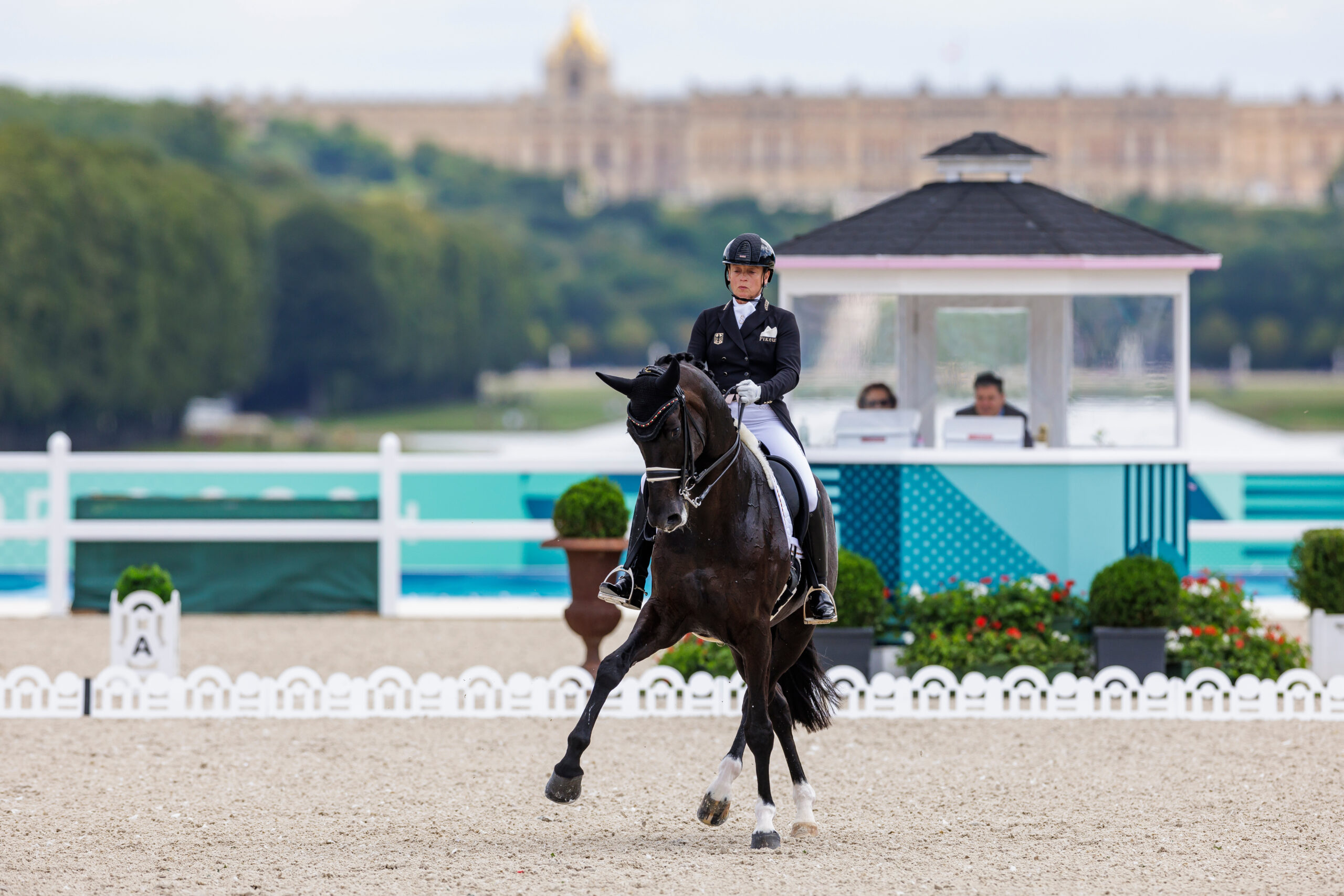
1/ 1
Ehemalige Pferde
-
Olympic Games
- Individual ranking1x
 6x
0x
6x
0x - Team ranking7x
0x
0x
-
World Equestrian Games/World Championships
- Individual ranking5x
1x
1x
- Team ranking5x
0x
2x
-
European Championships
- Individual ranking9x
2x
2x
- Team ranking13x
3x
1x
-
World Cup finals
- 5x
6x
5x
Latest News


EQUI PAGES & Cookies
Funktional Always active
Die technische Speicherung oder der Zugriff ist für den legitimen Zweck, die Nutzung eines bestimmten, vom Teilnehmer oder Benutzer ausdrücklich angeforderten Dienstes zu ermöglichen, oder für den alleinigen Zweck der Durchführung der Übertragung einer Nachricht über ein elektronisches Kommunikationsnetz unbedingt erforderlich.
Preferences
The technical storage or access is necessary for the legitimate purpose of storing preferences that are not requested by the subscriber or user.
Statistiken
The technical storage or access that is used exclusively for statistical purposes.
Die technische Speicherung bzw. der Zugriff erfolgt ausschließlich zu anonymen statistischen Zwecken. Ohne Vorladung, freiwillige Zustimmung Ihres Internet-Service-Providers oder zusätzliche Aufzeichnungen Dritter können die zu diesem Zweck gespeicherten oder abgerufenen Informationen in der Regel nicht dazu verwendet werden, Sie zu identifizieren.
Marketing
The technical storage or access is required to create user profiles to send advertising, or to track the user on a website or across several websites for similar marketing purposes.