Olympic equestrian and breeder Lutz Gössing (1938–2026) has passed away
Olympic equestrian and breeder Lutz Gössing has passed away
 from Jan Tönjes
 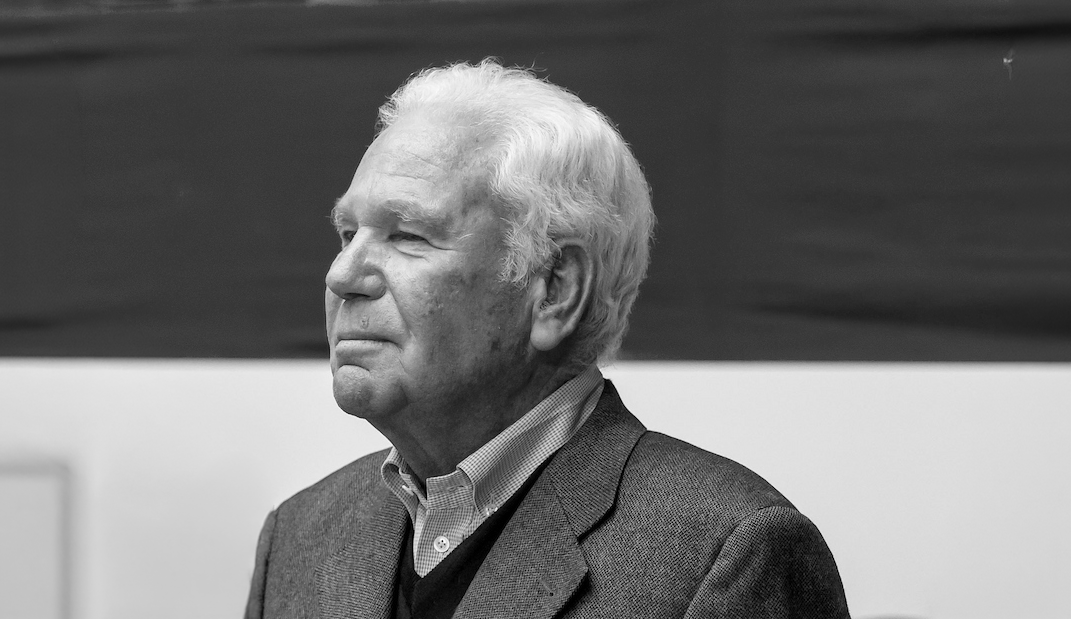 Lutz Gössing (1938–2026) Photo: sportfotos-lafrentz.de
 Lutz Gössing—officially Ludwig Gössing—was born on May 13, 1938, in Dortmund. As a farmer, he found his way into the sport in the 1960s, just like so many other great riders of that era. From rural riding to the world’s elite—that was not an uncommon career path back then. And, as with many other show jumpers and dressage riders, his path led through eventing. He belonged to that generation of German riders who got their start in the “Busch.”
Lutz Gössing: Joined the DOKR in Warendorf at age 25
In 1963, he joined the German Olympic Equestrian Committee (DOKR) in Warendorf. As early as 1964, he was a top contender for an Olympic spot. However, for reasons related to sports policy, there was no place for Gössing on the team, which at that time still represented a unified Germany.
Twice an Olympia
In 1968, Lutz Gössing made the national team. He had won the German championship in 1966 and 1967. At the Games in Mexico, however, he had to rely on his backup horse, Arved, and was eliminated on the cross-country course in the tropical rain. The start of the 1972 Munich Olympics was also anything but ideal for Lutz Gössing. His gray horse, Chicago, had forgotten just about every basic concept of dressage. It was only thanks to a spirited cross-country ride—at that time, the cross-country course, plus the racetrack and road sections, stretched over more than 18 kilometers!—that the German team got back on track for a medal. In the end, Gössing, along with Harry Klugmann, Karl Schultz, and Horst Karsten, won the bronze medal. In the individual standings, the trained farmer finished in 13th place.
Breeding Instead of Eventing: Rosella G and the Stable in Brockhagen
After 1972, Gössing lacked a suitable horse for
eventing
—so he turned to show jumping instead. He also became increasingly passionate about breeding. Together with his wife Christa, he ran his own competition stable in Brockhagen, in Steinhagen, Westphalia. One breeding achievement remains remarkable and is, to date, unique in the history of German equestrian sports: Riding Rosella by Ramiro—a mare he bred and trained himself—he won the German National Championships twice, in 1985 and 1986. He also competed in 13 Nations Cups for Germany.
Patron and Trainer
Young riders found a training center in Steinhagen: Mylène Diederichsmeier trained at the Gössing family’s farm and, for years, competed the Gössings’ horses at tournaments. When Gössing closed the competition stable for financial and personal reasons, Tim Rieskamp-Goedeking took over the family’s horses in 2010. At that time, Gössing’s wife, Christa, was already suffering from cancer. She succumbed to the disease in December 2011. The Gössings had been married for 45 years.
For many years, Gössing also served as team manager, leading junior and young riders’ teams to the European Championships. Other riders whose careers were significantly shaped by their time at the Brockhagen farm included, for example, Heinrich-Hermann Johannsmann and Susanne Behring. In recognition of his contributions, Lutz Gössing received the Peace Rider Award from the Westphalian Equestrian Federation and, in 2008, the German Equestrian Cross in Silver from the German Equestrian Federation (FN).
The 1972 Team
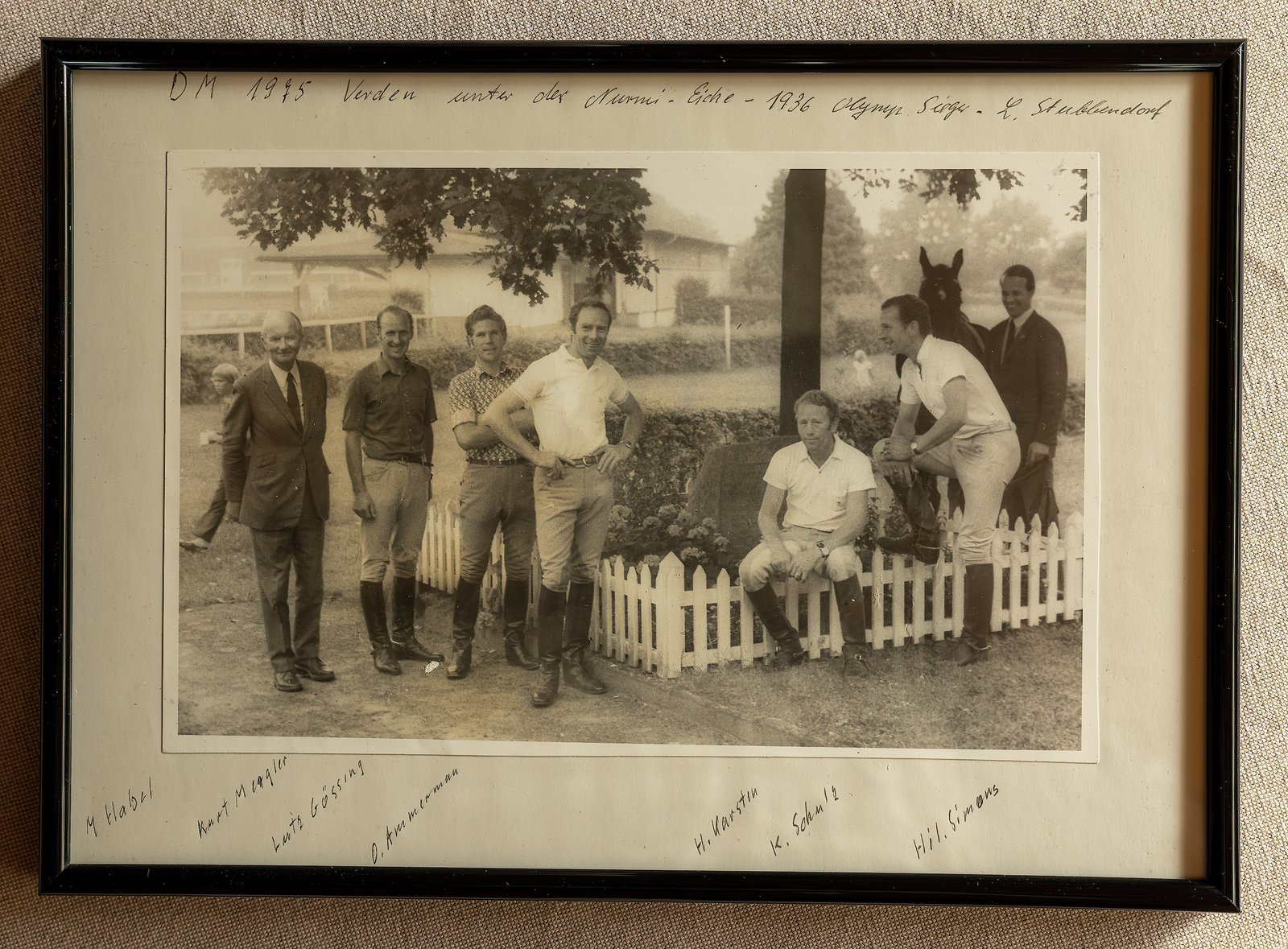
Just how much the friendships from his playing days meant to him became clear in 2018: For his 80th birthday, Gössing invited his teammates from the 1972 Munich Games, including the reserve riders—Helmut Rethemeier, Otto Ammermann, and Diedrich Fick—to a reunion in Steinhagen-Brockhagen. “I’d been thinking for a while about organizing another big reunion,” he said at the time. All seven Olympic riders from Munich attended—it is said to have been their first reunion in about 20 years.
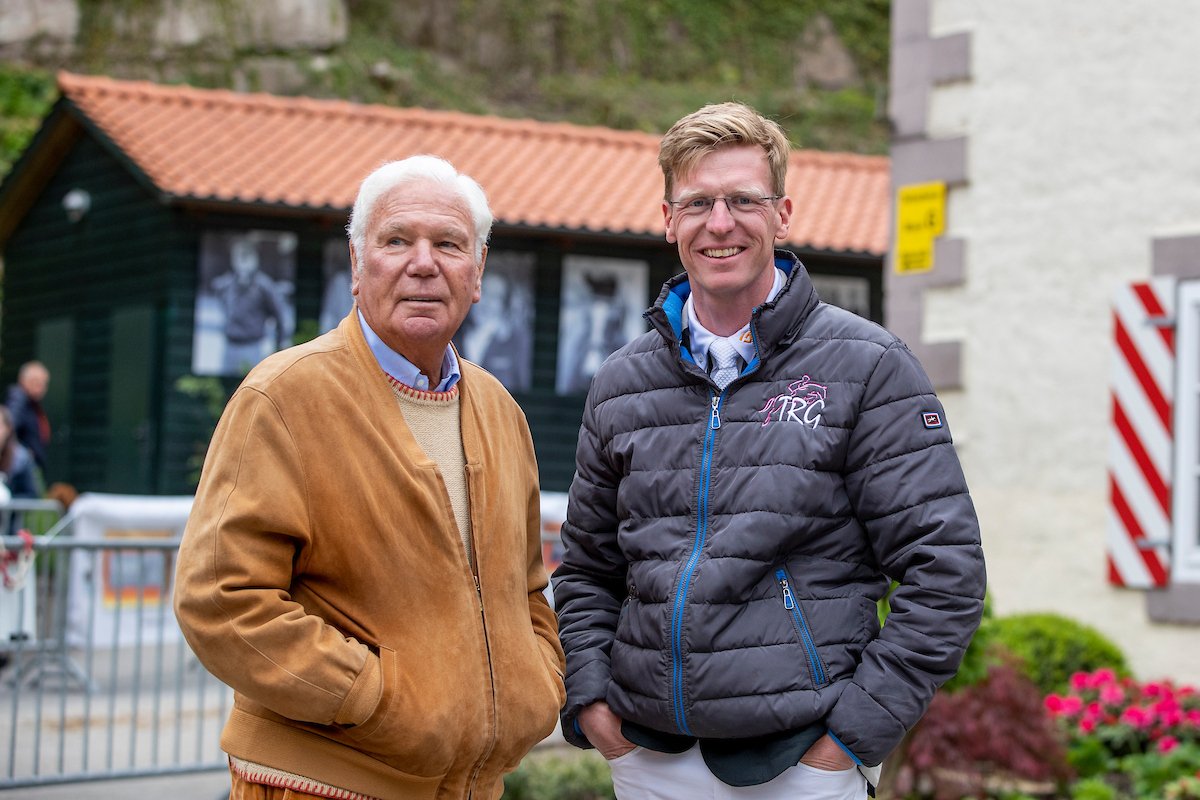
Not even back surgery could dampen his passion for horses. Whenever Tim Rieskamp-Goedeking—a multiple champion among German professional riders—competed, Gössing was often there to watch. In this way, the stylish rider carries on Lutz Gössing’s life’s work.