Clear words from the show jumping committee
 Niklas Jonsson, Chairman of the Swedish Show Jumping Committee until January 2026. Photo: kimc.nu/Kim Lundin
The tone of the letter was unusually sharp. It warned of a trend towards increasingly centralized, top-down management, in which divergent professional opinions would be marginalized rather than integrated.
It is no longer primarily about children starting competitions, but about how power is exercised within a member-based association.
The chair of the Swedish association, Sandra Ruuda, has since argued that this presentation of the facts contains several factual errors. However, she has declined to provide evidence to the contrary point by point, stating that the entire procedure followed the association’s common values and code of conduct.
Opposition at the grassroots level
A number of regional equestrian associations within the SvRF are said to have sent formal letters criticizing both the U13 decision and the procedure behind it. Voices from the regions and districts have even gone so far as to call for an extraordinary general assembly.
Although regional differences of opinion are nothing unusual in themselves, it is the timing that counts. Within just four days, opposition arose simultaneously at expert, professional and regional level. This coincidence of timing turned a controversial rule into a full-scale association crisis.
Why age limits are not as simple as they sound
International observers may find the Swedish debate difficult to understand. Much of the excitement stems from the fact that the age regulations in equestrian sport are already complex and highly differentiated.
- At international level, the Fédération Equestre Internationale (FEI) generally allows riders up to the age of 16 to compete on ponies, depending on the discipline and class. Pony sport is recognized as a high-performance sport in its own right and not just as a preliminary stage for the sport on large horses.
- Sweden has historically been more tolerant at national level than the FEI, allowing riders to compete on ponies up to the age of 20, balanced by strict pony size categories and rules (see below) for the rider/pony pairs. The aim of this system was to allow for gradual development and to avoid young riders being prematurely placed on horses.
- Eventing in Sweden already operates according to a differentiated age model, which was adapted a few years ago in line with the recommendations of the umbrella organization Riksidrottsförbundet in 2007: Riders up to the age of 13 compete in adapted classes, while those aged 14 to 20 form a separate category. This structure has been in place for years without major controversy and is often cited as an example of age-appropriate development.
The current conflict is therefore not about whether children should be protected. It is about how protection is defined, how quickly rules are changed and whether discipline-specific realities are taken into account.
Money is not discussed publicly
One issue that remains almost completely untouched in the many debates on social media and elsewhere is the fact that money is also at stake. Several observers point out that for many of the most vocal and active opponents, part of their livelihood is at stake when it comes to the under-13s decision. Buying and selling ponies, training young children and helping parents find the ‘right partner’ on four legs is a lucrative business. At a time when even small ponies, Swedish B ponies, are selling for 40,000 to 100,000 euros if they have the right attitude, age and ability, the stakes are high.
Children are exposed to pressure
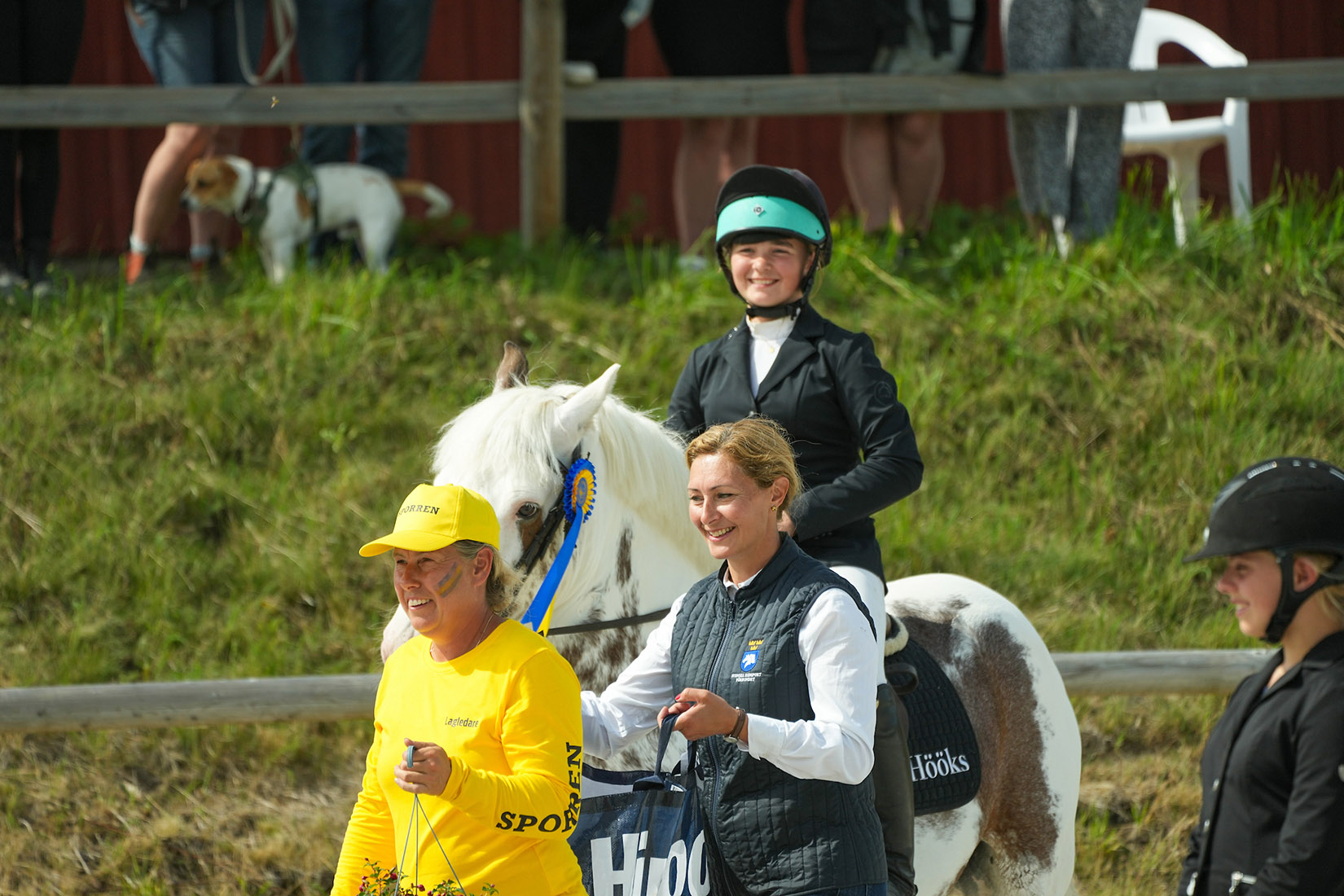
The high cost of buying a show pony inevitably puts pressure on children to perform well so as not to devalue the family’s investment. Most people would probably agree that such pressure on children under the age of 13 is less than ideal. More importantly, the proposed rule changes do not exclude children under the age of 13 from competing in general, but do exclude them from competing in national leagues and championships in this age group.
Sandra Ruuda: Reform-oriented chairwoman in a divided association
At the center of the storm is Sandra Ruuda, Chairwoman of the SvRF since May 2023. Ruuda made history as the first woman to head the association in its 111-year history. Her background differs from that of many of her predecessors. She is primarily known as a business-oriented leader with extensive experience in organizational development and leadership consulting. She previously managed a riding school and held elected offices at association, district and national level. In other words, from an organizational perspective and also in terms of good governance, Ruuda’s background fits the profile of a president. She is neither a lightweight nor an opportunist. Nor is she an upstart, quite the opposite.
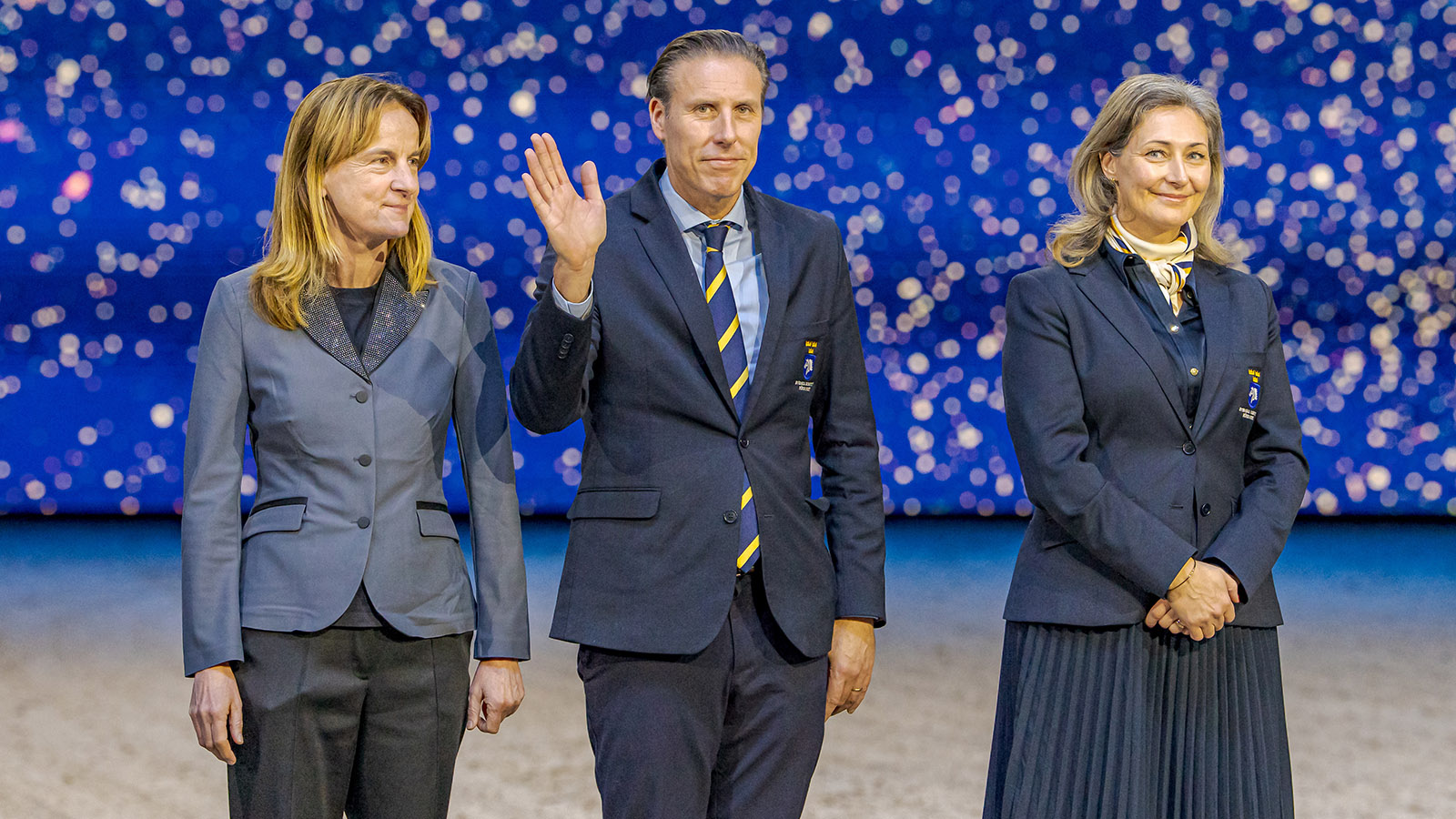
 A picture from better times: Sandra Ruuda, President of the Swedish Equestrian Federation, and Secretary General Johan Fyrberg are seen at a gala. In the meantime, Fyrberg has surprisingly resigned. Photo: kimc.nu/Kim Lundin
She is still closely involved in daily equestrian life, riding regularly and spending much of her time as a “pony parent” in the stables. From the outset, Ruuda has emphasized values such as safety and animal welfare as guiding principles, alongside the goal of modernizing management structures and making decision-making processes more transparent.
Association insists on new regulation
In an interview published on January 14, 2026, Ruuda described the immediate resignation of Johan Fyrberg as unspectacular and amicable and explained that talks about his dismissal had already taken place well before Christmas. She emphasized that the appointment of an interim Secretary General served to ensure continuity.
She was also unequivocal about the content of the decision for the under-13 age group and stated that she still had full confidence in the approach taken, even if the debate had now shifted to procedural issues.
Ruuda’s leadership style is also characterized by her international role. In October 2025, she was elected to the board of the European Equestrian Federation (EEF) for a four-year term. The EEF works closely with the FEI and plays an important role in coordinating the European federations on governance and development policy issues.
Supporters see this as strengthening Sweden’s international influence. Critics argue that there is a risk of prioritizing external conditions over national circumstances. Either way, Ruuda’s leadership style is now being judged not only domestically, but also in a broader European context.
Looking back on the many heated controversies and difficult relationships between her predecessor Ulf Brömster and the media, it is clear that the criticism directed at him was a mere breeze compared to the verbal attacks Ruuda is subjected to online.
Conflict continues to smoulder
The U13 decision has not been reversed. The association considers it to be necessary and correct from a long-term perspective in order to ensure the well-being of children. Critics argue that the process lacked transparency, analysis and involvement of experts and that the consequences were not adequately assessed.
It is clear that the controversy is now about far more than just an age limit. It has revealed tensions between professional expertise and the authority of the association, between symbolic politics and practical implementation, and between reform ambitions and institutional trust.
For Swedish equestrian sport, the question is no longer just how children should participate in competitions, but also how decisions that shape the future of the sport are made, justified and anchored in the rules.
This question remains unanswered.
Pony sport and age rules for riders in Sweden
Pony size classes (Sweden)
Sweden (SvRF) Pony size classes (A-D), measured at the withers:
- Category A: ≤ 107 cm
- Category B: > 107 cm to ≤ 130 cm
- Category C: > 130 cm to ≤ 140 cm
- Category D: > 140 cm to ≤ 148 cm
FEI
The FEI defines a pony as a maximum of 148 cm without horseshoe / 149 cm with horseshoe (rounded according to FEI measurement rules).
In Sweden, riders were previously allowed to compete on ponies up to the age of 20, as long as they remained within the appropriate pony size category. This is more liberal than the international FEI rules.
Official age rules – Swedish Equestrian Federation (SvRF TR I 2025)
Minimum age of riders
Riders may take part in competitions from the calendar year in which they turn 8 years old.
Rider categories
SvRF defines age categories that apply to all disciplines (on a calendar year basis):
- Children: Riders aged 12 to 14 years
- Juniors: up to 18 years
- Young riders: 16 to 21 years
- Seniors: from 19 years (vaulting from 16 years)
- U25: 16-25 years
Age limits for pony riders
SvRF has specific age limits for pony competition categories (calendar year rule):
- A- and B-Ponnyryttare (small/medium ponies): up to and including the calendar year in which the rider turns 13 years old (i.e. after this year the riders are no longer eligible to participate).
- C- and D-Ponnyryttare (large ponies): up to and including the calendar year in which the rider turns 20 years old.
- Riders who have just passed these age limits for ponies can sometimes still compete in pony classes as “överårig” (over-aged) under certain rules.
Definitions of fringe size
Ponies are defined as horses up to 148 cm tall with horseshoes, but the A-B-C-D classification used in Swedish competitions follows the SvRF pony rules.
How this relates to the controversy surrounding the age limit of 13
According to the current TR rules, riders on A and B ponies are automatically excluded from the pony classes after the year in which they turn 13. Riders on C and D ponies can compete at national level up to the age of 20, even in higher classes.
The SvRF’s new elite competition rule goes beyond these TR age categories: From 2027 to 2029, riders under the age of 13 may not participate in elite competitions, national championships or nationwide series, regardless of the pony category. However, detailed rules for nationwide series at a lower level still need to be discussed and defined.
This means that the debate is not just about the basic rules, but about how an additional age limit of 13 for elite competitions overrides the existing structure – a measure that hits show jumpers particularly hard, as riders can currently compete at a high level on C ponies well before the age of 13.



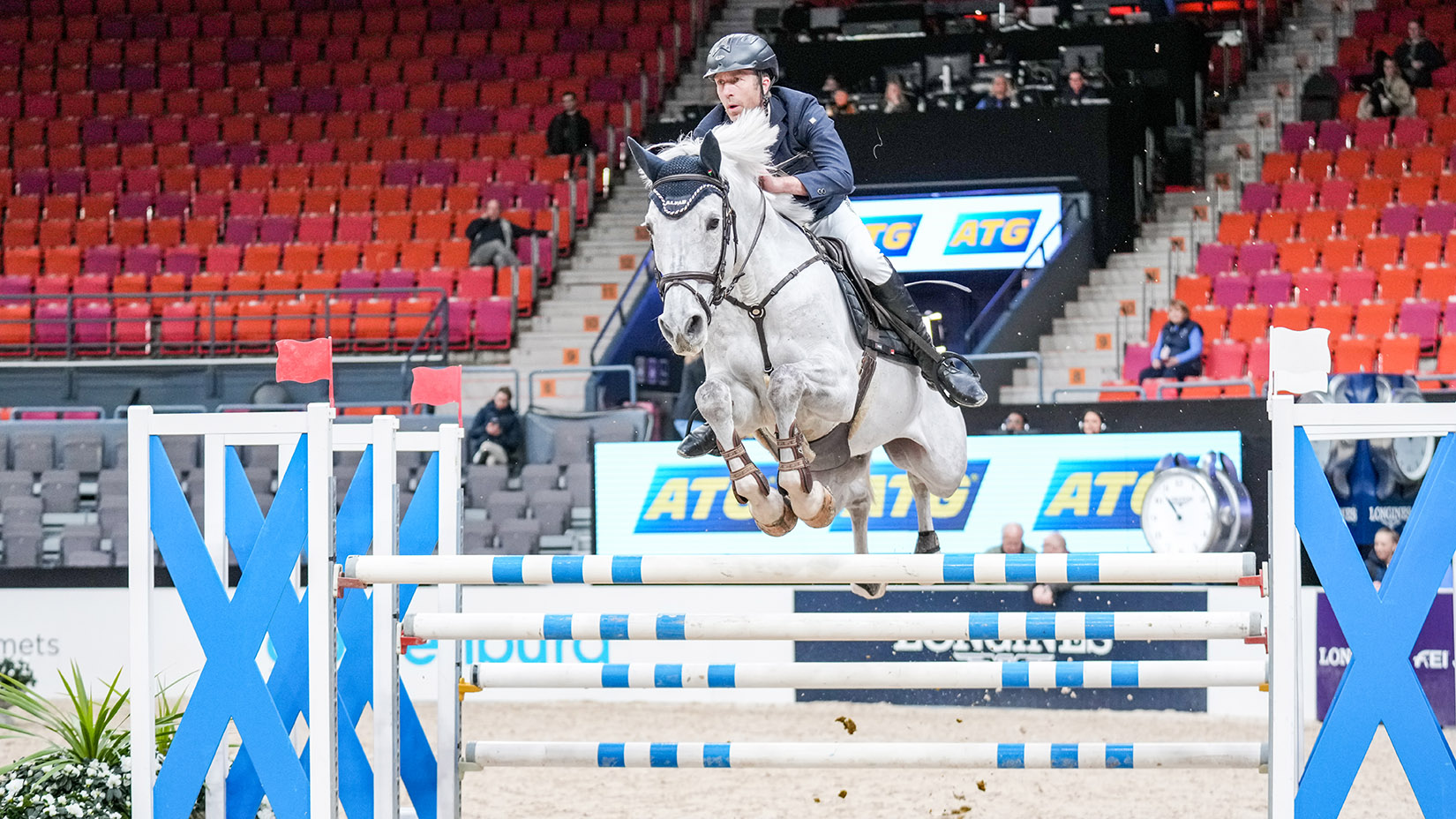 Niklas Jonsson, Chairman of the Swedish Show Jumping Committee until January 2026. Photo: kimc.nu/Kim Lundin
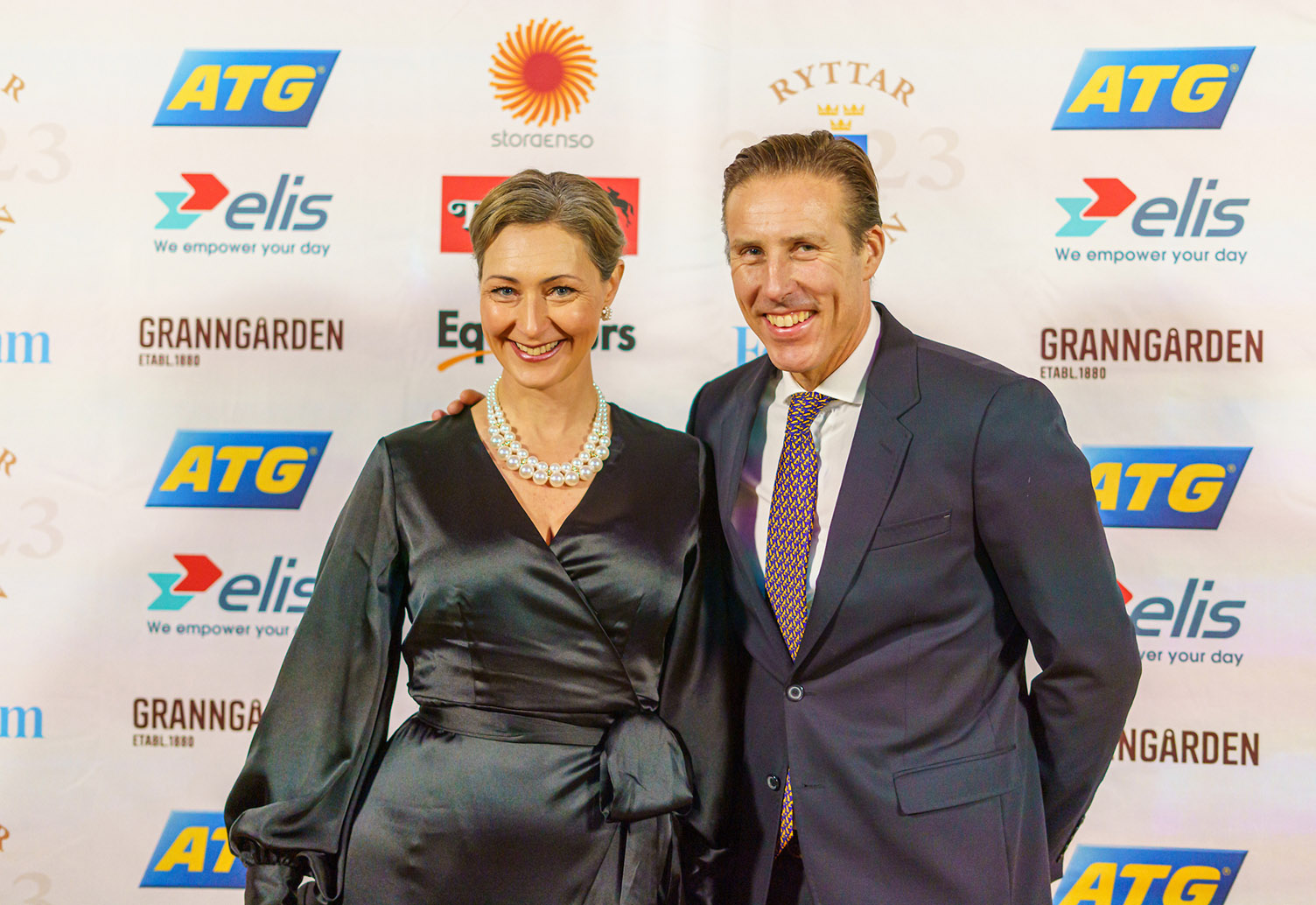 A picture from better times: Sandra Ruuda, President of the Swedish Equestrian Federation, and Secretary General Johan Fyrberg are seen at a gala. In the meantime, Fyrberg has surprisingly resigned. Photo: kimc.nu/Kim Lundin