FEI Sports Forum: Injections, ice, nerve cutting, Cushing's and magnetic waves in the focus of the Veterinary Committee
FEI Sports Forum: Nerve section, Cushing, ice and homeopathy under discussion
 from Jan Tönjes
 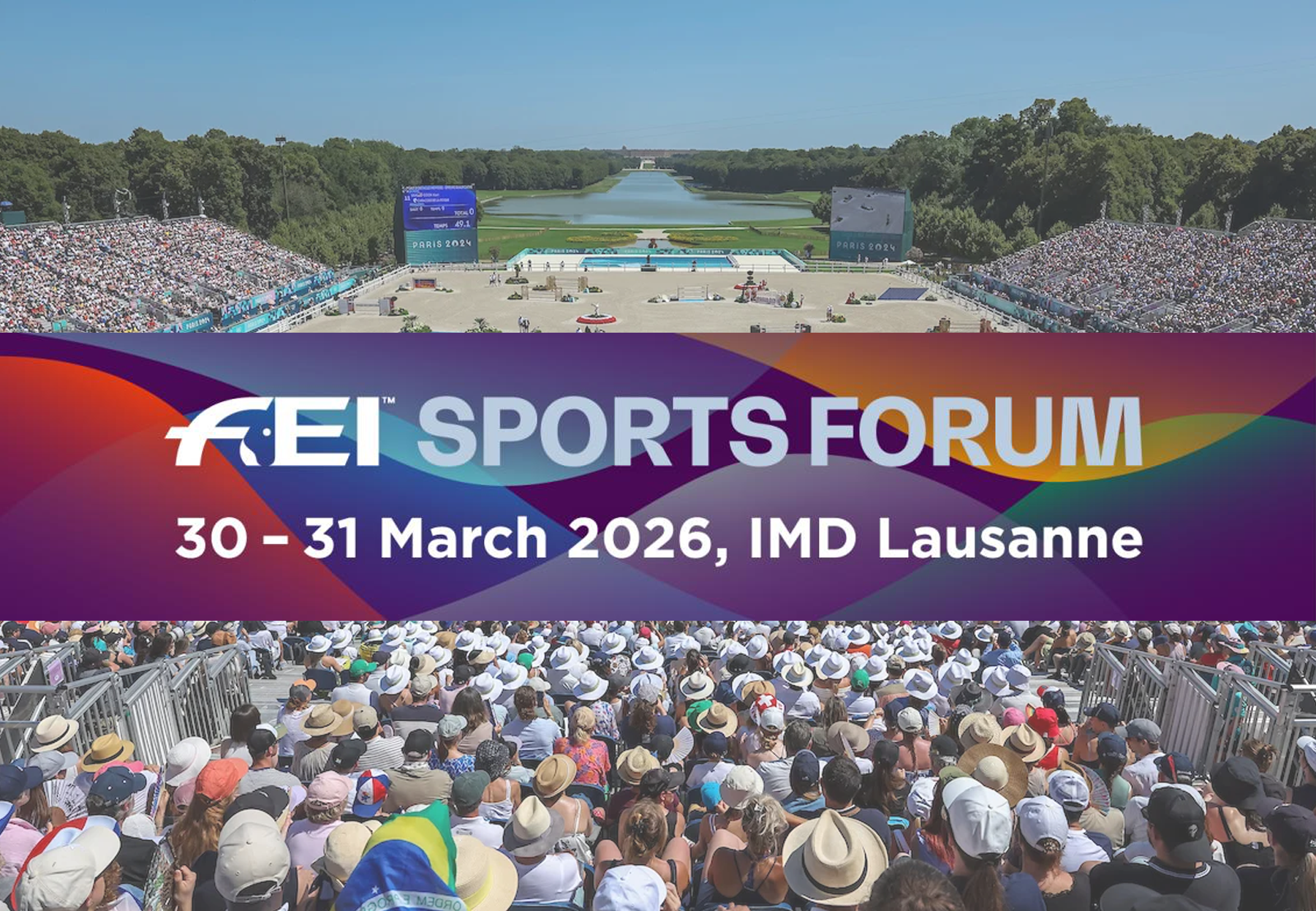 FEI Sportsforum, Olympic Stadium Paris 2024. Photo: sportfotos-lafrentz.de
 Mentally fit for the course? The French President of the International Show Jumping Club (IJRC), François Matthy jr., asked somewhat incredulously and raised an eyebrow as a sign that he did not consider this aspect to be relevant. The submitted proposal for the rule change is not limited to the requirement that the mental condition of the four-legged athletes must be given for eligibility to compete, but also includes the formulation of assessment criteria. This should enable the relevant groups of people within the FEI – riders, stewards, officials, trainers … – to decide on the basis of defined key data whether the mental condition of the horse does not stand in the way of a start.
Day 1: Are the final nodes coming back?
The first day dealt, among other things, with the team strength of the Olympic teams and planned changes to the dressage rules.
Nerve incision – does it still exist?
The good old nerve incision, technically known as a neurectomy, has not been permitted in Germany for some time. However, the ambiguous regulations are now to be clarified: The palmar nerve (Nervus palmaris), which runs along the cannon bone and splits into the palmar toe nerves at the fetlock head, which are responsible for the transmission of stimuli from the hoof, pads, heels and hoof roll (steel leg), must not be severed. Until the 1980s, nerve cutting was a tried and tested means of enabling horses with hoof roll problems to walk pain-free, even at competitions. However, it was accepted that many stimuli could no longer be transmitted from the sole of the hoof, for example. In future, every nerve incision should be compulsorily registered in the horse’s passport. If this proposal does not find a majority in the vote at the General Assembly, at least the cutting of the palmar nerve should be expressly prohibited as an alternative.
Cushing’s horses in sport
For many horse owners whose animals suffer from Cushing’s disease (Pituitary Pars Intermedia Dysfunction, PPID), a daily dose of Prascend is part of everyday life. The medication with the active ingredient pergolide significantly improves the condition of horses suffering from Cushing’s disease. Pergolide has not yet been approved for use at competitions. Because the administration of the active ingredient is interrupted before competitions, the patient’s situation worsens. For this reason, the proposal was formulated to decide on an exception, a so-called Therapeutic Use Exemption (TUE). The doping regulations also permit this in the human field if it is clear that the active substance has no performance-influencing effect.
No more emergency injections
As things currently stand, it is permitted to inject horses at competitions with substances that have little or no scientifically proven effect. This regulation collides with animal welfare laws in some countries and also poses legal problems for the treating veterinarian (“treating vet”).
In future, according to the proposal from the national associations, it should be made clear that nothing may be injected, not even products to support the joints or if amino acids or homeopathic remedies are in the injection. So far, this is still permitted.
Trust is good, control is better
This, as well as the next proposal formulated by the FEI, requires stricter controls, especially in the stable area. The FEI would like to see certain medications that are prohibited as controlled medication in competition but may be used at home not be allowed at competitions, for example in the tack locker. A list is to be drawn up for this purpose.
Making it difficult to administer intravenous fluids
The horse is tired, dehydrated – so it needs a drip after the competition. Common practice in endurance sport. Infusions with saline solution after a strenuous day of cross-country are not uncommon in eventing either. In eventing, the team veterinarian must already ask the Veterinary Delegate for permission. This is actually always granted. The horses are then placed in so-called “treating boxes”. However, if too many horses are registered, the Vet Delegate can also authorize an infusion in the horse’s box.
The key point in the proposed amendment is that in future an IV infusion without a clinical assessment of the horse should be subject to penalties.
Ice cream, ice cream baby …
Ice machines, which provide cooling for the horses’ extremities, are a common sight in the stable aisles of international show tents. There was a show weekend in Aachen where the grooms complained that there was never a quiet moment because the drone of the ice machines could be heard almost 24 hours a day. It was said that a chestnut gelding and a black stallion were constantly being cooled.
Cold can cover up lameness in the short term. Up to now, the period until when horses may still be treated in this way before a vet check was not clearly defined. In future, it should say “the horse may not be cooled with ice within 30 minutes before a vet check or re-inspection”.
The use of blankets or gaiters that use magnetic field therapy is also to be restricted. In future, according to the proposal, only applications that work with a rechargeable battery and not with a power supply via cable will be permitted. This should ensure that only magnetic fields with a maximum of 100 gauss – a value that is safe for humans – are used.
Safety and a good night’s sleep
According to the regulations, the lights in a stable must be switched off for at least six hours (more on this in the episode “Are you an FEI stewardess” of the podcast TELL ME ABOUT THE HORSE). As the Swede Göran Åkerström, FEI Director of Veterinary & Equine Welfare, smugly remarked, this is not always the case with the “ambitious” schedules of some indoor organizers. Consideration is now to be given to whether penalties should be imposed if this rule is not adhered to.
Safety can be jeopardized by dangerous horses – such as those that can only be led by two people to the conformation test. Applicants also see a need for action here. Some campaigners frowned at this. Eleonora Ottaviani, former president of the IJRC, referred to a prominent case. This horse was really dangerous, but was not only a top athlete, but also an exceptional stallion. His name: Diamant de Semilly…
Finally, there are to be changes to the pony dinner. Both the procedure – two vets (!) whose measurements are recorded as the average size of the pony – and the cost structure are to be reconsidered. Two European vets were flown to the USA to measure two ponies. Total costs: more than 10,000 US dollars.
Similar posts