Eventing Riders Found the International Event Riders Club (IERC)
International Eventing Riders Club – Following the IJRC and IDRC, Now Also the IERC
 from Dominique Wehrmann
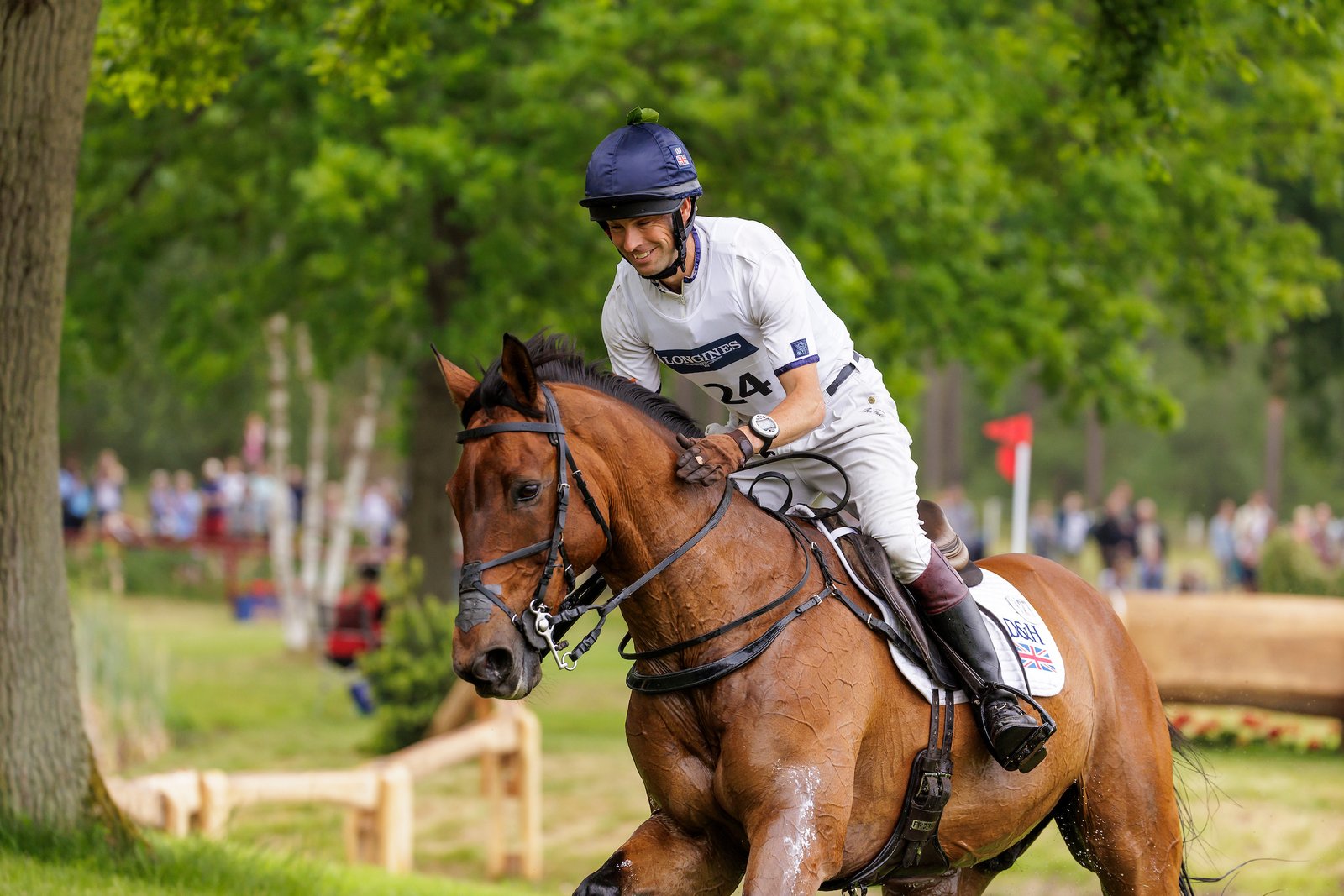 Harry Meade is the first president of the International Event Riders Club (IERC).
Photo: Archive, sportfotos-lafrentz.de
On October 13, the IERC, the International Event Riders Club, was formally founded. The president is Harry Meade of the United Kingdom, and his vice president is Lynn Symansky of the United States. Frédérique Reffet Plantier was appointed Secretary General. The board also includes Olympic champion Julia Krajewski, world No. 1 Tim Price (NZL), Sam Watson from Ireland, Noor Slaoui from Morocco, and Australia’s Oliver Barrett as the U25 representative.
As an athlete representative on the FEI Eventing Committee, Bettina Hoy also played a significant role in the founding of the IERC.
However, you don’t need to have won Olympic medals or competed in championships to join. The club explicitly invites eventing riders with FEI registration to join, regardless of their riding level. Membership is free and can be easily completed online.
IERC’s Mission
The International Event Riders Club aims to serve as a bridge between eventing riders and the FEI—in both directions. On the one hand, the goal is to ensure that riders have a say in the development of the sport by conveying the concerns, suggestions, and views of active riders to the governing body. Specifically, this involves, for example, making their voices heard when it comes to regulatory developments—such as those concerning horse welfare, as well as risk management for both animals and people.
On the other hand, we also want to become a point of contact for the FEI when it comes to issues affecting eventing riders, when representatives are needed for working groups, and so on. To ensure this collaboration, a Memorandum of Understanding (MoU) is to be signed with the FEI, in which both parties commit to cooperation on a voluntary basis.
“A club that listens to riders”
Harry Meade explains the idea behind the founding of the IERC: “The goal was to establish a club that listens to riders, represents them in a straightforward and effective manner, helps shape the sport, and—most importantly—endures for future generations. We will continue to maintain a close and cooperative working relationship with the FEI to ensure that the collective voice of riders is properly heard throughout the sport—today and in the future.”
Forum for the Exchange of Ideas
David O’Connor, the U.S. chairman of the FEI Eventing Committee and, as a former world champion and Olympic gold medalist, thoroughly familiar with the sport, welcomes the founding of the IERC: “We are very pleased that the athletes have established an organization through which they can bring their collective voice to the FEI Eventing Committee. We look forward to the IERC being officially recognized by the FEI through a Memorandum of Understanding (MOU)—as a forum where ideas can be exchanged and communication fostered.”
Example: IJRC
The International Jumping Riders Club (IJRC), founded as early as 1977, demonstrates that such an athletes’ association can be much more than just a debating club. The extent of its influence was evident, for example, in the implementation of Article 259 of the FEI Jumping Rules, which governs the issuance of so-called “Jumping Recorded Warnings.” It was the IJRC’s own request that blood on the horse within the rider’s sphere of influence or on the equipment should initially result in a warning and, upon a second occurrence within 12 months, lead to an automatic one-month suspension. The rule went into effect at the beginning of the year. Since then, over 300 warnings have been issued, and 19 riders have already had to—or are currently required to—sit out for four weeks, including Abdullah Alsharbatly and, most recently, Max Wachman.