In future, Trakehner foals will be labeled “Classic Breeding” if they have been produced without the use of modern reproduction technologies. This refers to matings by natural breeding, fresh semen or frozen semen – provided that the mare bears and raises the foal herself. The identification is made in the horse passport. The aim is to increase transparency for breeders, buyers and the professional public.
Biotechnology on the rise
The background to this is the growing importance of modern methods in horse breeding. Techniques such as embryo transfer (ET) or Ovum Pick Up (OPU) in conjunction with intracytoplasmic sperm injection (ICSI) are increasingly being used internationally – above all to use mares of particular genetic interest more intensively.
In an ovum pick-up (OPU), follicular fluid containing immature oocytes is aspirated from the ovaries of a mare. The mare is given painkillers and the immature eggs (oocytes) are removed with a needle. This allows several eggs to be retrieved, which then have to mature before they can be inseminated. This is where ICSI comes into play. A sperm is injected directly into the egg. The resulting embryo is then implanted directly into a recipient mare or deep-frozen.
The Trakehner Verband also provides its breeders with information and support in this regard. The procedures are particularly useful for rare performance genetics.
Identification of Trakehner foals: Supplement, not a counter-model
According to the Trakehner Verband, “Classic Breeding” is not intended to create a counter-model, but rather an additional differentiation. The label is intended to highlight those breeding methods that continue to do without biotechnological intervention. In other words, where it says “Classic Breeding” on the label, there is a foal “inside” that was carried by its mother herself. The foal is therefore socialized by the genetic mother. Mares from other populations, such as trotting mares, are often used for embryo transfer.
This marking also emphasizes the idea of pure breeding, which distinguishes the Trakehner from all other warmbloods. In addition to representatives of their own population, only English thoroughbreds, purebred Arabians or Anglo-Arabians may be used for breeding Trakehners. Pure breeding, mare families that have been kept for generations and breeding with the dam are still considered to be characteristic of the population.
The new labeling meets a growing need for information on the part of buyers. Origin, rearing conditions and the opportunity to see the mother mare on the farm are playing an increasingly important role in the selection of young horses, writes the association in a press release. “Classic Breeding” contributes to transparency. The designation should not be understood as a counter-model, but as a complementary offer.


 from Jan Tönjes
 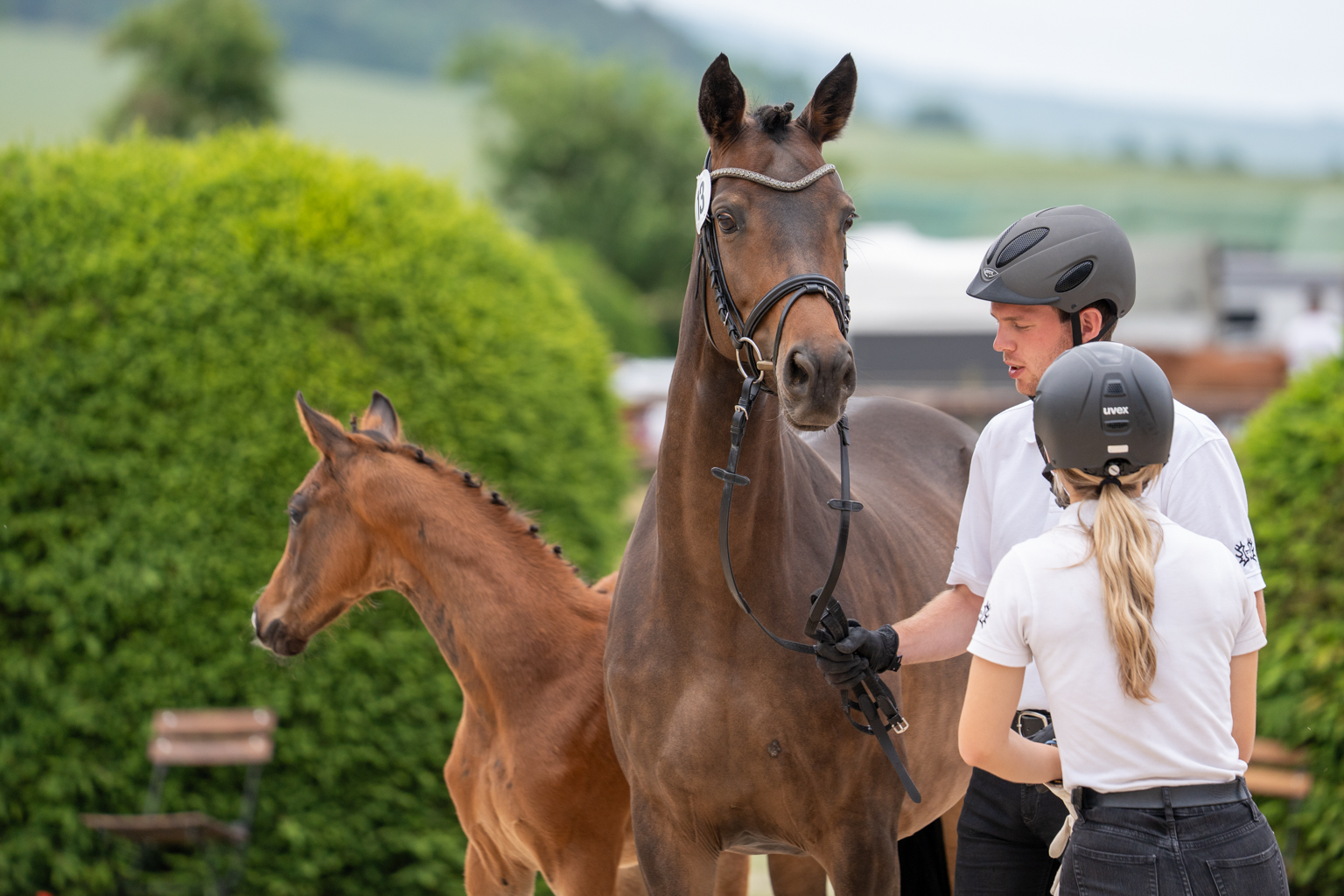 In the equine passport of a Trakehner horse, the designation "Classical Breeding" should in future indicate that the mother mare has given birth to the foal herself after insemination (fresh semen or TG semen) or natural breeding. Photo: Trakehner Verband/ Florentina Büttner