Conformation judging now on the day before the Bundeschampionat for riding horses and ponies
Renewed adjustment of the Riding Horse Bundeschampionat
 from Dominique Wehrmann
 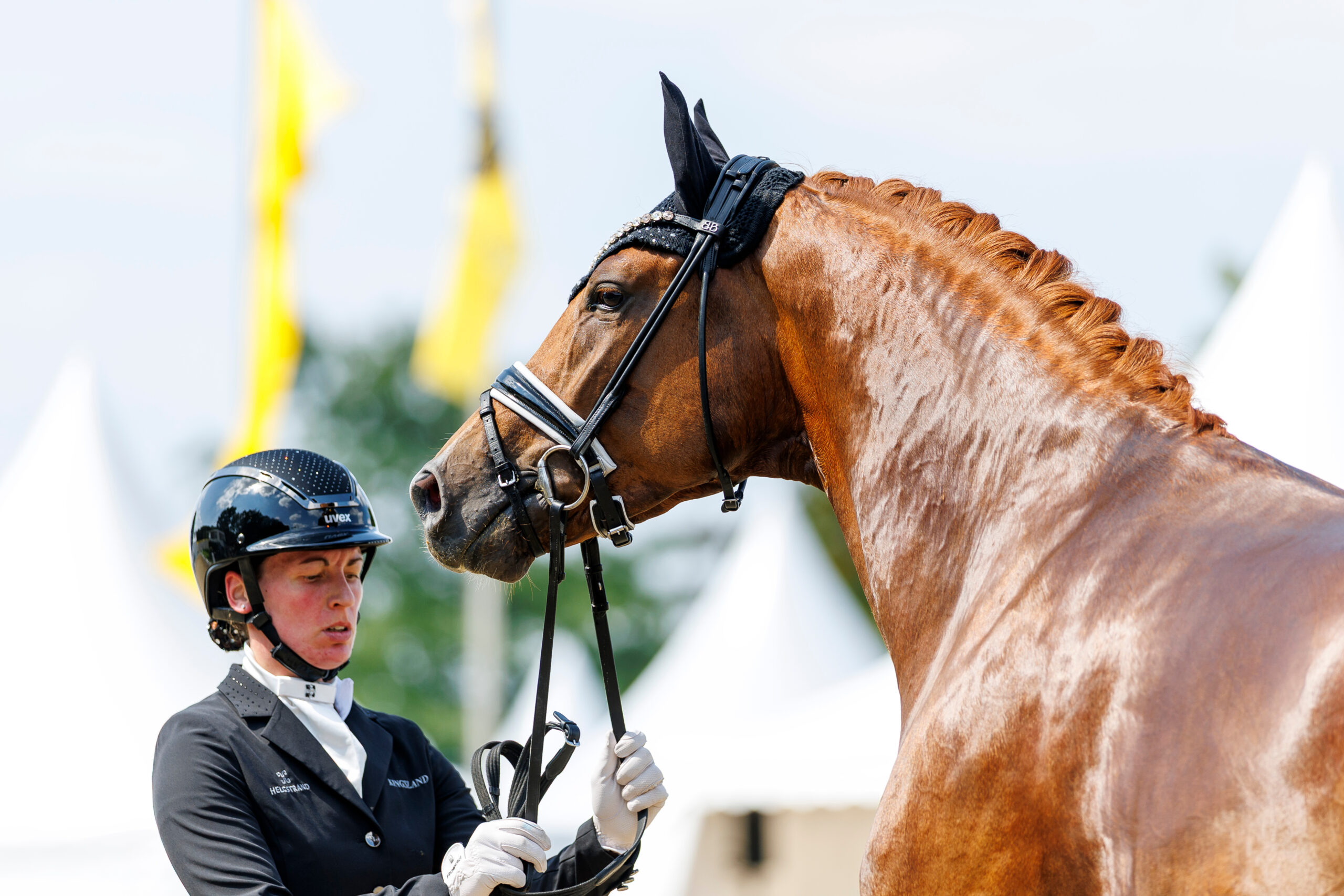 After it was originally said that the judging of riding horses and ponies in hand at the Bundeschampionat should be dropped completely, there is now a compromise. Photo: sportfotos-lafrentz.de
 A few weeks ago, the FN declared that there would no longer be a conformation assessment in the riding horse arena at the Bundeschampionat. Instead, type and quality of conformation should be assessed during the test under saddle and included in the overall impression score. This was met with incomprehension by many renowned experts, including the Chairman of the German Judges’ Association (DRV) and long-time Bundeschampionat judge Dr. Carsten Munk, as he explained in an interview with EQUI PAGES.
The new plan: conformation assessment the day before
Today, the FN announced that they had re-examined and adapted the procedure together with the DRV. Result: The assessment of body quality is to take place on the day before the actual riding horse test.
“We have decided that the horses and ponies will be presented in hand on the day before the test. The judges will assess the body quality of the horse on this day,” says Dr. Klaus Miesner, Head of Breeding at Pferdesport Deutschland.
The judges assess the body quality of the horses and ponies, which is included in the overall impression as a provisional mark. If necessary, this mark can be adjusted at the end of the actual performance – transparently and with justification on the test arena.
For example, if a horse has a very straight topline, this has a negative effect on the assessment of body quality without a saddle. However, if the horse still moves with elasticity under the rider, the score can be corrected upwards again. This is the difference between assessing the horse from a riding horse point of view and from a breeding point of view. For a breeding selection, one would be stricter at this point.
In the actual test, the riding horses are still awarded five marks: three for the basic gaits, one for rideability and an overall mark that summarizes the body quality and harmony of the performance.
Similar posts