The Holsteiner Association Explains Its Approach to Selling Sport and Breeding Rights; the Stallion United Way Is Currently with Max Weishaupt
Holsteiner Verband: Marketing of Sports Rights — United Way Currently with Max Weishaupt
 from Jan Tönjes
 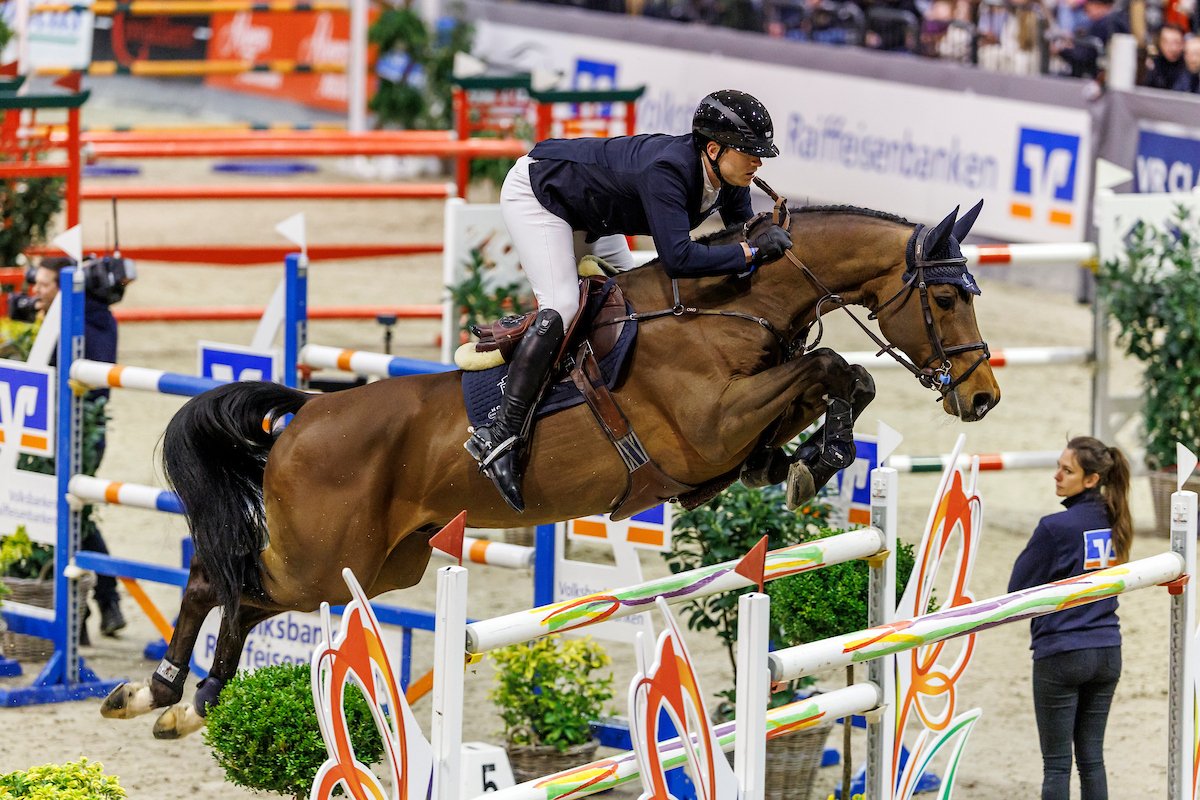 The Holsteiner stallion United Way, ridden by Lucas Wenz, pictured here at the VR Classics in Neumünster in 2026. Photo: sportfotos-lafrentz.de
 The new concept from Holsteiner Verband Hengsthaltungs GmbH has already been presented to delegates from the licensing districts. The idea: A stallion—a breeding stallion—is an individual, but one that can be marketed in two ways: for sport and for breeding.
Selling Sport Rights, Retaining Breeding Rights
“Sporting success should become the driving force behind the long-term use of Holsteiner genetics in breeding and the preservation of those genetics,” states the Holsteiner Verband. The goal is to showcase the Holsteiner horse’s performance capabilities on the international stage. Championships, the Global Champions Tour…—the Holsteiner Association is thus placing even greater emphasis on the “TV stallions” marketing concept. This is the term used for stallions that compete in international sport. These stallions are extremely sought after, especially among show jumping breeders. This is evidenced by the “big names” in the sire line and the sales proceeds from their offspring at foal auctions held seemingly every week across the country.
Bringing Holstein Genetics to Life
Without directly addressing the open letter—which several media outlets had published without comment—Holsteiner Verband Hengsthaltungs GmbH explains its strategy on the association’s website: Sell the competition rights, retain the breeding rights. In other words: The stallion leaves the Land between the Seas, but his semen can still be obtained through the Holsteiner Verband. They have had positive experiences with the still relatively new “TG wie frisch” method. It is intended to simplify the handling of frozen semen. The process, also known as “Frozen as Cool,” is intended to reduce breeding costs, as it can be handled just like fresh semen. The only difference is that the semen must be used on the same day it reaches the mare’s owner.
Horse Breeding in Troubled Waters in the Land Between the Seas
Times are generally anything but rosy for horse breeding associations. Markets are collapsing, and horse breeding is becoming increasingly expensive—not only, but also because of the GOT. The number of foals being born is shrinking. The Holsteiner Association has seen massive declines in recent years.
Over the past ten years, various measures have been implemented to stabilize and improve the financial situation of the association, which is currently the second-most successful show jumping breeding association in the rankings of the World Breeding Federation for Sport Horses (WBFSH).
Breeding Career After Competition in Elmshorn
The concept of competition and breeding rights stipulates that stallions return to the stud farm in Elmshorn after their competitive careers. This was standard practice in the Holsteiner Verband, from Corrado to Casall. The difference, however, is that during their active competition careers, these stallions were either stationed in Holstein or, at the very least, their fresh semen was available on a relatively consistent basis. Furthermore, they remained the property of the Holsteiner Verband.
The accusation made by Slawinski, an expert in semiconductors with a Ph.D., in his open letter: After their competitive careers, stallions are “old,” and their market value has declined. Other stallions currently successful in competition would then dominate the breeding scene.
Does the Holsteiner Verband plan to buy more foals again?
As part of these measures, the Verband had drastically scaled back its purchase of foals in the 2020s. This was also a point of criticism in the letter from former board member Slawinski. “The funds generated from the sale of sports rights are to be specifically reinvested in breeding. In particular, the association plans to purchase foals from breeders’ stables as well as young stallions with promising breeding potential,” the press release now states.
Are there any stallions for sale?
Holsteiner breeders once lived in a land of milk and honey. Foals were sold for a lot of money even before they were born. The problem: That was more than 30 years ago. These days, it’s hardly possible for a stallion operation to cover its own costs. With a few exceptions—such as United Way, who is in demand even outside of Holstein—hardly any stallion achieves three-digit breeding figures anymore. Thus, the sale of stallions is also part of the business model in Elmshorn. That, too, is nothing new. Slawinski fears that stallions like United Way, Keaton, Vigado, and Full of character could be on the list of animals for sale. The association does not address this point in its statement. It does, however, emphasize that “safeguarding its own economic and breeding capabilities” must be ensured in the long term.
You don’t have to be a prophet to know that stallions of the caliber mentioned here fetch seven-figure sums on the international market. And that figure doesn’t necessarily have to start with “just” a 1. Keaton, in particular , is putting the Holsteiner horse— and himself— in the spotlight this season under Arne van Heel. United Way’s rider, Lucas Wenz, has just left the Holsteiner Verband.
United Way in the News: Max Weishaupt
The stallion United Way is currently with Max Weishaupt. Felix Flinzer, managing director of Holsteiner Verband Hengsthaltungs GmbH, confirmed this to EQUI PAGES. “The horse is currently with Max Weishaupt because we think he could be a very good fit for riding,” said Flinzer. Weishaupt also rides the former association stallion Zuccero with international success. “To avoid any misunderstandings: United Way is currently with Max Weishaupt, and the goal is simply to see how well—and if at all—the stallion and Max are a good match, and to reach a financial agreement. Should the agreement not come to fruition for whatever reason, we’ll gladly take him back to Elmshorn. Then Arne (van Heel) will continue to develop him for competition.” In other words: This is about reaching a concrete agreement and not about the stallion being actively offered for sale.