World Championship Chief Veterinarian Dr. Friedrich-Wilhelm Hanebüchen on the Topic of Sport Horses and Heat
Interview with World Cup Chief Veterinarian Dr. Friedrich-Wilhelm Hanbücken on the World Cup and Heat
 from Jan Tönjes
 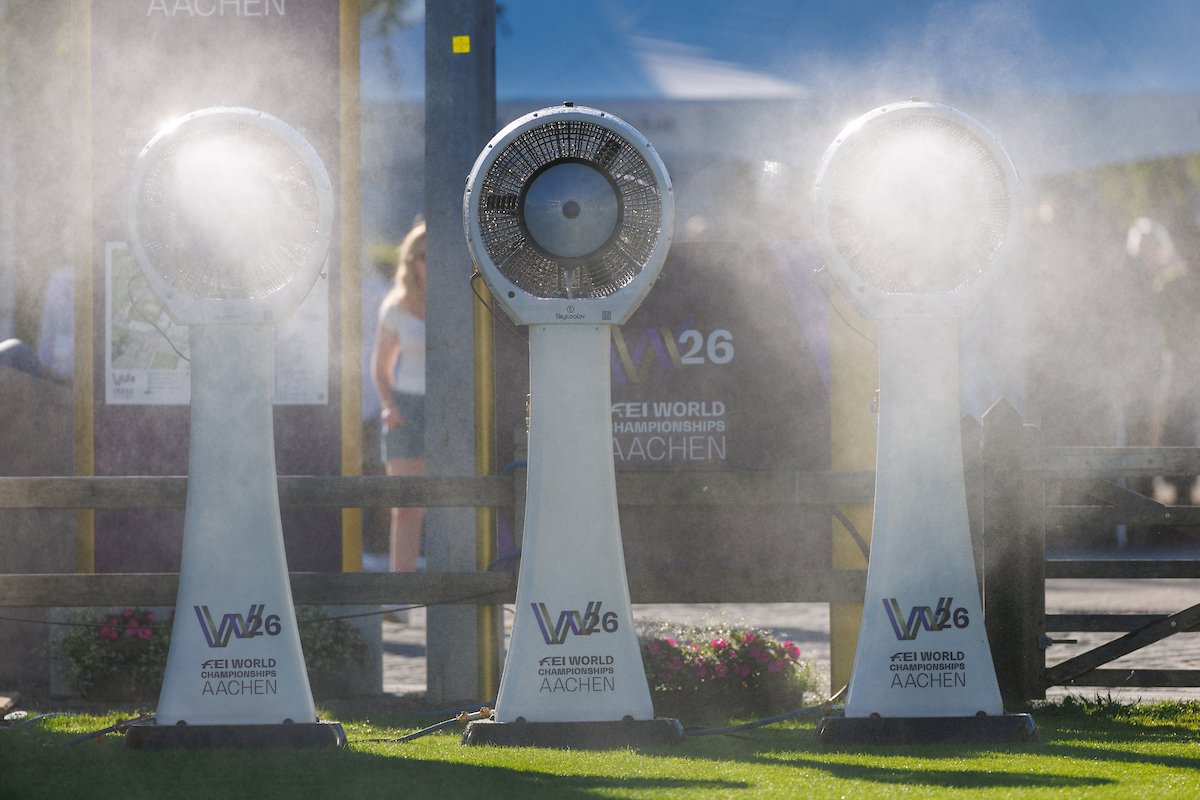 Fans spray cold air and moisture, thereby cooling the horses down.
Photo: sportfotos-lafrentz.de
Fans spray cold air and moisture, thereby cooling the horses down.
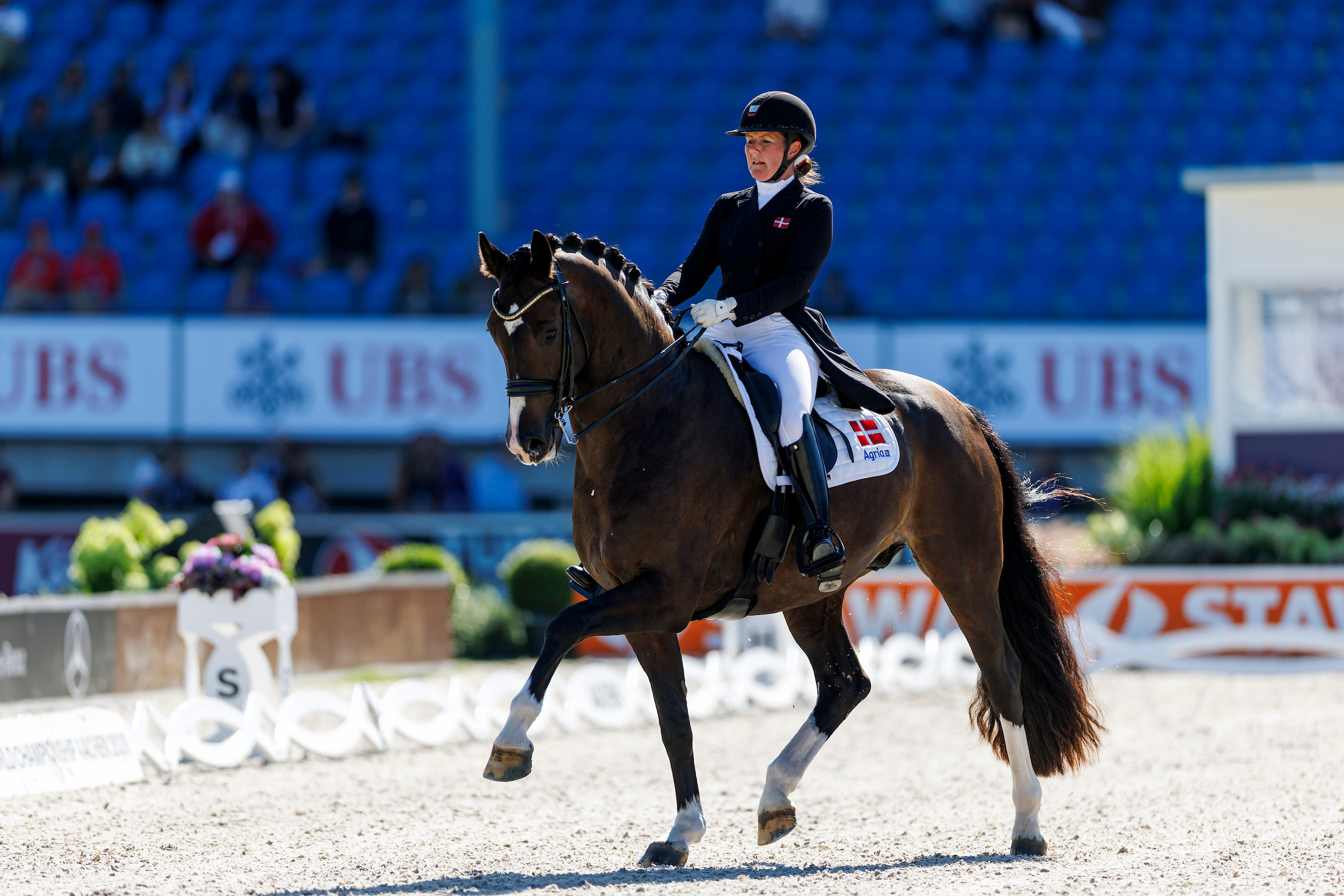
Photo: sportfotos-lafrentz.de Why was the decision made to change the schedule for the Grand Prix Special?
Dr. Friedrich-Wilhelm Hanbücken: The decision was made because the weather forecast predicts a significant heat spike around noon tomorrow. We have a committee that has discussed this with the organizer and the FEI—and they believe it makes sense to take a longer lunch break so that the horses aren’t exposed to the strain of the midday heat, but only once the temperature has moderated.
Specifically, this means that the start times have been moved up: The first horse is already in the arena at 8:30 a.m., then the competition continues until just before 1:00 p.m., and at 3:00 p.m. the second half begins. Does this time slot from 1:00 to 3:00 really make that much of a difference?
I think that really does make a difference. In the measurements we’ve been taking here over the past several weeks, we’ve noticed that the afternoon peak drops significantly at a certain point. That was also a practical solution that can be implemented without much organizational effort, but I still think it has a big impact.
People always talk casually about the 36 degrees that are forecast—but that’s not the whole story; it’s a more complex figure. What factors go into that?
For us, it’s not just the temperature that matters, but the so-called wet-bulb globe temperature—a coefficient that takes into account temperature, humidity, wind, and solar radiation. These are all factors that affect the body, which can either impair or promote sweating and also influence our subjective perception of heat or cold. It’s actually common knowledge that heat is perceived as more comfortable when humidity is low—partly because it’s easier to sweat under those conditions. Sweating is crucial for temperature regulation, and high humidity reduces the body’s ability to sweat, making the whole experience more uncomfortable. A light breeze, on the other hand, is always perceived as pleasant. So these are all factors that this index takes into account. And there’s empirical data accumulated over years and decades from other events that took place under sometimes even worse climatic conditions—the Olympics in Hong Kong, Tokyo, and even in Paris two years ago, when it was very hot. There’s empirical data regarding this index. In short: At a heat index of 30 degrees, you should take precautionary measures, such as cooling. But we already have those in place—we have misting fans here, which spray a moist mist. We have cooled water at the warm-up areas where the horses can be hosed down. And we also have the option of warming up in the shade. These are all factors that make things easier for the horses. And if we now have the opportunity to test their actual performance after the peak of the sun has passed, that really benefits the horse.
So is the sight of a sweating horse really not as alarming as some people think? The sight of a sweating horse causes some people to immediately sound the alarm—perhaps especially on social media. But that’s exactly what the body is supposed to do to cool itself down. Are there ways to check from a distance whether a horse’s body temperature is still normal or if it’s overheating?
Yes, that’s right. You can do that with an infrared camera—I believe it was even used at the Olympic Games in Paris, as far as I recall. We have one here, too, and we might give it a try tomorrow. During training for show jumping and dressage, it’s rather unlikely that you’ll detect temperatures approaching the red zone. That’s more likely to happen during endurance events—cross-country riding, marathons, horse races, or endurance riding. That’s certainly where it plays a bigger role.
Why isn’t there a new schedule for the second part of the eventing dressage, which will take place simultaneously tomorrow?
That’s primarily because they’re a different type of horse—they’re all horses with more spirit. They’re also in better physical condition than a dressage horse because they’re trained more for endurance and speed. And the dressage test they have to complete is about half as long as the Grand Prix Special. So that’s a completely different challenge—an eventing horse at this level handles it with ease. They also have a different musculature than dressage horses.
So, basically, there’s just more muscle mass, and a muscle that’s working produces heat because energy is being converted in the process?
Yes. That’s why I also believe that most dressage horses are still too heavy—you could put it that way. But that’s precisely why the measure applies only to dressage horses, not to eventing horses.
What can riders and caretakers do for horses that are currently in their stalls and sweating?
Especially when it’s very hot, it helps to pour some water on the horse or give it a cold shower—the horse finds this pleasant.
Riders and grooms are also considering the addition of electrolytes to drinking water. Is this advisable, not only for elite athletes but also for horses at home?
Yes, that’s right. But even more important than electrolytes is table salt—the salt content in most electrolyte mixtures is too low. In such hot weather, you can easily add one or two teaspoons of table salt to their feed in the morning and evening. This makes the horses thirstier, so they drink more, and the sodium and chloride lost through sweating are better replenished than with an electrolyte mix.
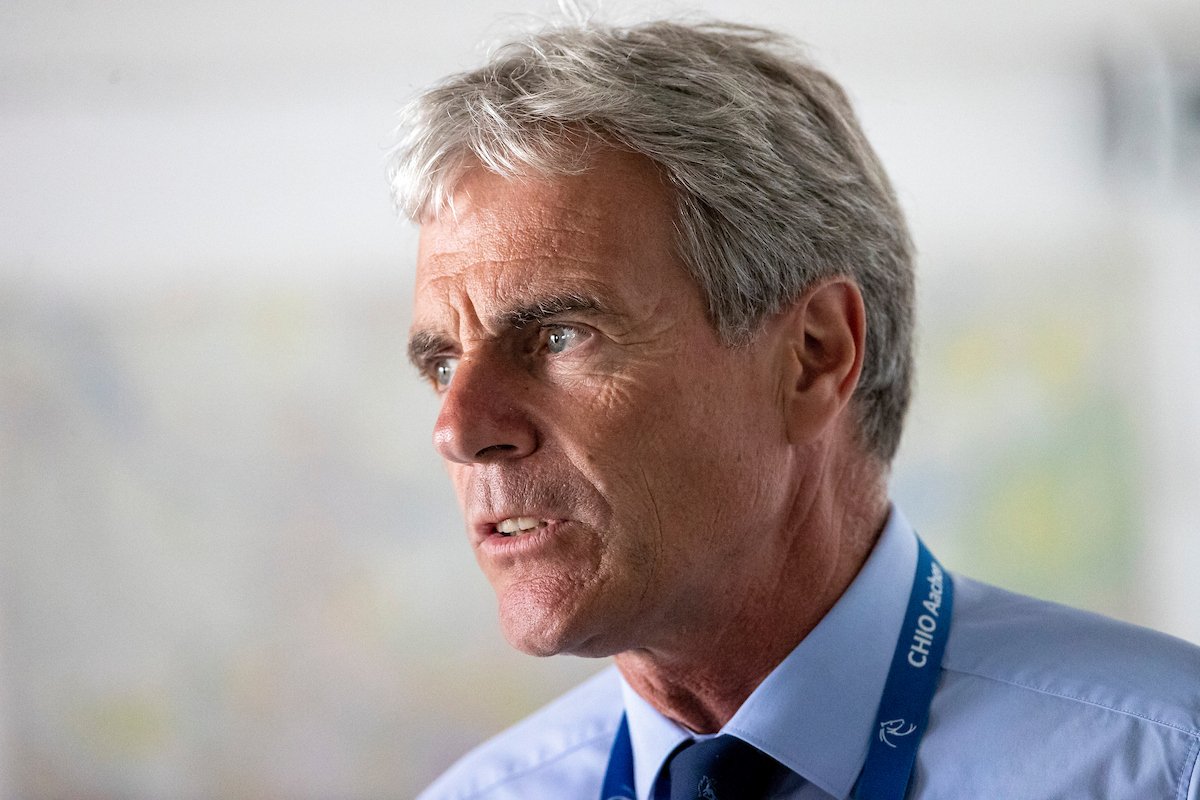
Our interviewee
Dr. Friedrich-Wilhelm Hanbücken has been working as a veterinarian at the CHIO Aachen for about 40 years and has served as chairman of the Veterinary Commission since 1998. He is now also serving in this capacity at the World Championships. As his primary occupation, the FEI veterinarian has been running his own practice in the Aachen area since 1993.