World Team Championships in Aachen: Gold for Germany, Silver for Great Britain, Bronze for Denmark
World Championships in Aachen: Germany Wins Dressage World Championship; Team Finishes Ahead of Great Britain and Denmark
 from Jan Tönjes
 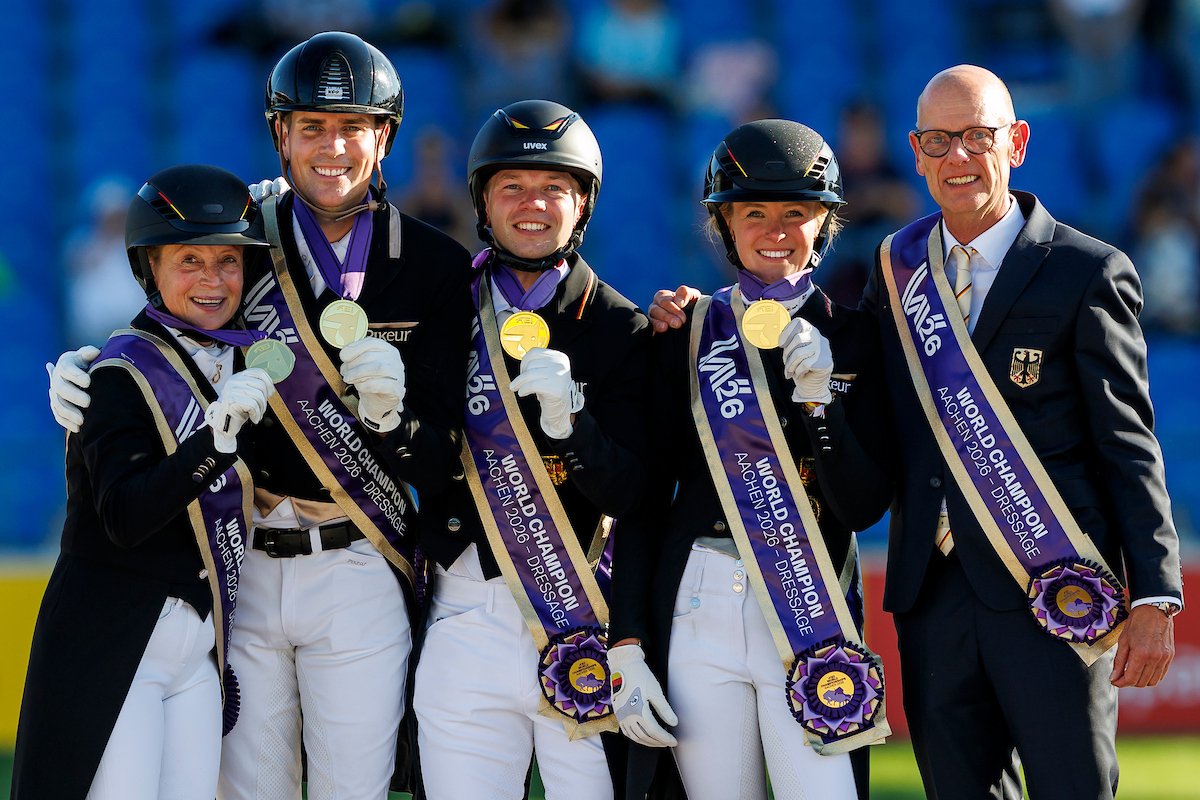 Germany is the world team champion in dressage. Photo: sportfotos-lafrentz.de
 After a day and a half in which the judges’ decisions were largely understandable, things became challenging during the competition among the final 15 pairs—not only for the seven judges in the judging booths, but also for the audience. Opinions on how to evaluate what they had just seen did not always align. The general consensus was that Cathrine Laudrup-Dufour had delivered the best ride with her Mount St. John freestyle routine.
Different Perspectives
Quite a few people, for example, had ranked Katharina Hemmer even higher in their personal rankings than the fifth place the jury had awarded her. Belgian rider Justin Verboomen, the reigning European champion riding Zonik Plus, also had one of those days when he didn’t necessarily belong at the very front of the pack. He finished in second place, ahead of defending champion Charlotte Fry and Glamourdale. Although the British rider had a slight hiccup at the start of her test, she showed the black horse to be more mature, more relaxed, and more at ease than he was last year.
Germany, Great Britain, Denmark
. In the end, the Germans took the win ahead of the British and the Danes. It was an outcome many had anticipated. Germany is thus the team world champion once again for the first time since 2018. The top 30 pairs from this competition will compete in the Grand Prix Special on Friday. That event will feature the first set of medals for the individual standings.
Here’s what’s next on the schedule for the World Dressage Championships
: The free dance will decide the winner on Saturday evening. Under the floodlights, the top 15 pairs from the Grand Prix Special will compete—though only the top three from each nation will be allowed to participate.
Here are the top rides of the afternoon:
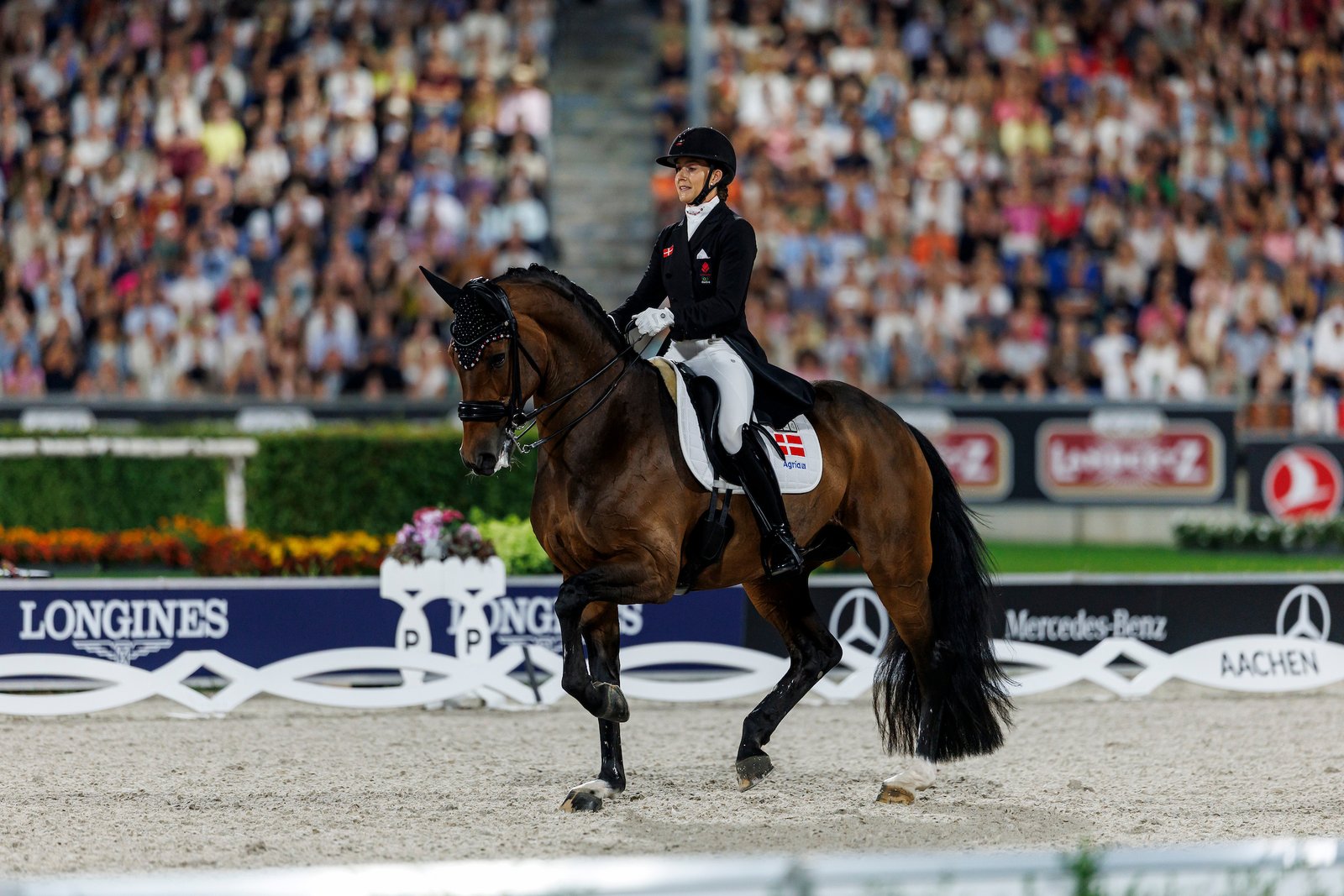
Cathrine Laudrup-Dufour (DEN) and Mount St. John Freestyle
What’s the easiest way to score more than 80 percent? Answer: By riding virtually every exercise in such a way that the score almost always starts with an eight. The Danish rider Cathrine Laudrup-Dufour adhered to this principle.
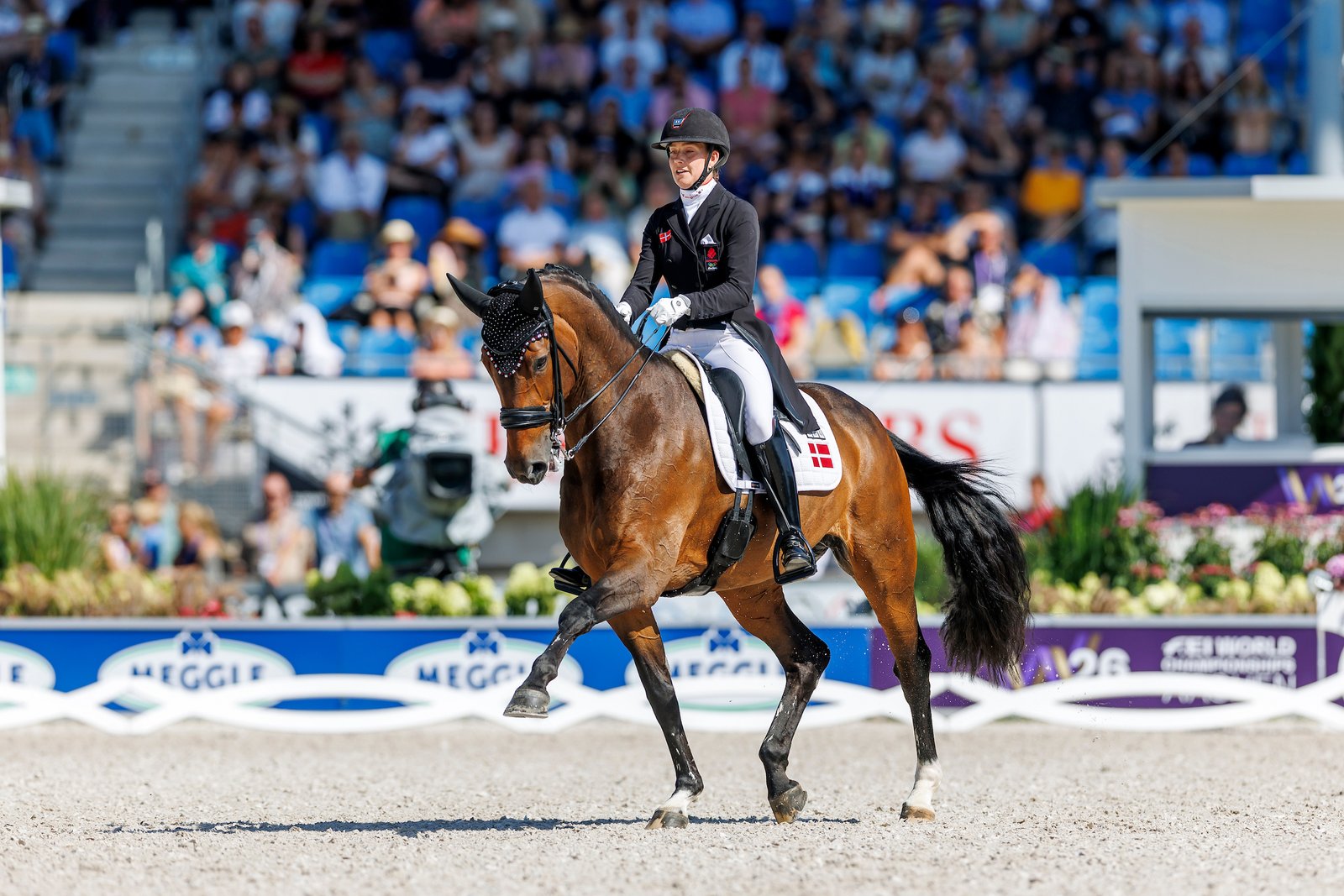
It started right from the warm-up: 8.9. After that, everything flowed smoothly, all in perfect rhythm in the collected trot—both forward and sideways. The backward movement highlighted the Hanoverian mare’s suppleness: confident strides leading into a smooth transition to the collected trot.
Variations in Seat
Position
It’s interesting to observe how Cathrine Laudrup-Dufour adjusts her seat during the Pi/Pa tour. In the passage, she sits a bit more lightly; in the piaffe, the Danish rider takes her full weight in the saddle again, and the mare tilts her pelvis forward to bear the load. There was a slight irregularity during the transition out of the second piaffe.
Canter – still some room for improvement
The jumps into the double changes weren’t exactly nine little explosions. However, the mare performed the movements almost throughout with a calmly swaying tail—a contented horse. The first pirouette was a bit bumpy, but the judges scored it generously despite the three-beat rhythm no longer being entirely clear.
The performance ended with a flowing passage and a piaffe executed with precise timing.
One thing that was repeatedly observed during the test: her mouth wasn’t always closed. It seemed as though the Hanoverian, a daughter of Fidermark, had also lifted her tongue. With a score of 82.376 percent, Cathrine Laudrup-Dufour made a significant contribution to the Danish team’s final score, which earned them the bronze medal (229.426). This was also thanks to the strong ride in the morning by Daniel Bachmann Andersen, who placed tenth in the individual standings with Flash Gordon.
Cathrine Laudrup-Dufour couldn’t say enough good things about her riding partner: “She’s 17 and competed in her first World Championships eight years ago; I rode in my first World Championships in Herning in 2022. Now we’re here together.”
Justin Verboomen and Zonik Plus
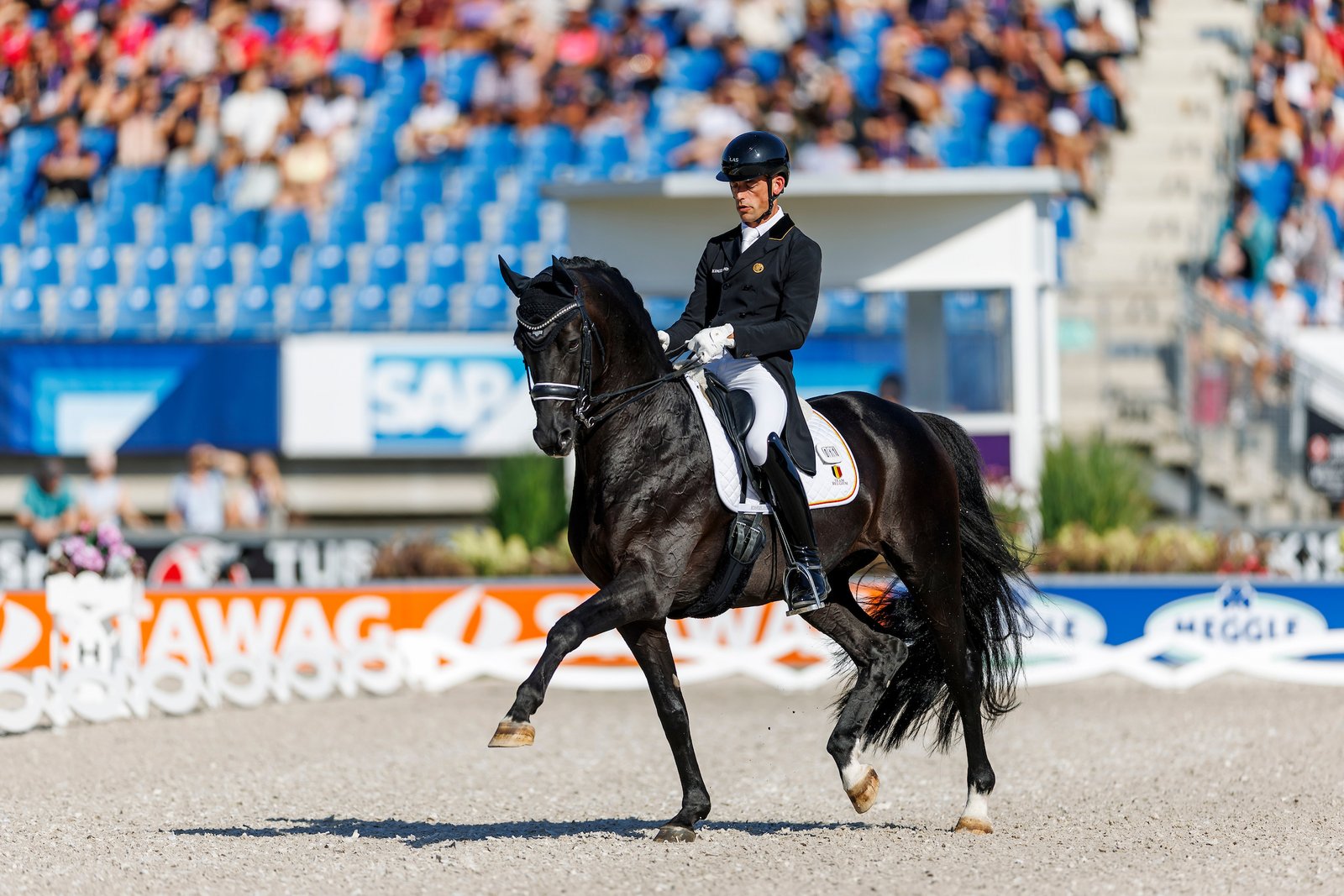
During the halt, the stallion stood on all four legs, but his hind legs could have been positioned further under his body. The traverse to the left was still slightly more fluid than the one to the right. Before coming to a halt to line up for the backward movement, Justin Verboomen gave a distinct leg aid. Zonik Plus responded with a high hindquarters. In the first piaffe, a tendency to move backward was noticeable. In the second piaffe, the Zonik son clearly stepped back with his right hind leg at least once.
During the zigzag traverse, the neck wasn’t always free, and there was also a mistake in the single changes. In the right pirouette, the hind leg got caught once again. Bottom line: one major blunder, several minor issues—too much to finish at the very top.
The judges saw it differently. With a score of 80.885 percent, they placed the pair in second place.
Charlotte Fry (UK) and Glamourdale
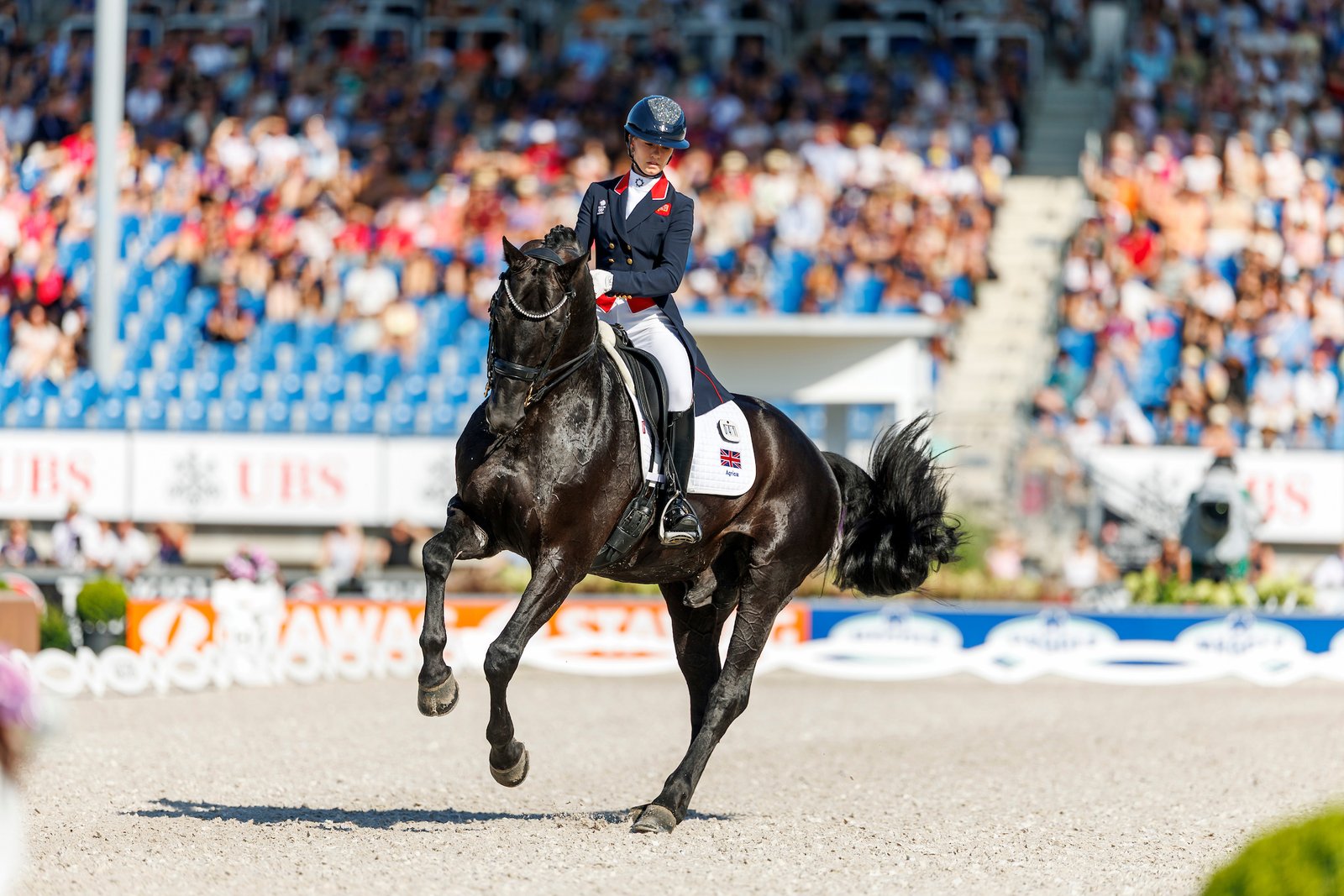
The defending champions began with a lively trot and a well-executed backing-up exercise. Coming out of the passage, the black horse paused briefly instead of starting the piaffe. It was a misunderstanding that was quickly resolved. The second piaffe also had a slight issue with the rhythm, though it was much less pronounced.
Canter? Impressive!
In the canter, the KWPN stallion moved well over his back and earned a lot of points. He received a 9.1 for the flying changes and a 9.6 for his strong canter.
Overall, Glamourdale is no longer the powerful, solid-backed horse that relied on spectacular mechanics, but rather a horse that was able to showcase his natural talents in the arena with greater ease than before.
The 2022 World Champion – a marked improvement
The pirouettes showed a marked improvement, as the stallion no longer braced his hind leg but actually spun around his inner hind hoof. Although, especially during the first pirouette, he rode on a slightly wider arc. The last piaffe was the best of the three required.
Charlotte Fry: “The mistake in the first piaffe was entirely my fault. After that, he was relaxed, and so was I.”
The pair scored 80.311 percent, the third-highest score among the 91 participating pairs and the largest share of the total score of 231.445, which earned Great Britain the silver medal.
Isabell Werth and Wendy
The test began with a trot extension that tended to be a bit rushed. The half-passes then led to a significant increase in the scores. After a confident halt before the counter-canter, there was a slight hesitation during this exercise.
The first piaffe was even, rhythmic, and lively, with light contact. Perhaps it was performed just before the actual point.
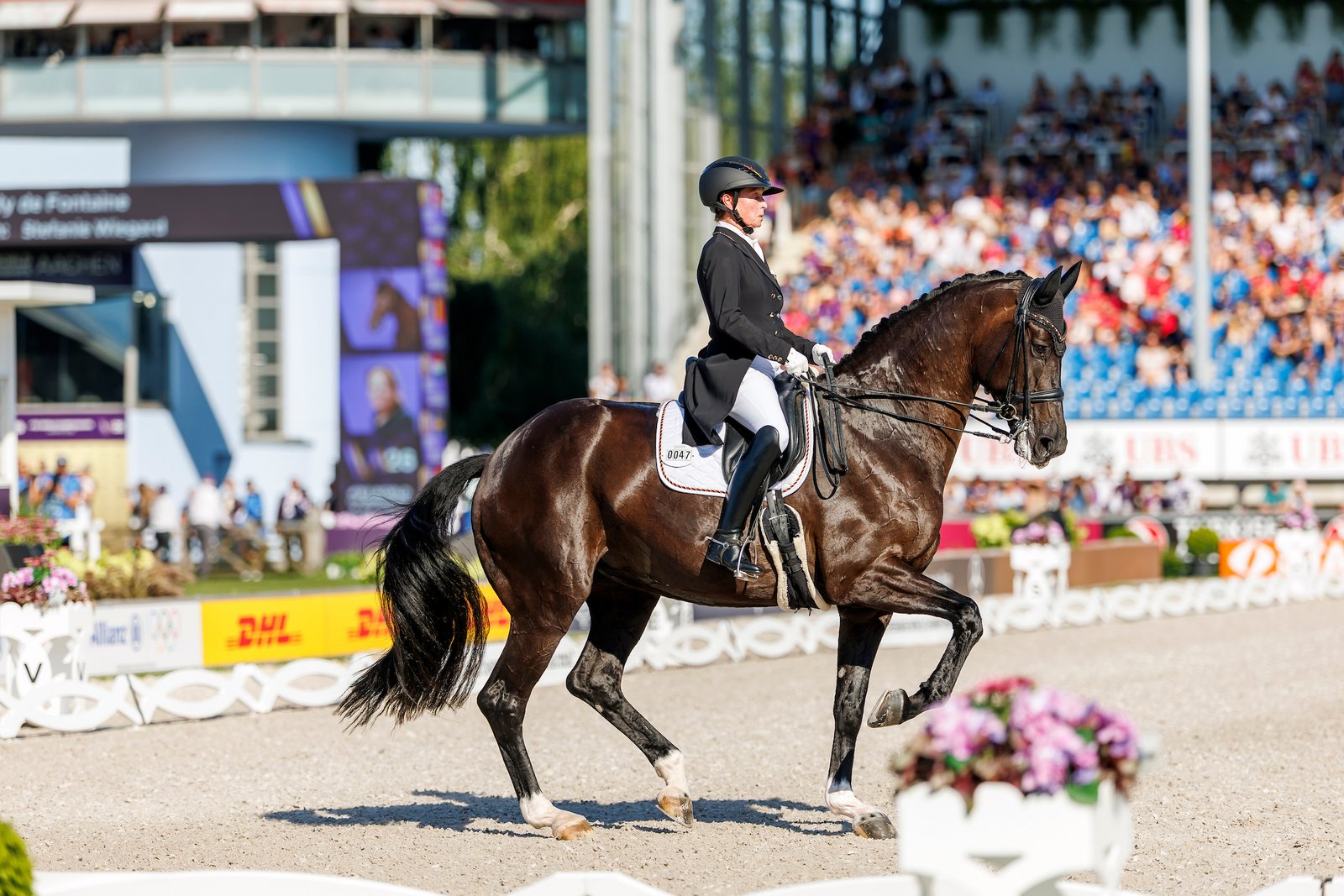
Riding freely, Wendy marched across the diagonal in a strong walk. The collected walk did not quite match the quality of the strong walk. The Sezuan daughter snorted several times during the second piaffe without losing the rhythm.
A technically sound start in the canter
Then came the canter—where the first series of changes were already waiting right at the start. The flying changes over two jumps could have used more volume and more extension. They were technically flawless. In the single-leg changes, a mistake occurred after a good start.
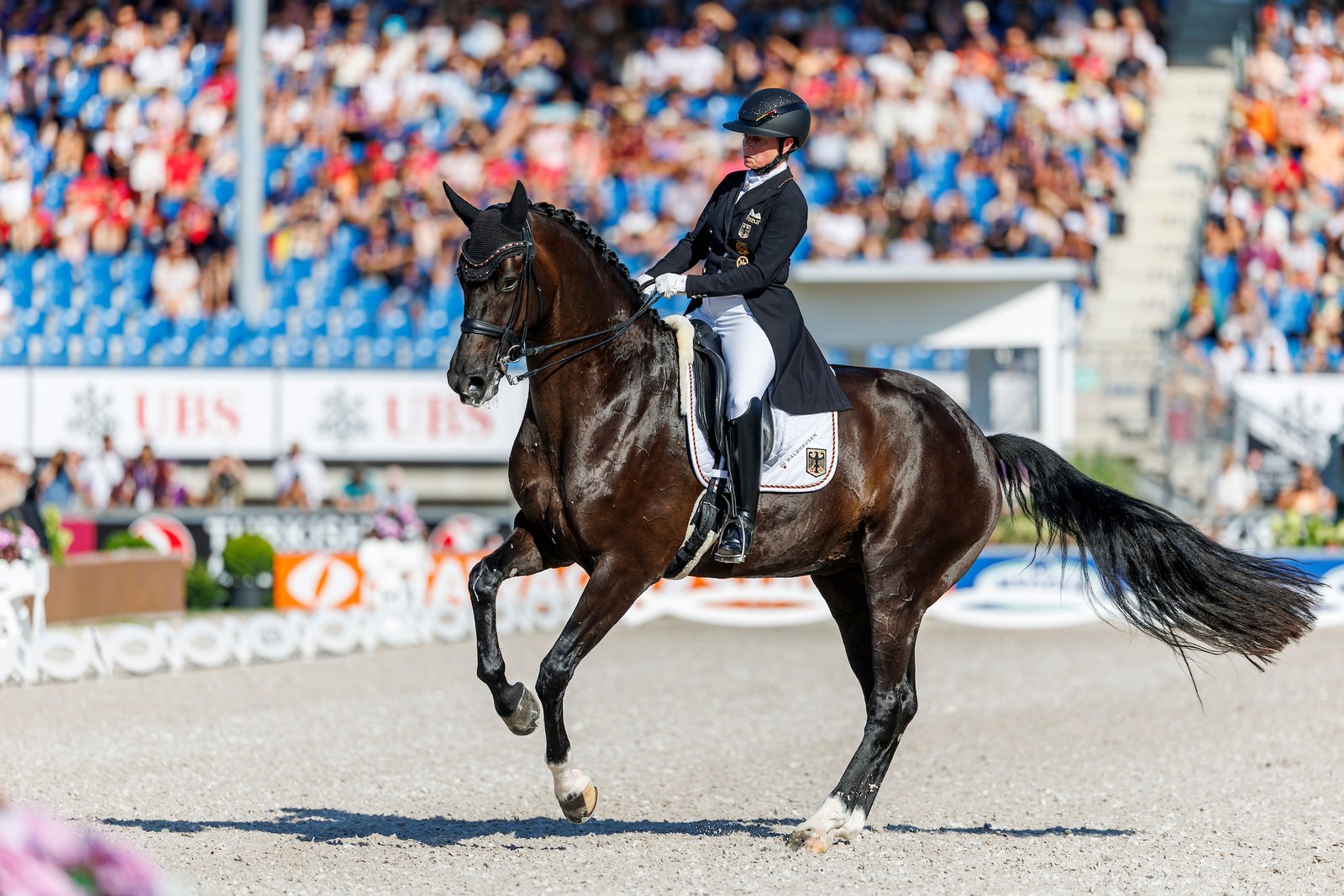
National team coach Monica Theodorescu explains the situation: “The pairs were very good and the twelve (singles) were really good, and then she (Wendy) held her breath a little bit because, of course, she was also nervous, and on the 13th one she was panting. She couldn’t hold her breath that long after all. She also got a little worked up out there. Out on the warm-up arena, the transitions were flawless and smooth. But once she goes in, Wendy does get worked up. Up to that point, I thought the transitions were of very high quality, and the pirouettes were better than usual—more composed and with a smoother transition—and her cantering was beautifully fluid overall, with a fantastic zigzag half-pass. It was a very good test overall. Sure, it didn’t quite reach 80 percent. But nonetheless: a great team effort.”
has improved her pirouettes
. The pirouettes were a notch bigger than what we’ve seen from this pair before. However, the mare jumped in a canter rhythm along the circle and didn’t find herself in a position where she had to brace herself.
An exemplary piaffe at the end of X helped boost the score even further. She received particularly high marks from German judge Ulrike Nivelle—2.4 percent more than the next-lowest score (80.326 percent from Maribel Alonso de Quinzaños (MEX) at F). Isabell Werth said the mare was so “fired up” by the atmosphere that she decided to ride a controlled test.
There was an even greater difference in the scoring of Cathrine Laudrup-Dufour: the scores given by Kurt Christensen of Denmark (84.130) and Maria Colliander of Finland (79.783) differed by 4.3 percent.
German riders in fourth and fifth place
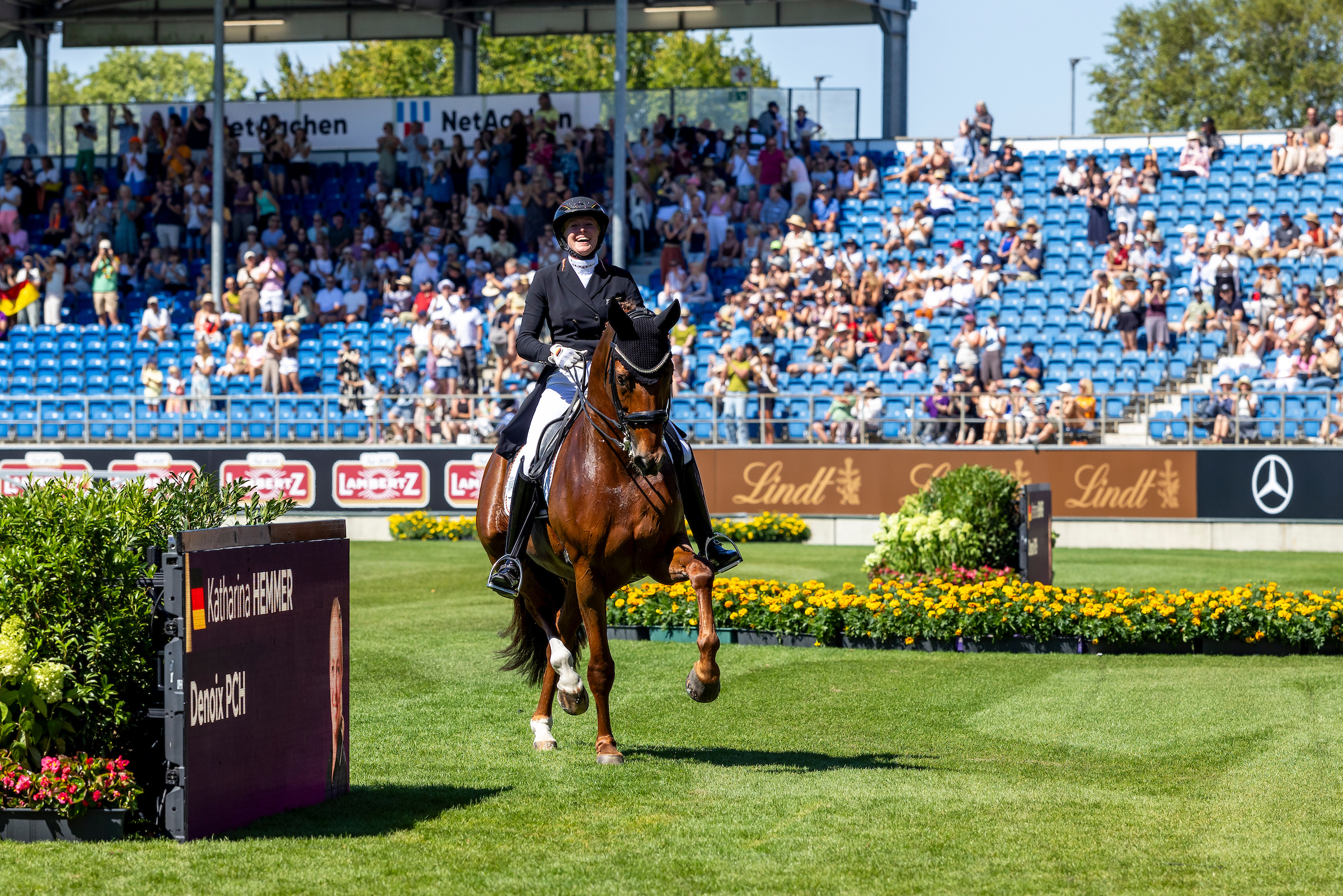
With a score of 79.876 percent, Isabell Werth edged out Katharina Hemmer and Denoix to take
fourth place
. This secured the victory for Germany. The team totaled 235.063 points. Isabell Werth won her tenth gold medal at World Championships, “and that’s not something to be taken for granted,” as Werth emphasized. The British team won silver, trailing by 3.618 percent. The Danes celebrated their bronze medal, trailing by 2.016 percent.
In the individual standings, Frederic Wandres finished in ninth place. Raphael Netz placed 13th in his championship debut.
In addition to the three teams on the podium, Belgium (223.044), the Netherlands (221.428), and Sweden (216.552) have also qualified directly for the Olympic Games.
World Championships in Aachen: Katharina Hemmer and Denoix Deliver the Best Ride of Their Lives—So Far
Go to the article: Hemmer, Bachmann Andersen, van Liere, and more
Marieke van der Putten (NED) and Zantana RS2 OLD
After the third Dutch pair, Dinja van Liere with Mauro Turfhorst, had already made a very good impression that morning, it was up to Marieke van der Putten (NED) and Zantana RS2 OLD to do everything possible to perhaps still secure a bronze medal. The Oldenburg mare Zantana is the third horse among the top 15 in this Grand Prix whose sire is Zonik by Zack-Romanov.
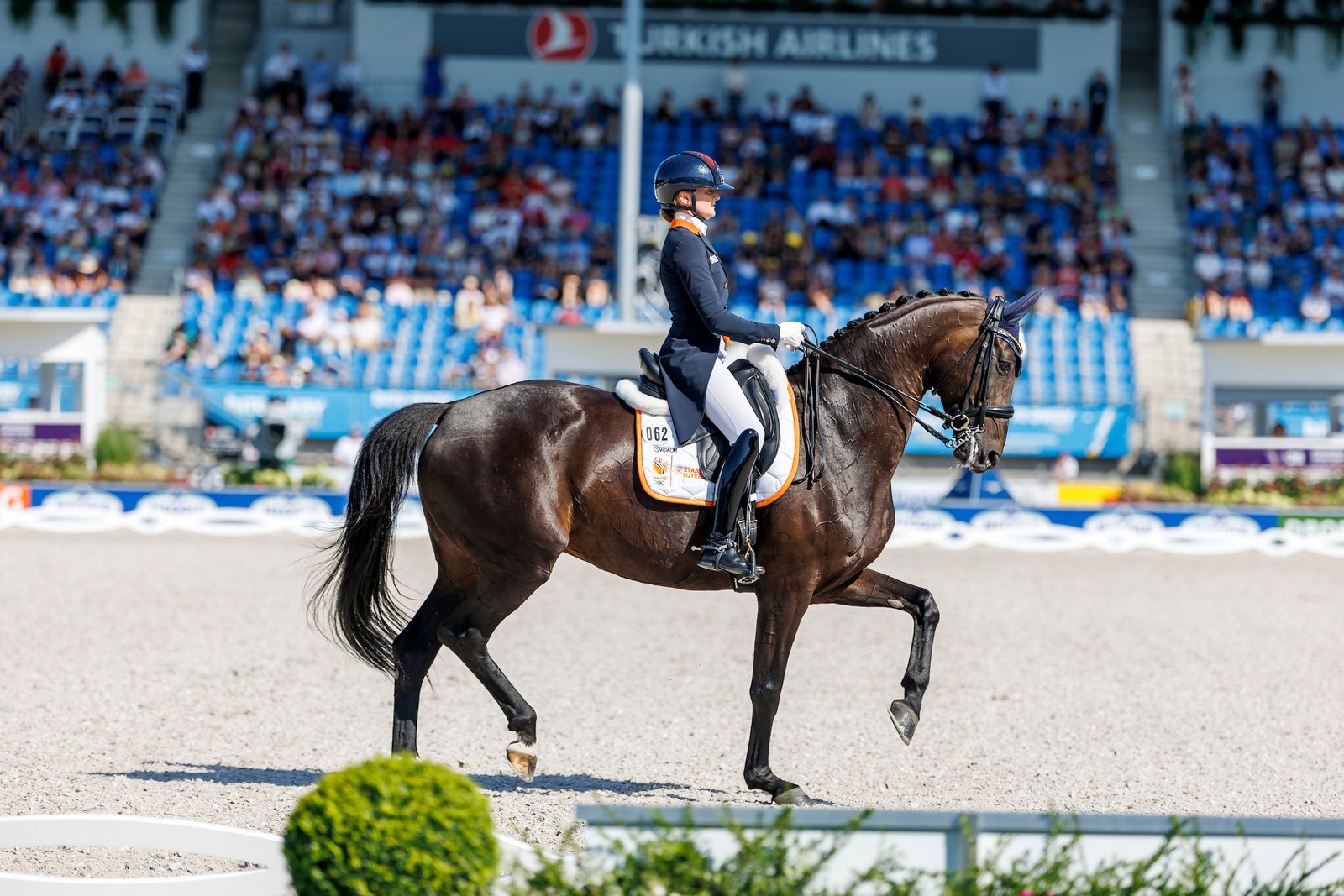
The mare scores points primarily for her mechanics. In terms of back engagement, she couldn’t quite match many of the similarly highly rated pairs. This was already evident during the backing-up exercise, which came across as rushed, with her hocks locking up and lacking suppleness.
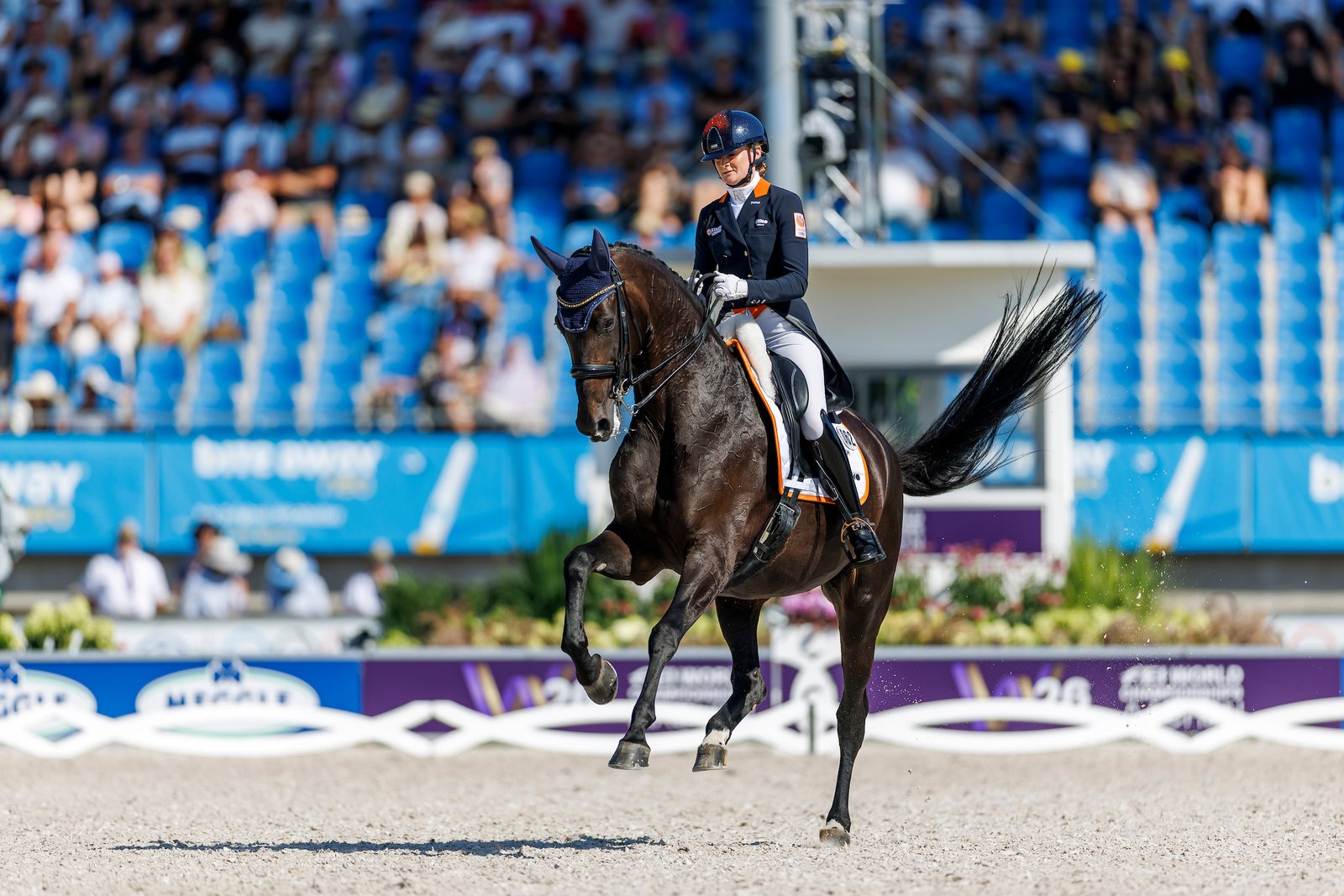
A slight disruption in the rhythm of the piaffe was the only noticeable flaw in the highest-level collection exercises. Tension arose during the transition to the canter. What marred the overall impression—especially during the extended canter, though not exclusively there—was that the mare repeatedly swished her tail. Technically, everything was in order; the flying changes were straight and uphill. The pirouettes were rushed. A score of 77.764 percent ultimately placed the Netherlands in fourth place (221.428).
Individual Competition at the 2026 Grand Prix World Championships in Aachen
Similar posts