Faustino G is the World Champion in the young dressage horse category for six-year-olds
World Championships in Verden: Gold for Denmark, Bronze for Sir Gribaldi, Viva Diamond Impressive but Overheated
 from Dominique Wehrmann
 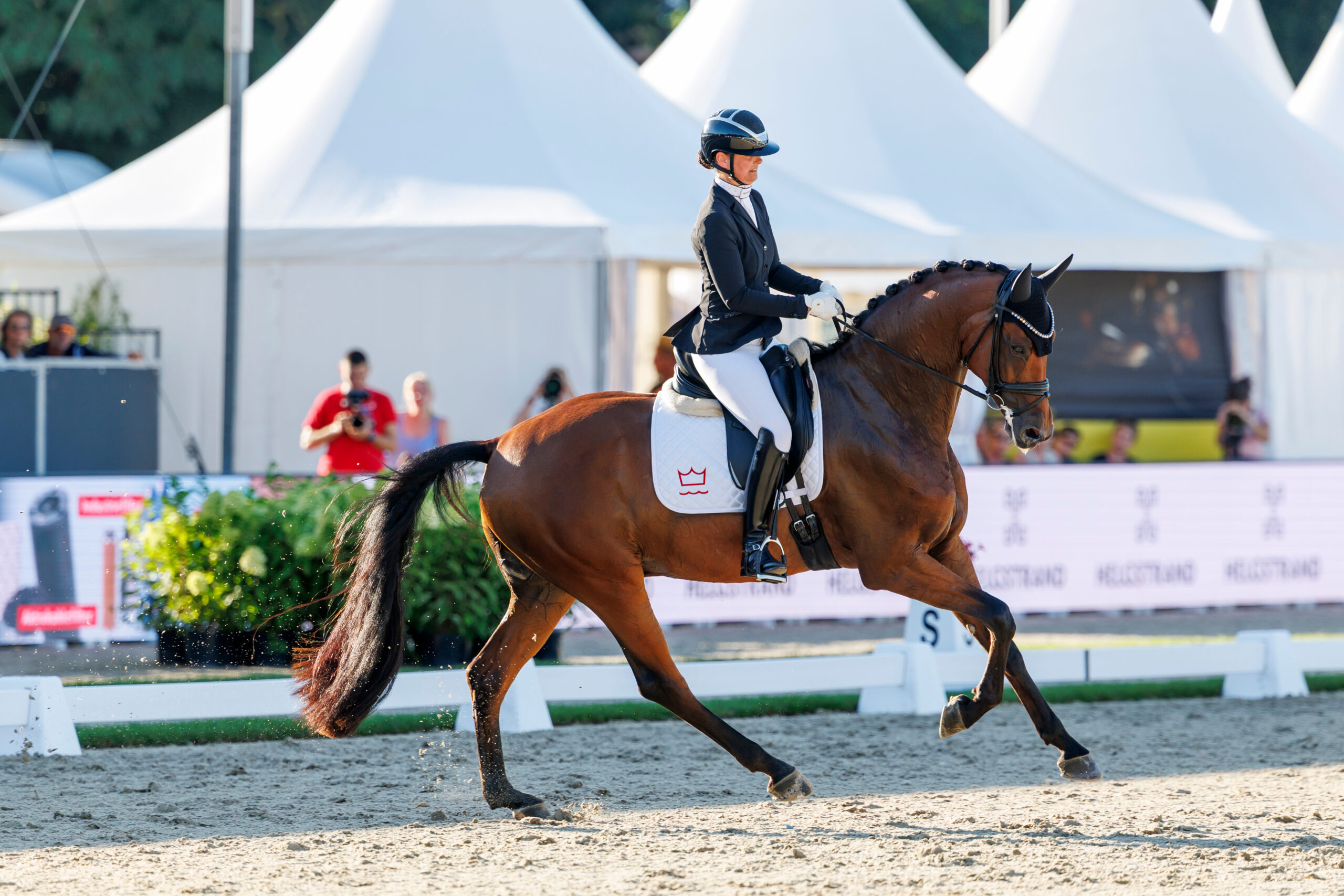 2026 World Champion in the Six-Year-Old Dressage Horse Division: Faustino G. with Betina Jæger Jensen.
Photo: sportfotos-lafrentz.de
2026 World Champion in the Six-Year-Old Dressage Horse Division: Faustino G. with Betina Jæger Jensen.
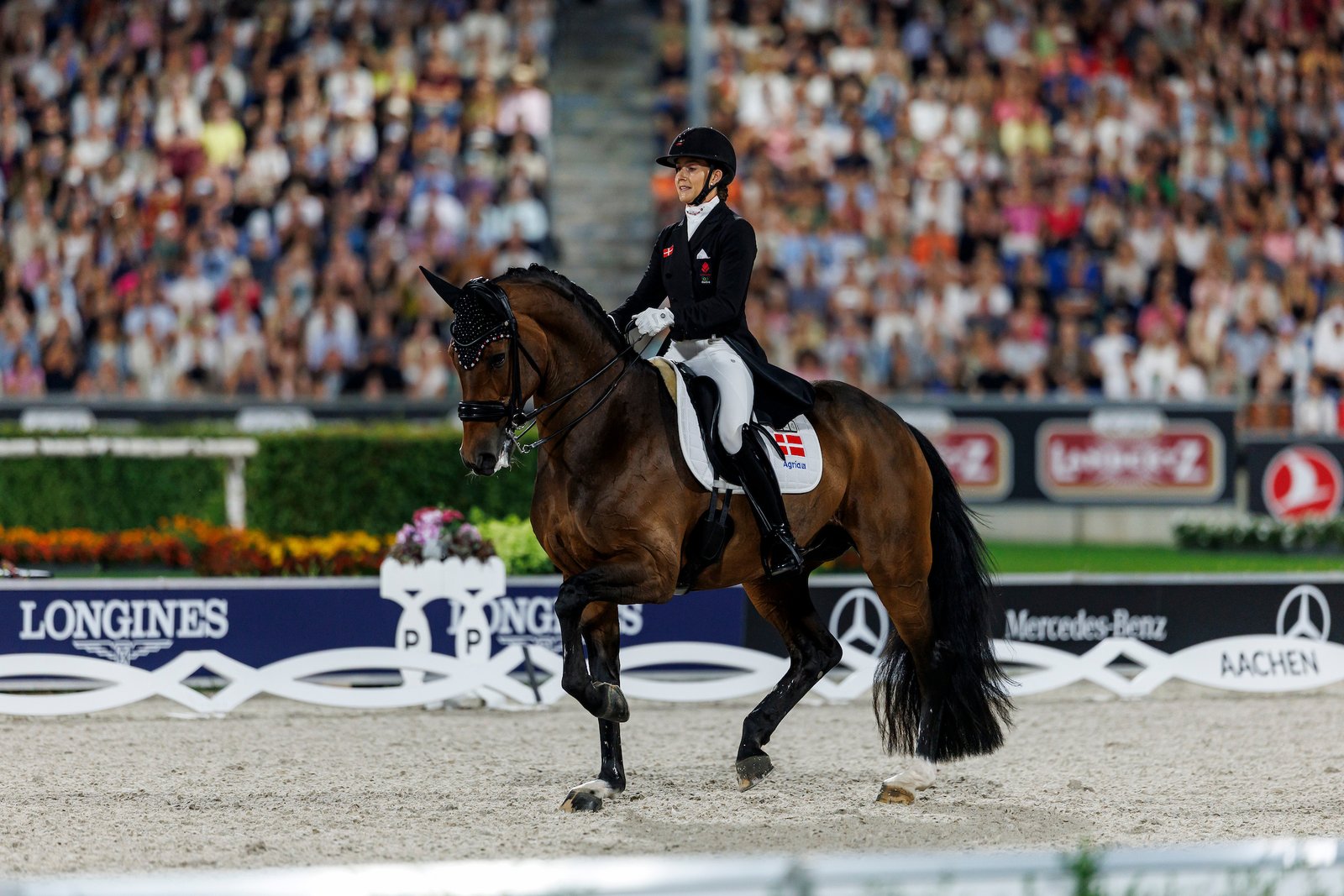
Photo: sportfotos-lafrentz.de Betina Jæger Jensen and the Danish stallion Faustino G. by Farrell-Sezuan from Helene Geervliet’s successful Stutteri G breeding program had already qualified for the final and were the last pair to compete today in the final for six-year-olds at the 2026 World Championships for Young Dressage Horses in Verden. The drama was just right, and their performance was, for the most part, as well.
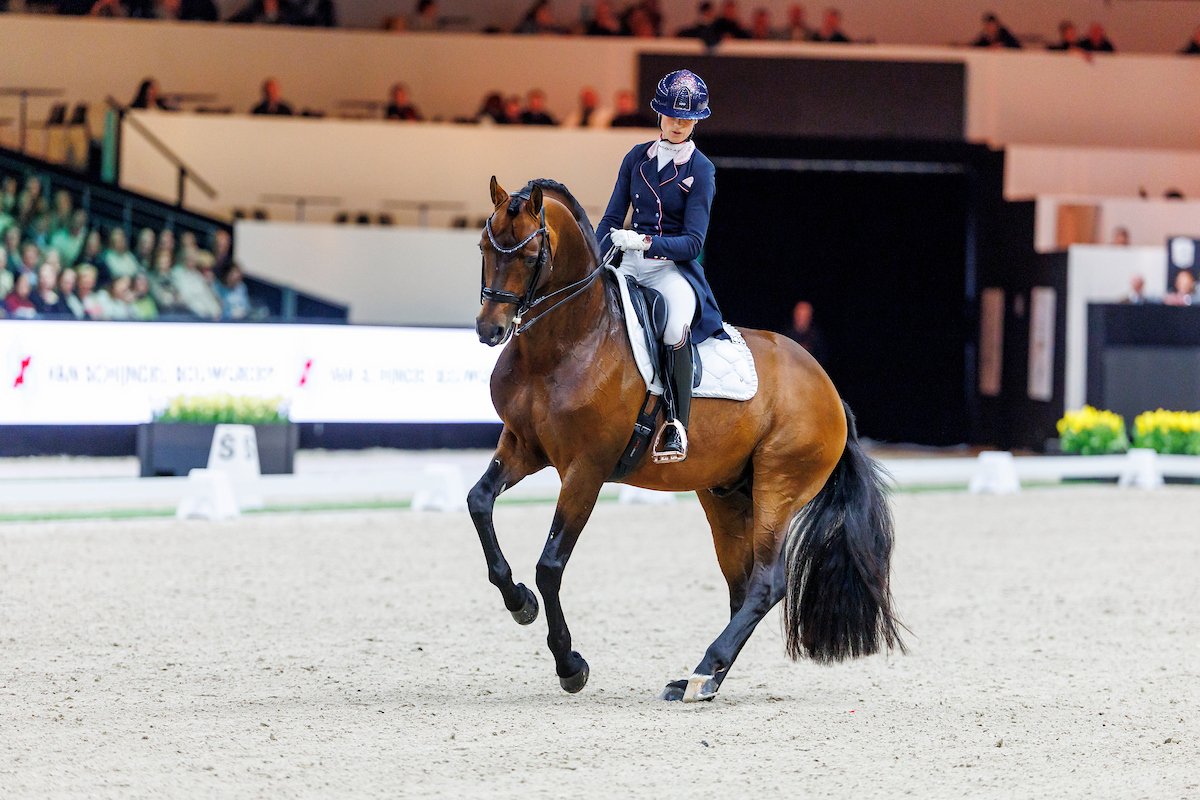
The strikingly beautiful, elegant stallion displayed great elasticity and momentum in his basic trot, maintaining a lovely rhythm even during lateral movements and turns. In the extended gaits, more drive from the hindquarters was desired, so that the hind legs would place more weight under the center of gravity and the rider could open the frame forward.
At a walk, Faustino set off with a relaxed stride and remained perfectly in time at all speeds. His walk pirouettes were flawless, leading into a very beautiful transition to a canter.
The canter is active and steady in three beats. From this, the stallion has already developed quite confident flying changes, although during the third one—which must be ridden from the outside canter on the right to the left after turning out of the corner following half a long side— he once kicked out vigorously, expressing his displeasure—but his rider skillfully prevented him from jumping over the point.
Knut Danzberg served as the commentator for the panel of judges today and praised the balance, rhythm, elasticity, commitment, and fluidity in the transitions during the trot sequence, 9.7. In the walk, the judges would have liked to see more freedom in the shoulders, 8.7. In the canter, Danzberg also highlighted, among other things, the horse’s controllability, 8.8. The same score was given for responsiveness, though Danzberg emphasized that it would have been higher had it not been for the swerving during the change.
Combined with the 9.5 they scored in the dressage, the two of them achieved a total of 91 percent—world champions! And this came just one week after Betina Jæger’s daughter, Filippa, became European Pony Champion for the first time at Le Mans. What a year for the family!
Breeding Success
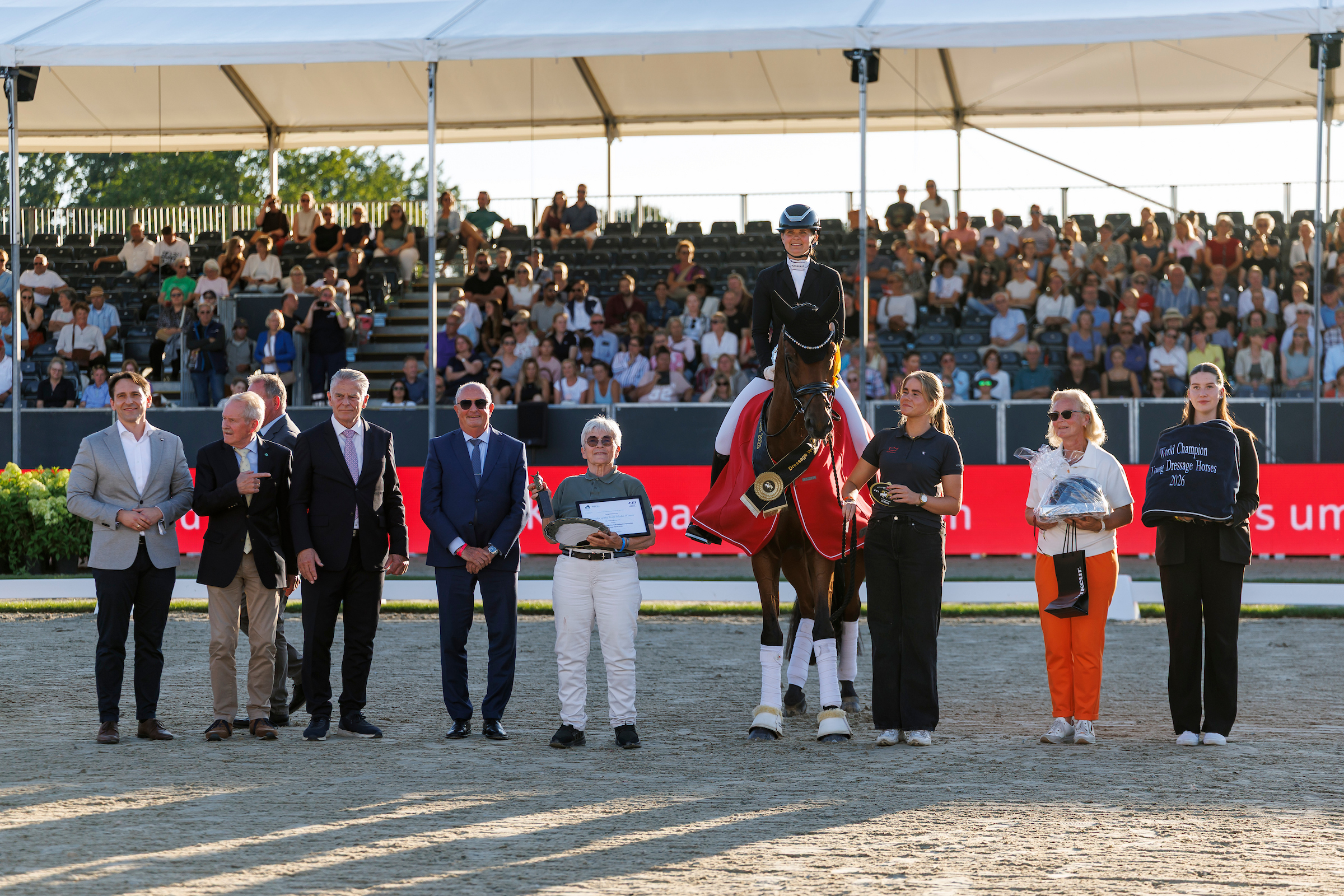
Breeder Helene Geervliet was also overjoyed. Last year, her horse Quinn G. was crowned world champion among seven-year-olds in Verden, where Faustino had already placed fourth. This time, she stood next to Faustino at the award ceremony to accept congratulations on behalf of the breeder of the winning horse. And this despite the fact that Daan G. by Donkey Boss—another stallion she bred, who was the top lot at the 2024 Verden Stallion Market with a price tag of 2 million euros—had convincingly won the preliminary test for the Hanoverian Championship for four-year-old stallions on Friday. It’s quite possible that Helene Geervliet will have another title to celebrate tomorrow.
This success is all the more remarkable given that Faustino G. is a fourth-generation horse born at his stable. How do you breed a world champion? “You have to breed with all your heart and listen to good advisors. And for the best horses, you also need the best riders.”
Silver Also Goes to Denmark
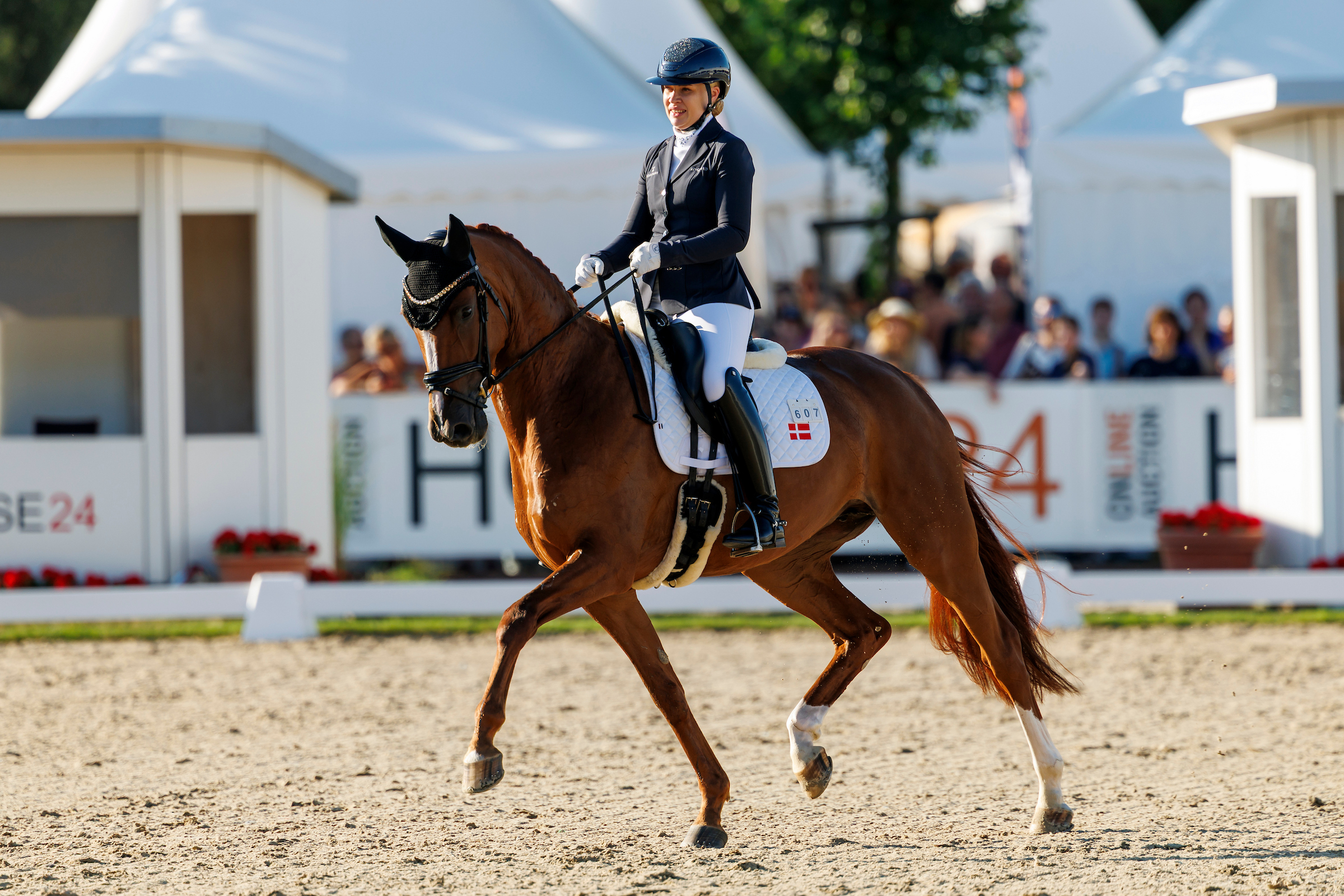
And in second place, too, it was business as usual— Dizzy by Hesselhøj Donkey Boy-Zack, bred by Gestüt Hesselhøj and ridden by Merita Hagren for Helgstrand Dressage, won silver.
Knut Danzberg praised the positivity the mare brings to the arena, and he’s right. She has an incredible amount of drive; her ears are always pricked up, and she’s always fully engaged. Despite all the forward momentum in her lively basic gaits, she still moved with a very relaxed, expansive walk and allowed herself to be guided back smoothly and with a steady rhythm. In the first walk pirouette, she didn’t follow through once, but the second one went better.
In her trot and canter work today, she showed very little collection and kept her neck tight. Her transitions were rather hurried, and in the trot, the mare leaned on her forehand instead of moving uphill. When transitioning back from a strong canter to collection, she broke free noticeably once. However, she is already executing the changes with great ease.
The judges particularly praised her natural, even, and active trot. They noted that the mare was “capable of demonstrating collection.” In the canter, they would have liked to see a greater tendency to move uphill during the extensions. Regarding responsiveness, Danzberg explained: “The only thing we’d like to see is more crossing of the legs in the half-passes.”
In terms of scores: Trot 8.5, Walk 9.5, Canter 8.3, Suppleness 8.8, Prospect 9.0. Overall score: 88.2 percent.
Sir Gribaldi’s Moment of Glory
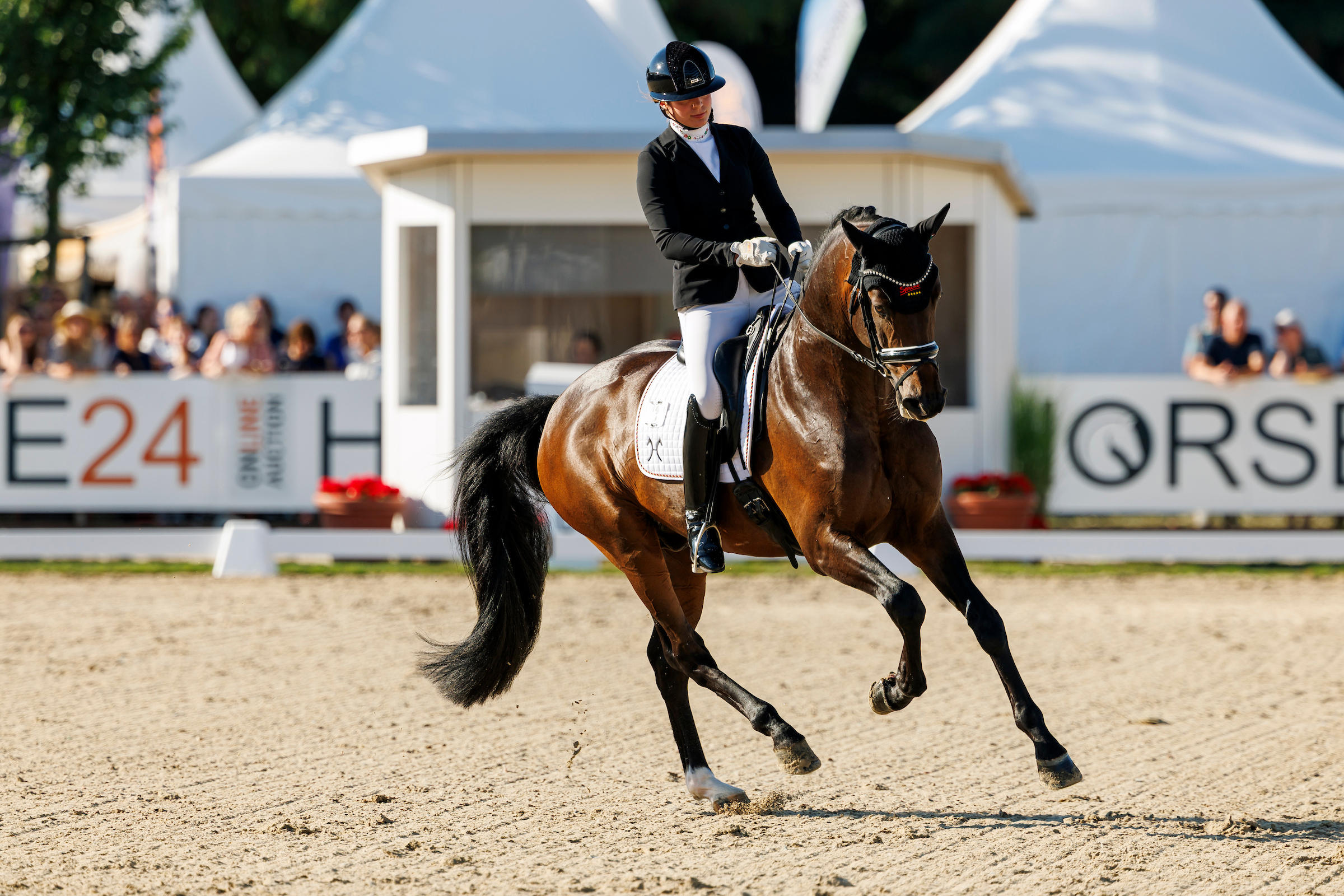
The bronze medal went to the Hanoverian stallion Sir Gribaldi, one of 18 (!) Secret offspring competing at this World Championship, making him the most widely represented sire at Verden 2026. Vitalis is represented by 9 offspring, and Escolar by 8.
Sir Gribaldi is named Sir Gribaldi because his breeders, ZG Janßen, crossed Aronis Secret with an All Inclusive dam, who is a son of Gribaldi. The Sprehe Stud is home to the result of this pairing, who, among other achievements, competed at last year’s Bundeschampionat and placed 24th in the small final there. Now, he and his regular rider, Beatrice Arturi, not only impressed the German selection committee for the World Championships, but they also brought home a medal.
During the qualifying round, Sir Gribaldi still seemed a bit unsatisfied with his contact. That was much better today. Although he was still a bit tight at times, he was much more consistent. His extended trots were at the lower end of the range, but the stallion showed beautiful lateral movements in which he was able to maintain the quality of his trot, as well as a superb walk-around.
The canter was the highlight of the test, with plenty of drive and extension, while the horse was already clearly carrying its weight—though a deeper croup would have been desirable. From this, the stallion already developed very mature, beautiful flying changes. The extension was slightly rushed. But still—that was a shining moment for the pair.
Knut Danzberg: “The rider presented the stallion very nicely. The trot was well-rhythmed. In the collection, we would have liked to see more cadence and more activity, and in the extended strides, more drive from behind—8.2. The walk was well-timed and had good reach, 8.8. At a canter, he showed plenty of activity and was well-collected. He could jump slightly more uphill at times, but showed great potential for carrying weight, 8.8. As for suppleness—the lateral movements were well-balanced, and the flying changes were excellent. The second walk pirouette was a bit large, and in the trot we would have liked to see a slightly more open frame, 8.7.”
The same rating was also given in the “Perspective” category, bringing the total to 86.4 percent.
The Medalist Who Won Everyone’s Hearts
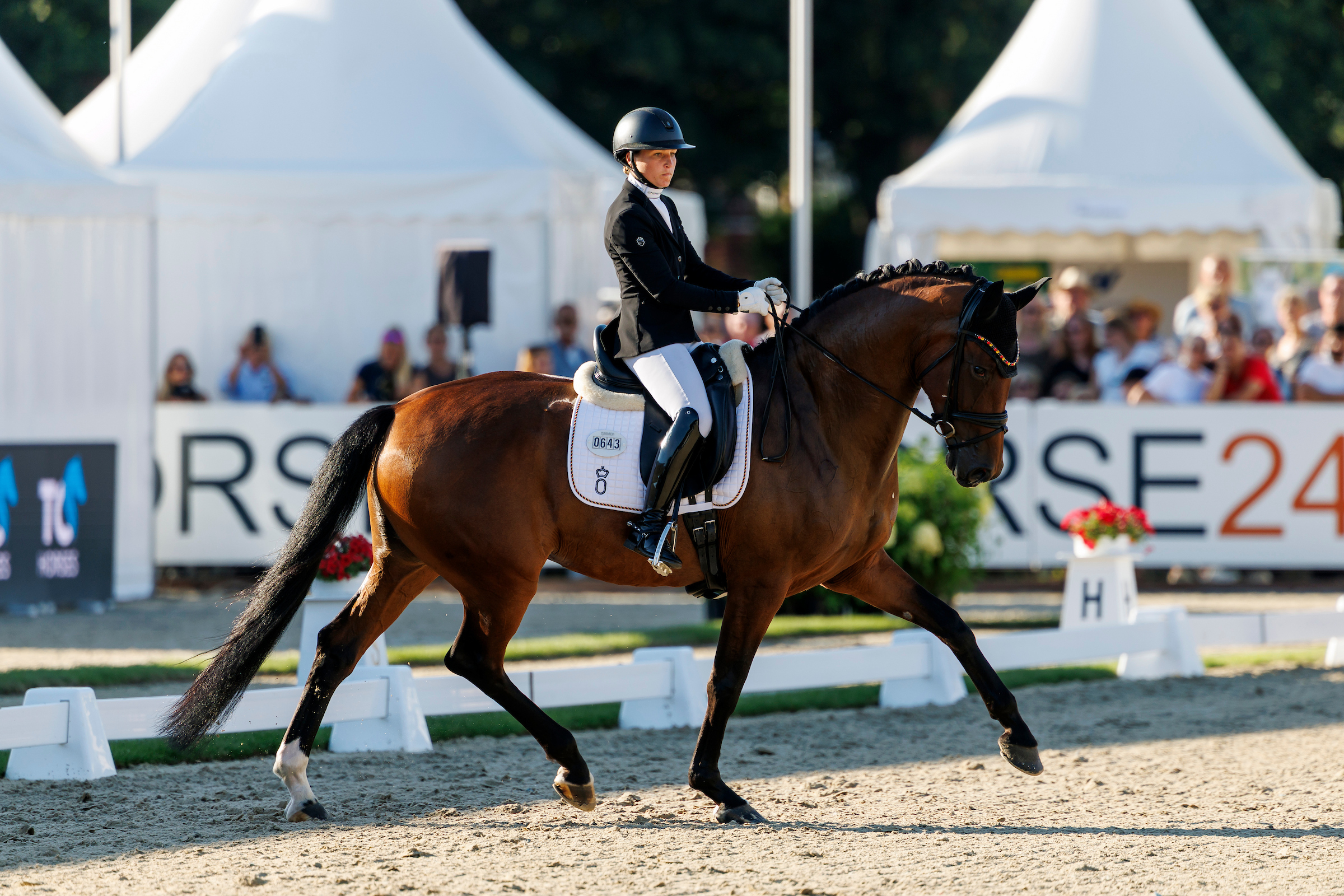
If there had been an audience award, perhaps it would have gone to the two silver medalists from the previous year: Linda Weiß and her Oldenburg mare Viva Diamond OLD, by Vitalis-Don Diamond, bred by Zuchthof Alberding and owned by 360° Sportpferde GmbH.
Even during the qualifiers, Viva Diamond seemed to feel lonely at the World Championship stadium in Verden and called out to her teammates on the warm-up arena. She did the same today, right after her first salute. You could tell: she was on fire.
When the mare relaxed at times, the test was a feast for the eyes. The trot—fluid, supple, rock-solid in rhythm, one stride exactly like the next, light as a feather yet consistently steady. Even at a walk, Viva Diamond initially approached the walk actively, supple, and confidently drawing on the rein. In collection, however, it was clear: there was still some tension.
It was a masterful display of riding skill by Linda Weiß, the way she handled the walk pirouettes and maneuvered the mare into a canter without her getting out of control. She managed this just as well with the flying changes; Viva Diamond only took one of them in two phases. She also handled the acceleration and deceleration in the canter—this mare can do it all. But yes, today’s test wasn’t without its challenges.
In their comments, the judges highlighted the balance in the trot. They would have liked to see the extensions come together more evenly from the hindquarters, and they noted that the mare became slightly crooked here (8.2). They awarded a 9.0 for the walk. In the canter (8.2), they criticized, among other things, that the upward momentum of the canter was somewhat lost during the preparation for the flying changes. For suppleness, they awarded an 8.7—based in part on the mare’s beautiful contact and obvious confidence—and an 8.8 for perspective. This totaled 85.8 percent, placing her fourth this time.
Two black stallions
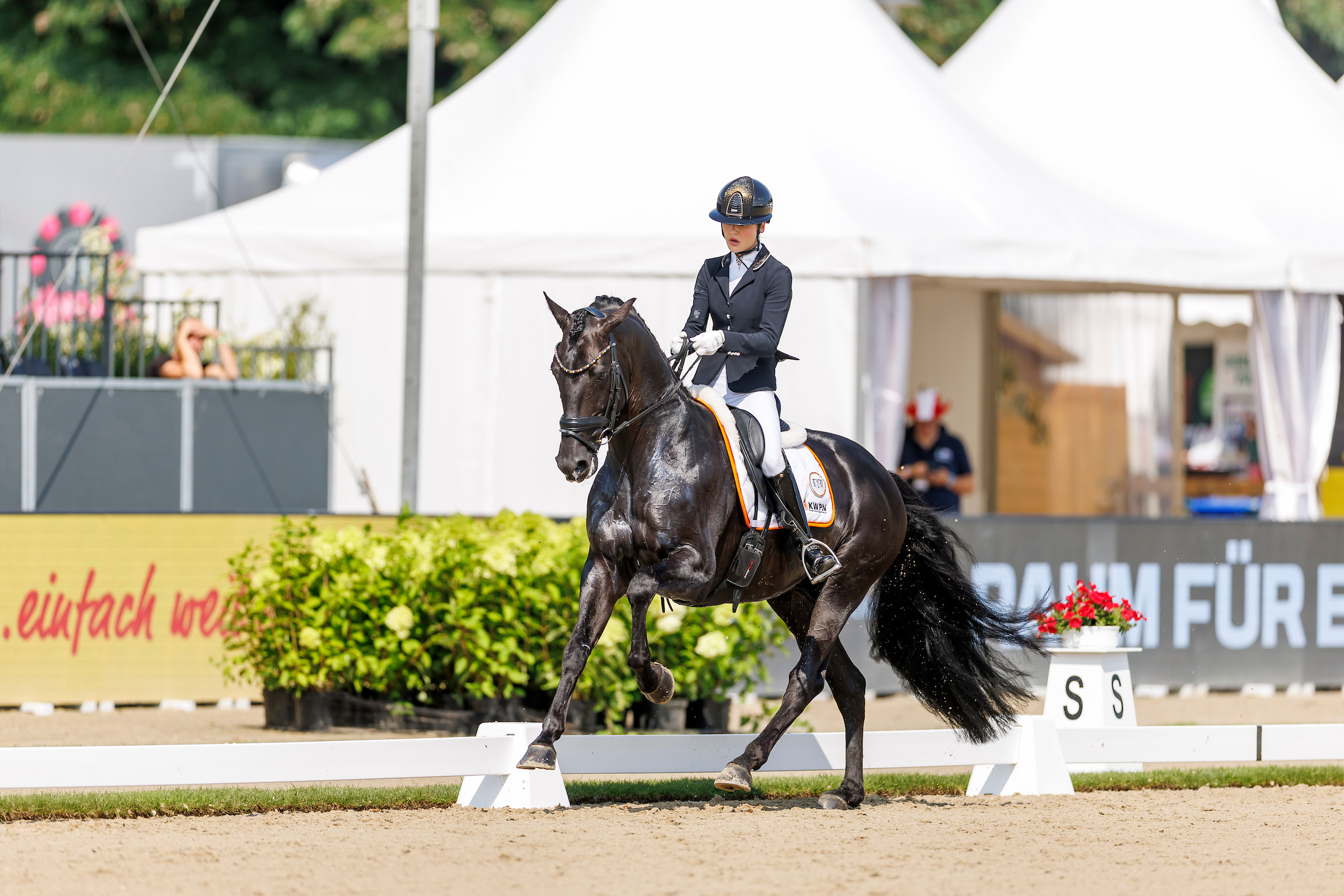
A Dutch and a Danish Rapp stallion tied for fifth place, each with a score of 84 percent.
The KWPN representative was Pythagoras WK, a son of All at Once and Vitalis, from the successful breeding program of Willeke Bos at Stal 104. Pythagoras is now jointly owned by Willem van Kampen and Franka Loos, who was also in the saddle. Pythagoras was also among the “hot-blooded” horses today. At a trot (8.1), he seemed to pull away from his rider a bit, so she wasn’t really able to drive him or let him give way, even though she kept trying—including by extending his neck. The walk sequence (8.8) went very well, although the pirouettes turned out a bit hectic. There were also several highlights in the canter (8.5), including the already confident changes and a good return to the basic gait after the extension. However, Pythagoras found the salute positions quite unnecessary today. He didn’t want to stand still in either of them (responsiveness 8.0).
The second black stallion from Denmark, ranked fifth, was last year’s strikingly handsome bronze medalist, Straight Horse Leonardo—a horse that clearly takes after his sire, Lord Europe (dam by De Niro, breeder: Straight Horses ApS). Mette Sjebjerg Jensen continues to ride Leonardo for Helgstrand Dressage. This year, too, she presented the stallion with great consistency and confidence throughout all phases of the test, although his persistent bobbing in the trot suggested that Leonardo had not yet fully relaxed his topline. But when it came to the dressage movements, the only issue was the flying changes to the right, both of which he executed in two phases. He received an 8.8 for trot, an 8.2 for walk, an 8.5 for canter, an 8.0 for suppleness, and an 8.5 for perspective.
V-Power Is Experiencing Problems Today
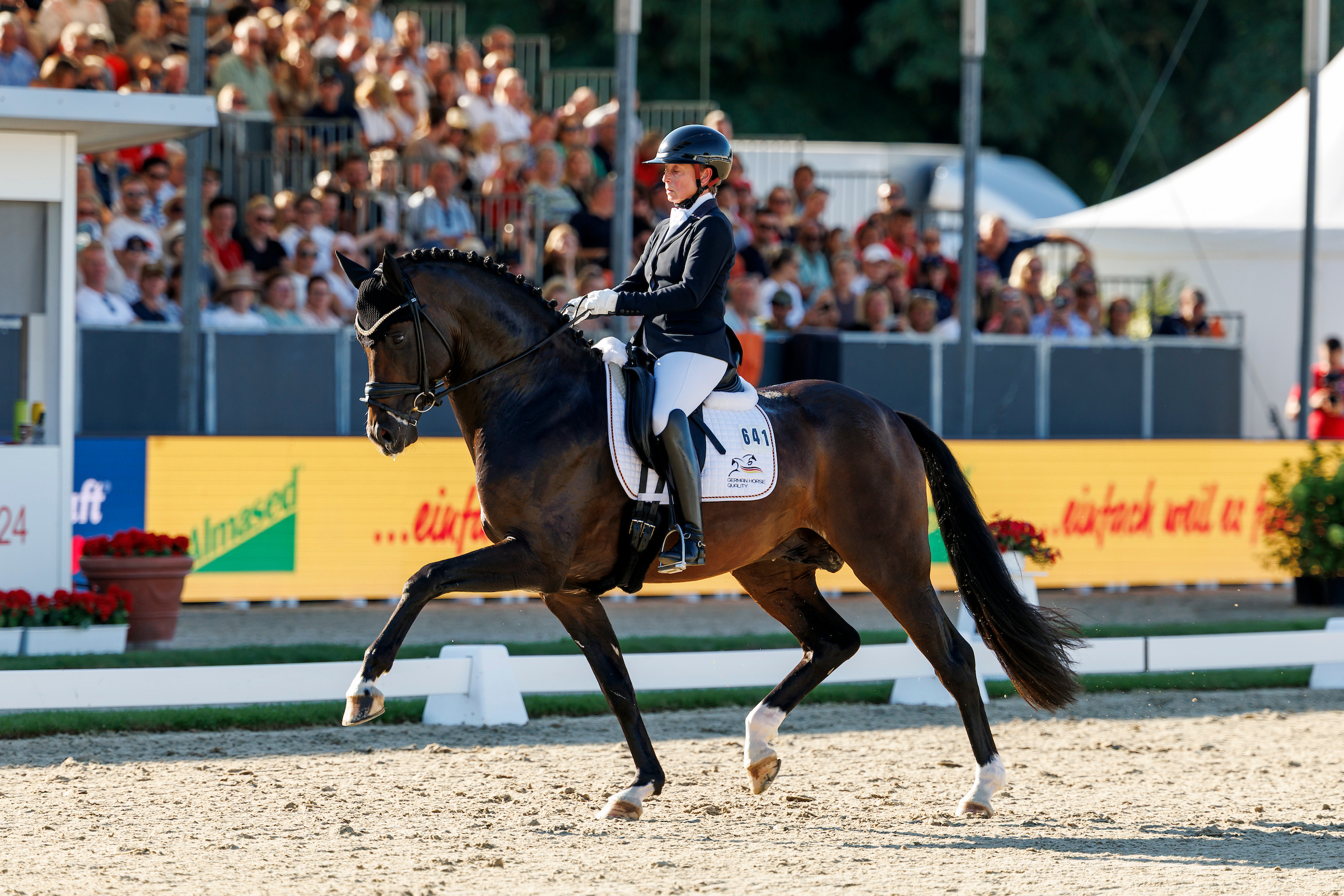
The appearance of Isabell Werth and the former Westphalian champion stallion V-Power—a beautiful dark bay whose head is the spitting image of his sire, Viva Gold—had been eagerly anticipated. V-Power was bred by Bernd Goeke out of a Fidertanz dam; he is owned by Helgstrand Dressage, and Isabell Werth took over his training when the German branch of the breeding farm moved to its facility in Rheinberg at the beginning of the year.
It’s no wonder that Werth enjoys riding the dark bay. He trots with his father’s technique, but with more elasticity. He, too, seemed more comfortable in contact today than he had in the qualifier. During the trot test, it still looked like a medal was in the cards—even though the stallion got a little hasty in the extended trots and briefly lost his balance once in the shoulder-in to the left, causing the arena barrier to collapse. The fact that part of the barrier then protruded into the arena didn’t throw either the horse or the rider off their game. They simply rode around it.
The problem started with the walk-around. V-Power couldn’t find his rhythm and didn’t respond to the reins. He still had the rhythm in the medium walk, but he clearly lost his rhythm during the pirouettes.
He should have broken into a canter after that, but Werth couldn’t get through with her aids. She had to draw on all her riding skills until it worked. The first change was also still a bit stiff in the back, but the others went better.
So, although she received a 9.5 in trot and a 9.3 in canter today, with a 6.8 in walk, a 7.6 in responsiveness—a generous score given the problems—and an 8.6 for her undeniable potential, it was “only” enough for seventh place this time.
True Love
Sabrina Geßmann and the highly supple and charming Westphalian mare True Love WS by Toto Jr.-Self Made (breeder: Elena Starr, owner: Westphalian Stables) placed ninth with a score of 82.6 percent. Among other things, the judges would have liked to see her carry the stride and cadence from the collected walk even more into the extended walk. The real issue was the walk, where True Love struggled a bit to find suppleness, and slight tension arose in the collection. That was the only score below 8 (7.5).
What was remarkable about True Love WS and Sabrina Geßmann was that, although the mare could have been a bit more consistent in her contact, Geßmann never applied pressure backward or “held” her back, so the mare never became tight. That was impressive. And it stood in contrast to other pairs, where the riders tried to force their horses into a certain shape, which the horses responded to with resistance, dissatisfied expressions, and tight necks. The judges made this point very clear in their comments.
You can find all the results here.