Interview with National Show Jumping Coach Otto Becker on the road to the WEG Aachen 2026, selection criteria and the situation of young show jumpers
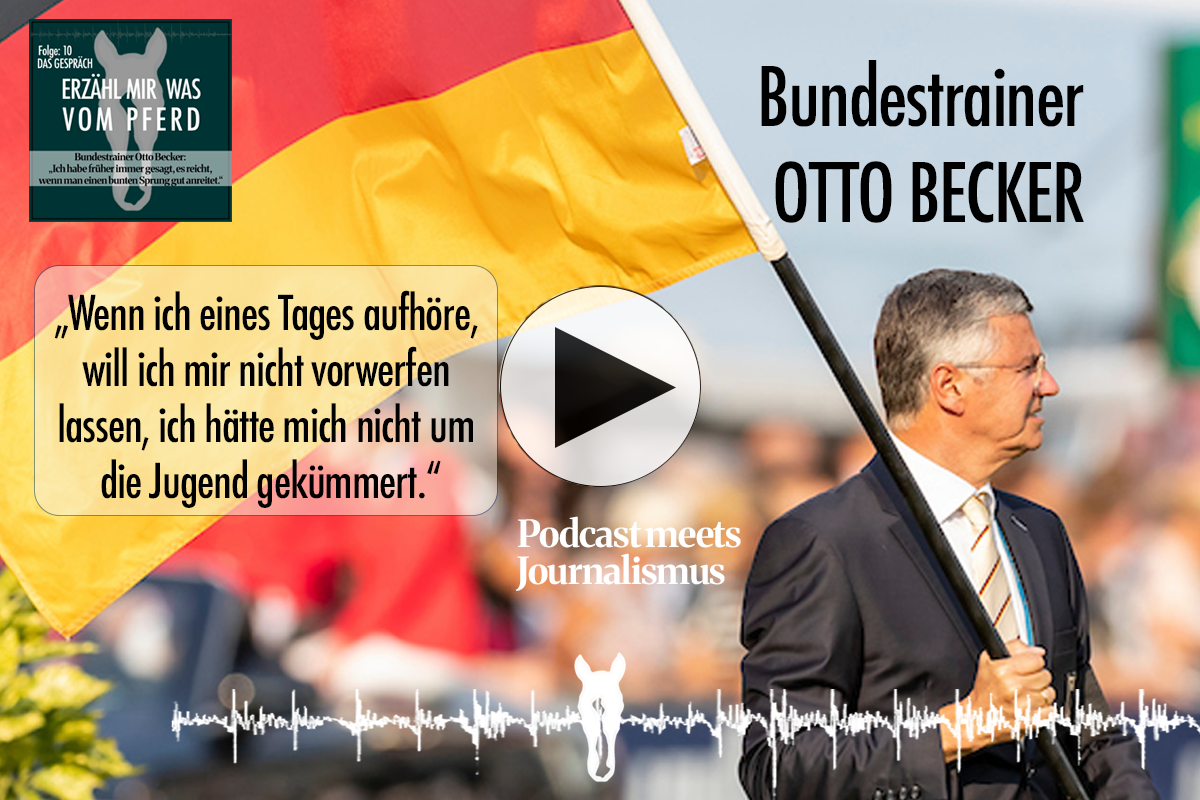
Otto Becker: “If I stop one day, I don’t want to be accused of not looking after young people.”
 from Jan Tönjes
 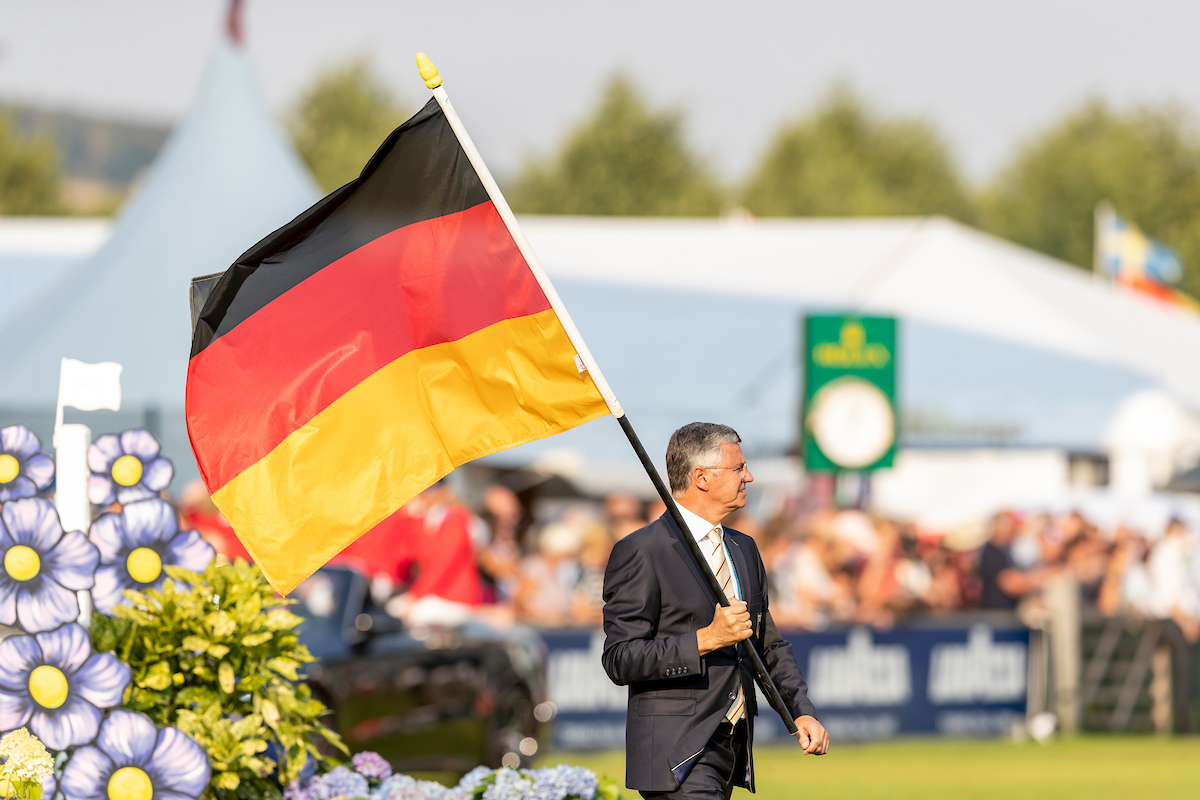 National coach of the show jumpers Otto Becker. Photo: sportfotos-lafrentz.de
 The green season has begun. What does national coach Otto Becker pay particular attention to, for example at the German Show Jumping Derby, also in view of the WEG in Aachen in August? Is it the ground, the turf?
Every year has its own special challenges when it comes to the scheduling of the Championships and the requirements: grass, sand, large arena, small arena… This year we are lucky enough to have a WEG in Aachen in our own country, something you normally only experience once in a rider’s life. And yes, other arenas are perhaps more in focus than usual on sand. And that includes Hamburg. We now have Hamburg, Aachen (the TSCHIO) and then we have three Nations’ Cups, which are also on grass in Rome, St. Gallen and La Boule. Of course, you take a closer look there.
World Championships Aachen 2026: Why turf is of raging importance
What distinguishes a turf specialist among four-legged athletes from a sand specialist? Or is that also a bit of an overused topic? In the past, almost everything was on grass and that was fine…
Of course, there are now more and more sand arenas than grass arenas. I would say that most horses, 90 percent, don’t notice any difference between jumping on sand or grass. But it’s true that on such an impressive arena like here or in Aachen, everything is a bit more massive, so the horses have a bit more respect than when they are on such a small sand arena. That makes a small difference. But the majority of the top horses jump on both arenas.
Squad = candidate? “not a closed society”
Let’s name a few names now. Who was particularly in the spotlight here in Hamburg? What were the findings? And with a view to August, i.e. the WEG in Aachen: Which names does the national coach bring into play?
I need to expand a little on that first. The Olympic squad has seven participants at the moment: the perspective squad, the former B squad is eight and that is of course the inner circle. But I always say that it’s not a closed group. Someone can always come in or move up or join the squad. We keep an eye on them too.
It was just that everyone was traveling in different ways at the beginning of the year. We had tournaments in the Emirates, then we had the Nations Cup in February, some were in Doha, there were ten five-star tournaments in a row. I think we stopped after the sixth when the war started. Thieme, Kukuk, Vogel and Dittmer were in America, in Ocala and Wellington. Three months. A few riders competed in the World Cup season, made the World Cup final, also very successfully in my opinion. And now they’re all coming together.
Successful start to the World Cup year
It started already: Hagen, Mannheim. We’ve already had the Nations Cup in Mannheim, which we were lucky enough to win. And now we have several tournaments six weeks in a row. Then there’s Rotterdam, a sand arena. But of course there is also a top tournament where, depending on how many are still on the shortlist, a preliminary decision could be made. Then there are still tournaments, but maybe two weeks to take a deep breath and then Falsterbo, Riesenbeck, Global Tour and Hickstead Nations Cup. And then we have to nominate. We will take a close look at all the potential riders. Next week is Aachen, the Grand Prix of Aachen.
Condition of rider and horse – “never a problem” for Otto Becker
The feeling of galloping around with a golden ribbon on the outside is, I think, quite unique. I’ll ask someone who knows. Klein Flottbek, Hamburg, is big, Aachen is even bigger, even longer distances, even more to canter. Conditioning questions – the courses are longer. Do you look specifically there? And how many people or how many riders from Germany are allowed to compete in Aachen?
So of course we’ll be watching very closely in Aachen, because it’s the same arena where the WEG takes place, especially again this year, because the dressage arena is already built in the middle. So it’s already there and it will always be exciting to see how the horses behave on this arena in Aachen. In this respect, this is a very, very important show for everyone involved and that is the first goal for everyone. That is what they are planning for.
The thing with stallions at training camp
Will performance diagnostics be carried out before the actual World Championships, special fitness training? Especially in view of the five starts a horse may have to complete if it makes it to the very end? Is there a training camp beforehand or do the top riders no longer really need one?
I have to say that we have never had a problem over the years – I am now in my 18th year as national coach – with a horse not being sufficiently fit. That can be an issue with younger people. We’ve had it on various occasions, but not with our top riders. Nevertheless, our vet Jan-Hein Swagemakers regularly takes blood and examines it. And of course we see the horses more often, see how they look, how they come out of the course. Whether they are panting. Whether they are sweating and we can see from the blood values what their current status is. Of course we do that. But as I said, we haven’t had a problem so far. Training camp? We do that individually, depending on who is nominated and which horses are nominated. We’ve lost our way a bit in recent years. However, this year it is planned again. But if there are stallions, for example, and they always need a bit of time to come down, then it’s better to train them at home and not in a different stable. They are already on the road enough as it is.
Do you also look at the fitness of the riders? Ten kilometers around the lake or not?
No. We’ve never had a problem with that either. The riders now work on themselves much more than they used to in my day. You always see them in the hotels, how they train, how they are in the gym, how they jog and how fit they are.
How can I recognize a championship horse?
What makes a championship horse? What perhaps distinguishes a championship horse from a good five-star horse that competes in the Global Champions Tour, for example? Or is it the same thing?
It depends on the requirements. In the Global Champions Tour there are also the team tests, which are not so difficult. And then there’s the Grand Prix. That is more difficult. It’s more like a championship. Just like the grand prix at five-star tournaments. Ultimately, you only know when they’ve done it. You can’t look inside a horse’s head. Of course we want the horses that compete. These are the horses we need. We’ve seen for many, many years how close it is, especially in show jumping. Everything is so close together. One mistake can decide four, five or six places and everything has to be right. And of course, especially at shows like the one next week in Aachen, you try to have two rounds with jump-offs. If a horse does this in Aachen, then it is also suitable for a championship. And that’s what we’re looking at in different places. Especially over the next few weeks, we will be looking to see who delivers a top performance, who consistently delivers a top performance. That is a key point for us. Because it’s just so close. Because it’s not like tennis or soccer, where you can maybe pull something out of a half. If the bar is down for us, it’s down and we can’t make up for it. And that’s why consistency is important. And of course the quality of the rider and horse.
A championship rider – what do they need to bring with them?
Yes, good. We have a lot of people who have grown in many battles. Personally, I’m pleased that we’ve had several younger players in the team in recent years. When I look at last year’s team from the European Championships with Kukuk, Vogel and Hinners. Three younger riders who really delivered at the very highest level. Marcus Ehning completed the team last year. And then when you get to a veteran, we also see Deußer and Ahlmann again, who really deliver outstanding performances. They are absolute world-class riders, and they are also the ones we need later on when things get tight in the championships. Nothing can happen there. Everything has to work out. And they simply delivered. And they prove that every week.
Beyond the course – social media, videos and co.
Now equestrian sport is indeed in the spotlight and also under a bit of public criticism and perhaps even more under scrutiny in Germany than elsewhere. Is that also a topic that is addressed in the preparation? There are all sorts of things. There is filming on the warm-up arena. You have to explain social media… How big is the topic in preparation for a World Cup like this?
Of course we talk about it, but I often find myself saying what I said when I started as national coach: We want success, yes, but not at any price. If I may give you an example: Marcus Ehning when we were in the lead at the European Championships in Milan three years ago. His horse wasn’t lame, but he didn’t feel well. Something wasn’t right. And then he withdrew and we lost a medal. Just as an example. So success: yes. Not at any price. And also that we simply want to deliver fair sport. And of course we talk about how we perform. But that’s nothing new. We have always paid attention to this and will continue to do so.
Who is eligible for the World Championships Aachen, dear Otto Becker?
The European Championship team won bronze last year, so of course you could say: Never change a running system. But: Daniel Deußer was really strong at the World Cup Final. Has there been any pair that has particularly surprised you in the last six/three quarters of a year or that has climbed up the internal list a bit?
Every word the national coach says before such an important event is weighed on the balance. The team? They delivered last year. We know what we have in them. Daniel was at the World Cup Final. Christian Ahlmann won here (in Hamburg) last year. It will be interesting to see in the next few weeks. André Thieme’s Chakaria is in very good form again (note: we did the interview before André Thieme won the Grand Prix in Hamburg ). She was in the Nations Cup team in Ocala, which we won.
Too much harmony?
It is always said that the team medal is the decisive factor. Is that still the case or are you already looking a bit more in the direction of who has a chance of making the podium individually?
No, that is absolutely the top priority. And fortunately the riders see it that way too and they all go along with it. We’ve actually always had good teams over the years. I can remember times when it was different.
Sometimes I think it’s almost too harmonious, because a bit of friction sometimes doesn’t hurt either.
But if you have the same goal, I’m happy that everyone is pulling together. That’s why I’ve always been an opponent like in Tokyo, when it’s the singles first and then the team.(In the Olympic mode at the Tokyo 2021 Games, the individual competitions were held first and then the team competitions). Then everyone looks after themselves a bit first and doesn’t think about the team yet. But it’s easier for me to handle it this way(in World Cup mode), everyone has the same goal, everyone wants a team medal, wants to be successful. Then comes the individual. The better everyone is in the team competition, the better their chances are in the individual competition. And it’s a good thing that this has been changed again and the order is team first, then individual.
Young talent in German show jumping
Now, good young people are always moving up. Sophie Hinners is certainly an example of this. How would you assess the overall situation for young talent in equestrian sport, especially in show jumping? It’s getting more and more expensive. The number of events is decreasing, the number of horses is decreasing. More and more people are finding it difficult to afford this hobby. But ultimately, top-class sport only grows out of the hobby.
It’s like this. I’ve always said that if I stop one day, I don’t want to be accused of not looking after young people. I always try to be on the ball and find out what’s going on. We’ve brought in a lot of talent over the last few years. Starting with Klaphake(Laura Klaphake rode in the 2018 World Championship team in Tryon and won a team bronze medal) and the ones I just mentioned. That’s important to me. But I also have the impression that there are fewer of them at the moment than before, if you look at the numbers. At championships, national championships – the number of riders is decreasing and so of course the pool we can draw from is also decreasing. But luckily we can ride for a long time. Fortunately, we have many riders who are of a good age, who can still deliver top level for another 15 or 20 years. So I’m not worried about the next few years. But yes, at some point this could have the effect that there will simply be fewer of them.
Chances, without a “horse family” in the background?
The next generation, which is similar in dressage, are mainly descendants from established equestrian families. Is there still a chance at the moment for people who do this as a hobby, who don’t come from horse families, to actually make it into top-class sport? So will it become such an elite sport at some point that, let’s say, you completely distance yourself from the rural basis?
It was always expensive, it has become even more expensive for many. But I still think the opportunity still exists. It always depends on the individual. I used to say that it was enough to ride a colorful jump well. That’s no longer enough today. It takes more than that. You have to manage yourself well, sell yourself well, approach people, breeders, horse owners, patrons who might make a horse available to you. That you ride well, that you assert yourself and that you advance your own career. This possibility still exists. Even for riders who come from non-horsey families. It’s perhaps a little more difficult because the parents don’t have the same experience. But the opportunity still exists.
Self-management is important
You have to go to other stables. It’s best to work with top people, that’s where you benefit the most. And once you’re on the way up, I think it’s much easier to get into the top sport these days because there are so many more competitions. There used to be tournaments that were always ridden by the same riders, big international tournaments. But there are still enough small tournaments. Fortunately, we still have them in the countryside. They are becoming fewer, but the tournaments still exist. There are many professional centers where you can ride every weekend and during the week. So the opportunities are there. Much more than before.
In Germany, the number of tournaments is decreasing slightly. Internationally, it is increasing. So the opportunity to ride is there. And if you are good and have a horse… We are always desperately looking for people who can also ride Nations Cups, both five-star and three-star. If someone is good, I think there’s now a much better chance of getting in than there used to be, where it was always the same people competing.
Quo vadis top-class sport?
Riders in top-class sport have twelve or 20 horses that fly from tournament to tournament. The horse flies there too. Then they meet them again. Is that a framework that still honors the sport as a sport? Is the relationship with the horse still there? Do you perhaps have to downshift a bit at some point? To say that you want to get back to the point where a real partnership still exists?
The partnership exists. The horse has to trust the rider, otherwise you can’t get through such courses. So I don’t think it’s always easy for riders either. Fortunately, there are lots of competitions, but as a rider I also have to plan well and manage my horses. Management is always more important, so that I don’t overtax my horses. We have that responsibility. And yes, of course there used to be fewer competitions and you knew the pairs more. Now there are simply a lot more competitions at shows, and the top riders in particular have several horses. You don’t have horse pairs like Ratina, Deister or, in my case, Cento. He competed internationally for eleven years. Of course, you might have them more in mind than at the moment, where Richie Vogel or Christian Kukuk have several horses. But basically: without the necessary trust, without the connection between rider and horse, top sport is not possible.
Is the development a pity or is it just the way it is?
I don’t think you can turn it back at all. It’s not even necessary. We can be happy that there are so many tournaments. I remember when I started, there were no tournaments at all in the winter. Now I don’t think there’s a weekend in the whole year where there isn’t a five-star tournament. So the development is such that we can’t stop it. Whether some things suit us or not. But nevertheless, and I repeat myself here too, it is all the more important that the management does justice to the responsibility of the horses and that they are treated sensibly and not overtaxed.
Which nations should I keep an eye on at the WEG Aachen?
Other fathers also have beautiful daughters, they say. In other words, when you’re at the tournament, you watch, of course. What are the Germans doing? Do you have your internal list that you probably check off? But of course there are also the other nations. Can you name a few nations that you particularly favor – maybe it’s still too early – but where you’re already keeping a close eye on?
Basically, when I’m at the warm-up arena, especially at the Nations Cup, I don’t notice much of the competition in the ring. But of course you always try to learn from the best, even from the best nations, to take something away with you. But basically we look after ourselves. We have to have our things in order. Most of the time it’s the established nations because they simply ride well. Because they are well managed. Because they also have the right horses. So the English are very strong again. Belgium is always a force to be reckoned with. Ireland, Holland, America – also towards the Olympics in their own country. So basically there are eight to ten nations at a World Championships who, if they have a good weekend, will be in contention for gold. And that makes it exciting on the one hand, but also quite difficult.
How does the national coach sleep in the last few days before the WEG in Aachen?
I know what’s in store for us. There is something very special about riding in your own country. Conversely, when championships were far away, very far away. A few hours time change, there were fewer friends, fewer fans: then you can concentrate much more on the task at hand. And Aachen will then be a number. Because everyone will be there. And I hope that the riders will have the necessary peace and quiet, the necessary concentration to really focus on the most important things. We have to pay attention to that. The tension will increase over the weeks and months. That’s already the case. With the nominations: You think about who is going where? Giving riders the chance to present themselves and qualify.
Finding the right way for each individual or for each individual horse. It’s quite a rattle in your head in between.
Thank you for the interview
The interview was conducted by Anja Nehls and Jan Tönjes
The entire talk with even more interesting answers – from season planning at A, L or M level to the national coach’s all-time favorite horse (spoiler: it’s not one of his horses) in the podcast TELL ME ABOUT THE HORSE. Click here for the current episode.
Ähnliche Beiträge