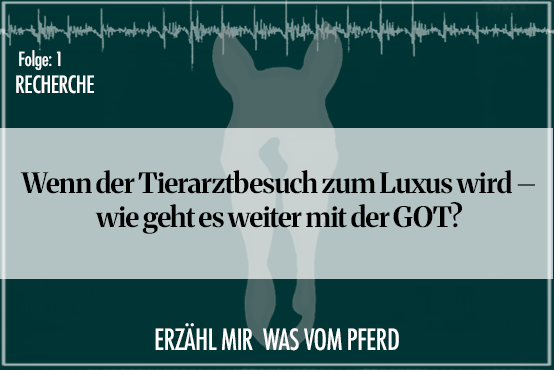
SWR TV documentary on the GOT: “The Story – Tierisch teuer – was hinter den hohen Tierarztkosten steckt”
 from Jan Tönjes
 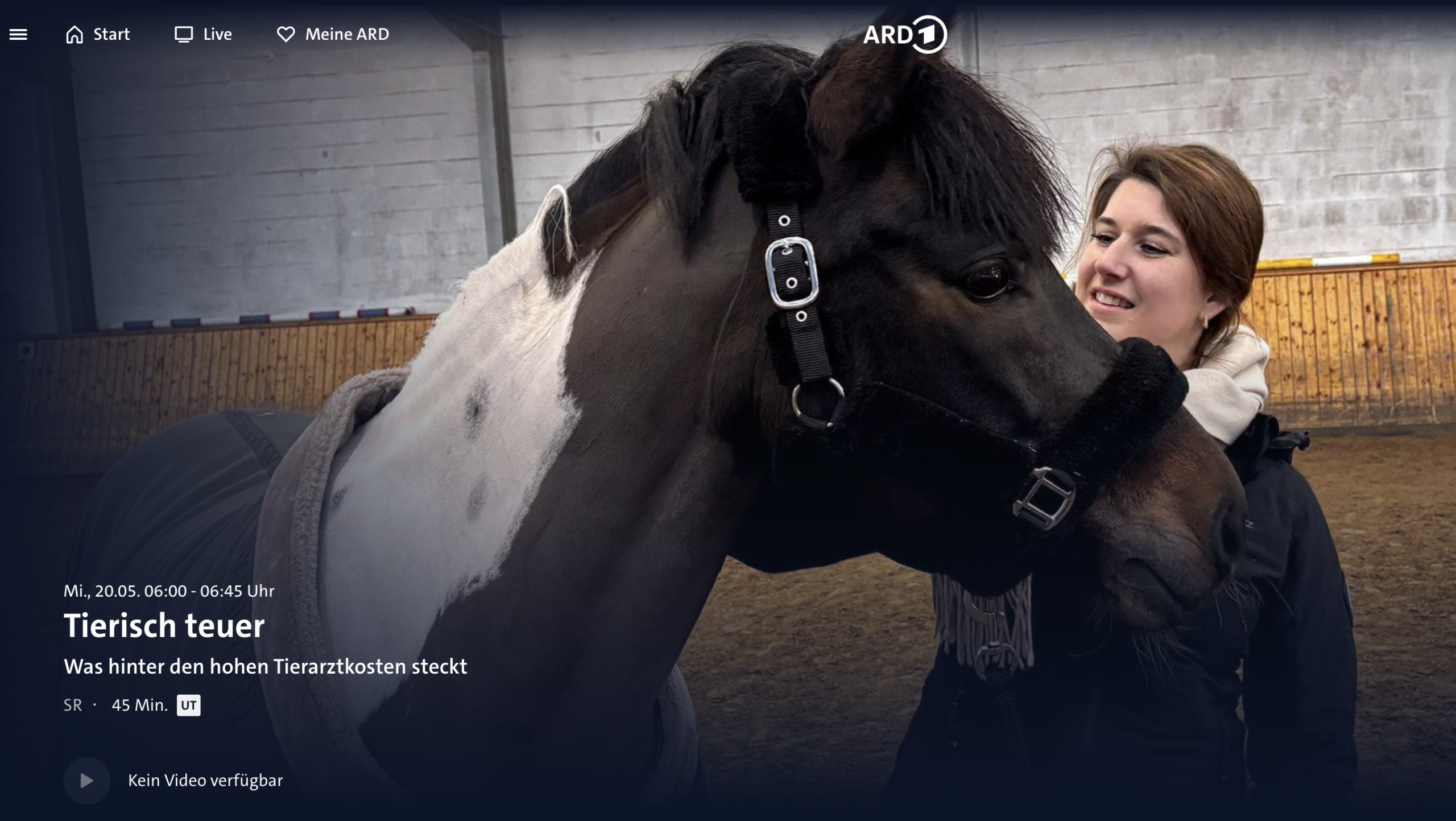 Documentary on the scale of fees for veterinarians (GOT). "Die Story - Tierisch teuer - was hinter den hohen Tierarztkosten steckt" can be found in the ARD Mediathek and on YouTube. Photo: ARD Mediathek
 The scale of fees for veterinarians (GOT) is the subject of the TV documentary “Die Story: Tierisch teuer – was hinter den hohen Tierarztkosten steckt”. Animal owners, vets and politicians have their say. SWR promises a “film about a system under pressure – and the question of how affordable animal love will still be in the future”. The documentary can be viewed in the ARD media library and on YouTube. The film will be shown in the linear ARD program on Tuesday, 19 May from 9 pm.
German Pet Owners’ Association continues to warn
In connection with the TV documentary, the Association of German Livestock Owners (VDTH) continues to call for fundamental changes and a departure from the GOT. The association summarizes its fundamental positions in a press release:
Readjustment of the GOT not a solution
The current GOT does not adequately protect animal owners. The reason for this is not only the increased fee rates, but also the wide discretionary scope that is used commercially. Restricting this leeway would be bureaucratically complex and would conflict with EU directives.
VDTH therefore calls for the abolition of the GOT
The GOT is unsuitable for updating, as the fee rates were set unsystematically and without an up-to-date cost basis. Further increases without a well-founded calculation are not acceptable.
Following the abolition of the GOT, practices would be able to calculate prices individually, offer pension plans and insurance companies could agree flat rates for treatments. This would make costs more transparent and calculable.
This must be accompanied by transparency, consumer education and antitrust monitoring.
Non-binding nature of the GOT – a lazy compromise?
Making the GOT non-binding would prolong the problems, as the old rates would continue to serve as a benchmark. This would not achieve any real progress.
In Austria, the fee table has been abolished and fee recommendations have been introduced instead. A similar model with guideline values could also provide orientation in Germany.