The special story of Tobias Nabbens Forster
From challenge cup to international Grand Prix horse
 from Dominique Wehrmann
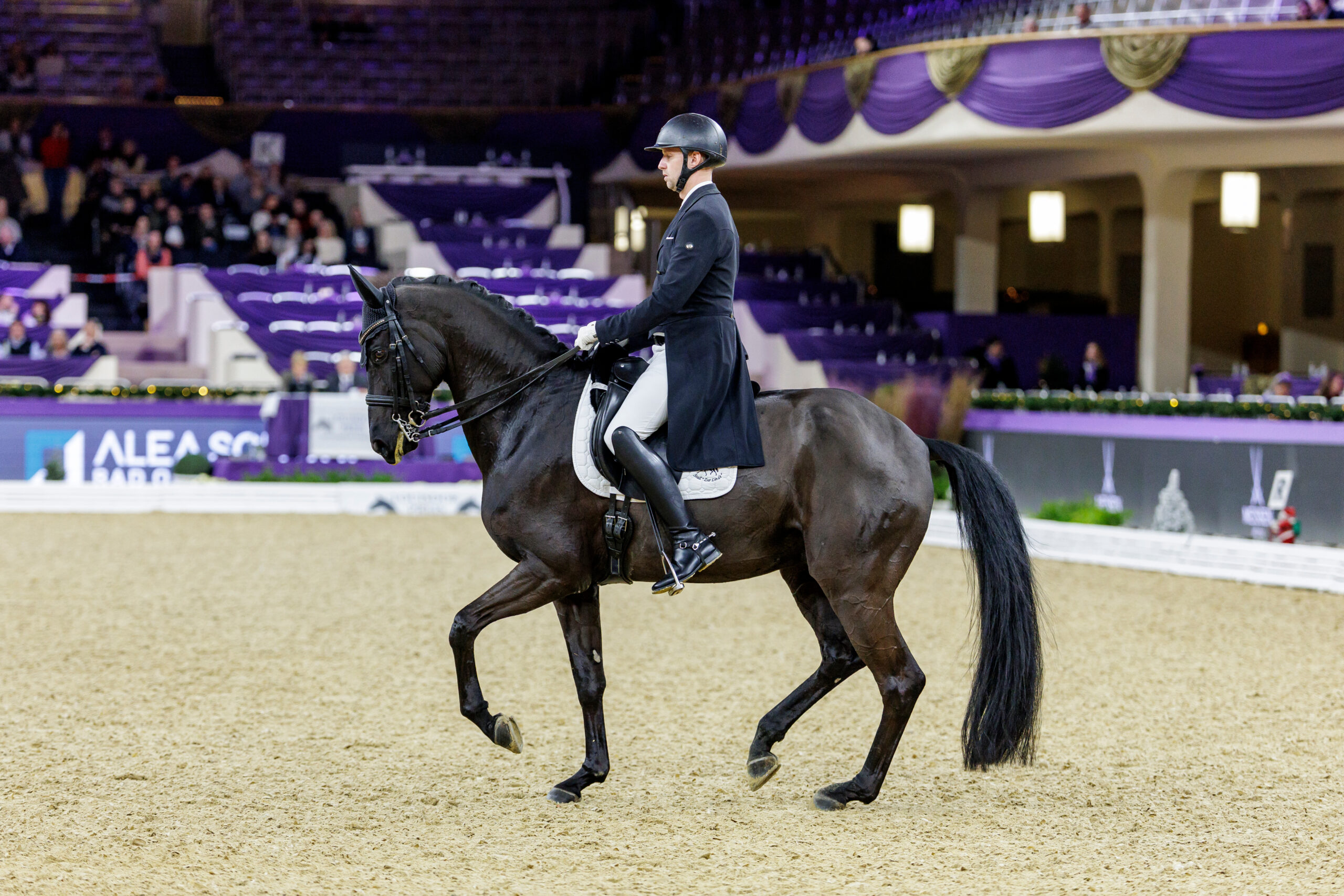
 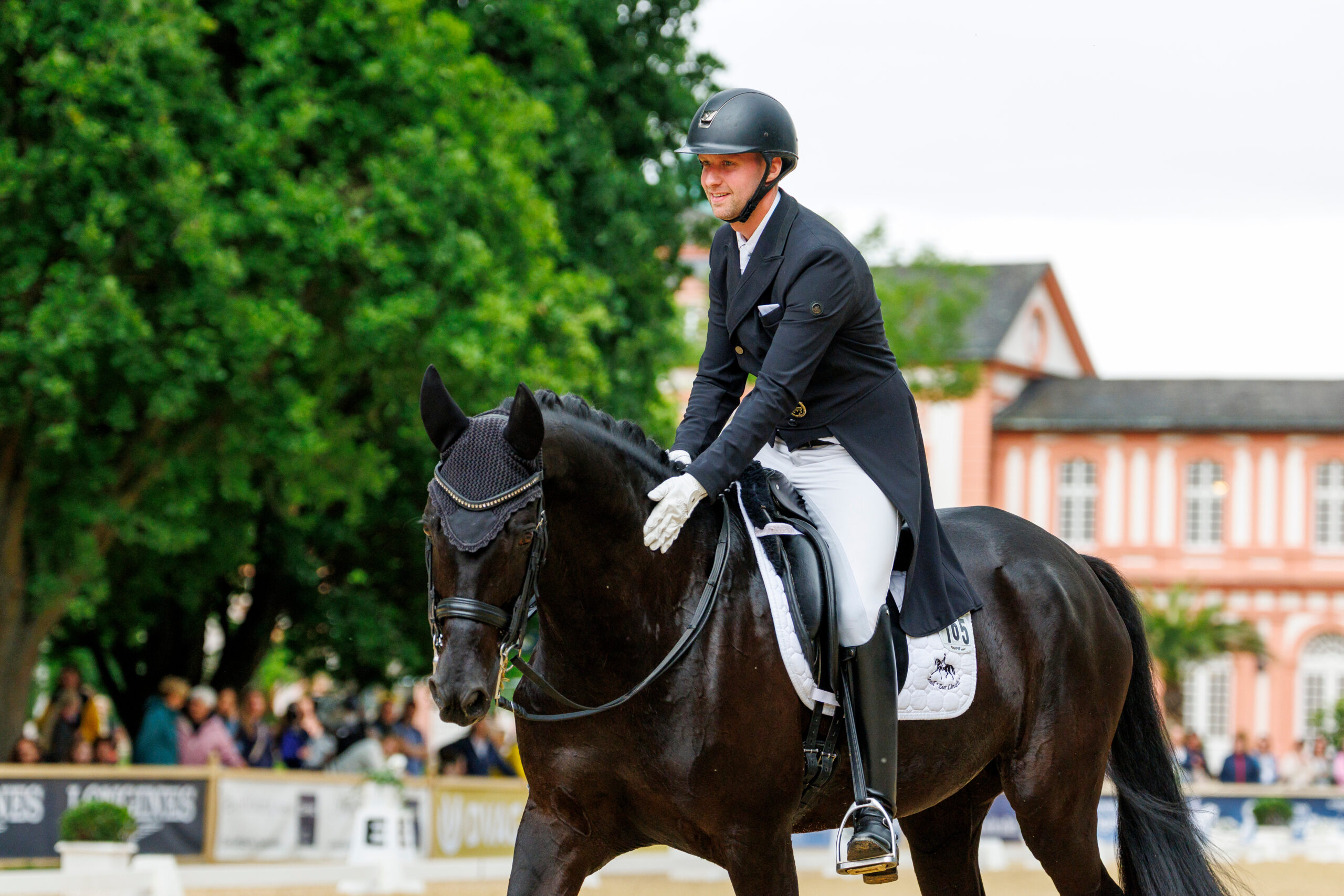 Tobias Nabben's Forster - from candidate for the slaughterhouse to international Grand Prix horse. Photo: sportfotos-lafrentz.de
 Secretly and quietly, master horseman Tobias Nabben and the Hanoverian gelding Forster have danced their way to the fore in recent months. Anyone who makes it to the Louisdor Prize Final in Frankfurt in December is one of the top young dressage horses in Germany. Nabben and Forster were there. However, after a great third place in the warm-up test, the ghosts of the past returned in the decision in Frankfurt. A pity, but just a stumbling block on a path that is far from over.
Last weekend, the pair made their international debut at the CDI3* in Lier. They scored just under 70 percent in the Grand Prix and Special, coming seventh and third respectively. That may not yet sound like a world star. But Tobias Nabben is certain that this is by no means the end of the line – and anyone who has followed Forster’s development will immediately understand what he means. Forster actually has everything that an above-average Grand Prix horse needs: three very good basic gaits and a rare talent for piaffe and passage. For him, these seem to be the fourth and fifth gaits. He switches from one to the other as effortlessly as a Dalera BB once did. It is almost a small miracle that this horse is where he is now. His story is the famous “from dishwasher to millionaire” story
Forster – “difficult” and “only for professionals”
Forster is a Finest son from the successful breeding program of Ulla Kazorke in Essen. His line also produced the Burg Cup finalist Bohemian Rhapsodie ridden by Kira Wulferding. Forster’s dam is a daughter of Boston. It was this part of the pedigree that drew Tobias Nabben’s attention to the gelding. Because one of his most successful horses was also a Boston offspring.
An ad on ehorses advertised the then five-year-old Forster – although “advertised” doesn’t quite cover it. “Only for professionals” and “difficult” was what it said. And the price also suggested that there must be a catch. But Nabben is a professional. He began his training as a horse farmer with Jo Hinnemann at the age of 16, by the time he was 23 he had his master’s degree in horse management and has been running his parents’ business, the “Zur Linde” stables in Bottrop, together with his mother and wife ever since. He was therefore confident that he could meet the requirements that the advertisement placed on prospective buyers for the gelding. So off he went.
What he saw was worse than he had expected: “Forster was skinny as a rail and had hardly any muscle. When he was ridden, he was unsteady in his contact and you could tell that he had already been tried out by others. He was totally insecure.” But Nabben took a liking to the elastic black horse. He contacted the owner and offered to take Forster on a three-week trial. She was not enthusiastic at first. But on the advice of the Schult family in Hünxe, where Forster had grown up, who told the owner that Nabben had a knack for difficult cases, she was persuaded.
The next hurdle was the purchase inspection. Forster failed. But after talking to several vets, the Nabben family took a chance on him anyway. “The vets said it was a question of management. He was simply too poorly muscled. He lacked strength,” says Tobias Nabben. So Forster moved to Bottrop. A bargain, but also a “risky purchase”, as Nabben says.
“He really needed a lot of love”
Riding was difficult at first. Nabben didn’t really want it to be. In the first few weeks, Forster was mainly lunged. Although he was already five years old, he had the training level of a remonte. “He was constantly going through the motions,” recalls Tobias Nabben. “My rider didn’t even want to sit on him anymore.”
Forster was never angry, on the contrary. “He was sweet as sugar in the stable. He just needed a lot of love.” And time. The Nabben family gave him that. Forster had to realize that the rider was not a threat. “He first had to learn to walk relaxed under the saddle,” says Nabben. The Finest son did not compete at either the age of five or six. He gradually gained trust in his people.
The more confidence grew, the greater the progress Forster made under saddle. Once the foundations had been laid, everything went very quickly. Forster didn’t need to be explained twice, he understood immediately. He now seemed to enjoy working with his rider. “People are always quick to say that the horse fights for you and gives everything for you. But it really is like that with Forster,” says Nabben. “He wants to do everything right.”
From zero to Grand Prix
Two years after Nabben took over Forster as a difficult case (“I can imagine that if we hadn’t taken him, he would have gone to the butcher sooner or later”), he was already competing in his first medium (M**) and advanced (S) level tests. At the age of nine, he could do the Grand Prix program. He got the hang of piaffe and passage straight away. “That’s why we went to the Balkenhol family back then,” reports Nabben.
Klaus Balkenhol also thought he would be really good one day.
The riding champion and former national coach was proved right, as has become increasingly clear in recent months at the latest. “The great thing is, I have the feeling that he still has a lot more potential. I can’t call up everything yet, but it’s getting better and better. All he needs is more strength and self-confidence.”
He is not for sale, by the way. “Of course, when he qualified for the Louisdor Prize Final last year, there were lots of inquiries. But I want to continue riding him myself. Besides, I don’t know how it would work with him elsewhere. He is a sensitive horse. He needs his trusted partners.”
Outlook
Since last year, Nabben has also been supported in training by national coach Monica Theodorescu. He is determined to continue this. “I know there are still a lot of things we can work on. But that’s also nice! Now we can work on the finer details.”
Nabben is coordinating exactly what the show season will look like for Forster with the national coach. But it is already clear that he will be riding in Hagen and at the German Championships in Balve – two tournaments in which permission to participate is already an accolade.