Metabolic problems in horses: EMS, PPID (Cushing's disease) & laminitis
Metabolic problems in horses: EMS, PPID (Cushing’s disease), laminitis & other diseases
 from Kerstin Wackermann
 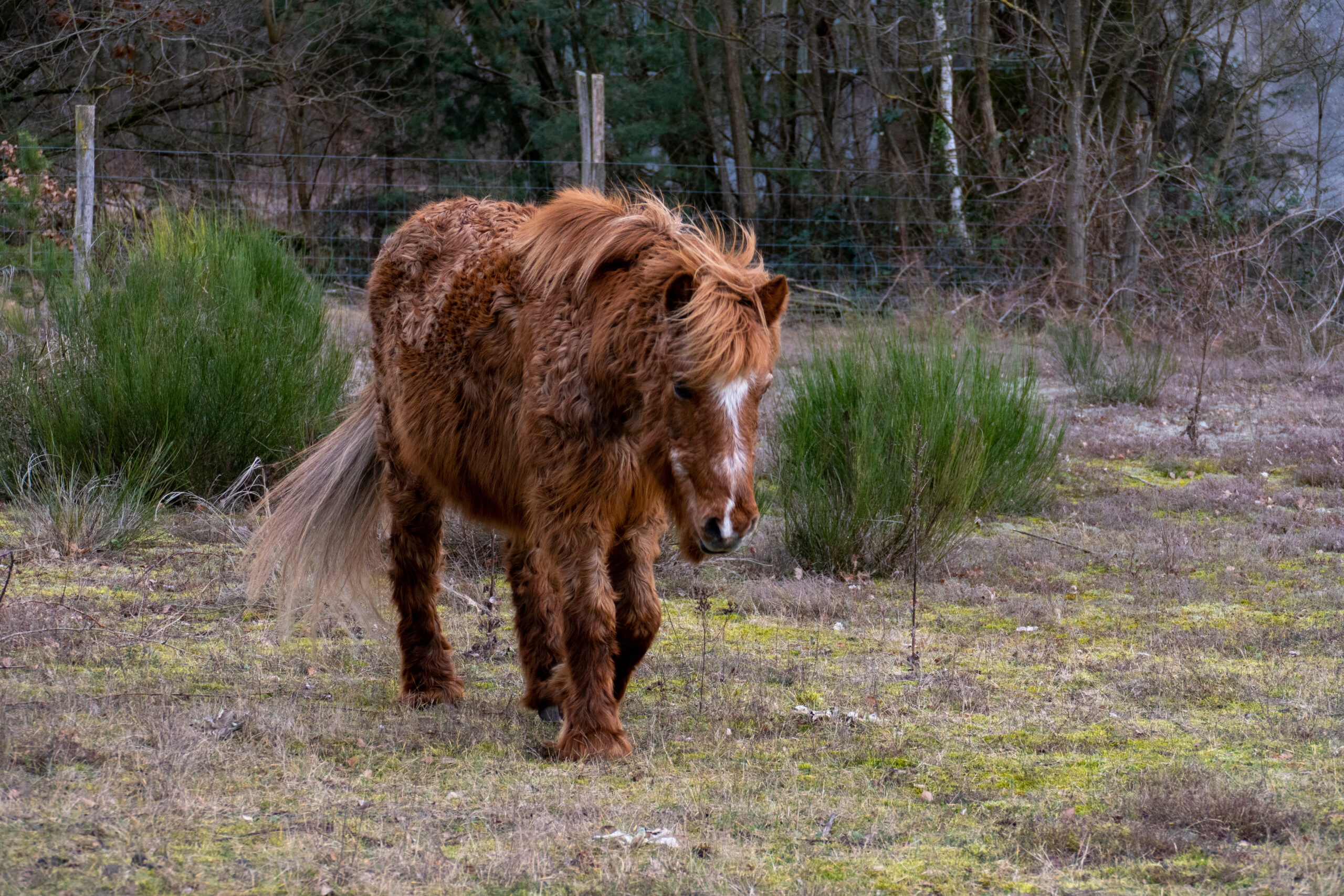 A typical characteristic of a pony or horse suffering from Equine Cushing's disease (PPID): long curly coat. Photo: Adobe Stock
 Metabolic problems in horses often develop gradually. In everyday life, they are usually only noticed when visible changes are already apparent. Depending on the disease, these include pronounced fat pads on the mane crest, shoulders, croup or base of the tail, as in EMS, or a disturbed coat change or long, curly coat (hirsutism) in Cushing’s disease. There are also changes that are less clearly attributable: Some horses sweat profusely, even in cool temperatures and without any exertion. Others appear tired and flat or have recurring problems with their hooves. Such observations are sometimes classified as typical for the age or breed in the stable, but can indicate that central metabolic processes are no longer running normally.
How the horse’s metabolism works
Metabolism encompasses all biochemical processes by which the horse’s body absorbs nutrients from the feed, converts them, stores them and makes them available again. This includes the energy metabolism of carbohydrates and fats, protein metabolism, mineral and trace element metabolism as well as breakdown and detoxification processes. The digestive tract, liver, muscles and fatty tissue are involved, as is the hormone system, which finely regulates these processes. Hormones control whether nutrients are used for building and repair processes, stored as reserves or mobilized to cover current needs.
Causes of metabolic problems in horses
A permanent imbalance between energy intake and consumption plays a central role in the development of metabolic problems. If a horse consumes more energy over a longer period of time than it converts through exercise and performance – for example, when grazing on energy-rich grass for a long time or on high-energy rations despite little exercise – the hormonal control of the energy metabolism comes under increasing pressure. Insulin regulation reacts particularly sensitively. Although the underlying mechanisms are the same for all horses, some breeds show stronger insulin reactions to the same energy surplus and therefore a higher risk of metabolic imbalances.
Ponies and many robust horse breeds have a particularly efficient energy metabolism that is evolutionarily adapted to poor feeding conditions. Under current husbandry conditions with high-energy feed and limited exercise, these horses react more sensitively to energy surpluses and show insulin dysregulation more frequently than less efficient breeds.
Hormonal control mechanisms can also change with increasing age. This is particularly relevant in PPID: the age-related loss of function of dopaminergic nerve cells in the brain, which control the pituitary gland, leads to impaired hormone regulation with permanently increased ACTH secretion. This change is disease-specific and not part of a general ageing process in all horses.
Diseases, pain, stress or abrupt changes in feed can also destabilize the metabolism. Such factors rarely act as the sole cause, but significantly increase existing genetic and hormonal risks. The higher a horse’s individual metabolic susceptibility, the slower and more controlled the changes in feeding and management should be.
Typical metabolic diseases in horses
Equine Metabolic Syndrome (EMS)
In equine metabolic syndrome, insulin regulation is out of balance. The clinical picture often occurs together with obesity. Many affected horses show pronounced fat pads on the mane crest, shoulder, croup, tail base and around the udder and hose. They hardly lose any weight even when the amount of feed is significantly reduced. If there is any suspicion of this, the vet will carry out a targeted examination. He assesses the body condition and determines the insulin concentration in the blood in particular, often in combination with glucose levels.
To test the insulin response after feed intake, the vet uses stress tests such as the oral sugar test. In this test, the horse eats a defined amount of sugar and the vet then measures the insulin level at intervals. Many EMS horses show normal blood sugar levels, but react with a strong and long-lasting increase in insulin. Even horses that are not overweight or have no typical fat deposits can suffer from this type of insulin dysregulation (ID). It is important to adjust the feed to avoid insulin spikes. Exercise can help the body to respond better to insulin (link to EMS article).
PPID (Cushing’s syndrome)
PPID stands for Pituitary Pars Intermedia Dysfunction and is often referred to in everyday life as Equine Cushing’s Syndrome. Typical signs include delayed or incomplete shedding, long or curly coat, progressive muscle loss along the topline, loss of performance and increased susceptibility to infections. While some horses lose weight during the course of the disease, others remain overweight despite PPID. The disease mainly occurs in older horses, but can also affect younger animals.
For clarification, the vet measures hormonal blood values, in particular ACTH. ACTH stands for adrenocorticotropic hormone and is produced in the pars intermedia of the pituitary gland. It stimulates the adrenal glands to produce cortisol. In healthy horses, ACTH secretion fluctuates depending on the time of day and season, which is why vets take these natural fluctuations into account when assessing the values.
PPID is caused by a progressive loss of function of certain nerve cells in the brain that normally slow down the release of hormones from the pars intermedia. If this control is lost, the body permanently produces too much ACTH. In practice, vets often treat PPID with pergolide, which curbs this overproduction. He adjusts the dosage individually and monitors the progress regularly.
Insulin-associated laminitis
Insulin-associated laminitis often occurs in conjunction with EMS or PPID and often develops gradually. Severe overweight is not necessarily the main cause. The first signs are usually that the horse walks more cautiously, is lame when turning and relieves the affected leg. Another typical sign is a significantly increased pulsation of the toe artery, which can be easily felt on both sides of the fetlock head on the back of the leg.
The vet diagnoses laminitis based on the symptoms and also measures metabolic parameters, in particular insulin levels. If the insulin level remains high for a long period of time, functional changes occur in the hoof corium. Among other things, this disrupts blood circulation and cell control in the fine lamellae. The fine lamellae of the hoof corium, which anchor the coffin bone in the hoof like Velcro, lose stability: cell connections loosen, elasticity decreases and the load-bearing capacity drops. The result: the suspension of the coffin bone can no longer withstand the tensile and compressive forces when standing and walking. The coffin bone can drop or tilt slightly.
It is crucial to identify the underlying metabolic disorder at an early stage and to stabilize it in a targeted manner in order to prevent further relapses.
Hyperlipemia and hyperlipidemia
In contrast to EMS, PPID or insulin-associated laminitis, hyperlipidemia and hyperlipemia are not a chronic metabolic disorder, but an acute metabolic imbalance. It mainly occurs in ponies and light-fed horse types. If energy intake drops suddenly and significantly, for example due to illness, severe stress or a persistent reluctance to eat, the body mobilizes large amounts of fat from its reserves. These enter the bloodstream in high concentrations.
If blood lipid levels rise sharply, this is initially referred to as hyperlipidemia. If the increase in triglycerides reaches a pronounced level, this is referred to as hyperlipemia, in which the blood serum often appears visibly milky. The liver cannot adequately process this flood of fat, causing the metabolism to become unbalanced. Initial signs often remain unspecific and manifest themselves as loss of appetite, fatigue or a rapidly deteriorating general condition. The vet makes the diagnosis by means of blood tests with significantly elevated triglyceride levels. Early detection is crucial, as hyperlipemia in particular can be life-threatening if left untreated.
PSSM type 1 – disorder of the carbohydrate metabolism
PSSM (Polysaccharide Storage Myopathy) type 1 is not a hormonal disease like EMS or PPID. Nevertheless, the disease has a significant effect on the horse’s muscle metabolism and performance. A genetic change ensures that the muscles “incorrectly process” carbohydrates. The muscle cells store too much glycogen and cannot use these energy reserves in a controlled manner.
Affected horses walk more stiffly than usual, they tire quickly and have little desire to move. Vets confirm the diagnosis using a genetic test. Myofibrillar myopathies (MIM) – formerly known as PSSM2 – are to be distinguished from this, as there is as yet no clearly proven metabolic disorder.
Frequently asked questions about metabolic problems in horses (FAQ)
When should I take a closer look if I suspect metabolic problems?
You should always take a closer look if changes such as weight gain or fat deposits are not temporary or do not go away despite adapted feeding and exercise. Recurring problems such as laminitis, loss of performance or infections should also be a reason to have the metabolism checked by a vet.
Are metabolic problems in horses always associated with being overweight?
No. Being overweight is a common risk factor, but not a prerequisite. Horses with PPID can be of normal weight or even underweight. Excess weight is not necessarily present in EMS either. The decisive factor is insulin dysregulation, not just the body condition.
What is the difference between EMS and PPID?
EMS primarily affects insulin regulation and often occurs in overweight horses. PPID is a hormonal disease of the pituitary gland with altered ACTH secretion. Both diseases affect the metabolism, but are based on different mechanisms.
Can a horse with metabolic problems get laminitis even if it is not fat?
Yes, it is not only the body weight that is decisive, but also the metabolic situation. Permanently elevated insulin levels in particular increase the risk of insulin-associated laminitis (link to article), even in horses of normal weight.
How are metabolic problems diagnosed in horses?
The diagnosis always begins with a clinical assessment of the horse and is supplemented by specific blood tests. Which values the vet determines depends on the suspicion: in the case of EMS, insulin values are the main focus, in the case of PPID the determination of ACTH, whereby seasonal fluctuations must be taken into account. If individual values are not sufficient or if there are borderline values, stress tests, such as the oral sugar test for EMS, help to better classify the metabolic situation under practical conditions.
What can horse owners do in everyday life to support the metabolism?
Horse owners influence their horse’s metabolism primarily through feeding and exercise. The decisive factor is a ration that is based on the actual requirements and specifically limits the energy, sugar and starch content. Regular exercise supports the energy and muscle metabolism, regardless of whether the horse is overweight or normal weight. If the body condition remains unchanged despite adapted feeding or if performance and resilience deteriorate, the vet should be consulted at an early stage to review feeding and management in a targeted manner.