Store hay correctly: avoid mold, maintain hay quality
 from Kerstin Wackermann
 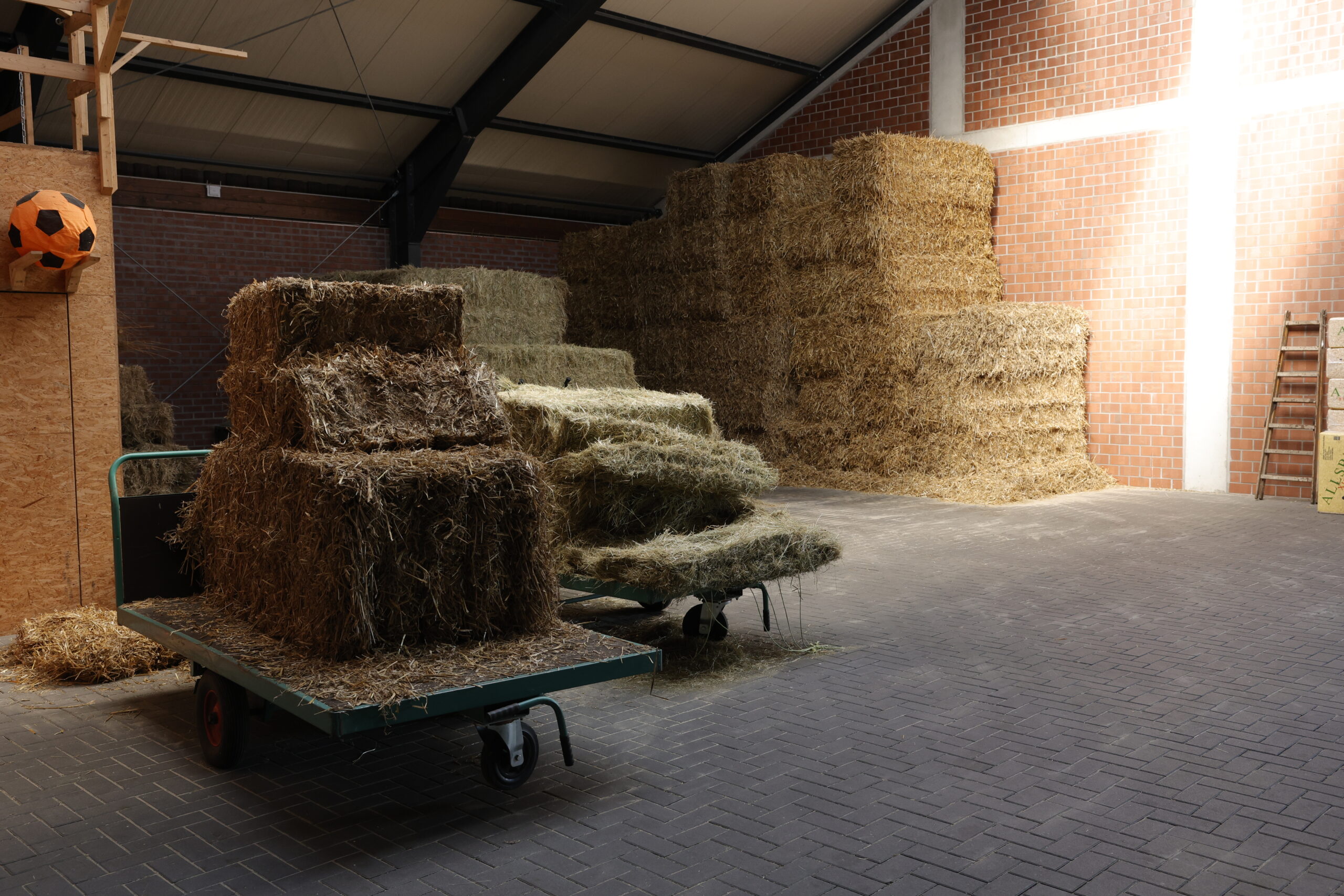 Storing hay properly is almost a science in itself. Photo: Jacques Toffi.
 If the hay is dried too slowly or unevenly, metabolic processes continue that break down sugar and generate heat. If the temperature rises over a longer period of time, the protein structure can change and the energy content decreases.
How can mold be avoided in hay?
Moisture in hay is the main risk factor. Molds and yeasts find ideal conditions at residual moisture levels above 15 percent. Experts at Weihenstephan-Triesdorf University of Applied Sciences point out that above this range, microbial activity increases and nutrient losses are possible. The aim is to quickly reduce the water content to below 15 percent: In this range, the nutrient content remains largely stable and the risk of mold in the hay is low.
Hay drying: This preserves the nutrient content
For hay to dry evenly, it needs air and movement. Regular turning distributes the moisture, drying floors or hay ventilation systems speed up the process. This helps to avoid areas of increased moisture where mold could grow. If baled too early, heat can build up again inside a bale. Temperature sensors help to monitor this point. Slight heat up to around 40 degrees is harmless – it indicates the so-called ripening heat. However, if the core temperature rises above 55 degrees, the bale should be restacked and actively ventilated. Above 70 degrees there is an acute risk of fire.
A dry, well-ventilated environment is crucial for storage. Bales should be placed on a raised, clean surface, away from walls and floors so that air can circulate.
Which hay drying method is best?
Soil drying remains widespread, but requires stable weather. Precipitation during drying washes out sugar, potassium and soluble nitrogen compounds. This reduces the energy and mineral content.
Under-roof drying with hay ventilation allows more controlled moisture removal. Warm air flows through the haystack from below and transports water away. The drying time is shortened and the risk of mold growth is significantly reduced. Studies by the LfL have shown that ventilation systems can stabilize the drying process and reduce nutrient losses.
Combined processes combine field and indoor drying. The hay is first dried outdoors and then finished under cover. In this way, the leaf structure is largely preserved, while the residual moisture decreases rapidly. It is important that the material is evenly distributed – layers that are too high impede air circulation.
In regions with high humidity, hanging or scaffold drying systems have proven their worth. The food hangs loosely and air can circulate from all sides. Warm air drying is also gaining in importance: with warm air drying, supply air at approx. 35 to 45 °C has proven to be effective, thus largely preserving heat-sensitive vitamins and amino acids.
Detect and avoid mold in hay at an early stage
After storage, the hay remains sensitive. In the first few weeks, residual heat, humidity and air circulation still change significantly. Temperature measurements help to detect at an early stage whether microbial processes are developing again. If the core temperature permanently rises above 55 to 60 °C, the hay should be moved and ventilated to prevent mold. Above 70 °C, there is an acute risk of fire.
Visual and odor checks are simple but effective quality control measures. Good hay is light green to golden yellow, smells neutral to slightly grassy and is dust-free. A musty or sour smell, gray layers or crumbly leaves indicate mold or overheating.
Check and ensure hay quality
A laboratory analysis provides reliable information about energy, crude fiber and protein content as well as possible mycotoxin contamination. An analysis is particularly recommended in the case of changeable harvest weather or feed for sensitive horses.
Hay that is dried evenly and quickly, pressed properly and stored under dry conditions retains its quality for months. Careful monitoring during hay drying and storage not only ensures the nutrient content, but also prevents mold growth – the basis for good, safe horse feed.
Steaming can significantly improve the hygienic quality of hay because it reduces germs, mold spores and dust. The process is particularly suitable for hay that is basically good but slightly contaminated or dusty. However, spoiled or already moldy hay cannot be reused by steaming – the mycotoxins it contains remain.
Guide values for optimum hay quality
Residual moisture:
- Target value: under 15 %
- from 16 – 18 % critical, over 18 % not storable
Drying temperature:
- Guide values below 40 °C
- above 50 °C there is a risk of nutrient loss
- above 60 °C Danger of mold
- over 70° C acute fire hazard
Ventilation:
- Continuous air supply, especially in the first 48 hours after pressing
- Keep humidity in the warehouse below 60
Storage:
- Place bales on a dry, raised surface
- Distance to walls: at least 20 cm
- Weekly temperature check in the first 4 weeks
Sensory testing:
- Color: light green to golden yellow
- Smell: fresh, grassy, not musty
- Structure: firm, not crumbly, little dust