Hay in horse feed: quantity, quality & tips for healthy horses
 from Kerstin Wackermann
 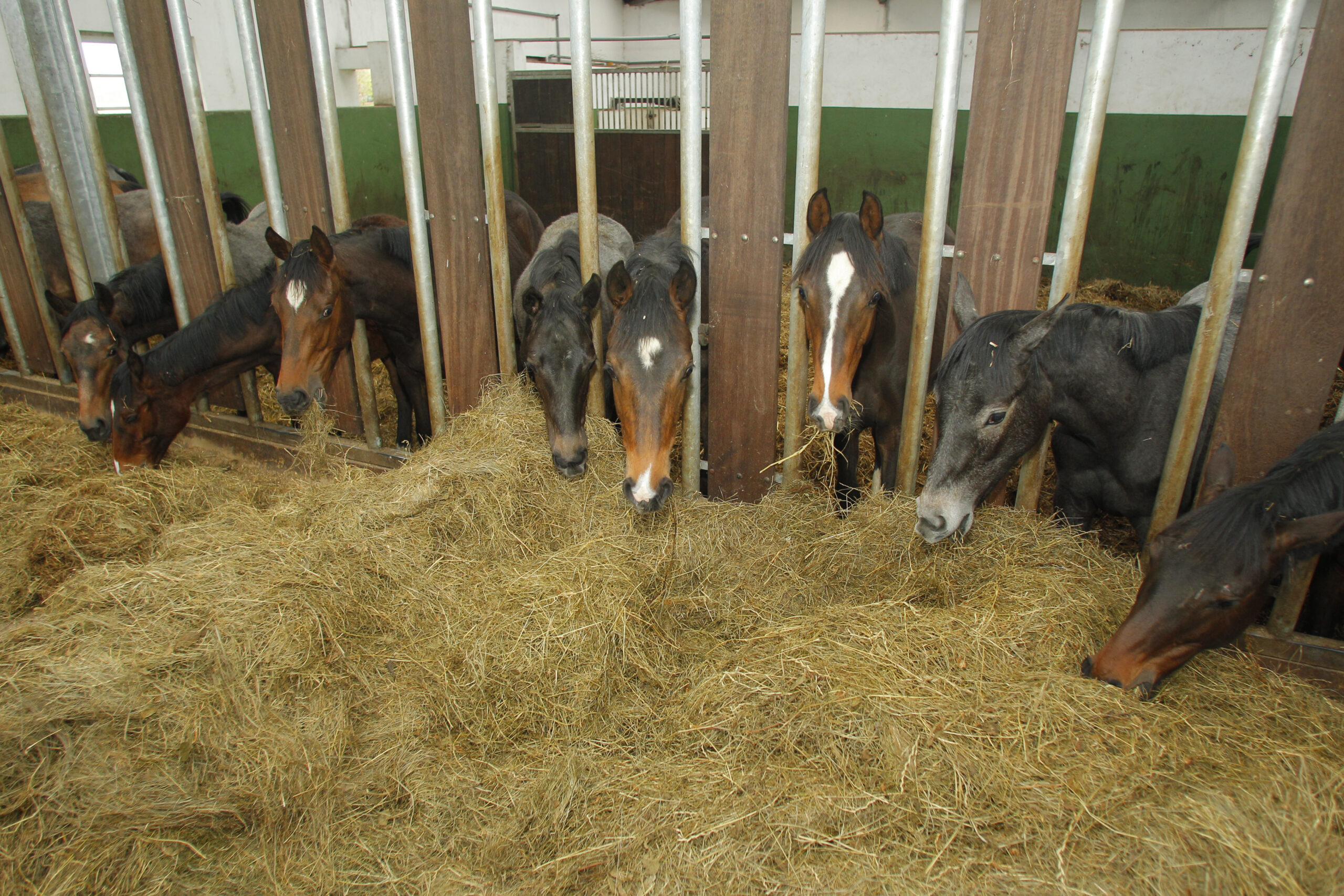 Hay is the basis of horse feeding at any age. Photo: Sportfotos-lafrentz.de
 Hay is indispensable in horse feeding because horses are physiologically designed to continuously consume roughage throughout the day. This constant chewing ensures healthy tooth wear and stimulates the production of saliva, which neutralizes stomach acid and thus protects the stomach lining. It also satisfies the horse’s natural need to chew. The ingredients ensure a healthy intestinal microbiome, prevent incorrect fermentation and provide the horse with long-lasting energy.
If horses eat too little high-quality hay, this can lead to stomach ulcers, colic or stereotypical behavior such as cribbing.
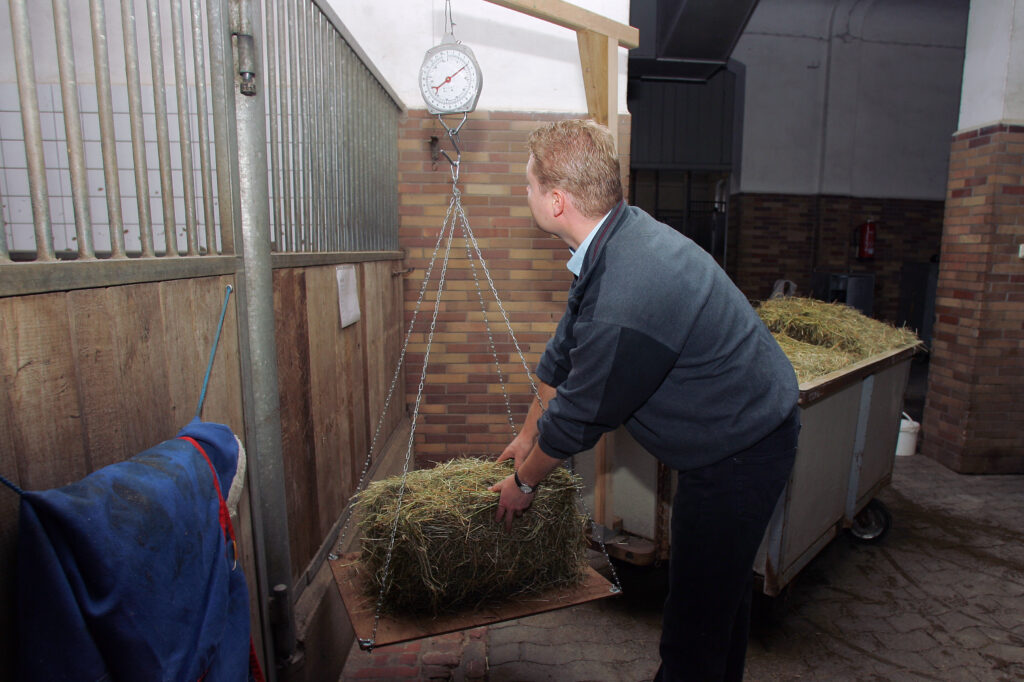
How much hay does a horse need every day?
The amount of hay depends on the horse’s body weight. According to GfE 2014 (Society for Nutrition), the daily requirement for hay is between 1.5-2.0 kg per 100 kg body weight, depending on activity, body condition and type of husbandry. A 600 kg horse therefore needs 9 to 12 kg per day. Factors such as age, work and state of health can increase or reduce the amount. Sport horses or young growing horses have a higher requirement, while horses with metabolic problems often need to be fed in a more strictly controlled manner.
Hay ad libitum?
Hay ad libitum means that horses have unlimited access to hay. This is useful to satisfy the natural need to chew, to promote digestion and intestinal health and to reduce stress in horses. However, it can also lead to problems if horses have a constant supply of hay and consume more energy than they need. One study showed that horses with a higher body condition score (overweight) appear to have a different satiety behavior than thinner horses. They do not automatically stop eating even when they have consumed enough energy. This contradicts the widespread assumption that horses regulate their own intake when fed ad libitum. So if you decide to provide your horse with hay around the clock, you should keep an eye on the horse’s weight and condition. The type of hay should also be taken into account when feeding hay ad libitum: late cut hay is often less problematic ad libitum than early cut hay, which can be too high in energy.
As a rule, ad libitum feeding is unsuitable for horses with metabolic problems such as EMS or insulin resistance. This can lead to blood sugar spikes, obesity and other health problems. In such cases, portioned feeding with analyzed, low-sugar hay is recommended.
Why is hay so important for horses?
First of all, hay is so important because the horse’s digestion is designed for feed rich in raw fibers. The horse wears down its teeth evenly as it chews, and the long fibers stimulate saliva production. In the rest of the digestive tract, the crude fiber ensures stable intestinal movement and a balanced intestinal microbiome. Hay provides long-lasting energy and covers the majority of essential nutrients for horses.(Link to further article)
Early pruning (before flowering) and late pruning (after flowering)
Early cutting, i.e. harvesting before full flowering, produces young, leafy hay with a high protein and energy content. The stems are soft, the color light green, the smell fresh, the feel soft. This hay is particularly suitable for sport horses, growing animals or lactating mares, as it provides energy and protein for muscle building and regeneration.
The late cut, harvested after flowering, contains more crude fiber, less protein, thicker stems and a firmer structure. The color is usually darker, the leaf content lower and the taste somewhat more bitter. It supports older horses or animals with moderate energy requirements, as it promotes chewing and slow digestion.
You can find more information on pruning here.
1st cut and 2nd cut: which hay for which horse?
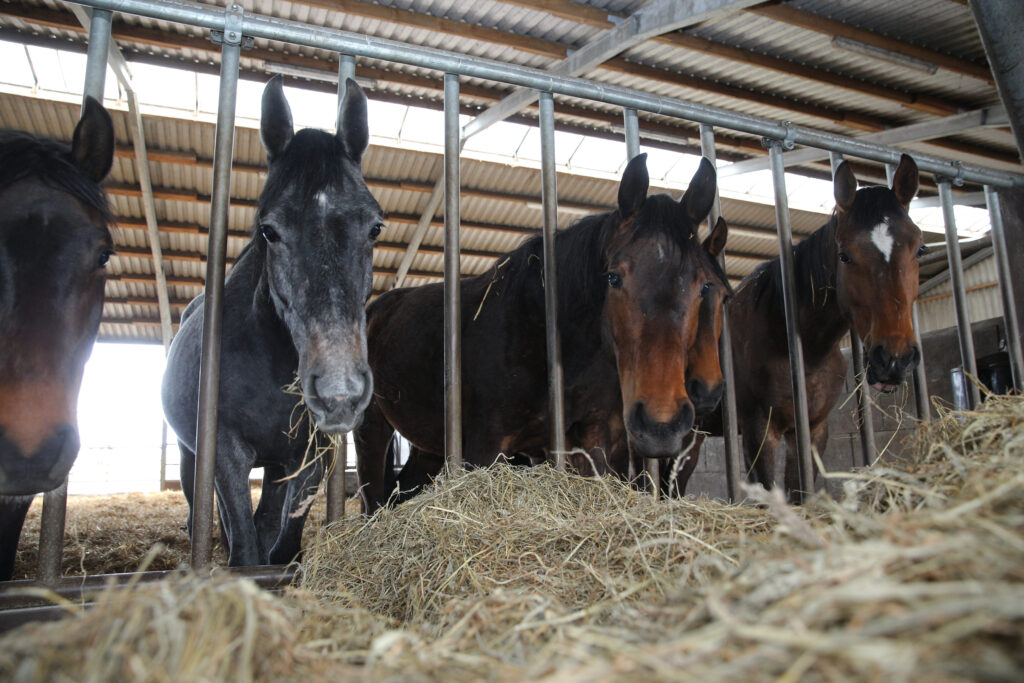
The 1st cut takes place in early summer (end of May to beginning of June) and provides the highest yield. It is richer in structure, contains more crude fiber and ensures a good chewing load and satiety. Depending on the time of harvest, it can also provide sufficient protein and energy for sport horses, provided it is cut early.
The 2nd cut is produced in late summer or fall, when the meadow has grown back. It is leafier, softer and easier to chew, usually with a slightly higher protein content but less structure. It is therefore particularly suitable for horses with dental problems, seniors or young animals, while light-feeding breeds should only be given it in small quantities.
How do I recognize good hay?
High-quality hay is light green to greenish and smells aromatic. The structure should be soft enough to be chewed easily, but at the same time rich in fiber to promote intestinal movement. Musty smells, brown spots, visible mold or high dust content are warning signals, as they can endanger health and cause respiratory problems. Regular sensory checks and nutrient analyses ensure feed quality and provide safety when feeding.
Store hay correctly
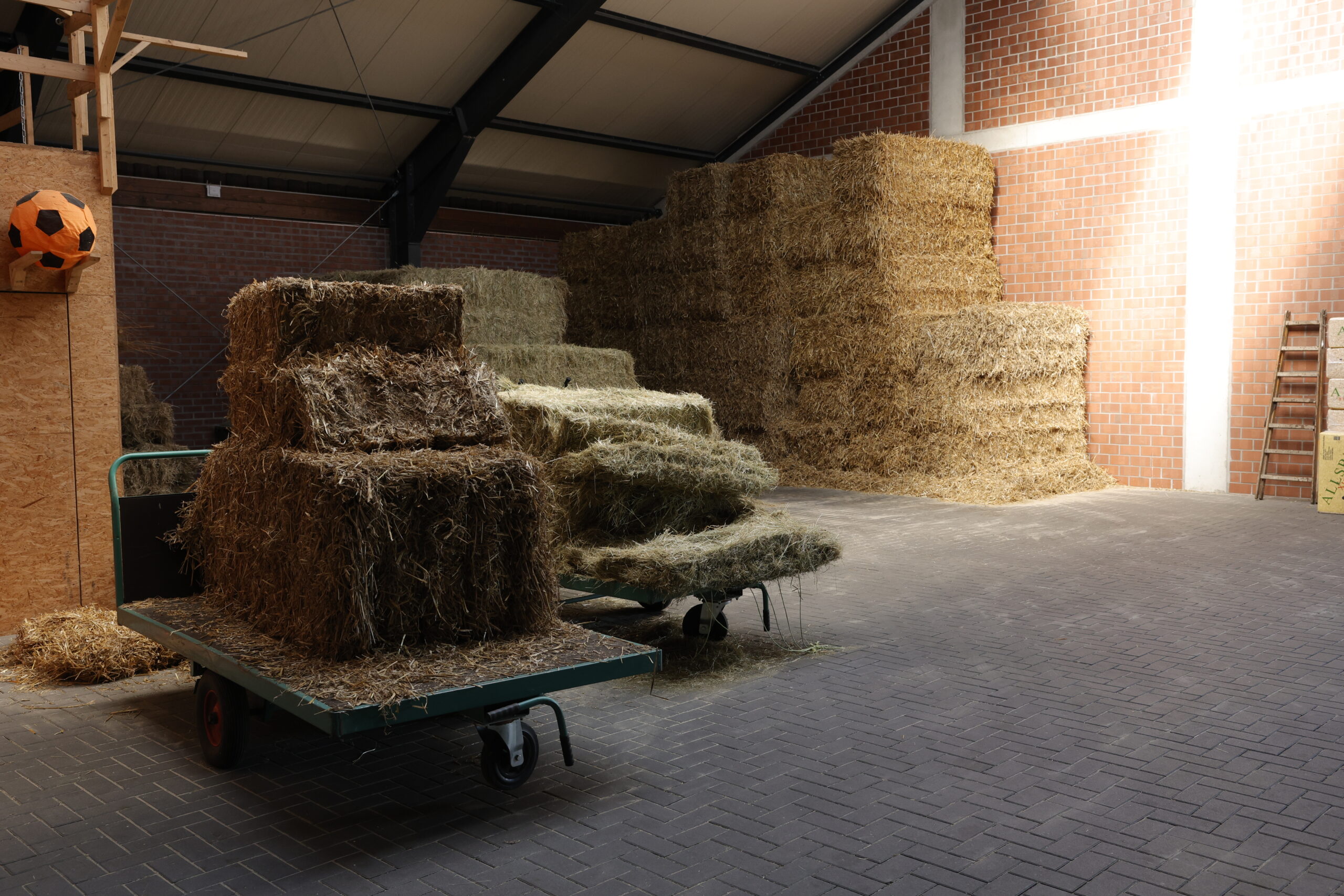
Drying is crucial after cutting: a quick, even process prevents nutrient loss and mold growth. Storage should be dry, ventilated and protected from direct sunlight. Moisture, odor and structure must be checked regularly.
You can find more information about hay storage here.
Soak and steam hay – reduce dust, preserve nutrients
Soaking hay reduces dust and water-soluble substances, but can wash out minerals. Based on recent scientific publications and practical results, it can be summarized that the optimal soaking time for hay is 15 to 30 minutes in warm water or a maximum of 60 minutes in cold water to reduce dust and water-soluble carbohydrates (WSC or sugars) without risking excessive nutrient loss or bacterial contamination.
Hay: horses’ lungs suffer from poor quality
Horses inhale exclusively through the nose, which means that dust particles from hay can enter the lungs directly. This can cause chronic respiratory diseases such as equine asthma or acute coughing fits. Soaking hay reduces dust particles, while steaming hay can also kill allergens and microorganisms while minimizing nutrient losses.
In the long term, the use of low-dust forms of hay helps to maintain the lung function and well-being of horses, especially those that regularly live in dusty stables or in hay with high levels of particulate matter.
FAQ – Answers to specific questions about hay feeding with references
Can a horse get too much hay?
Yes, a horse can be given too much hay, especially if it is too high in energy or protein. Excess energy can lead to obesity, metabolic problems and stress on the joints. Horses with EMS or insulin resistance should therefore be fed in portions and adjusted to the total energy intake. The amount should be around 1.5 to 2 kg of hay per 100 kg of body weight per day, depending on activity and state of health. Continuous monitoring of weight and fecal consistency helps to avoid overfeeding.
How can you recognize good hay?
Good hay is greenish, smells fresh, contains lots of leaves and has firm, non-brittle stems. It should be free of mold, moisture and foreign matter. When kneaded, it should be elastic and not dusty. Good storage and harvesting time contribute significantly to the quality.
How do I recognize mould in hay?
Mold is indicated by a white, grey or black coating, a musty smell and lumpy, damp patches. A change in texture, such as brittle or sticky stems, also indicates mold. Visual and odor checks should be carried out regularly. Horses that eat mold develop respiratory or digestive problems. If mold is suspected, do not feed the hay and remove it immediately – not just the mold spots, but the bale, as the (invisible) spores have already spread through the hay. .
What is the protein content of hay?
The protein content depends on the time of cutting and the plant species. Early cut hay can contain up to 9 to 14 % crude protein, late cut hay usually 8 to 10 %. Legumes such as alfalfa or clover significantly increase the protein content. A laboratory measurement is recommended in order to plan the supply individually. The protein content influences growth, muscle development and regeneration.
How do I measure sugar in hay?
Sugar levels are determined in the laboratory by analyzing for ESC (ethanol-soluble carbohydrates) and NSC (non-structural carbohydrates). These values show the availability of easily digestible carbohydrates, which are critical for EMS or insulin-resistant horses. Sensory assessments do not provide reliable values. The measurement enables targeted feeding and the avoidance of blood sugar peaks. It should be carried out regularly, especially with changing hay cuts.
Which types of hay are suitable for horses with EMS?
Late cut hay with a low sugar and starch content is suitable for horses with EMS. Soaking can further reduce the sugar content. Legumes should be used sparingly as they are higher in energy. Analysis of the ESC/NSC content provides certainty when making a selection. The aim is to keep blood sugar levels stable and avoid obesity.
Is alfalfa hay suitable for horses?
Alfalfa hay is rich in protein and energy and is particularly suitable for sport horses and in rearing. However, it may be too high in energy for horses with a sensitive metabolism and those that do little work. A targeted mixture with grass-rich hay can be useful.
Is vaporized hay better for horses with asthma?
Yes, because steaming reduces dust and allergens in the hay – one of the main causes of equine asthma. Steaming changes the nutrient content only minimally if done correctly. It should be done just before feeding to ensure optimum moisture. Regular monitoring of temperature is necessary. Horses often show improved breathing and reduced coughing fits.
How long do you have to soak hay?
Hay should typically be soaked for 30 to 60 minutes. Longer soaking can wash out minerals and soluble nutrients and increase germ formation. The aim is to reduce dust and sugar (in horses with a sensitive metabolism). Water should be clean and sufficient to ensure that the hay is evenly moistened. After soaking, feed the hay immediately to prevent mold growth.
How do I store hay correctly?
Hay should be stored dry, ventilated, on pallets and protected from direct sunlight. High humidity can promote mold, extreme heat can break down nutrients. Regular checks of smell, color and consistency are important. Airy storage prevents heat build-up and moisture accumulation. Properly stored hay retains its quality and nutrient content for longer.
How much does good hay cost per bale / per ton and where can I find current prices?
Prices vary depending on quality, cut, region and delivery conditions. Currently, prices for good hay are between €6 and €12 per 25 kg bale and €200-350 per tonne (Agrarheute: https://www.agrarheute.com/). Prices fluctuate greatly from region to region and season to season, so it is worth comparing the market regularly. Pay attention to quality and analysis values when purchasing. Cost planning should also take transport and storage into account.
Hay in bales, loose or in a hay net?
Bales make storage and transportation easier, loose hay allows flexible portioning, hay nets delay intake and extend the chewing time. The choice depends on the husbandry, horse type and feeding system. Combinations can be individually adapted. It is important that the hay remains clean, dry and low in dust. Feeding systems should take into account the natural chewing load.
Which hay for older horses with dental problems?
Soft cut hay, hay cobs or soaked hay are suitable for older horses. The stalks should not be too hard to reduce chewing. Soaked hay can also reduce dust and be easier to swallow. Regular dental and oral health checks are important. Adapted feeding supports digestion, weight control and well-being.