Early or late cut, 1st or 2nd cut – which hay is suitable for my horse?
 from Kerstin Wackermann
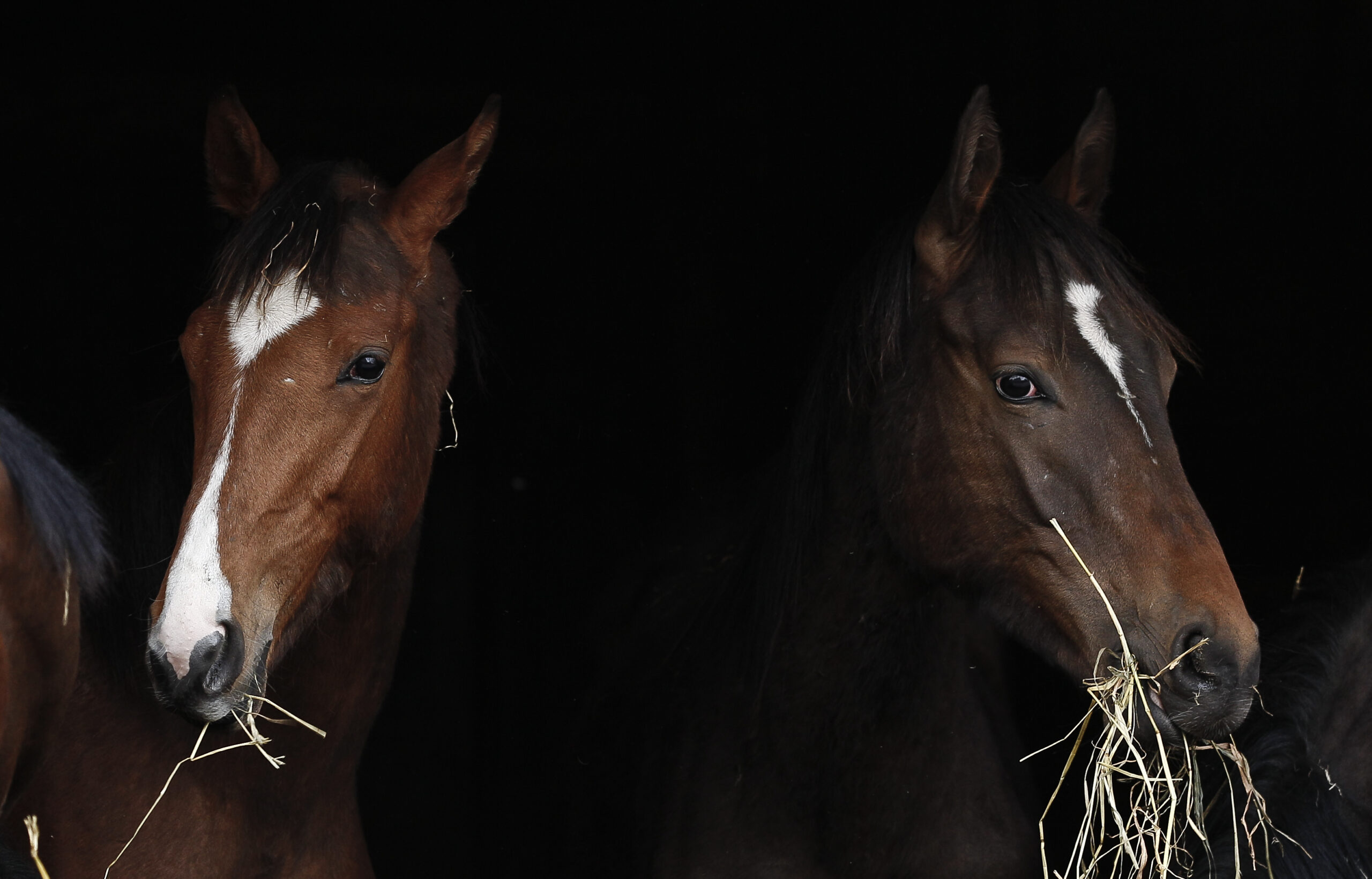
  Sport and breeding horses need a lot of energy and therefore hay from an early cut. Photo: Sportfotos-lafrentz.de
 What does “early cut” mean for hay?
The term “early cut” is used when the grass is mowed before or at the beginning of flowering. In this development phase, the leaf content is predominant, the stems are soft and the cell walls are not yet lignified. As a result, the hay contains more protein (crude protein) and energy with a lower crude fiber content. Analyses show values of around 9-14 % crude protein in the dry matter and 8.0-9.5 MJ energy (ME) per kg dry matter. (Sources: Arbeitskreis Pferd, ak-pferd.de; iWEST, iwest.de)
This hay is suitable for sport horses, young growing horses and lactating mares because they need extra energy and protein. Leisure horses or ponies, on the other hand, can be fed too much energy with an early cut, which can lead to obesity or metabolic problems. (see also article “Which hay for which horse”)
What ingredients does late cut hay contain?
“Late cutting” means that the grass is cut after flowering. The proportion of stems then increases, the cell walls become firmer and the crude fiber content increases significantly. This reduces protein and energy. Typical values are 6-9 % crude protein and 6.5-7.5 MJ ME per kg dry matter.(ak-pferd.de)
Late cut hay is more suitable for light-fed breeds, ponies or horses with metabolic problems (e.g. EMS or Cushing’s). This is because the content of water-soluble carbohydrates (sugar) usually decreases as the hay matures. Late cut hay is therefore often better for horses with EMS or at risk of laminitis. It also extends feeding times, is filling and the lower energy content helps to prevent overweight.
Comparison: Early cut vs. late cut
| Early pruning (before/at flowering) | Late pruning (after flowering) | |
| Crude protein | 9-14 % DM | 6-9 % DM |
| Crude fiber | 55-60 % DRY MATTER | 65-70 % DRY MATTER |
| Energy (MJ ME/kg DM) | 8,0-9,5 | 6,5-7,5 |
| Optics/Haptics | green, leafy, soft | yellowish, stalky, coarse |
(Sources: Horse Working Group; iWEST)
The values given are practice-oriented average values and can vary by up to 20 % depending on the plant population, location and weather conditions. This is because the nutrient content depends not only on the time of cutting but also on plant species, fertilization and weather conditions – every meadow is slightly different.
What is the difference between the 1st cut and the 2nd cut of the year?
In addition to the time in the growth stage of the plants, the growth sequence over the course of the year also plays a role:
- 1st cut: first mowing at the end of May/beginning of June. This growth provides the highest yield. The hay is richer in structure, more stalky and saturates well. Depending on whether it is cut early or late, it is richer in energy and protein or crude fiber.
- 2nd cut: takes place in late summer or fall, when the meadow has regrown. This hay is leafier, softer, easier to chew, often contains slightly more protein but less structure and crude fiber. It is particularly suitable for horses with dental problems, seniors or foals; it can be too rich for light-fed animals.
Which cut is suitable for which horses?
Early pruning (before flowering):
for sport horses, young horses, lactating mares → more protein and energy.
Late pruning (after flowering):
for leisure horses, ponies, EMS or Cushing’s horses → less energy, more crude fiber.
1st cut (early summer):
Basic hay for most horses, provides structure and crude fiber; if harvested early, also nutritious enough for sport horses.
2nd cut (late summer/autumn):
Supplement for horses with dental problems, seniors and young animals; should be dosed carefully for robust breeds.
Tip
A laboratory analysis provides reliable values for energy, protein and sugar in the hay – particularly useful for sensitive horses or horses with metabolic disorders.
You can find a deeper insight into which horses tolerate which hay best here.