Natural Hooves or Horseshoes—There’s a Paradigm Shift Underway When It Comes to Horseshoes and Hoof Protection in Equestrian Sports
Natural Hooves or Horseshoes—Things Are Changing When It Comes to Horseshoes and Hoof Protection in Equestrian Sports
 from Jan Tönjes
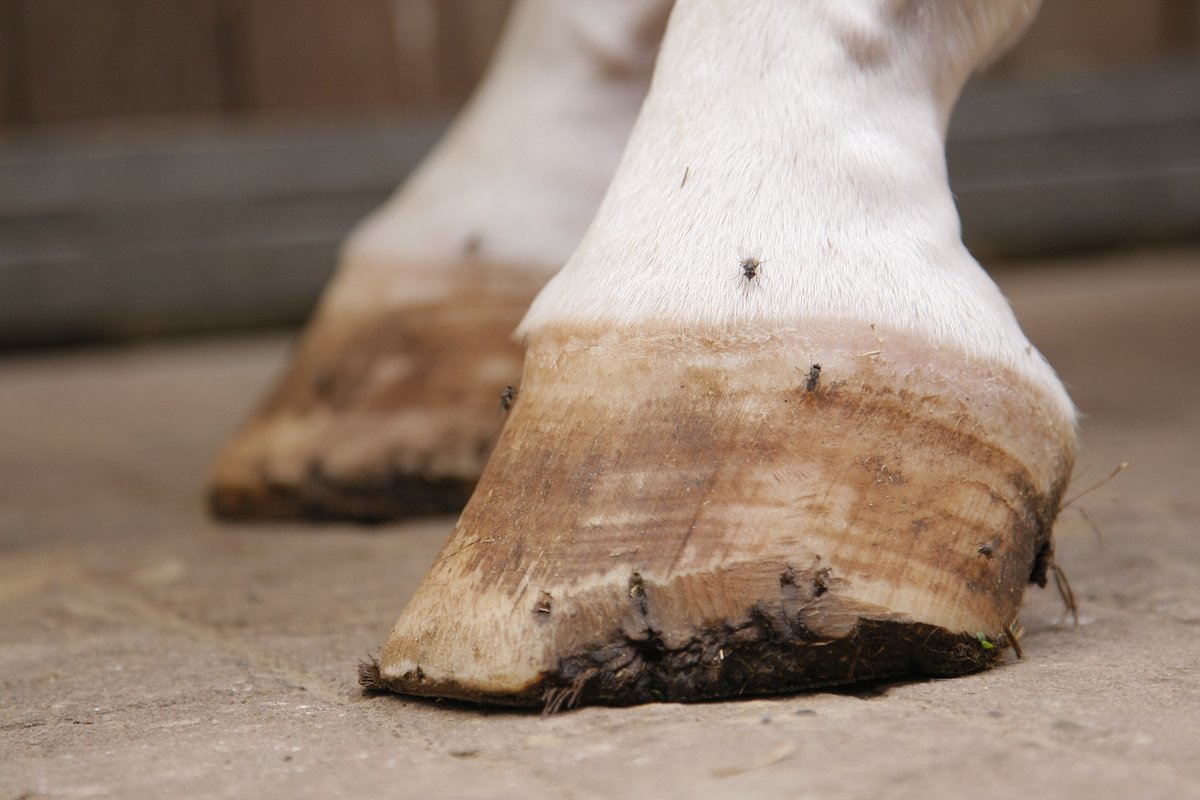 The hoof—the foundation of the horse. Photo: sportfotos-lafrentz.de
“No hoof, no horse,” as the English say. That’s still true today. And until a few years ago, anyone involved in competitive equestrian sports who heard the word “hoof” would immediately picture four horseshoes in their mind’s eye. No horseshoes, no competition? That has changed in the meantime.
Barefoot on the course, barefoot in the arena
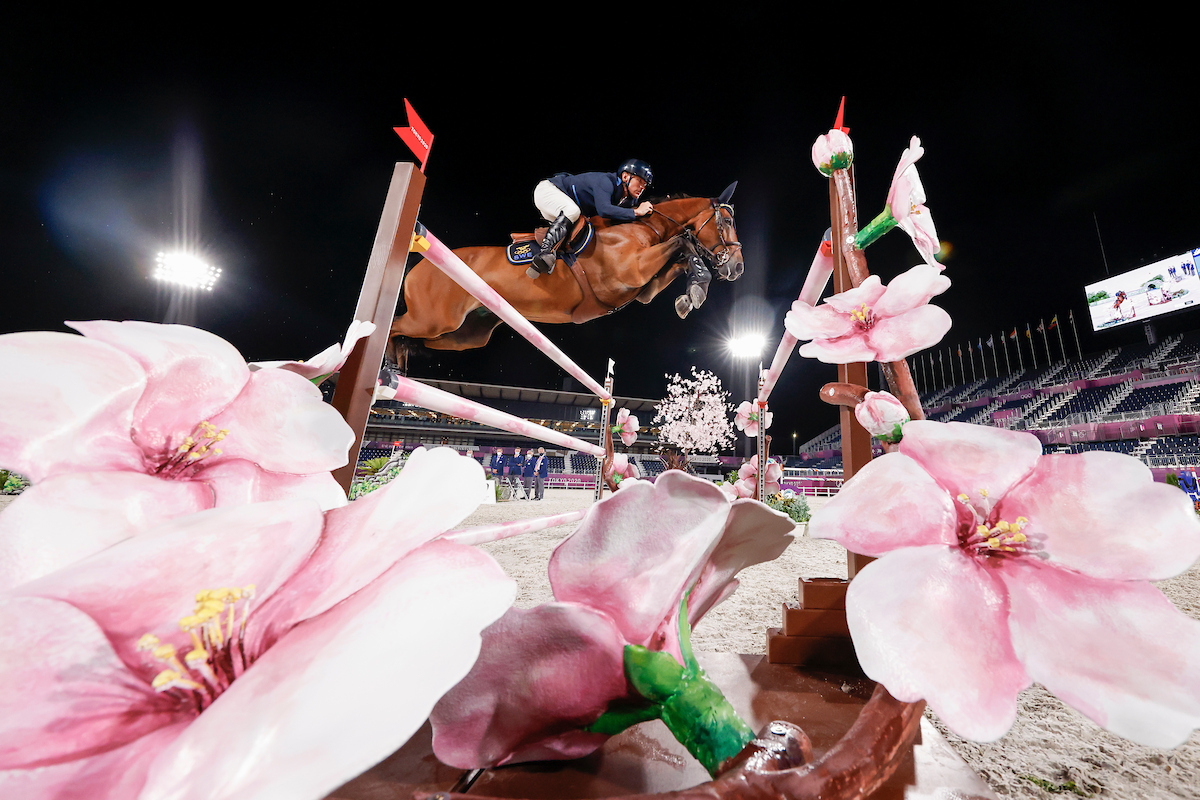
The list of horses competing “barefoot” is long and includes some exceptional horses. Peter Fredricson took second place at the 2021 Tokyo Olympics with All In, riding barefoot. Henrik von Eckermann’s King Edward galloped barefoot to the world championship title in Herning in 2022. And Christian Kukuk, a 2023 European Championship finalist in Milan—who was not yet an Olympic champion at the time—said even then that his horse was significantly faster in the jump-off when unshod.
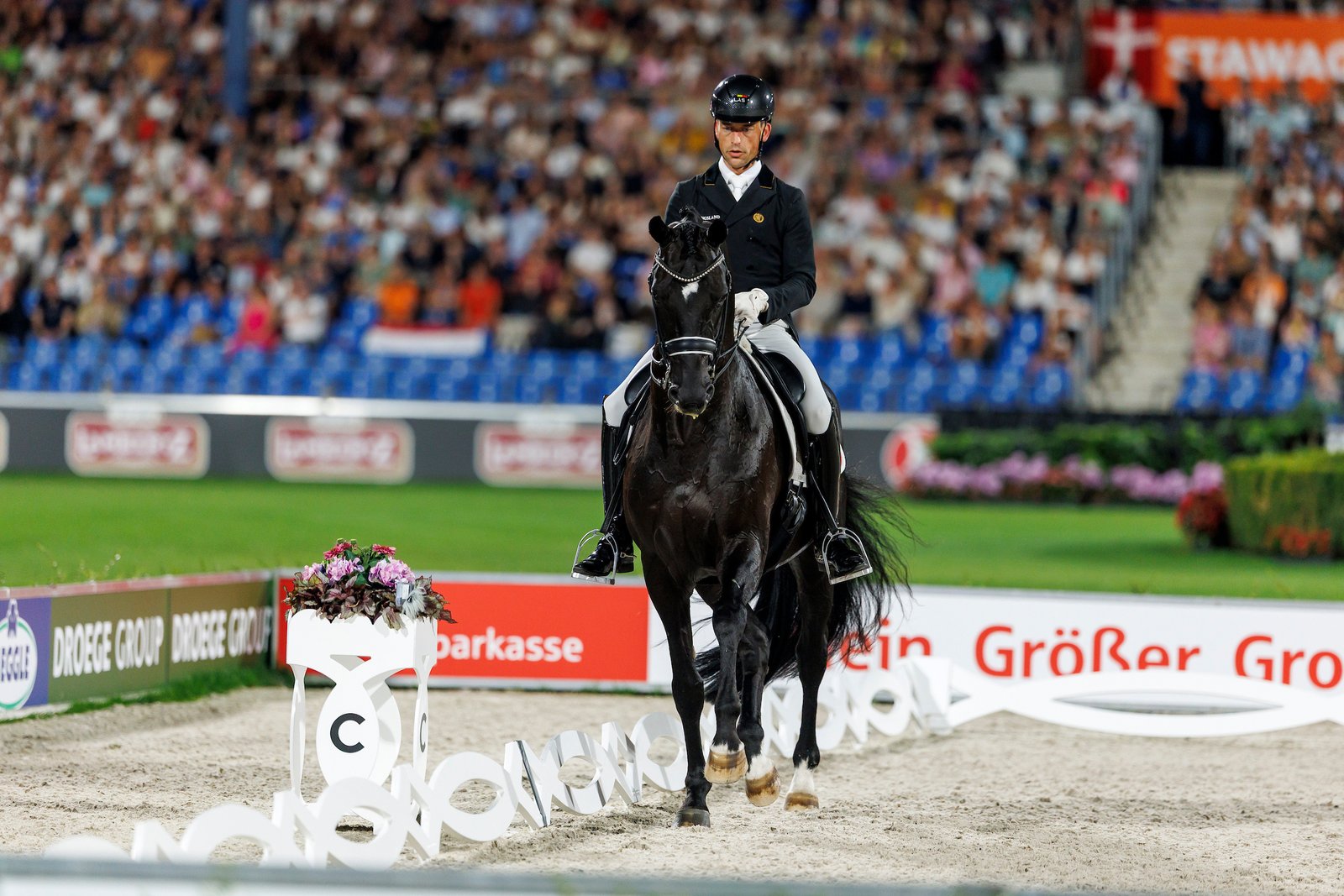
In dressage, Justin Verboomen is currently making waves with the Belgian horse Zonik Plus, a horse that competes completely barefoot. This hasn’t been seen in international dressage for a long time. Those who have been following the sport for a while will remember Princess Natalie zu Sayn-Wittgenstein’s Digby, who competed successfully barefoot at the European Championships, the Olympic Games, and in the World Cup.
What was unthinkable 20 years ago and began quietly ten years ago is now part of everyday life. But what does that mean for the horse in the stall next door?
Faith, Love, Hoof Mechanics
“I think it’s not a matter of faith, but rather that it depends on each horse, each rider, and the circumstances,” says Volker Schurig. Posture, conformation, hoof quality, training: If all these factors align, horses can succeed even in competitive sports. In the podcast “TELL ME SOMETHING ABOUT HORSES,” two experts discuss how much shoeing is currently in vogue.
Volker Schurig is an instructor farrier at the Equine Clinic of Freie Universität Berlin and has been self-employed in the field for 30 years. At the clinic, he treats horses for which orthopedic shoeing is absolutely necessary. His goal there: to gradually transition them back to normal shoeing. Or, where possible, to a barefoot state. In his private practice, he also works with many clients who want to move away from shoes. That’s why he understands the hurdles that lie along this path.
Dr. Friedrich Appelbaum, a veterinary specialist in equine medicine and an FEI veterinarian, agrees with Schurig: “I think we’ve moved beyond the question of belief.” The goal is “to provide the horse with the greatest comfort, and in cases of doubt, that isn’t always the shoe.” But it’s also not always going barefoot. Instead of dogmas: observe what makes the individual horse feel most comfortable. And a horse that feels comfortable also performs well.
Dr. Friedrich Appelbaum studied veterinary medicine at Freie Universität Berlin and is a specialist in equine medicine as well as an FEI veterinarian—that is, he is recognized by the International Equestrian Federation and works at major tournaments, such as those in Aachen or at championships. He is the chair of the examination board for the state farriery certification exam in North Rhine-Westphalia. In his doctoral dissertation, he investigated hoof mechanics using prepared horse limb specimens, with measuring probes and a computer-aided 3D reconstruction based on a series of CT scans.

Hoof Mechanics: The Hoof That Works With You
Appelbaum explains what happens inside the hoof. Hoof mechanics refers to all changes in the shape of the hoof capsule during loading and unloading. There are essentially two situations. First: When the hoof strikes the ground, the body’s weight is transferred from the bone through the hoof support to the hoof capsule. The rear half of the hoof expands in the area of the heels, the front wall sinks inward, and the angle flattens out. Second: The hoof adapts vertically to the ground. If one half is resting on a higher stone, the other half sinks down.
“Independent Suspension”—Why the Hoof Bone Actually Floats
The hoof bone does not stand within the hoof capsule; it hangs within it. Appelbaum draws a comparison with teeth: those in the lower jaw are embedded, while those in the upper jaw hang. Theoretically, the hoof bone would remain in place even if the sole and frog were removed.
The horseshoe does not allow for vertical adjustment. In addition, the experienced veterinarian explains that with a bare hoof, the frog makes contact with the ground and slows the movement early on. A horseshoe about 8 millimeters thick creates an additional 8 millimeters of clearance. On hard, non-sandy ground, the frog doesn’t encounter resistance until later. The result: On pavement, the rear sections of the hoof move even more than they do on sand or grass. Anyone who has ever removed a shoe is familiar with the worn-down spots on the shoe’s flanges. Incidentally, these worn areas led scientists to discover the hoof’s mechanics as early as the mid-19th century.
Does the iron restrict blood flow to a harmful degree, as is often claimed on social media? “That hasn’t really been studied,” says Appelbaum, and it’s also difficult to study. On a dressage arena, riding arena, or grass, little traction is lost due to the shoes during directed movement. The situation is different on gravel, stone, and roots.
Shock Absorbers with Side Effects
“The hoof itself is so ingeniously designed that it can actually absorb a great deal of shock and force right off the bat,” Schurig emphasizes. The shoe, on the other hand, makes it rigid. On hard ground, it can also “vibrate like a triangle.” That’s why he prefers horseshoes made of relatively soft steel, because the harder the steel, the stronger the effect. The vibrations are transmitted through the bones to the joints, “which is very bad for the horse.”
The solution? Pads and plates? Not without their own pitfalls, according to the two practitioners: additional weight on the hoof, more momentum, and more strain on ligaments and tendons. Furthermore, they aren’t a realistic option for some housing arrangements: in open stables, moisture can seep under the pad, causing the frog to start “rotting.” And if the plate is too hard, there’s a risk of atrophy over time—simply put, the frog “wasting away.” Schurig’s conclusion, therefore: Pads and plates are a sensible orthopedic measure, but that’s exactly what they are—a measure that should be discussed in consultation with, for example, a veterinarian. Using pads and plates prophylactically, “just as shock absorbers,” would be wrong. Furthermore, according to the instructor from the Free University of Berlin, it is not the hoof that needs support. Rather, one must consider the structures above it—tendons, ligaments, and joints.
Are Bare Hooves the Ultimate Solution?
So, back to square one, back to zero, back to nature? No. Because while the horse is, by its very origins, the oft-cited steppe animal. However: It has been domesticated for millennia, and the steppe isn’t exactly the predominant type of vegetation in Europe. There are certainly good reasons for the barefoot approach, but there are also plenty of arguments in favor of shoeing.
First, let’s talk about protection: Anyone who rides on gravel and cobblestones knows this—sooner or later, the hoof wall starts to chip away. But even supposedly top-quality sports surfaces have their pitfalls—especially those used in show jumping. The fine-grained quartz sand, with its angular grains, is slip-resistant and doesn’t “roll,” but it’s “highly abrasive.” To put it bluntly: On these surfaces, horses wear down their hooves “faster than they can regrow.” In the long run, it wouldn’t even be possible to maintain the necessary training intervals on these surfaces with bare hooves.
Humans must ensure proper protection
Veterinarian Appelbaum looks at the big picture. The hoof serves as the point of contact between the horse’s body and the ground. Then humans come along and demand more from the horse than evolution intended. “We must ensure that we cause as little harm as possible in our use of horses,” the veterinarian emphasizes. This isn’t an entirely new idea: hoof protection has been around for over 2,000 years; shoeing with iron is a more recent development.
Hoof Boots for Horses
So, bare hooves and hoof boots when needed? Sounds simple, but it’s not. “Without hoof boot advice, I wouldn’t recommend anyone just go out and buy hoof boots,” says farrier Schurig. Fit and size are tricky, and “once they’re on, you can’t return them to the retailer.” That can quickly become an expensive endeavor. In Schurig’s experience, many horse owners struggle to put certain models on because they lack the strength in their fingers or the horse is fidgeting. Even custom-made shoes require a tremendous amount of effort. His advice: Anyone who rides regularly should eventually consider whether traditional shoeing might be the better solution after all.
In practice, there are also extreme cases: What to do with the gelding who has wonderful hooves but a less-than-wonderful habit of scraping on the concrete paddock? His toe is getting too short. The solution: hoof boots 24/7. That’s because the big black horse simply couldn’t cope with the movement patterns required by horseshoes.
Do hoof protectors alter movement patterns?
Speaking of movement patterns… Neither of the two experts wants to commit to a definitive answer here. Do hoof protectors—whether made of steel, aluminum, plastic, or in the form of a shoe—affect movement patterns? Both experts agree that weight distribution, swing-out behavior, rolling motion, and push-off vary from horse to horse. Schurig says that hoof shoe models can be adjusted using the “Flex” feature to achieve a good rolling point. And he recommends a self-test: make video recordings with and without the shoe. Ultimately, it’s the rider’s feel that determines how comfortable the horse is with a particular type of hoof protection. Schurig’s tip: “I always say, feel it very precisely with your butt.”
By the way: Hoof boots are now permitted in national competition classes, as long as they do not cover the coronet band. However, according to LPO 2026, they are not permitted in riding horse classes.
How can I tell if a blacksmith is good?
Appelbaum answers the question of what makes a good
blacksmith
—from a veterinarian’s perspective—in a “very pragmatic, self-interested” way: someone you can work with as an equal, without your criticism being taken the wrong way. He admits that in the past, there were certainly conflicts between veterinarians and farriers. Those days are behind us. Today, they pool their collective experience “for the benefit of the horse.”
First, onto the runway
A good farrier looks at the horse as a whole, has it presented before and after the procedure, and asks what the owner actually plans to do with the horse. Appelbaum openly admits that this isn’t the case everywhere: “The horse is taken out of the stall, stood there, the shoes come off, the new ones go on, and that’s it.”
Yet it is precisely the young farriers he observes during exams who put in tremendous effort and take a more holistic and sensitive approach to their work. The collaboration with the medical field is also becoming closer: X-rays, and even CT and MRI scans, are the first to reveal to farriers which part of the hoof is diseased.
And the biggest source of uncertainty in the entire system? People. “The human factor is simply so significant in this system,” says Appelbaum, when the hoof—as the “weakest link in a static system”—suffers due to husbandry and use. Specifically: a concrete paddock instead of forest soil or a sandy area? Rubber mats are a good start, says the veterinarian.

One rider who stopped using horseshoes on his horses quite early on in international competition is the Frenchman Julien Epaillard. He outlined his entire philosophy to EQUI PAGES.
When the Instagram blacksmith wields his rasp
The fact that shod horses cost money isn’t without consequences. Appelbaum sees firsthand that owners are asking whether pad shoes are really still necessary. And some want to do without the farrier altogether. A rasp and hoof knife are easy to buy, and tutorials are available online.
Schurig reacts to this “very critically, of course.” He says it’s fine to smooth down a protruding bit here and there. But the hoof is so complex, he explains, that a lack of expertise can cause so much damage that the money spent on the farrier and the veterinarian would be “easily” lost.
Farrier vs. Hoof Technician
Farrier and natural hoof care practitioners did not always get along harmoniously. On the contrary. A certain rivalry meant that they often spoke a great deal about each other but rarely, if ever, to one another. There were outright factional conflicts. This situation has since eased. A bachelor’s thesis in Eberswalde compared several German and international barefoot schools. According to Schurig, the result is that, on the whole, it is nuances that distinguish them. Without hoof care specialists, Schurig says, the horses would “suffer significantly more.” And the farriers “wouldn’t be able to keep up” with the workload. Appelbaum hopes that the next step will be to develop a shared vocabulary. After all, the veterinarian often says, “The toe is too long; it needs to be trimmed.” The farrier says, “I’m extending the toe.” Although these sound contradictory, they mean the same thing.
Back to Bare Hooves, but with a Plan
Anyone who wants to transition their horse from shoes to bare hooves should, according to Schurig, start in the spring: the frost is over, the ground is softer, and horn growth is stronger. All of these factors are beneficial in case something breaks off, since the nail holes have left behind weak spots.
First, observe whether the horse moves well in its paddock and whether it feels “grounded” on the riding arena and forest floor. If so, you can introduce a transition phase with synthetic shoes, which provide cushioning and allow the vertical movement—which has been suppressed for years—to gradually regain momentum. It’s best to proceed in stages. After that, perhaps try hoof boots, and in the summer, when there’s enough horn, go completely barefoot.
The Path to Barhufer
- Remove the horseshoes after the frost period
- If necessary, start by using a (lighter) plastic shoe to help the horse adjust to the new situation
- If necessary, use hoof boots afterward until the hoof is stable enough and the horse can walk well barefoot
The environment has to be right
A prerequisite for this scenario: The circumstances must be right. “No more concrete paddocks,” says Schurig; even active stables, which for hygienic reasons often feature many paved—and thus hard—surfaces, might need to be modified. Appelbaum advises consulting the farrier and veterinarian beforehand. How much sole does the horse have? Have orthopedic issues been positively affected by the horseshoe? In his experience, Thoroughbreds can often walk very sensitively without horseshoes but can no longer be shod. In addition, the owner must be on board, as the transition can lead to a temporary impairment of the horse’s performance. In other words, the Easter ride, planned tournament appearances, or perhaps a long weekend with the horse must be compatible with the horse’s hoof condition.
Winter “barefoot”—just like in the old days?
The old approach: barefoot in winter, with horseshoes during the riding season? Appelbaum thinks it’s a good argument: The horn that grows in the summer then provides support in the winter, says the veterinarian. Schurig is skeptical. Forty years ago, horses usually spent the winter in stalls or free-stall barns, rarely on frozen ground. Today they’re outside. In Brandenburg, where Schurig’s clients live, the ground thaws during the day and freezes again at night, and the horses run on a bumpy track. Anyone there who suddenly sends a horse—which has been wearing horseshoes for a season—barefoot across frozen ground risks laminitis. If not worse.
The Big Picture: Stollen, Plastic, Compromises
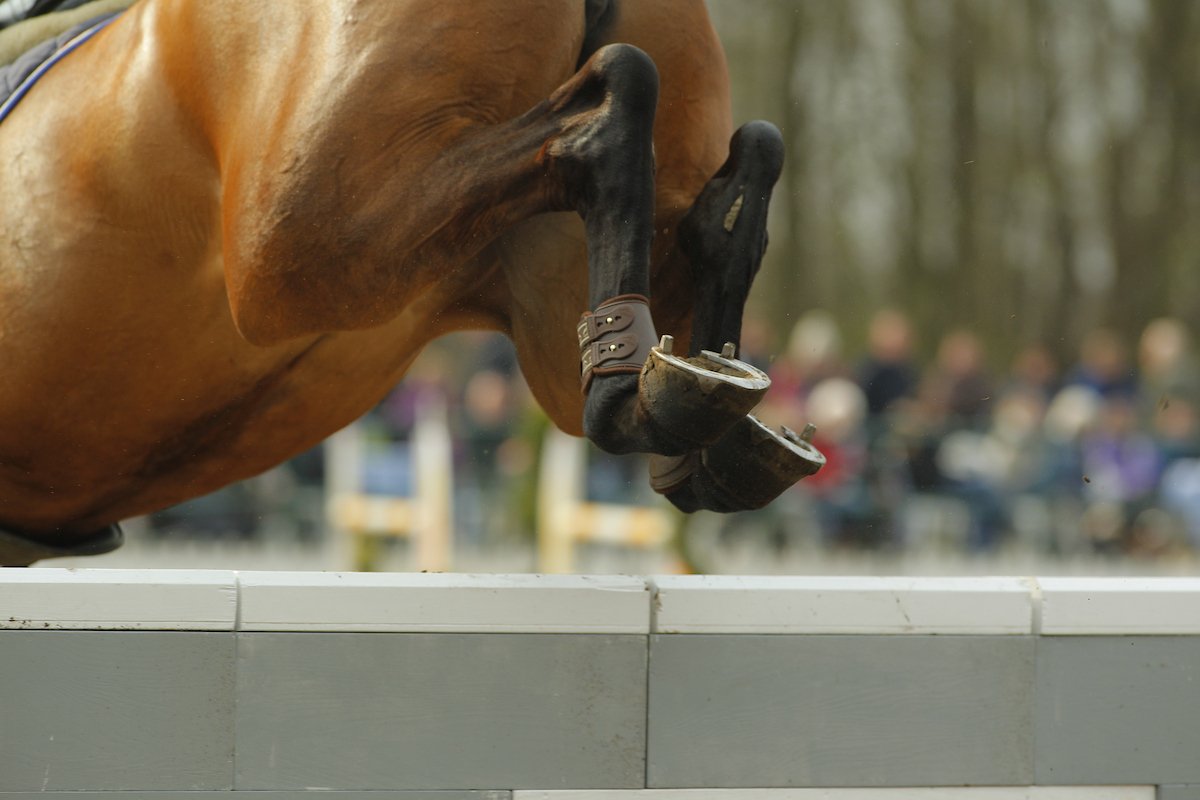
For Schurig, the classic horseshoe remains popular because it’s the most affordable option. Nevertheless, plastic shoes are gaining ground—either for nailing or gluing. They’re excellent for endurance riders due to the variety of surfaces and the reduced risk of slipping, and for driving horses because of their shock-absorbing properties on hard ground. But not every horse tolerates every type of cushioning: “Some slow down more, some slow down less.”
And what about the studs? At the World Championship final in Aachen, the soft ground once again raised the question of long studs—perhaps even triple studs in the rear. Appelbaum was there. He explains: “First and foremost, the studs are designed to prevent slipping. There is no scientific evidence that they are harmful or cause more problems. The turf is more likely to give way than for the leg to get stuck.” A horse that slips and falls is worse off. Schurig calls studs a “necessary evil.” Using screw-in or clip-on studs—which are used only for the competition—can significantly reduce the risk of injury. They have no place on the trailer; horses could kick each other with them there.
Decisive in War—Indeed
Finally, a look back. Friedrich Appelbaum has a passion for historical veterinary literature—and the history of veterinary medicine. Europe’s first veterinary schools evolved from farriery schools, first in France and, at the same time, in England, where narrower and lighter horseshoes were forged early on. “100 years ago, having the best possible horseshoes was, in the truest sense of the word, decisive in war,” says Appelbaum. Even Xenophon advised in the 4th century B.C. to assess a horse first by its feet—and, when looking at the feet, first by the hooves.
 If you’d like to listen to the experts’ discussion again: the podcast “Tell Me About Horses,” episode “Hoofs: Bare or Nailed,” featuring Volker Schurig and Dr. Friedrich Appelbaum.