Coat change in horses: Influence of day length, weather and blankets - Study view
Coat change in horses: What light, weather and blanketing do
 from Kerstin Wackermann
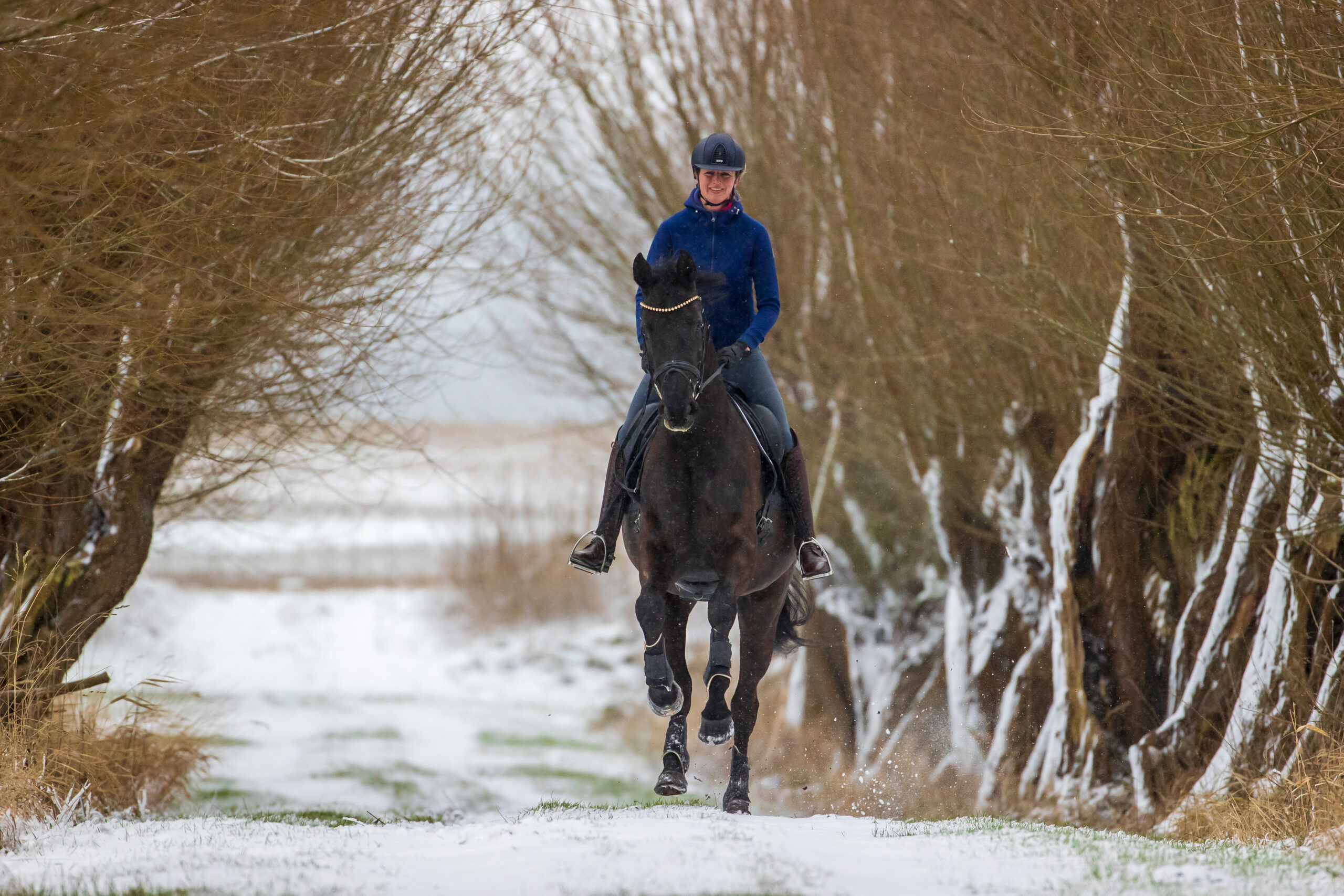
  Although you cannot prevent the formation of the winter coat by covering it, you can influence how thick it becomes to a certain extent. Photo: sportfotos-lafrentz.de
 The change of coat in horses follows a fixed annual rhythm because the length of the day determines whether the body produces a winter or summer coat. The weather, on the other hand, influences how much heat a horse loses and how much the metabolism has to counteract in order to maintain body temperature. Blankets change this heat balance and – depending on how they are used – can even influence hair length, as one study shows.
Why does day length control the change of coat in horses?
Horses do not change their coats according to the weather, but according to the length of the day. This signal remains stable every year and tells the body early on whether winter or summer fur is being formed. If daylight is shorter in late summer, melatonin secretion at night is prolonged. This signal reaches the pituitary gland via the hypothalamus and lowers the prolactin level – a hormone that is closely linked to hair growth.
When prolactin drops, the hair follicles switch to winter mode: more follicles enter the growth phase and the hair becomes longer and thicker. In spring, the prolactin level rises again and the organism switches to summer coat. Temperature and weather only influence how strongly the coat insulates later – they do not replace the hormonal clock of the photoperiod.
Can you prevent the coat change with light programs?
In studies, artificial lighting extended the “day length” using stable light or light masks, sometimes combined with additional warmth from blankets. The results show that if such a program is started in good time, i.e. before the natural start of winter coat growth in late summer, the summer coat is retained for longer and the transition to the winter coat is delayed. However, once the body has initiated the transition to the winter coat, the process can only be slowed down, not completely reversed. (O’Brien C et al. 2020).
Temperature, wind and wet conditions: What stresses horses in winter?
Heat or cold does not change the timing of the coat change, but it does influence thermoregulation and the extent to which the winter coat is developed. In very cold winters, horses often develop a thicker and therefore more insulating winter coat. The body reacts to persistently higher heat loss by increasing the protective effect of the existing winter coat.
Healthy, adult horses can cope with significantly lower temperatures than humans. Their thermoneutral zone is roughly between 0 °C and 10 °C. In this range, the body can usually maintain the heat balance without significantly increased energy expenditure – provided the coat remains dry and the wind protection is right.
Dry cold can often be well compensated for by the raised winter coat. The insulating layer of air between the hairs is retained and heat loss is limited. It becomes critical when wetness or wind are added: Moisture displaces the insulating layer of air, wind swirls it around. In both cases, heat loss increases significantly and the metabolism has to provide noticeably more energy to keep the body temperature stable.
Does a blanket help to prevent the horse from developing too much winter coat during the change of coat?
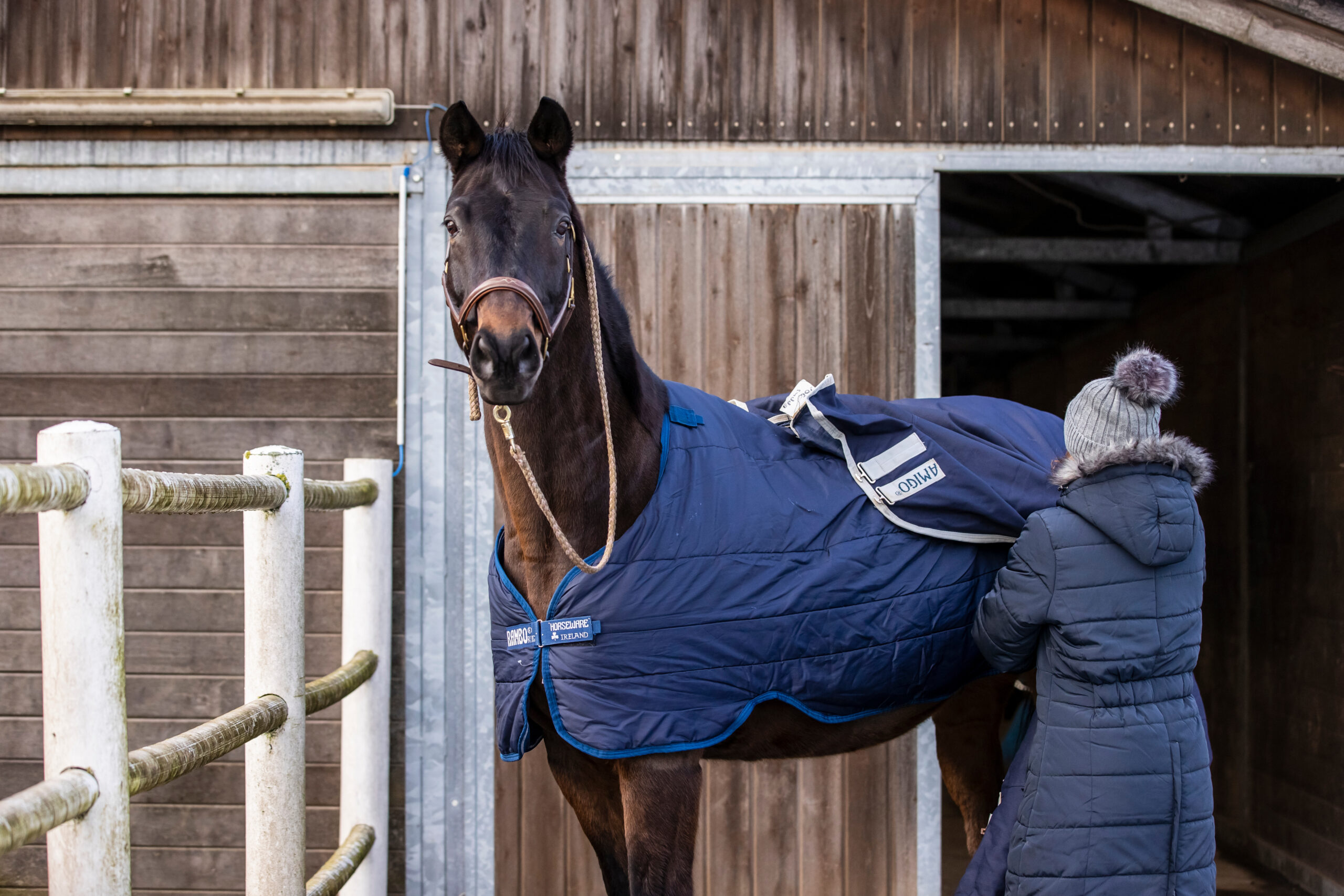
A rug does not interfere with the coat change itself, but it does change the horse’s heat balance. It reduces heat loss by keeping out the cold, wind and moisture. This can protect against cooling, but carries the risk of overheating if the rug is too warm or temperatures rise. It is therefore crucial that the blanket filling is adapted to the weather, checked regularly and adjusted to changes in temperature. How sensible blanketing is in individual cases also depends on the horse itself – for example on coat structure, body condition, state of health and workload.
A controlled study was carried out to investigate whether blanketing can also influence the development of the winter coat. DeBoer et al. compared 16 horses, eight of which were covered from October onwards, while eight animals remained uncovered. The researchers measured the hair length in several areas of the body and used the neck specifically to rule out any chafing effects caused by the blanket. In winter, the covered horses had shorter hair overall than the uncovered animals; in January, the difference on the neck was 43 mm compared to 58 mm. The results suggest that blanketing affects overall hair length because the body loses less heat.
Why shedding and winter coats vary from horse to horse
Whether a horse has a very thick coat in winter or remains comparatively short-haired depends not only on the length of the day, the weather or the covering, but also on the individual animal. Age, breed type, body condition and metabolic state influence the extent to which the winter coat develops and how visible the shedding is.
Ponies and robust breeds often develop a longer and thicker winter coat than many warm-blooded animals under the same conditions. In older horses, the change of coat is often delayed or incomplete, often in connection with hormonal changes such as PPID. Horses with metabolic disorders also often shed their coats differently in everyday life than metabolically healthy animals.