Interview with dressage co-federal coach Hendrik Lochthowe
 from Dominique Wehrmann
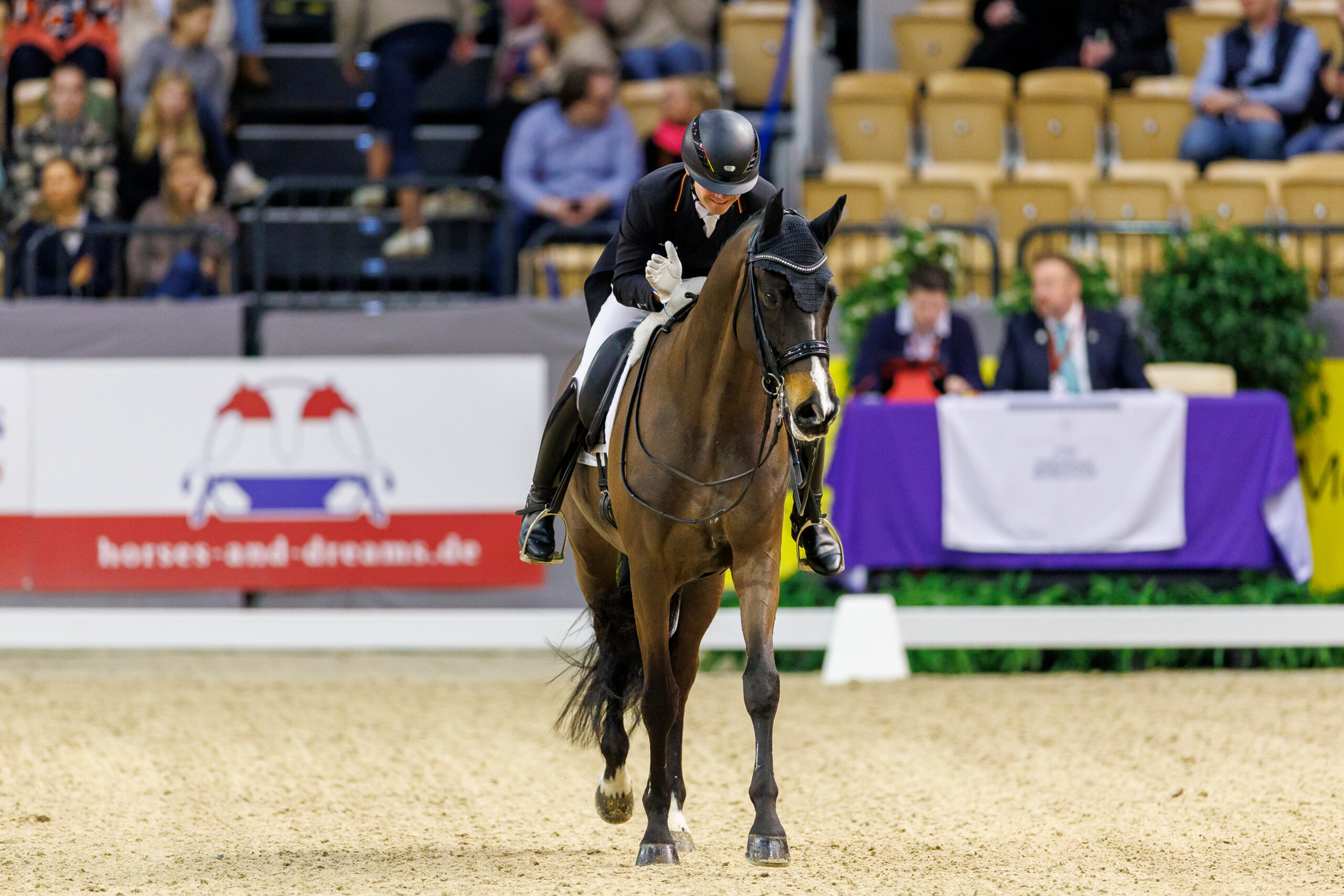
 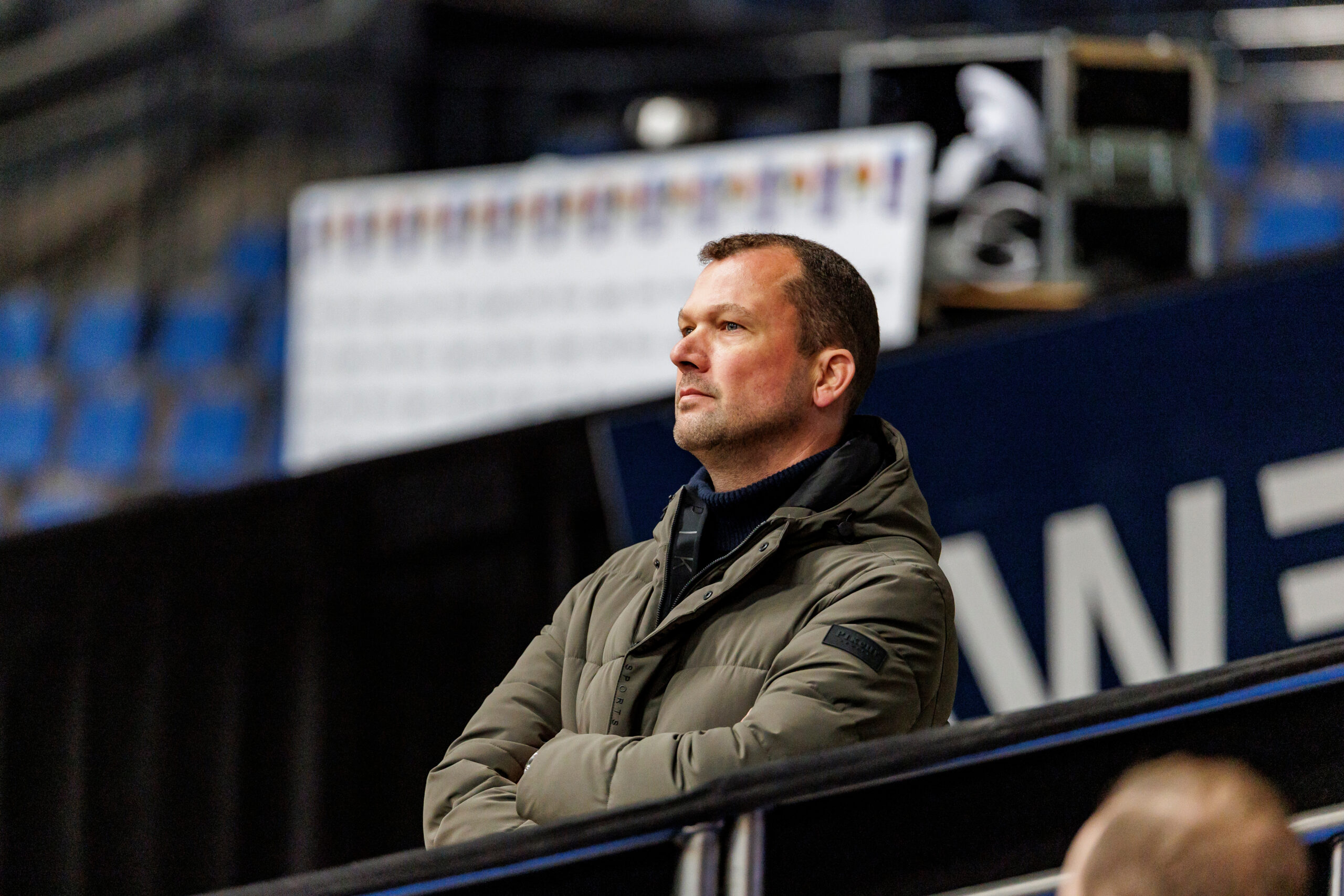 Hendrik Lochthowe. Photo: sportfoto-lafrentz.de
 How did it come about that you became co-head coach?
Monica called me one evening and asked if I could imagine it. I hadn’t expected that at all and I was delighted that she trusted me. It quickly became clear to me that I could very well imagine doing this job. I had already planned to move back home anyway.
What does “back home” mean?
I moved back to Recklinghausen after 21 years – back to my family. For me personally, that was absolutely the right move.
I have a stable very close by, just five minutes away by bike, where my horses are stabled. That makes a lot of things easier in everyday life.
My father and sister support me, and that is something very special. We are now a small family business. When I go to the tournament on Wednesday, my family has my back completely.
So you now have a fixed home base from which you are on the road?
Exactly. That has many advantages. I only drive to Warendorf in just under an hour. This means I can easily take part in courses and work very closely with Monica. All in all, everything has developed in such a way that it simply fits well.
You used to mainly ride yourself. What is it like for you to give so many lessons now?
That’s true, my focus used to be clearly on riding. But I’ve actually always given a lot of lessons. Now my focus is more on training than riding.
What exactly excites you about it?
I am fascinated by accompanying the development of riders and horses. Seeing how a pair improves and grows together – that fulfills me.
What does a typical week look like for you?
When I’m at home, I ride my horses in the morning and give lessons in the afternoon. Then there are courses, for which I sometimes spend two days on the road.
On the tournament weekend I’ll be on the road from Wednesday to Sunday.
Which is more stressful: everyday life or the tournament?
It’s difficult to compare. At the show, the day starts early – I’m usually in the arena at six o’clock and accompany the riders.
It’s different at home. I can’t do without riding myself. When I’ve been away for a few days, I really look forward to being back at the stables on Mondays and sitting on my horses. Then I think: here we go again.
Variety for the horses is very important.
And your horses – are they just as motivated?
I don’t think any of my horses take it amiss if I’m not around for a few days. Then they go on the double lunge, do pole work, lots of different things. It works really well with my team at home.
Is this an experience that you now pass on to your students?
Absolutely. Riding dressage for six days in a row, practicing, practicing, practicing again, that doesn’t work. I’m convinced of that now. I do things differently now than I did seven or eight years ago. I think more about a lot of things. I also learned that from Jonny Hilberath, not to just do things because you’ve always done them that way. Variety for the horses is very important.
Are you still learning as a national coach?
Absolutely – and from all sides. When working with horses, you actually learn something new every day. I try to take something positive with me everywhere.
Did you have a clear vision when you accepted the national team coach position?
I didn’t have a concrete vision. First and foremost, I had – and still have – great respect for the task. You don’t take on a position like this on the side.
This route was not originally on my plan. But I’m really keen on the task. I enjoy developing myself further and passing on my knowledge.
So you feel like you’re growing into the role?
Definitely. I said that right from the start. It’s a process and I’m growing into it step by step.
How do you divide up the responsibilities for the riders? Is this determined from the outset?
We discuss and agree in advance. In general, we keep an eye on all the riders and horses, observe them and discuss them. Of course, you have to be flexible at the show itself. In the end, we always try to do what we think is the best solution for rider and horse in the respective situation.
About Hendrik Lochthowe
The now 46-year-old completed his training at his uncle Norbert Lochthowe’s stables in Recklinghausen. He then worked for 21 years as a trainer in the saddle at various renowned dressage stables.
His stations initially took him to Harli Seifert, later to Silvia Iklé in Switzerland. This was followed by positions at the Meggle family’s Georgihof in Wasserburg and at Gestüt Riedmühle in Butzbach. In June 2025, he set up his own business and shortly afterwards took on the role of co-bundle trainer.
The master of equine management names Jonny Hilberath, Hans-Heinrich Meyer zu Strohen, Wolfram Wittig and Silvia Iklé in particular as formative teachers.
Hendrik Lochthowe himself was a successful international dressage rider and also works as a dressage judge up to advanced (S**) level.