Freedom of choice snaffle/bridle up to CDI3* - Opinions on the topic
Freedom of choice snaffle/bridle: great option or the beginning of the end?
 from Dominique Wehrmann
 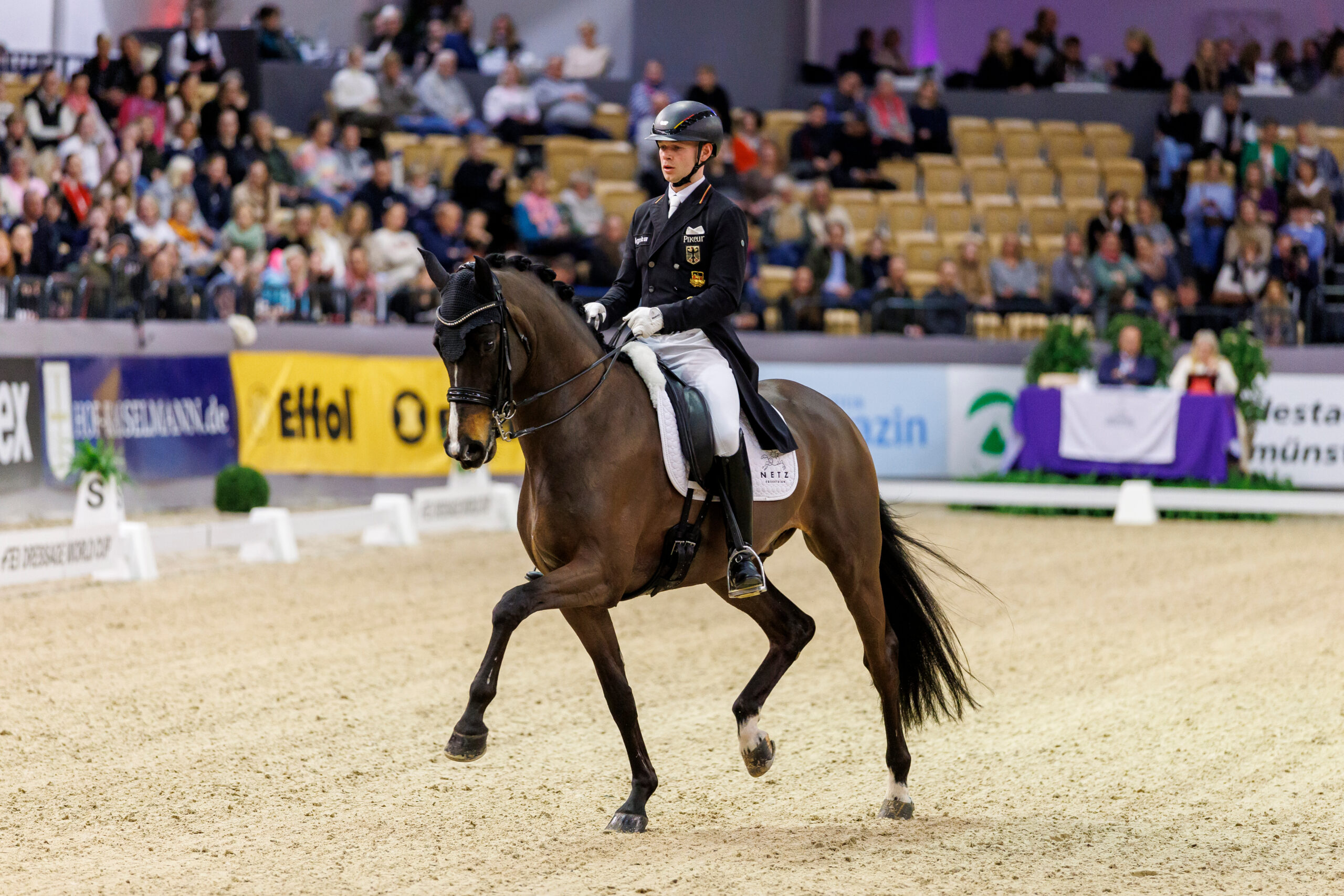 Raphael Netz with Great Escape Camelot. Photo: Lafrentz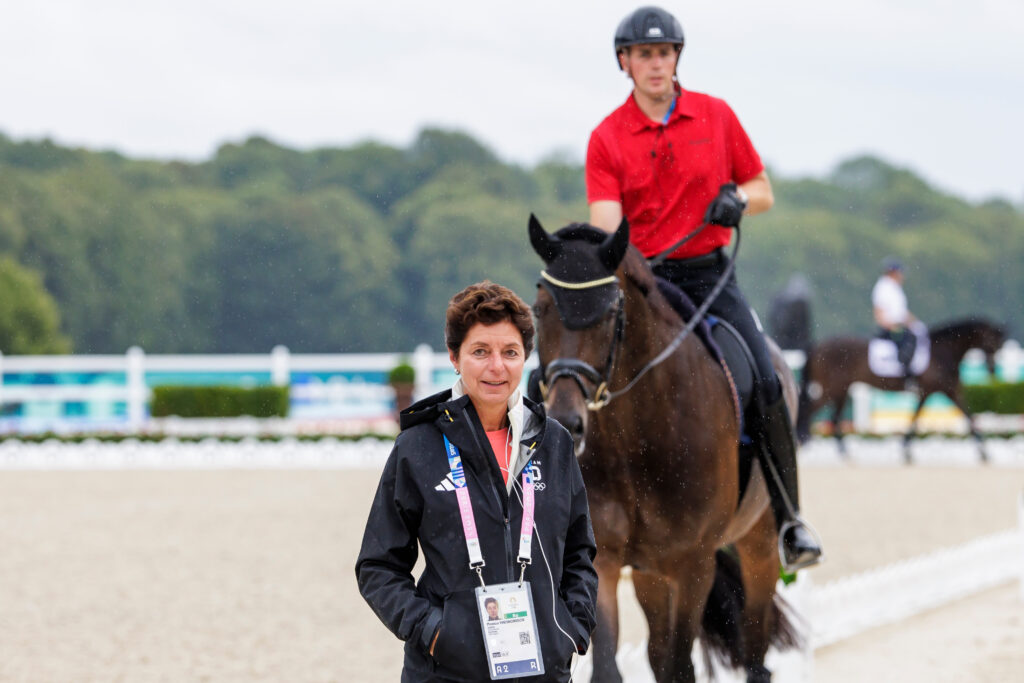
Monica Theodorescu, German national dressage coach
I am still against options in the upper Grand Prix sport. The FEI Dressage Committee follows democratic rules. We have decided to allow the option for Grand Prix competitions at 3* level in order to evaluate the collected data and experience after one year. How many riders use the bridle, with which halters, what about possible mouth injuries and what are the ratings? The option is already available in some countries. We also want to observe how this develops.
Double bridle essential at championships
But we have nevertheless once again made it very clear in the Dressage Committee, in the Riders Club (International Dressage Riders Club, IDRC, editor’s note. ) and in the Trainers Club (International Dressage Trainers Club, IDTC, editor’s note. ) said that riders have to show that they can ride with a double bridle at four-star plus and at championships. That is a criterion of the Grand Prix. But in order to gain experience and possibly make it easier for some riders, we are now looking at this.
But even in high-level sport, we often see pictures of curbs that really fail ...
That’s how it is. But that’s not the curb bit’s fault.
Okay, but the rider. And if we want to keep the curb, then we have to do something about it …
Yes, it has to be ridden well. And you have to learn that.
But then directed accordingly ...
… of course!
Shouldn’t bad leaning be punished more severely?
Yes, that’s already the case. Poor contact, open mouths, visible tongues, tight necks and so on – the protocols often mention this. This is already clearly noted and criticized. So, there is no extra mark for it. But it is absolutely assessed.
But would it perhaps be a compromise to say that a grade should be introduced for this?
Yes, we’re working on that too. We keep asking the FEI to give us a footnote that reflects the training scale. So one mark for the rider and harmonious riding or aids and one for the training scale, or whatever you want to call it. This has been our goal for a long time.
Only the FEI is resisting this because they did this study in 2018 and say that the scale of the training should be reflected in the lessons. I oppose this and argue that I don’t see enough of this in the individual scores and that another score is needed to give the judges a tool with which they can evaluate the basics of training more clearly.
Convincing harmony
We see it now in top sport like in Crozet and at the moment with our champion from Belgium with Zonik Plus – it’s this harmony, good contact and lightness paired with collection. It is possible and then it is simply beautiful!
That is what we strive for. It may not be the most successful here and there. But that is the goal. And as I see it, everyone – or most people – have understood that.
And the FEI is still reluctant because of the study that found that judges would be cognitively overloaded with additional footnotes?
Yes, I have often discussed this with them and I am of the opinion that they have let the reins be taken out of their hands. Of course, there is a lot that has to be judged in a Grand Prix, and it is also very complex, but the trained eye and those who have ridden can see that. The important thing is: what is the value? A few years ago, spectacular movements and the shortest possible tasks were prioritized for marketing reasons. That led us down the wrong path.

Martin Plewa, riding master, former national eventing coach, trainer, judge and co-author of the guidelines for riding and driving
The problem is not the curb. The problem is the misuse of the curb.
The fact that we see bad pictures in practice only shows that trainers, judges and riders have not done a good job. Studies have found that correct riding on a double bridle can actually be more horse-friendly because, when used correctly, the tongue pressure is lower than when riding on a snaffle. Of course, this is not the case if the curb bit is misused, for example to force biting. In my opinion, the freedom of choice is therefore a step in the wrong direction.
Some people are already calling for bits to be abolished altogether. But we need the bit in the horse’s mouth, because the bit is the only way to create contact. This in turn is essential to create the positive arc of tension from the hind leg over the back into the hand, which enables the horse to carry the rider’s weight. The rein aids enable me to position the horse and thus bring it into the balance that we need when riding. The quality of the contact influences all other points on the training scale. Used correctly, the use of a bit is gentler on the horse than a bitless bridle. With a mechanical hackamore, the pressure on the bridge of the nose is so high that it is in the area relevant to animal welfare. This can often be seen in the ossifications on the bridge of the nose and lower jaw branches. In addition, horses with a mechanical hakamore can no longer release the lower jaw. However, relaxed chewing is essential for suppleness. This is why nosebands that are too tight are so problematic. However, this can be avoided by correct buckling, but not with the hackamore. The so-called “glow wheel” also fixes the lower jaw. Even a sidepull exerts considerable pressure. In addition, dressage gymnastics is not possible with these bits. But we need this so that the horse can carry the rider’s weight.

Hubertus Schmidt, riding champion, president of the German Riders and Drivers Association (DRFV), Olympic team champion, world and European champion
I am absolutely against the opening for one reason, because it suggests that riding in a snaffle is more horse-friendly than riding in a double bridle. That’s simply nonsense, it’s not true. You can only handle the curb bit incorrectly.
If you use the curb bit correctly, it is definitely more horse-friendly because I as the rider have to exert much less influence.
Of course, you also have to make and keep the horses sensitive. It’s just like the thing with the spur – I don’t have one to use all the time. It’s the same with the curb bit. Even when I ride with a double bridle, 99 percent of the time I use the snaffle. And if someone says they want to ride in a snaffle, they can do that. Then I can use the curb bit with a very small baby curb bit, don’t use the curb reins and ride in a snaffle with a curb bit.
What bothers me about it, as I said, is that it suggests that riding in a snaffle is more horse-friendly, and that is absolutely wrong.

Isabell Werth, most successful dressage rider of all time, President of the International Dressage Riders Club
We have had this discussion at length and are completely in agreement with the fact that we say we will now test it at three-star level and see at the end of the year, when we evaluate how many have actually ridden in snaffles, what was the ratio? Only then can we make a judgment as to how well it is accepted and how high the demand is.
And we all agree that at the top level, four and five stars, we want to keep the curb as a must, because then there is simply a very clear sporting comparison and because it is simply the equipment for top-class sport and we don’t want to have an imbalance in terms of appearance.
The curb bit also makes sense from a training perspective. What is your position on this?
There is a very clear attitude that, at the end of the day, the curb bit is the bridle that should demonstrate top-class sport and fine riding. The mistakes that are made in its use have nothing to do with the fact that you can choose.
We stand for top-class sport and that is where the curb has its ultimate position.
The development of the horse from the snaffle to the curb bit is something that has to be trained individually. And I actually have no concerns at all that this needs to be discussed in a problematic way.

Cathrine Laudrup-Dufour (DEN), team world champion and individual silver medalist, among others
This has been possible in Denmark for a long time. That’s why I’ve known for a while that we can choose. I think it’s good that it’s now being tried out, simply to see how and why riders use the option.
Personally, I still prefer the curb bit in the Grand Prix. But it’s okay that this is now being tested.
For me, the curb bit is part of the training – that you learn how to handle the curb bit yourself, but also that you get the horses used to wearing the curb bit at a certain age.
They need a different level of permeability before they are perfect on the curb bit. This is somewhat easier on the snaffle.
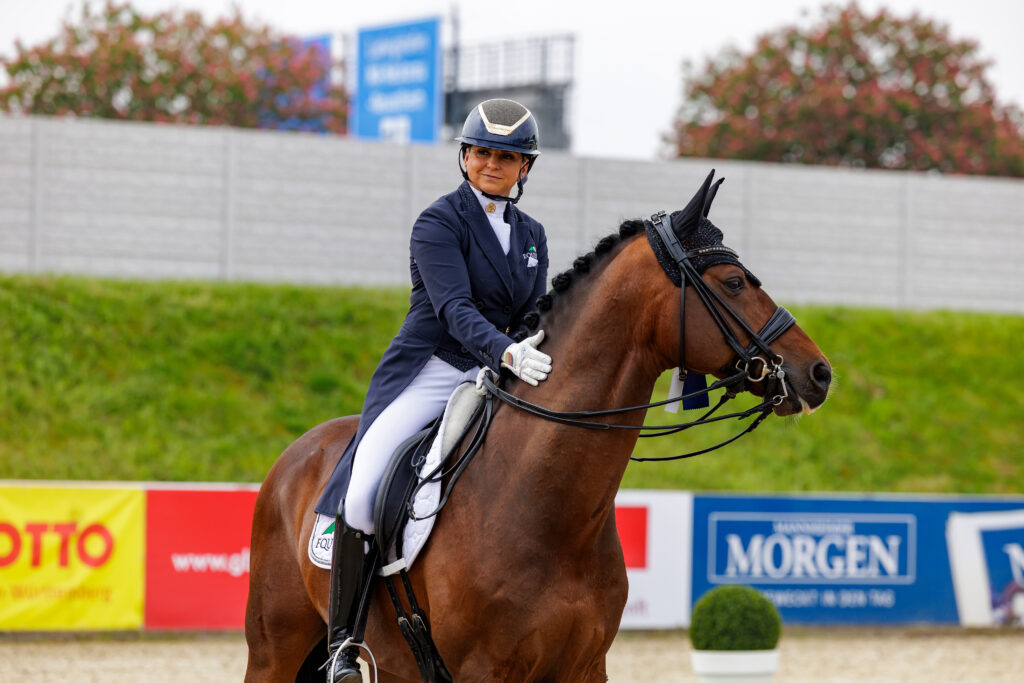
Dorothee Schneider, riding champion, Olympic team champion, world and European champion
I’m happy about it because I also like to ride everything in a snaffle and in the 30 years that I’ve been training horses, I’ve had horses that feel more comfortable with a snaffle. The fact that there is now the option to change or to choose between snaffle or curb bit, that the horse can be treated individually – I’m looking forward to that.
Would you then say that it should also be opened at four- and five-star level?
The first thing that matters here is how to judge it. I’m not a judge, but it’s the same to judge, it’s always the issue of contact, whether on a curb bit or snaffle. We all want our horses to feel comfortable in the mouth. And basically, I believe that if this is well received, it may also open the door to four and five stars.
As I said, I am a snaffle trainer. I like riding in a snaffle, even in the really difficult lessons. I know that there are many other opinions, but I would be very open to it if it could be extended to four or five stars.
It’s funny, almost all riders say that they like riding in a snaffle, but the theory says that riding in a double bridle should actually be much finer.
Regardless of the bit, if a horse feels comfortable in the mouth, it will give positive feedback.
And there are horses with smaller mouths or very light necks that simply prefer the snaffle to two bits. Why shouldn’t we cater to this individuality?

Dr. Evi Eisenhardt, CDI5* judge
I think that the FEI’s decision with the freedom of choice up to the three-star CDIs is a good thing, and that we are keeping the snaffle bit at the championships and the tournaments at four and five-star level, too. A well-ridden horse can also go Grand Prix in a snaffle, and I think it’s actually okay to keep the double bridle at championships.
But even at 5-star level you see riders who don’t ride the curb bit the way it should be. How do we change that?
We are here in Europe, where we have a relatively good basis. And if riders at five-star level have problems with the curb bit, then they often have a deficit in their own seat or in their training. Most Europeans have a relatively good basic training. If you see riders from countries far removed from dressage who have problems with the curb bit, you have to help them.
I think the solution we have now is a good one and I am curious to see whether it will be followed up nationally.
I would trust the five-star riders to be able to do that on a curb bit.
And if they can’t?
Then you have to go down in the grade for the “General Impression”.