


Julia Krajewski



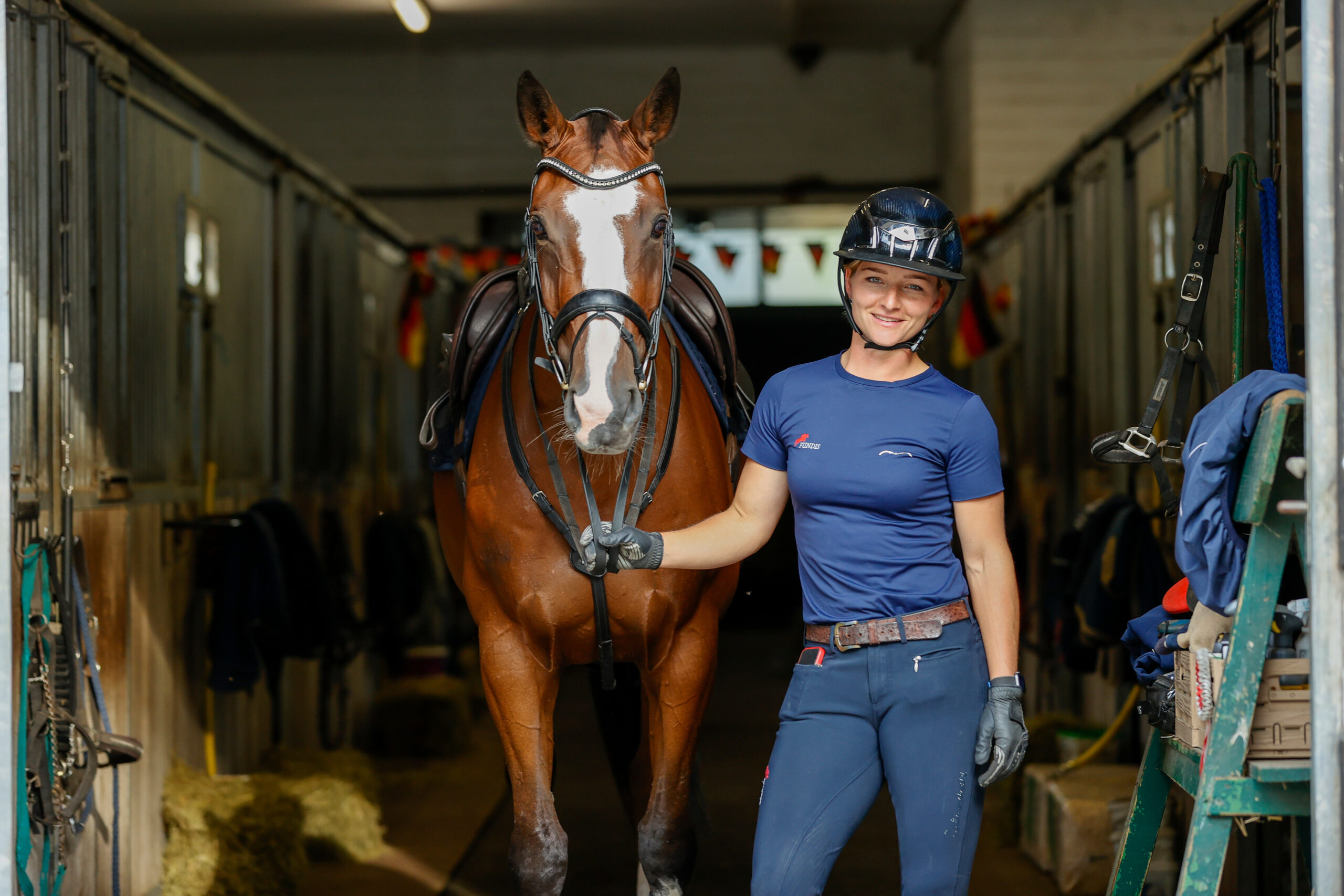
Two Olympic champions: Julia Krajewski and Amande de B'Neville. Photo: Sportfotos-lafrentz.de
Reflective, honest, smart, resilient, a brilliant trainer for horses and riders alike and always on the lookout for that little bit extra – that’s Julia Krajewski, the first woman in the history of eventing to win individual Olympic gold. It was a long way to get there, with many ups and downs.
Pony power
In October 1988, the year in which the German riders won team gold in all three Olympic disciplines at the Olympic Games in Seoul, the eldest of Christina and Paul Krajewski’s three daughters, Julia Krajewski, was born in Langenhagen, Lower Saxony.
The Krajewskis were not a traditional horse family. But mother Christina had been riding as a hobby since her youth and introduced her daughters to horses. During a summer vacation on a farm in the Lüneburg Heath, the children were able to ride and get a taste of the stable air – the beginning of a lifelong love affair. When the family then acquired a remaining farm in Emsland, the first ponies moved in.
Today, Christina Krajewski, who has a degree in natural sciences, works as a product manager for the English company Neue Schule Gebisse in Germany. So the children’s love of horses fell on fertile ground with their parents.
And the fun soon turned serious.
No European Championship without a medal
Julia Krajewski was just 12 years old when she competed in her first European Championships with the Weser-Ems pony Cyrano. But being there wasn’t everything. The pair won double gold in the individual and team competitions on their U16 debut. A year later, they became European team champions again. This time they won the silver medal in the individual competition.
When Julia Krajwski and Cyrano parted ways, the gelding paved the way for Felix Vogg, now a five-star winner and Olympic rider for Switzerland, to enter the sport. Julia Krajewski found a partner for the junior tour in the Oldenburg gelding Leading Edge. The result: two participations in the European Championships, two team gold medals, one individual silver medal and one fifth place.
And she also returned home with medals from her last European Championship appearances in the U21 young riders’ camp. This time it was three silver medals, in 2008 for second place in the individual and team rankings at the 2008 European Young Riders Championships in Kreuth with Lost Prophecy, one for the team ranking at the 2009 European Championships in Waregem with After The Battle, who also accompanied her two years later at her first European Senior Championships.
Remarkable: apart from the thoroughbred After the Battle, which was previously ridden by Frank Ostholt, none of the horses with which Krajewski was successful in the young rider sector went international under another rider before coming to Krajewski. She brought both Leading Edge and Lost Prophecy into the sport herself at the age of six.
Apprentice years, not master years
When she rode for Germany at the European Young Rider Championships, Julia Krajewski already had her A-levels in her pocket, was a member of the eventing perspective group and had signed on as an apprentice at the DOKR in Warendorf. Her most important teacher was Rüdiger Schwarz, who saw that he had not only taken a talented rider under his wing, but also a girl who had the necessary mindset for a top athlete, as he explained in the CHIO Aachen Podcast:
“She came close to my idea of a top athlete who doesn’t want to be good at top-class sport, but wants to be top class.”
She only realized later that Rüdiger Schwarz thought so much of her, says Krajewski. Because her trainer was not one to hold back criticism: “I still have that in my ear to this day, whenever I pulled too much and rode a canter jump where none belonged: ‘That’s shitty riding, girl’,” he used to say, she recalls in the podcast.
Where others might have complained about her directness and choice of words, Krajewski accepted the criticism and learned. Not just as a rider. “Rüdiger Schwarz taught me to be patient and to wait longer, especially with horses.” It was probably not an easy path. There were sometimes tears when she wanted to ride a class more, but her trainer said “I don’t care, you can’t”.
Looking back, Krajewski appreciates her mentor’s honesty and clarity. Because if you overtax your horse, you quickly lose its trust. For Krajewski, however, this is the most important building block of the partnership. “For me, trust between rider and horse is very important! It’s great if you love your horse – but that doesn’t mean you have a trusting relationship with each other.”
National coach with attitude
After passing her final examination to become a horse trainer in 2009 as the best in her year, she completed her master’s degree and then saddled up for a three-year course to become a qualified equestrian trainer at the German Sport University in Cologne. In 2016, she took over the position of national coach for the juniors at the DOKR and was later responsible for the U25 riders before deciding to concentrate on her own riding for the time being after the Olympic Games in Paris.
During her time as a DOKR trainer, she coached riders who now compete with her in the senior division for Germany: Libussa Lübbeke and Calvin Böckmann, for example. Just as she once benefited from the openness of her trainer Rüdiger Schwarz, her students must also be able to deal with criticism and openness.
She benefits from the experience she has gained in her own training. Now she is the one who has to explain to some disappointed students that they are either not yet ready to move up a class or perhaps they don’t have the right horse. Because asking more of a horse than it can give would be irresponsible and unfair to the animal.
“You will always get an honest statement from me. I believe that you owe it to yourself as an athlete. You don’t develop if you deceive yourself and sugarcoat things.”
Another important sentence from her as an instructor: “My students should understand what they are doing so that they have an idea the next time they ride alone. That’s what makes a good rider, that they know what they’re doing and why they’re doing it.” Because: “As a rider, I am responsible for ensuring that the horse is able to do what I want it to do.”
Highs and lows
Six European Junior Championships, none without a medal – Julia Krajewski’s early career could hardly have gone better. The setbacks came later – the elimination at the Olympic Games in Rio de Janeiro, Samourai du Thot’s positive medication test at the 2017 European Championships, which cost Germany the silver medal, Chipmunk’s failure at the 2018 World Equestrian Games in Tryon. Then the sale of her top horse.
Krajewski has not only overcome these setbacks, she has emerged from them stronger. “Sporting failures, when you’ve really messed up and done really badly, are probably more rewarding than if you’d won. Winning is nice – but you deal with everything much more intensively when it didn’t work out than when it was enough to win.”
Krajewski has dealt with the low blows in her career in her own way: dealing with them, learning what needs to be learned and moving on. Her friends, family and horses have helped her. She made sporting history in Tokyo in 2021 when she became Olympic champion – the first woman in the history of eventing. She rode a horse she had trained herself, the French mare Amande de B’Néville. She was thus responsible for two thirds of the German team, as she rode side by side in Tokyo with Michael Jung, the new rider of her former top horse Chipmunk, whom she shaped from remount age into the top athlete who helped Michael Jung to his third individual title in Paris in 2024.
Olympic mare Amande de B’Néville retired after the 2022 World Championships, where the pair played the lion’s share of the German team gold and won silver in the individual classification. Something Julia Krajewski herself did not expect: Her next Olympic horse was already waiting in the wings: the Holstein gelding Nickel.
In 2022, she still had him for the fun competition on Saturday evening at the CHIO Aachen, the Jump and Drive. In an interview with CHIO Aachen recently, she said that she would never have thought at the time that the Numero Uno son would win the big eventing competition in Aachen two years later. Or that he would even have what it takes. But the persistent work and patience to allow him to mature at his own pace have paid off. In 2018, Krajewski was able to register his victory with Chipmunk on the Aachen winner’s board. Another entry was added in 2024, this time with Nickel, who subsequently accompanied her to the Olympic Games in Paris. Here they finished in a strong eleventh place. They were the first pair to enter the magnificent cross-country course in the Palace Park of Versailles and showed how to negotiate it without any faults.
Krajewski canceled the 2025 European Championships in Blenheim early on because she didn’t think the course there would suit Nickel. Her focus is already on the 2026 World Championships. As we know, this will take place in Aachen, and Nickel has already proven that he loves this course …
Private
Julia Krajewski is in a relationship with Italian Olympic rider Pietro Roman. His family is also active in eventing. His father Federico took part in three Olympic Games, Montreal 1976, Moscow 1980 and Barcelona 1992. Pietro Roman rode for Italy together with his brother Luca in Rio 2016.
During her time as a trainer for young riders at the DOKR, Julia Krajewski and her horses were based in Warendorf. After not renewing her coaching contract following the 2024 Olympic Games, Krajewski found a new home in Germany in Wallenhorst near Osnabrück. She now spends the winter months at the Roman family’s facility near Rome.
Aktuelle Pferde
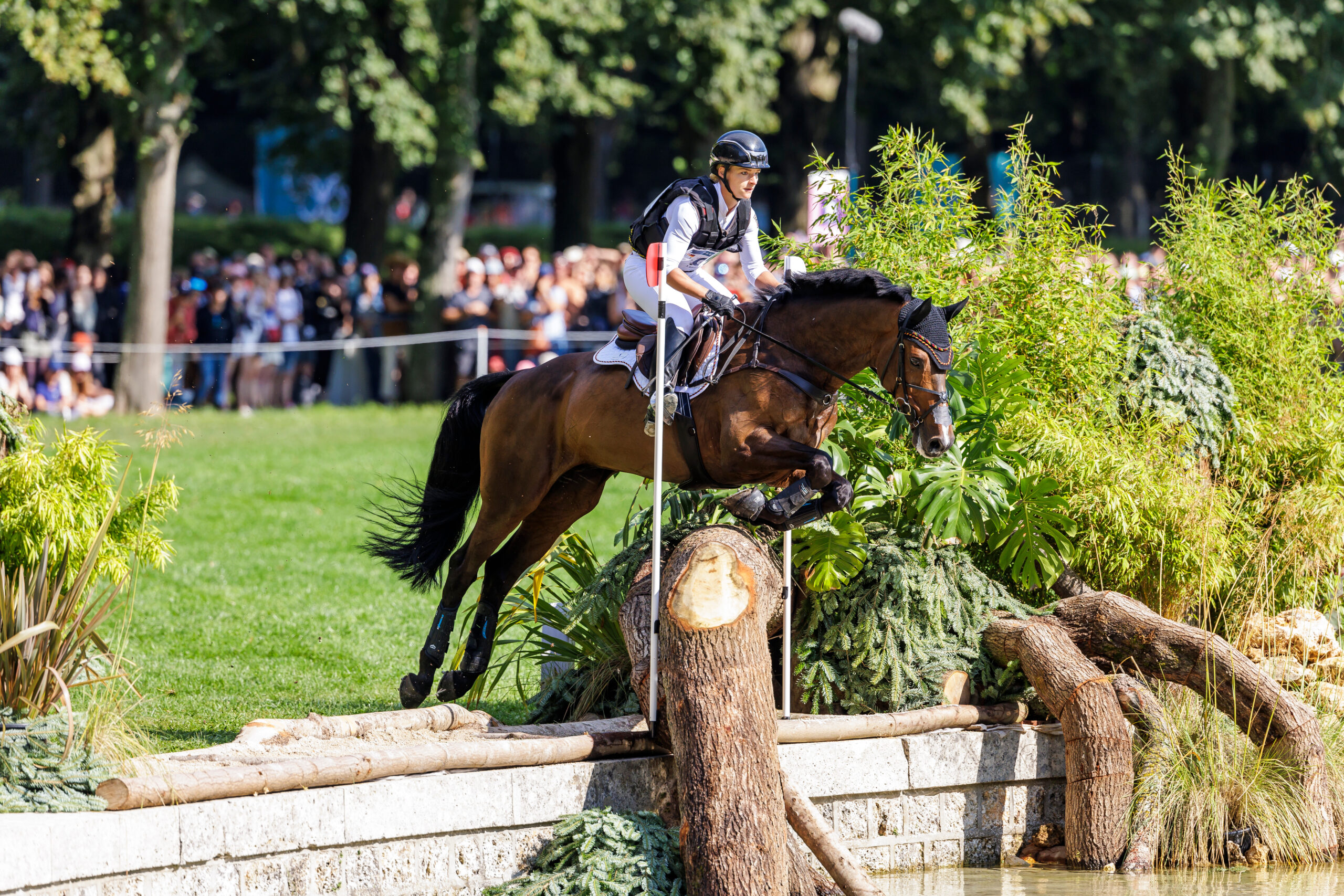
1/ 1
Ehemalige Pferde
-
Olympic Games
- Individual ranking1x
 0x
0x
0x
0x - Team ranking0x
1x
0x
-
World Championships
- Individual ranking0x
1x
0x
- Team ranking1x
0x
0x
Latest News


EQUI PAGES & Cookies
Funktional Always active
Die technische Speicherung oder der Zugriff ist für den legitimen Zweck, die Nutzung eines bestimmten, vom Teilnehmer oder Benutzer ausdrücklich angeforderten Dienstes zu ermöglichen, oder für den alleinigen Zweck der Durchführung der Übertragung einer Nachricht über ein elektronisches Kommunikationsnetz unbedingt erforderlich.
Preferences
The technical storage or access is necessary for the legitimate purpose of storing preferences that are not requested by the subscriber or user.
Statistiken
The technical storage or access that is used exclusively for statistical purposes.
Die technische Speicherung bzw. der Zugriff erfolgt ausschließlich zu anonymen statistischen Zwecken. Ohne Vorladung, freiwillige Zustimmung Ihres Internet-Service-Providers oder zusätzliche Aufzeichnungen Dritter können die zu diesem Zweck gespeicherten oder abgerufenen Informationen in der Regel nicht dazu verwendet werden, Sie zu identifizieren.
Marketing
The technical storage or access is required to create user profiles to send advertising, or to track the user on a website or across several websites for similar marketing purposes.