


Kent Farrington


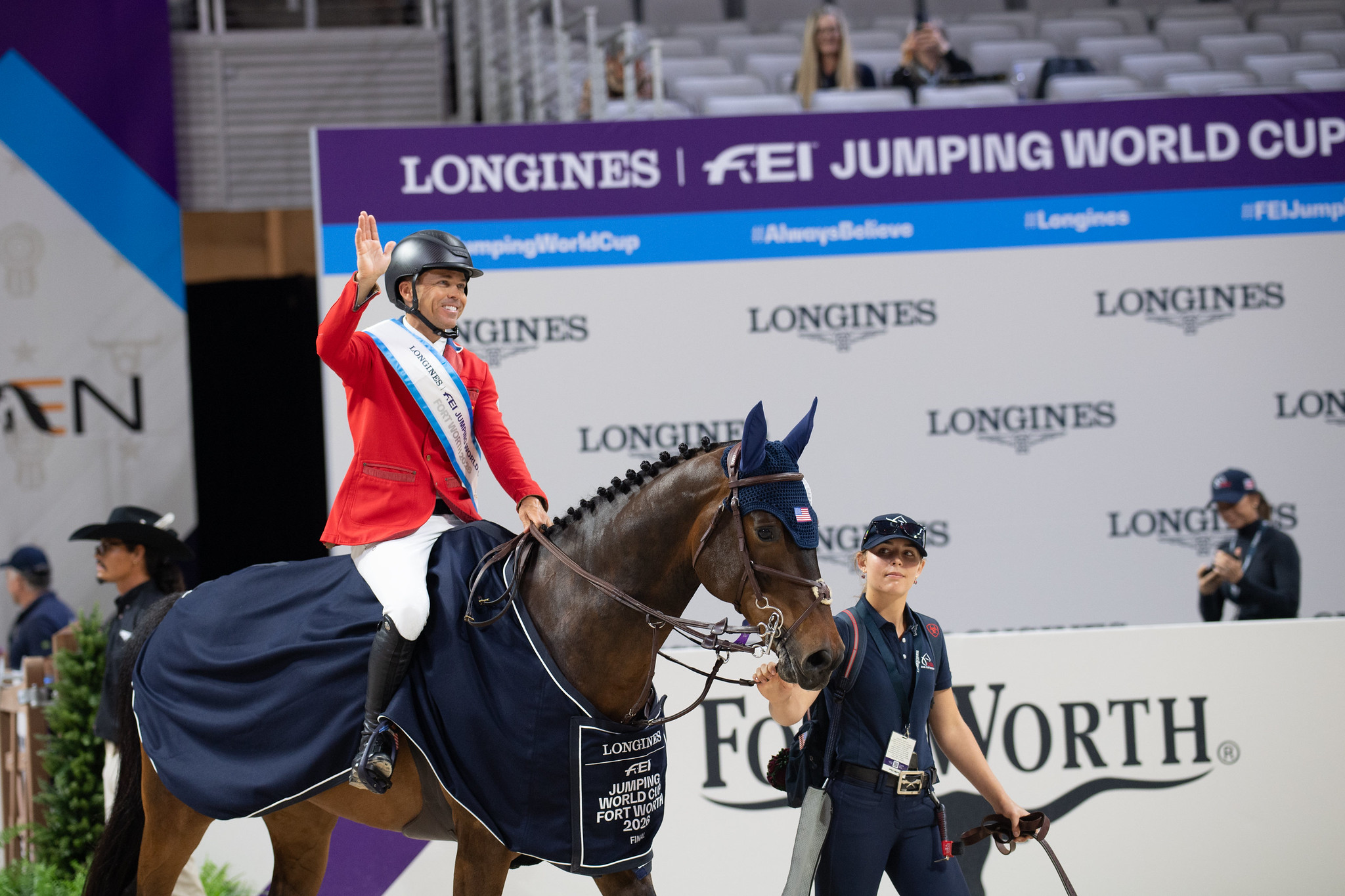
Kent Farrington. Photo: FEI/Shannon Brinkman
Can you only make it to the top of the equestrian world with vitamin B and/or a fortune behind you? Kent Farrington proves the opposite. Farrington was born in Chicago in 1980 and grew up here in modest circumstances. But he had a mother who did everything for him. His Instagram feed features a photo of him as a young boy wearing a white NASA suit. “My mother always supported me and my dreams. That day I wanted to be an astronaut,” he wrote.
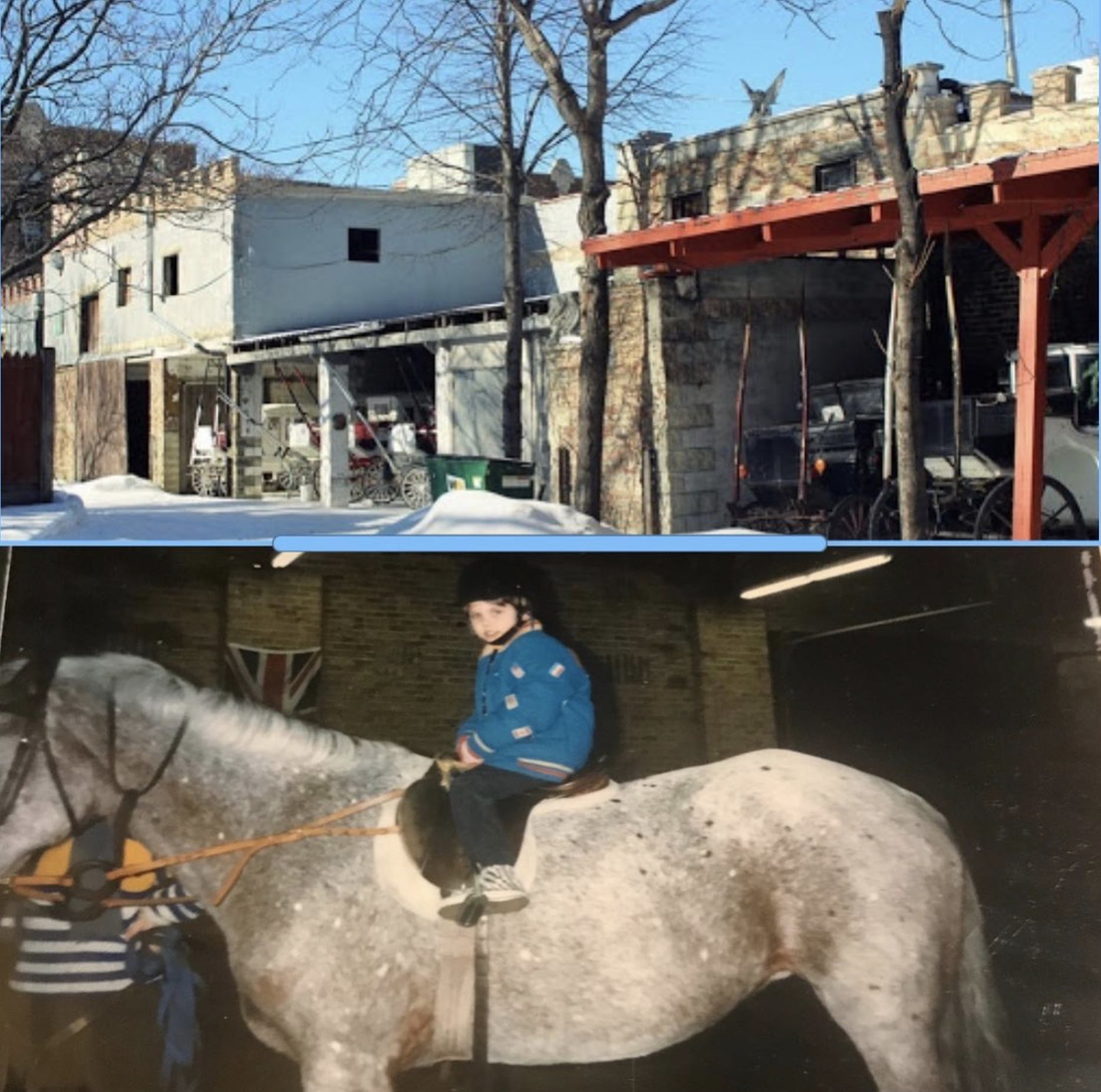
He abandoned this plan when he found a photo of his mother on a horse at the age of eight. He then decided he wanted to learn to ride. And because Mrs. Farrington was the way she was, she found a livery stable with a carriage business in Chicago, where her son received his first riding lessons. It soon became clear that this boy loved speed and was not afraid of anything. He was asked if he would like to take part in pony races. And he did! Farrington would probably have become a successful jockey if he hadn’t happened to catch a TV broadcast from Spruce Meadows. He was probably eleven or twelve years old, he can’t remember exactly. What he does know is that he knew from that day on that he wanted to be a show jockey. Nick Skelton and Rodrigo Pessoa were his idols. He wanted to be able to ride like them.
The road to the top
Kent Farrington worked towards this goal with patience and perseverance. His mother did her part to support her son. What she lacked in money, she made up for in ingenuity. Her son’s first pony was a trade for a second-hand computer. The Kent Farrington story proves it: Where there’s a will, there’s a way. Okay, he also had a fair amount of talent. All of this combined meant that Farrington was already riding in professional stables as a junior.
Here, he soaked up as much knowledge and expertise as he could, as he reported in an interview with St.GEORG in 2019. “I wanted to know everything – what equipment do they use? How do they ride? Do they use spurs or a crop? How short do they strap their stirrups? Do they finish the training with an oxer or a steep jump? How many jumps do they do at all?” Getting all these questions answered and watching the greats train was like free training for him, Farrington recalls.
He got better and better, as did the horses he was given to ride. At the age of 18, Farrington won the North American Young Riders National Competition. He turned professional in the same year. His first stop was at the stables of Tim Grubb, a British-born rider who won team silver at the 1984 Olympic Games in Los Angeles alongside the Whitaker brothers, among others, but who took his wife’s US citizenship in 1994 and ran a training center in California. The next step led Farrington to Leslie Howard.
But these were all rather flying visits. At the age of just 21, Farrington set up his own business. A mare named Madison was “to blame”. In an interview, Farrington once said that he trained this mare himself and was then able to celebrate his first five-star victory with her. “That’s when I realized that maybe I was good enough and could consider riding as a career.” He soon realized that this assessment was correct. In his first three years as a professional rider, he earned over one million euros.
The fact that the whole world took notice of Farrington was largely thanks to the KWPN stallion Voyeur. Kent Farrington competed with him in his first championship at the 2014 World Equestrian Games in Normandy, where the US team took bronze. Two years later, it was team silver at the Olympic Games in Rio. In 2017, Farrington was number one in the world rankings for the first time.
Incision
At the peak of his career so far and with the 2018 World Equestrian Games in Tryon, North Carolina, in sight, Farrington suffered a severe setback. During a training competition in Wellington, he fell heavily and broke his right fibula and tibia. An open fracture. “Both bones came out of the leg,” he described vividly and chillingly.
Despite his devilish name, his accident horse, the Oldenburg Lucifer V, made a career with Nayel Nassar in the saddle, the husband of Dr. Jennifer Gates, who, despite riding internationally for Egypt, was born in Chicago like Farrington. And Farrington had to learn to be patient. Hospital rooms instead of stables, rehab instead of competitive sport. He couldn’t stand the inactivity for long. While still on bed rest, he began the first mobilization exercises for his injured leg. He struggled, but it was worth it. After just three months, he was back in the saddle.
“The accident showed me that what I previously thought was normal – riding, traveling with horses, competitions – is anything but normal. The accident showed me how much I love working with horses and how nice it is to grow into a team with them,” he explained in the interview.
The Kent Farrington philosophy
This “growing together as a team” is essential for Kent Farrington. He got almost all of his horses young, usually between the ages of five and seven, and then brought them into the big sport himself. Farrington is convinced that the earlier you start to build a partnership with the horse, the better it is. According to the US magazine The Chronicle of the Horse he once said that he manages his horses like an NFL team – there are the stars, the young talent and the veterans. All of them together are important to ensure lasting success.
What exactly he means by this can be seen in his current successful duo Toulyana and Greya. He got Toulyana at the age of seven. Greya was only four and had never competed. While Farrington was still jumping from success to success with Creedence, Austria and above all Aachen winner Gazelle, these two mares, as well as the now sold Pan Am Games gold and silver medal winner Landon, had the chance to grow into the big sport in the slipstream of the established stars. And when Farrington retired his top horses, the three were ready to fill the big hoofprints left by their predecessors. They brought Farrington back to the top of the world. Literally, as he was number one in the world rankings for eight months in 2025.
Farrington: “You have to find a way with each horse and learn to understand them. That’s ultimately what our sport is all about. Horses always present you with new challenges. Understanding their personality is a variable goal because they develop and change. But what you ultimately need in our sport is a real partnership with the horse. The horse needs to know the rider and the rider needs to know the horse. As in any other team sport, that’s what leads to success – knowing what the horse needs and when, how best to ride it, etc.”
Farrington was once asked where he gets his motivation from. He said: “I think it’s the journey. I really love horses and I’m living my dream. People always ask me if I need a vacation. I feel like I’m on vacation! I’m traveling the world with a group of like-minded people who are my friends and all the horses who are also my friends. Traveling the world and riding in the shows I grew up watching on TV and still being part of the sport is what keeps me motivated – I just love it.”
-
Olympic Games
- Team ranking0x
 1x
0x
1x
0x
-
World Championships
- 0x
0x
1x
-
Pan-American Games
- Team ranking2x
0x
1x
- Individual ranking1x
1x
0x
Latest News



EQUI PAGES & Cookies
Funktional Always active
Die technische Speicherung oder der Zugriff ist für den legitimen Zweck, die Nutzung eines bestimmten, vom Teilnehmer oder Benutzer ausdrücklich angeforderten Dienstes zu ermöglichen, oder für den alleinigen Zweck der Durchführung der Übertragung einer Nachricht über ein elektronisches Kommunikationsnetz unbedingt erforderlich.
Preferences
The technical storage or access is necessary for the legitimate purpose of storing preferences that are not requested by the subscriber or user.
Statistiken
The technical storage or access that is used exclusively for statistical purposes.
Die technische Speicherung bzw. der Zugriff erfolgt ausschließlich zu anonymen statistischen Zwecken. Ohne Vorladung, freiwillige Zustimmung Ihres Internet-Service-Providers oder zusätzliche Aufzeichnungen Dritter können die zu diesem Zweck gespeicherten oder abgerufenen Informationen in der Regel nicht dazu verwendet werden, Sie zu identifizieren.
Marketing
The technical storage or access is required to create user profiles to send advertising, or to track the user on a website or across several websites for similar marketing purposes.