Eiken Sato - a portrait of a Japanese show jumper
The Japanese man in the yellow jacket who grew up in the temple
 from Dominique Wehrmann
 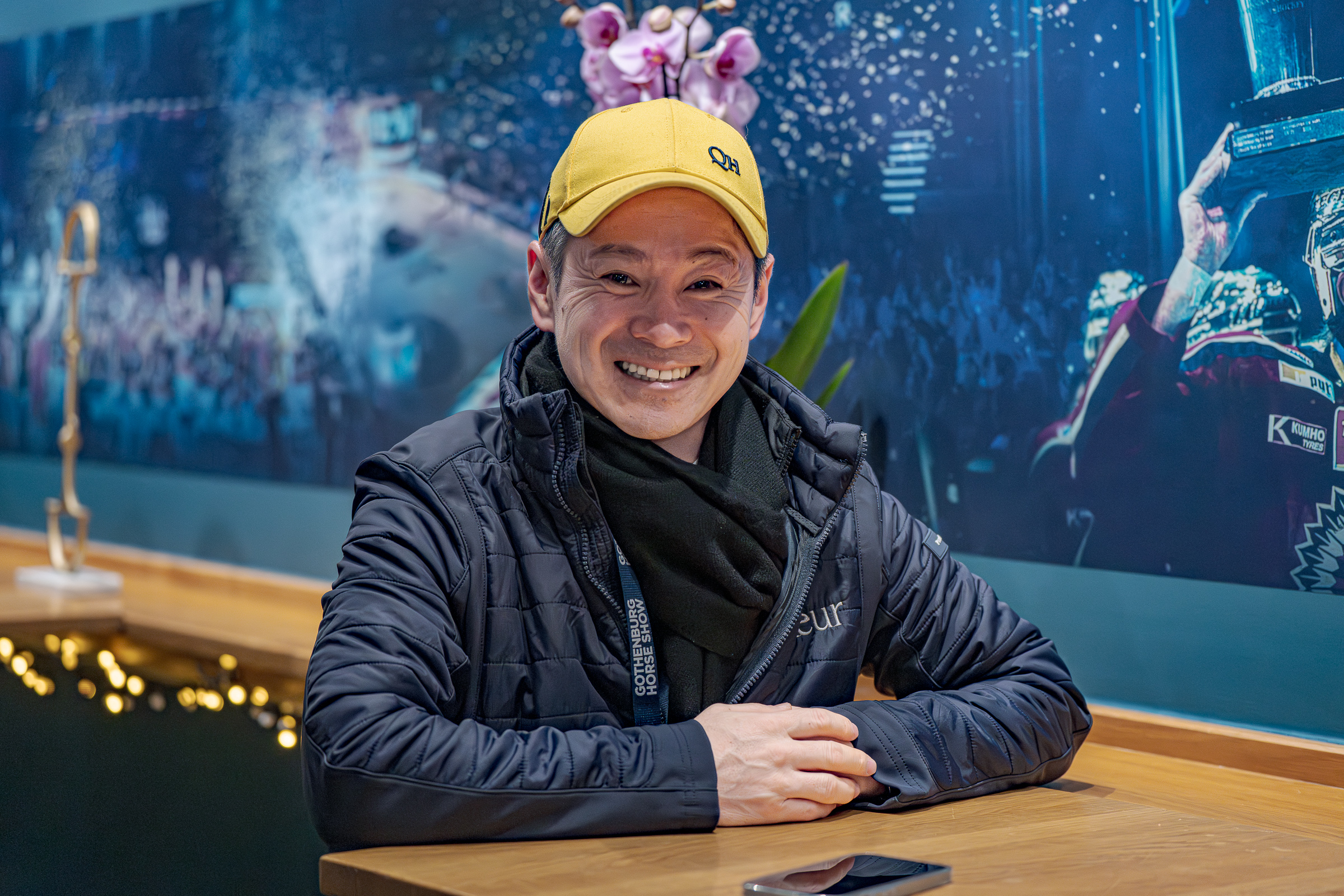 Eiken Sato. Photo: Kim C. Lundin
 He grew up in a Buddhist temple and comes from a country that is not necessarily associated with show jumping – Japanese rider Eiken Sato. He is currently on a roll and is in Gothenburg to collect points for the qualification for the World Cup final.
If he continues this weekend the way he has started, he should add a few more on Sunday. He was currently number 26 in the rankings on Thursday, so he still has eight places to make up to book his ticket to Fort Worth. Sao is Japanese, but as he lives in the Netherlands, he also rides in the Western European League – just like his new boss.
Brazilian-Japanese co-existence
For the past seven months, the 40-year-old Sato has been competing in a bright yellow jacket – a color familiar from the Brazilian Yuri Mansur. The reason is simple: Sato now rides for Mansur.
“I am very happy about our collaboration. Yuri is a great rider, person and trainer, so I owe a lot of my success to him,” says Eiken Sato.
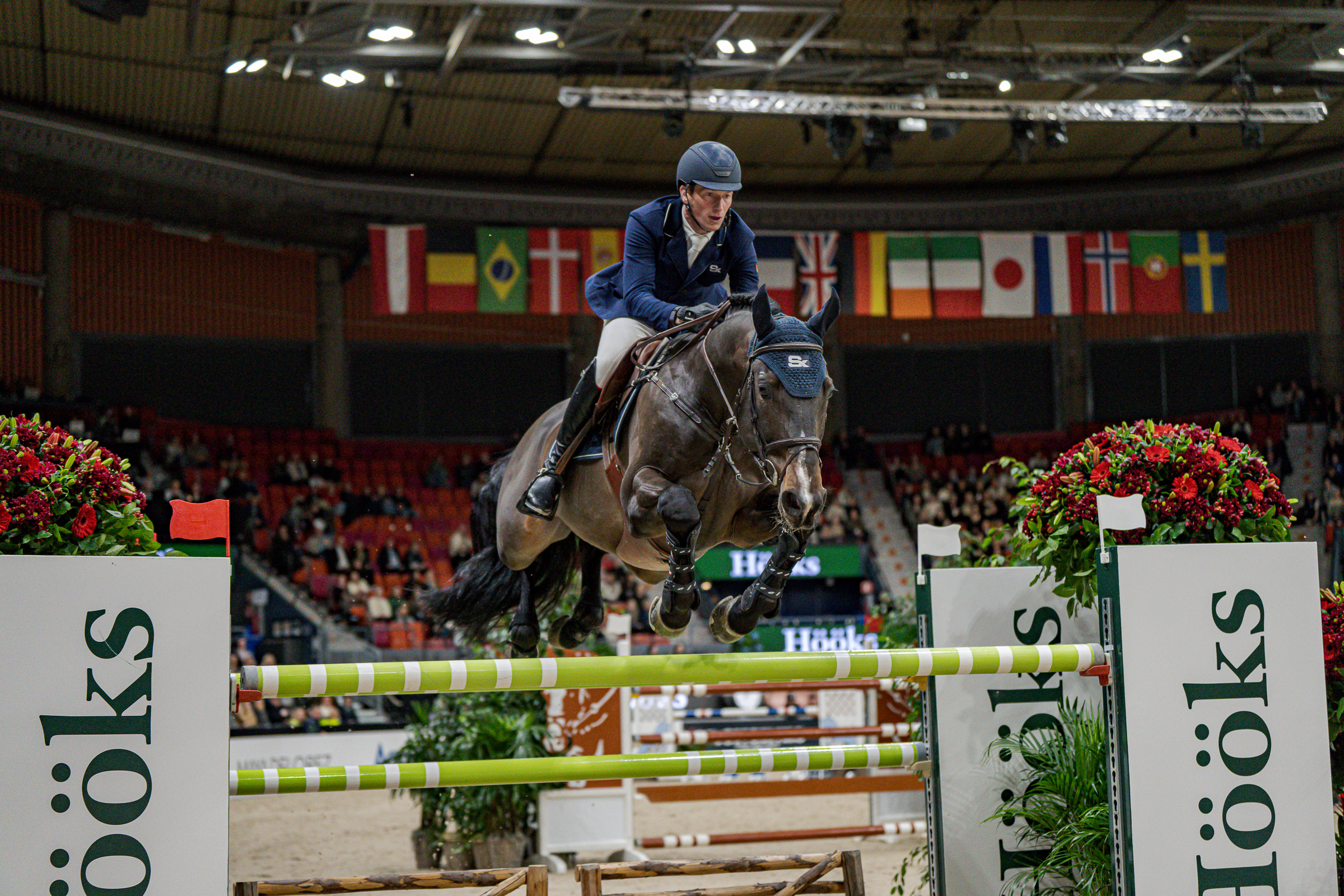
At the Gothenburg Horse Show, Eiken is currently the best-placed Japanese rider in the FEI world rankings in 198th place. Third place on Campai in the 1.50 m jumping competition on Thursday was his fourth top three finish in 2026.
“This is my first time in Gothenburg. The arena and the audience have already impressed me,” says Eiken.
Growing up in the temple
Japan is not necessarily known for its equestrian sports. Eiken grew up on the grounds of the Myōshō-ji temple. In Japanese Buddhism, it is traditional for the eldest son to become a monk – although most lead a normal family life and have regular jobs. Eiken’s father is a monk, as is his older brother.
“I grew up with this culture, but I no longer practise it at all,” says Eiken.
His parents ran a riding school, so horses and riding were a natural part of his life. He knew early on that he wanted to go to Europe to experience the sport more intensively. At the age of 18, he left the island in the Pacific without speaking a word of English, and that’s how it turned out:
“Jos Verlooy was the national trainer in Japan and helped me to get a job at Axel Verlooy. There I worked with riders like Harrie Smolders. I traveled to competitions with them and learned how to communicate with Europeans and find my way around Europe. It’s very different to Japan,” says Eiken.
European tour
Eiken eventually ended up at the stables of legendary horse trainer Paul Schockemöhle, where he worked for several years. One of his colleagues there was the Swedish rider Helena Torstensson, who is still impressed by his talent to this day.
“He has an incredible feel for the horse, the obstacles and the course. Whether it’s a newly broken-in horse or an Olympic horse – he makes them all jump beautifully,” says Torstensson.
Eiken Sato is modest: “I always try to do my best – that’s part of the job. At Schockemöhle, I rode all kinds of horses and tried to learn something from each one.”
Destination: Fort Worth
As mentioned at the beginning, Sato is currently number 26 in the Western European League rankings and still has to make up eight places to be allowed to drive in the World Cup final. He says: “I would love to score points on Sunday. That would take some of the pressure off me in Helsinki. Ideally, I’d like to finish in the top three.”
He makes no secret of the fact that success is his driving force. “I love horses and it’s important to me that they are well looked after and that I have a well-functioning team that looks after them in the best possible way. Competition and success are the goal – that applies to everyone.”
PM Gothenburg Horse Show, edited/supplemented by EP