Society for Equine Medicine has published revised 2026 X-ray guidelines
New 2026 X-ray guide is here
 from Dominique Wehrmann
 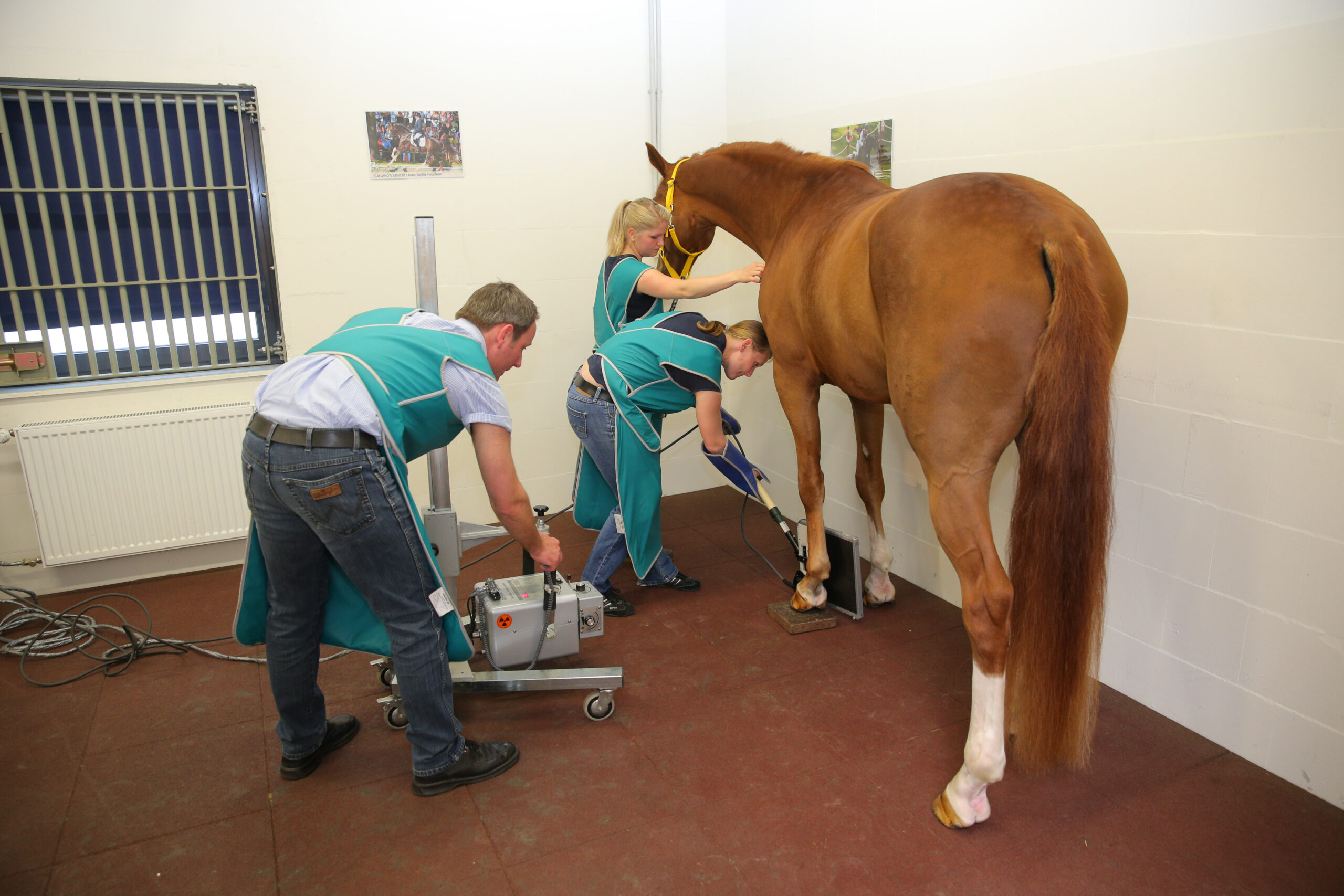 Symbolic image X-ray. Photo: sportfotos-lafrentz.de
 The X-ray commission of the Society for Equine Medicine (GPM) is made up of the veterinarians Dr. Dagmar Berner, Dr. Maren Hellige, Dr. Werner Jahn, Prof. Dr. Christoph Lischer and Dr. Jörg Neubauer.
The new 2026 X-ray guidelines have been in force since April 1st and promise “more clarity and safety when buying horses”.
What the 2026 X-ray guidelines mean for the buyer
According to the GPM, the updated RöLF specifies which images are to be taken as standard and how findings are to be assessed and documented. The aim is to identify health risks at an early stage and present them transparently.
Even if a residual risk remains even with the most modern diagnostics, the RöLF could in principle help to better assess these risks. However, it is no guarantee for the usability and health of the horse in the future.
More pictures
In future, 22 images will be taken as standard instead of the previous 18. This will make it possible to assess the fetlock joints in particular, but also other areas, more accurately. “Changes that were previously difficult to detect can now be better visualized, as three-dimensional structures such as bones cannot be reliably assessed in a two-dimensional plane,” says the GPM.
This gives the buyer a more sound basis for making a decision. At the same time, however, this also means a more extensive and more expensive examination.
Present findings clearly and comprehensibly
It is important for the GPM to differentiate between:
- Findings without clear significance
and
- Findings with a possible risk of subsequent lameness.
This should make it easier for horse owners to better classify the results in consultation with the veterinarians.
Clinical examination remains a must
The RöLF may be a help, but the GPM emphasizes that the clinical examination of the horse with assessment in motion, the classification of behavior and the general health check is the most important part of the purchase examination. “X-rays provide additional information, but do not replace the overall assessment of the horse.”
Orientation aid, also for other examinations
According to the GPM, the 2026 X-ray guidelines apply to:
- Lameness-free warmblood horses
- from the age of 3 years
- as part of a purchase investigation
It is not intended for other issues, such as the clarification of lameness or breeding decisions. But it can serve as a guide here.
Dr. Maren Hellige, Vice President of the GPM and Chair of the X-ray Commission, emphasizes that the revision is primarily based on practical experience. The aim was to make the guidelines easier to understand, more consistent and more suitable for everyday use.
Further information: gpm-vet.de