FN announces show sport figures for 2025
Tournament sport statistics: everything in decline – almost
 from Dominique Wehrmann
 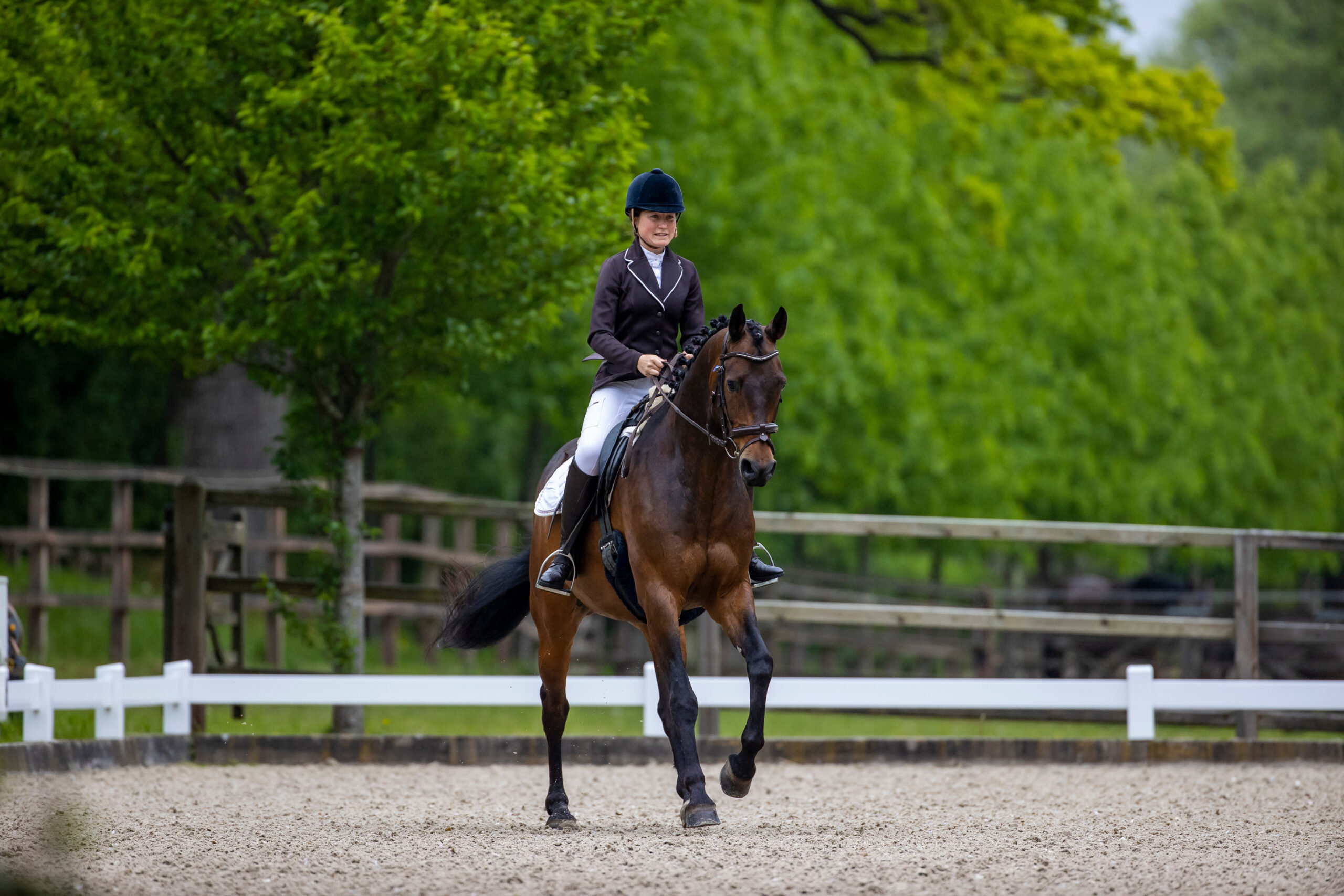 Symbol photo show jumping. Photo: Archive sportfotos-lafrentz.de
 The only area where there is a small ray of hope is the new registrations of show horses. Otherwise, the trend in show jumping has been downwards in all areas since 2023.
From around 3,500 tournaments per year in the past ten years, 3,138 were left in 2025, according to the FN. This corresponds to a decrease of nine percent.
The number of tournament tests fell by 0.5%, from 56,975 to 56,686 tests. Compared to the last six years, the number of tests decreased by 14.5%.
In terms of starts, 1,078,453 competition rides were recorded in 2025. This represents a slight decrease of 0.2 percent compared to 2024, which is also good news, as it means that the individual competitions are better filled again. This is good news for the remaining organizers, says Leonie Kalthoff, Head of the Show Jumping Team at the German Equestrian Federation (FN). “Compared to the pre-corona period, however, it is a drop of almost 20 percent and shows us the seriousness of the situation,” says Kalthoff.
Annual tournament licenses continue to decline
The first year in which fewer than 70,000 annual tournament licenses were issued was 2023. Since then, the number has fallen steadily from 68,425 in 2024 to 66,729 in 2025.
The proportion of male competition riders is also declining. In 2025, only a good eleven percent of competition riders and drivers will be male (7,631). Twenty years ago, it was still around 20 percent.
In 2024, there was a pleasing increase of almost 14% in trial licenses. However, these also fell in 2025, from 5,447 to 5,148 licenses applied for, a drop of 5.5 percent.
More show horses newly registered
The only ray of hope is the number of newly registered show horses. This was still declining in 2024 and rose again slightly in 2025. 21,326 horses were registered in 2025. In 2024 there were 20,343 horses. That is an increase of 4.8 percent.
This positive development is offset by the decline in updates. Here, the number fell by 2.1 percent, from 116,741 to 114,320.
A summary of the current figures from Leonie Kalthoff, head of the FN’s show jumping team
The FN press team spoke to Leonie Kalthoff, Head of the Show Jumping Team, about how she assesses the situation.
How do you rate the latest tournament sport figures?
Leonie Kalthoff: Of course, these figures are nothing to cheer about, but we are not surprised either. If you look at the past ten years, you can see a linear decline. The pandemic has accelerated this decline, but we are not quite as far removed from the trend that we would have expected even without the pandemic.
What we regret most is the decline in the number of events. The small, rural organizers in particular have not been able to close their tournaments with a black zero for some time now. This means that we are mainly missing the small tournaments that a club organizes once a year. And above all, this is a great and regrettable loss for club life and the community.
Do tournaments need to change, what do tournament organizers perhaps need to change?
If you look at the figures from the Federal Statistical Office, I am convinced that it is primarily external influences that are making life difficult for us and many other sports associations in Germany.
The rising cost of living means that there is less money left over for sport, leisure and culture. We don’t have to fool ourselves – tournament sport is the first thing to go when money gets tight. In addition, organizing a tournament is becoming more and more expensive due to rising prices and demographic change is also a fact.
But of course we as an association are looking at the adjustments. We constantly scrutinize our regulations and see where we can accommodate participants and organizers. We are also happy to accept ideas – after all, that’s why we have a federal system. The only problem is that if an idea seems absolutely logical from the perspective of one target group, it usually has disadvantages for other target groups. For example, a participant has different interests than the organizer, the spectator or the tournament experts.
The only option for event organizers is to ask themselves which target group they are primarily addressing. For example: As a “normal” club-based organizer, I don’t need to appeal to the professionals. The top riders go to equestrian centers with top conditions, mainly during the week.
So the tournaments need to become more demand-oriented?
Yes, small organizers can build up niches. There is also great potential in middle-aged people returning to the sport. These are adults who have both feet on the ground and look after the family horse every day alongside their job and family. Offers need to be created for this target group.
And there is still a lot of potential when it comes to the activities for the very young and beginners, i.e. our base. Lead rein competitions are great, but sometimes it feels like we bore our youngest horse fans with the correct seat before they even develop a feel for the horse. And that’s exactly where we need to start. And for an advanced (S) level show jumping competition with ten starters, no more spectators will come to the show.
What does the ideal tender look like?
Basically, there is no one-size-fits-all solution for a perfect competition and guaranteed high entry numbers. There are too many factors that play a role, such as course size and ground conditions. Well-attended and popular tournaments live from the fact that the organizers are open to new ideas, always have new ideas and implement them. And by the way: Every organizer can seek advice from their national association regarding their invitation to tender.
What can the active participants themselves contribute?
It is not only the organizers and tournament experts who can contribute to an improved tournament landscape. One of the main concerns of organizers is the lack of volunteers. Active players and club members can help to make their own tournament attractive and thus keep costs down by providing active support. After all, the motivation to organize a tournament depends on a sense of community and ultimately on whether there is anything left over in the club’s coffers at the end.
fn-press/evb