New Rules for the Recognition of Previously Approved Sires: The Hanoverian Association Opens Its Doors to European Stallions
New Rules for the Recognition of Previously Approved Sires: The Hanoverian Association Opens Its Doors to European Stallions
 from Jan Tönjes
 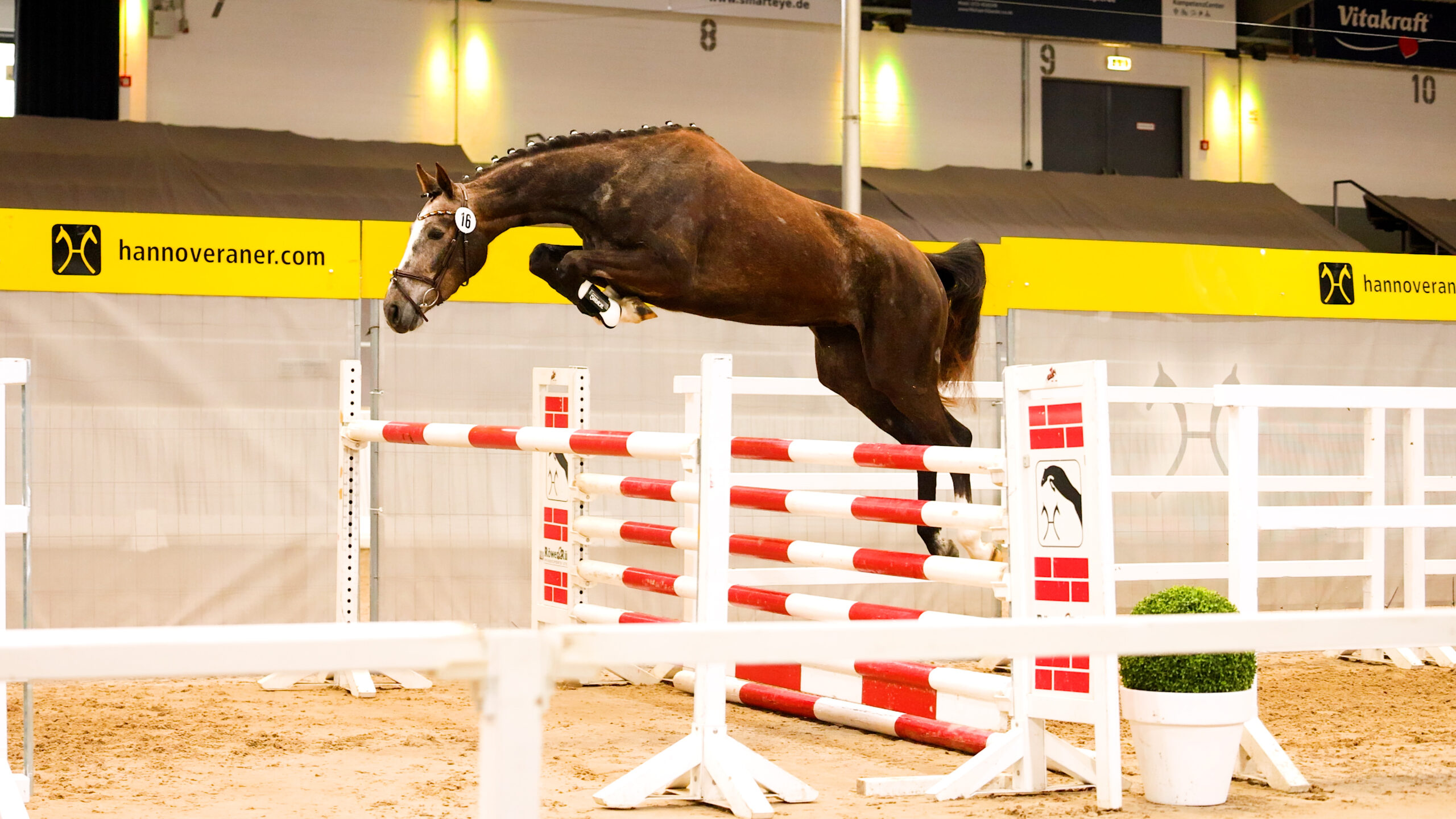 For show jumping breeders in particular, international genetics play a major role in the marketing of young horses and foals. With the Hannoverian Association’s new breeding policy, it will now be easier for its breeders to use stallions that have already received a positive licensing evaluation in other European countries. (Archive photo: Noblesse S by Nevados, winner of the three-year-old division at the 2026 Hanoverian Free Jumping Competition). Photo: Hanoverian Association
 Until now, the Hanoverian Association’s regulations stipulated that a stallion could only be entered into Stallion Book I and the Hanoverian Association’s stallion distribution plan if he had received a positive licensing evaluation from the Association. This meant that even stallions that had already been approved elsewhere still had to undergo another evaluation by an assessment committee of the Hanoverian Association. This procedure is no longer in effect.
More Genetic Options for Hanoverian Breeders
The Hanoverian Association aims to offer breeders an easier way to acquire international genetics. It has long been the case that offspring of stallions listed not in Stallion Book I but only in Stallion Book Ib could be registered with the Hanoverian Association. These sires simply did not appear in the stallion distribution plan.
“Be embraced, millions…”
… writes Friedrich Schiller in his “Ode to Joy,” immortalized by Ludwig van Beethoven in his Ninth Symphony, the “European Anthem” (“Joy, beautiful spark of the gods”). “All men shall be brothers,” it says there. And something similar is now to be the case with stallions from Europe’s sport breeding programs: From now on, a regulation will apply in Hanover stipulating that stallions approved by the Danish Warmblood Breeding Association, the Belgian BWP, the Zangersheide Studbook, the Dutch KWPN, the Swedish Warmblood Breeding Association (SWB), and the Selle Français, can automatically be used by Hanoverian breeders as well.
However, they must meet certain criteria, such as the veterinary requirements in effect in Germany. The pedigree must also be complete:
Regulations for the Hanoverian Stallion Register I
He (the stallion) must have at least six generations of approved and performance-tested sires in his pedigree. The stallion’s dam and granddam must be registered in the main mare book; the great-granddam must be registered in at least the mare book. Stallions must achieve an overall score of at least 7.5 in the evaluation of the selection criteria for conformation during licensing.
No Free Pass
However, Germany’s largest warmblood breeding association still intends to assess the stallions used for breeding Hanoverian horses. Specifically, this means that stallions whose owners now wish to take advantage of the association’s liberal breeding policy in Lower Saxony must still appear before an evaluation committee. A linear profile of these stallions will then be created. “The Hanoverian Association will no longer conduct any further selection of these stallions,” writes breeding director Ulrich Hahne in the 03/2026 issue of the association’s magazine, *DER HANNOVERANER*. The linear profile serves as additional information for interested breeders. This allows them to compare the characteristics of the stallion they are considering with those of other stallions they are familiar with.
Overall, this move is seen as a way to give breeders—who are also facing challenging market conditions—as much freedom as possible in choosing the ideal mate for their mare.
Breeding inspections remain an integral part of the selection process
The Hanoverian Association does not want the new regulations to be seen as a rejection of the traditional licensing system. Rather, as board member Hergen Forkert states in *DER HANNOVERANER*, “we are making the practical procedures for breeders more streamlined and transparent.” And, as board member Arend Garrn adds, “we’re giving them greater planning certainty for their personal breeding goals.”
The new procedure has already been approved by the Breeding Committee and the Executive Board of the Hanoverian Association regarding stallion approval as an amendment to the breeding programs for Hanoverians and Rhinelanders. All that remains now is approval from the Lower Saxony Chamber of Agriculture, to which this proposal has already been submitted.
Similar posts