Atypical Pasture Myopathy in Horses: Causes, Symptoms, Prevention
Rare, but dangerous right now: Atypical pasture myopathy
 from Dominique Wehrmann
 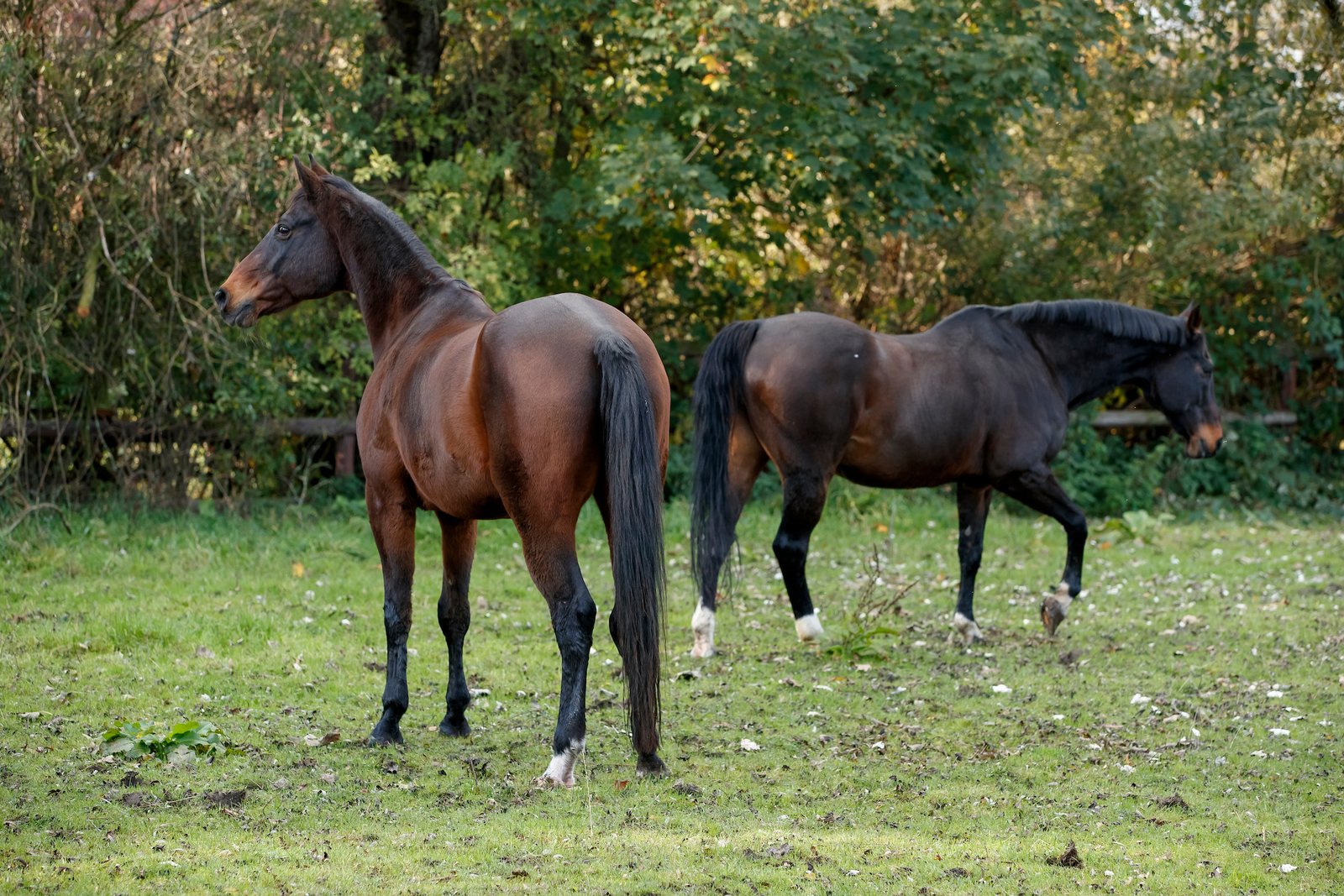 What's growing there? Pastures with sycamore maples should be avoided at all costs in the spring and fall!
Photo: sportfotos-lafrentz.de
What's growing there? Pastures with sycamore maples should be avoided at all costs in the spring and fall!
Photo: sportfotos-lafrentz.de Every fall and spring, a few horses die from a disease that most owners have never even heard of: atypical pasture myopathy. It is not caused by a virus or bacterium, but by the inconspicuous seeds of a tree that grows along the edges of many pastures—the sycamore maple. The disease can become life-threatening within a matter of hours, before anyone even suspects what is wrong with the horse.
Fall and Spring: High-Risk Seasons for Atypical Pasture Myopathy in Horses
The risk is not the same throughout the year. About 76 percent of all cases occur between late fall and spring—when sycamore maples (Latin: Acer pseudoplatanus) shed their winged seeds and the first seedlings sprout from the ground in early spring. Both contain the actual toxin. Caution: In barren, overgrazed, or frost-damaged meadows, horses are more likely to eat unusual vegetation—and in doing so, they may pick up seeds or seedlings from the ground that they would have ignored in the summer.
Stats that catch your attention
Since a European research network (the Atypical Myopathy Alert Group, or AMAG, at the University of Liège) began systematic data collection in 2006, more than 3,000 cases from 14 countries have been documented. The disease is clearly most prevalent in Western and Central Europe. Hungary also reported its first case in 2022. The actual number of horses affected can only be estimated—there is no mandatory reporting requirement, so the number of unreported cases is likely to be significantly higher.
The largest single outbreak in Germany to date, which occurred in the fall and winter of 1995, demonstrated just how much case numbers can fluctuate from year to year: 115 horses fell ill, and 111 of them died. The overall mortality rate is 60 to 80 percent—in fatal cases, affected horses survive for less than two days on average.
The Invisible Enemy: What Lies Behind the Disease
The culprit is called hypoglycin A—a protoxin, or a precursor to a toxin, that is only converted into its harmful form once inside the horse’s body. During metabolism, it is converted into MCPA (methylene cyclopropylacetic acid), which blocks beta-oxidation. Simply put: this is the process by which muscle cells burn fat to produce energy. If this pathway fails, the very muscles that need the most energy—the heart, respiratory muscles, and the muscles that keep the horse upright—are the ones that suffer. The result is a condition known as rhabdomyolysis: massive, often life-threatening muscle breakdown. In North America, a related tree, the ash maple (Acer negundo), the same condition—which is why it is usually called “seasonal pasture myopathy” there.
Recognizing and Taking Action: Symptoms and Diagnosis
Affected horses often suddenly appear listless, tremble, sweat profusely, and exhibit a stiff, unsteady gait—some refuse to move at all, while others lie down and are unable to get back up. A conspicuous warning sign is coffee-brown urine, which results from muscle breakdown. Important: Unlike with colic, the horse’s appetite usually remains intact, which can falsely reassure owners. A definitive diagnosis is made through a blood test that detects toxic metabolic byproducts (MCPA- or MCPG-carnitine) as well as an altered acylcarnitine profile — acylcarnitines are transport molecules that indicate how fat metabolism has been disrupted. Certain values even allow veterinarians to make a rough prognosis as to whether a horse will survive the disease.
Treatment without an antidote
There is still no specific antidote available. Treatment is purely supportive: intravenous fluids to restore fluid balance, glucose and insulin, strong pain relievers, warmth, restricted movement, and high-dose vitamins (especially E and B1) and carnitine. If a horse survives the first five days, the chances of a full recovery—which often takes several months—are good.
Prevention Is Key: What Horse Owners Can Do
Since treatment options are very limited, the focus must be on prevention. This includes removing sycamore maple seeds and seedlings from pastures or fencing off problematic trees—keeping in mind that the winged seeds can fly up to 200 meters, so neighboring properties must also be taken into account. It is also important to supplement the diet with sufficient hay on sparse fall and spring pastures so that horses do not resort to eating seedlings or seeds due to a lack of forage. If you’re unsure, you can have tree samples or even your own horses’ blood tested for hypoglycin A at specialized laboratories. In one study, 97 percent of the clinically healthy pasturemates of affected horses also had hypoglycin A in their blood. Anyone with an affected horse should therefore definitely have the other horses examined by a veterinarian as well. However, this does not mean that the disease will necessarily develop in them. In fact, the latest studies show that there are horses that are, in a sense, immune. This offers hope. See below.
What New Findings from Research in 2024/2025 Reveal
Over the past two years, science has yielded some surprising findings. A 2025 study (González-Medina et al.) shows that toxin levels can vary by up to 60 percent even within a single cluster of seeds from the same tree—so a single sample says little about how dangerous a tree is overall. Even more concerning: The same research demonstrated that hypoglycin A can actually leach into water from seeds and seedlings damaged by freezing and thawing—as little as about two liters of contaminated drinking water could contain a critical dose for a horse. A second line of research focuses on the gut microbiome: Laboratory experiments suggest that certain gut bacteria can break down hypoglycin A before it causes any harm. This could explain why some horses grazing alongside sick horses remain healthy despite the presence of detectable toxin in their blood—and offers a potential starting point for future prevention strategies.
5 Facts About Atypical Pasture Myopathy
- Trigger: Hypoglycin A from the seeds and seedlings of the sycamore maple (Europe) or ash maple (North America).
- High-risk period: About 76 percent of cases occur between late fall and spring.
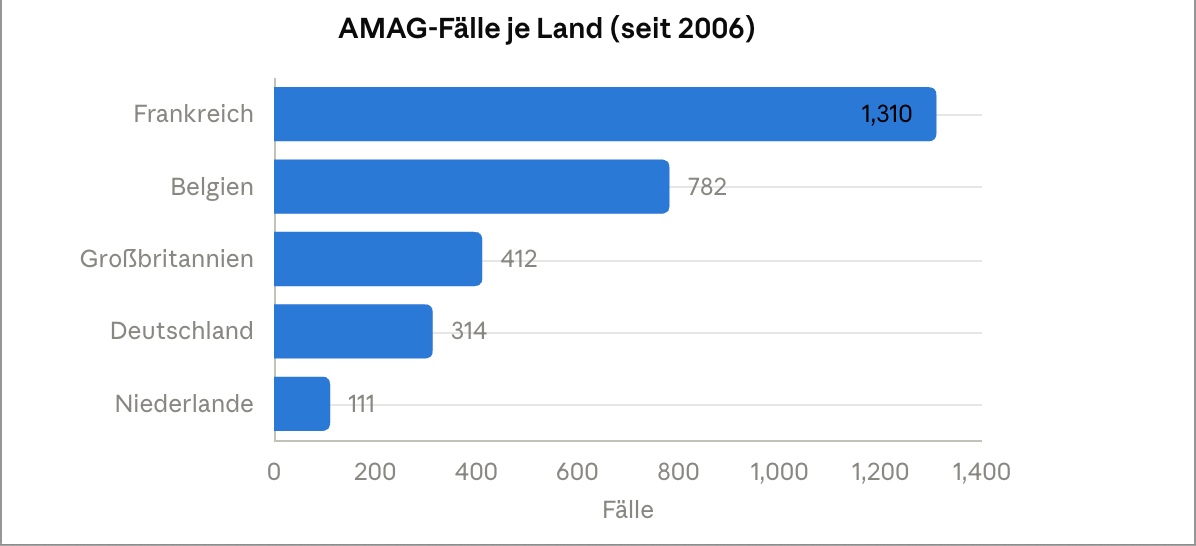
- Prevalence: Over 3,000 documented cases since 2006, with a concentration in France, Belgium, the United Kingdom, Germany, and the Netherlands.
- Mortality: 60 to 80 percent of affected horses die, usually within two days.
- No antidote: Only supportive care is possible—prevention is the most effective protection.
Sources
- François, Renaud, Kruse, Marcillaud-Pitel & Votion (2024), Veterinary Record – 20 Years of Research
- González-Medina et al. (2025), Equine Veterinary Journal – Risk Factors for Maple Seeds
- van Galen et al., PLOS ONE – Acylcarnitine Prognosis
- Fabius & van Galen (2018), Equine Veterinary Education – Evidence-Based Therapy
- van Galen et al., PMC4574941 – Hypoglycin A in pasture-grazing horses
- In-vitro Microbiome Study, Animals 2025
- van Galen 2012, Equine Veterinary Journal – Case Numbers 2006–2009
- VFD/AMAG Figures for Germany